17
17


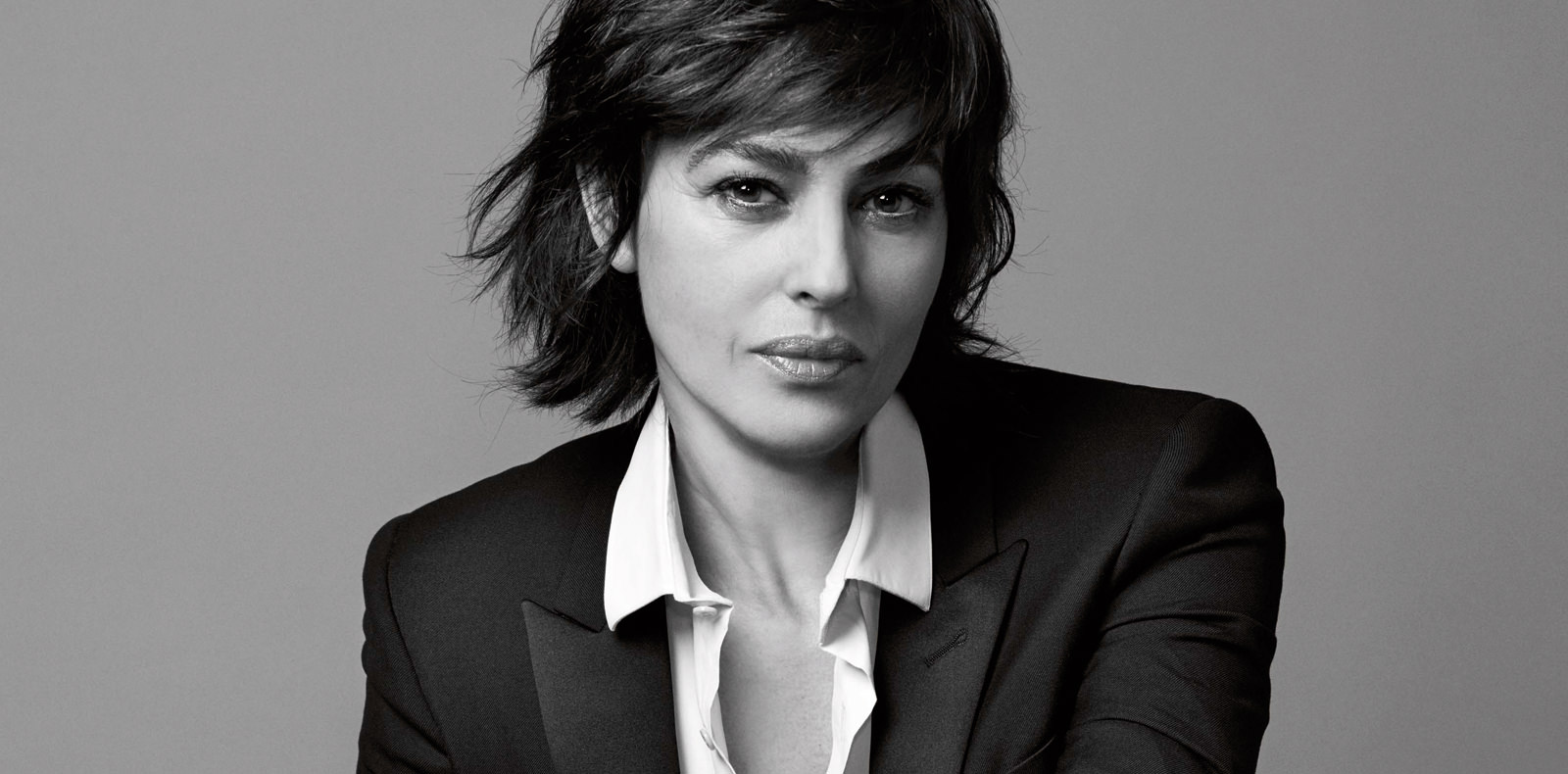
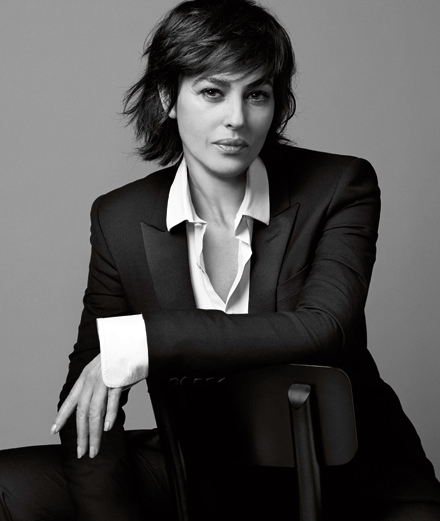
Interview with Monica Bellucci: “I probably am a little narcissistic, otherwise I wouldn’t be an actress”
Emir Kusturica’s drama On the Milky Road (2016) starred Monica Bellucci in a different role than the ones we are used to seeing her portray. Numéro met the Italian actress in 2020 to discuss her collaborations with the greatest directors and her relationship to beauty throughout her career.
By Philip Utz.
Published on 8 September 2020. Updated on 17 June 2026.
Numéro: You are a shockingly beautiful woman… Don’t you ever get bored with people telling you that every five minutes?
Monica Bellucci: You can never have enough compliments. In life, we’re subjected to so many insults and mean comments that a nice word can’t do any harm from time to time.
What are the pros and cons of being so gorgeous?
Gorgeous, really? The pros? Well, in the words of Oscar Wilde, “Beauty lasts five minutes in life if you don’t have other qualities to maintain interest.” You know, being pretty when you’re an actress is painfully banal. Do you know many ugly actresses? If I was an astronaut it would be more original.
Have you ever made an active decision to escape the archetypal “woman-object” when choosing a role in your career?
No. Let’s just say there is always a slight complex with women who have an advantageous physique to prove themselves as credible actresses. For me, it’s been doubly difficult because I started out as a model. A double death defying leap. It’s as if beauty creates a sort of mask that stops emotions from showing. This prejudice is still very widespread. Your question confirms it. As soon as a beautiful woman plays a prominent role, people will say, “Ooh isn’t she daring?” But they don’t bother saying that I’m acting well.
What role are you playing in the anticipated Twin Peaks: The Return by David Lynch?
I can’t tell you anything at all, you’ll have to wait to watch the series yourself. What I do in the show, well, it’s a true moment of cinematic love. It’s quite dreamy.
Obviously…
Voilà! If I instantly accepted the role, it was to be part of an experience directed by David Lynch. My relationship with movies has always been like that: I can shoot with Rebecca Miller for five minutes, as much as I can film for four years with Emir Kusturica. I go from one extreme to the next. I just took part in a project by the Italian writer Niccolò Ammaniti, and it was a day of work. What he asked me to do was so out there I just couldn’t refuse. The most interesting projects are like mosaics where each piece is equally important. That’s how I perceive movie making.
How come the filming of On the Milky Road (2016) by Emir Kusturica took four years?
There are two reasons. On the one hand, we only shot during the summer, and on the other hand, Emir very kindly let me do other parallel projects during the filming. I’ve always loved Kusturica’s films, I first discovered his work with The Time of Gypsies. When I saw that movie, I said to myself, this is an absolute masterpiece that will mark the history of cinema forever. I’ve always respected Kusturica’s work immensely, and when he called me about shooting with him, I was over the moon. He explained the thread of the film over the phone, but it was only when I was sent a script much later on that I realised I was going to be playing a Serbian woman. I was a bit worried about that at the beginning, but I went for it head on. It’s been worth it, I think.
I didn’t understand everything in the film, but then I didn’t understand everything in Maxtrix Reloaded either. I’m probably just an idiot.
No, I don’t think so. On the Milky Road is a very particular film that plays out against the Balkan war, an era that means a lot to Kusturica. But there is also a very poetic side to this love that unites this mature couple, like we rarely see on the big screen. The two characters aren’t that young anymore, they’re expecting nothing from life, but in spite of that, they rediscover love, sexuality and sensuality in the magical moments when they meet each other.
How has the film industry changed over the years you’ve been working in it?
Today it is all about TV series. That’s the big difference. Series have taken on an unbelievable importance. I’ve even done an American TV show, Mozart in the Jungle, which was a very lovely experience for me as an actress. I was really able to express myself. When I did the dubbing in French and in Italian, the director said to me, “What a shame this isn’t for the cinema!” But for me that’s not really a subject. When I see my daughter watching films on her mobile phone, I realise it really is another way of watching fiction. We’ve moved into another world.
What did you think about all that business with Netflix at the Cannes Film Festival? What exactly was the problem?
Netflix was accused of not making cinema in the true sense of the word. But Cannes is, above all, a festival about communication. Refusing to select a film simply because it isn’t released in actual movie theatres strikes me as a little reductive. It’s like hiding from the major changes that are currently shaking up the film industry, like cutting yourself off from the world by sticking your head in the sand.
How do you get elected Mistress of Ceremonies at the Cannes Film Festival – twice!
Thierry Frémaux [director of the Cannes Film Festival] just called me and said: “We thought about you, and would be delighted if you’d be part of the adventure.” And I said to him: “Jeanne Moreau has done it twice and so has Isabelle Huppert, so I don’t see how I could possibly refuse!”
What happens if four members of the jury vote for Ozon and the other four for Dolan? Do you draw straws?
When I was on the jury in 2006, there weren’t enough prizes for all the films that deserved one. To the extent that we had to call ex aequo. Sometimes I am sad to see some filmmakers leave empty-handed when the quality of their film was so outstanding. But it also means the selection that year was excellent.
Many actresses have denounced the increasingly rare number of good roles for actresses over the age of 50. Do you agree?
I don’t think that’s the case. When I look at Kusturica’s film, for example, I can see clearly how my physique has completely changed from when I made Asterix and Obelix: Mission Cleopatra, Irréversible, Malèna and The Passion of Christ. But with this new body I can tell other stories. I would never have been able to do On the Milky Road twenty years ago, because the woman I play has such inner power, such passivity. She is so attached to the land, even if she steals, I could never have brought her to life without the wrinkles around my eyes. It would have been fake, and the film wouldn’t have been the same.
Do you claim to be a feminist?
First of all, what does the word “feminist” actually mean? Behind a badly behaved man is often a mother who badly educated her son.
You are very feminine, even if you’re not a feminist. We imagine you a little like Donatella Versace, spending your days in a bath of essential oils sprinkled with rose petals and floating candles.
If only! Unfortunately, I don’t have that much time for myself, I have to take care of my kids and I have a politician’s schedule. I occasionally have a face massage, I have acupuncture and I do Pilates, but that’s pretty much it.
So, you’re not a narcissist?
I probably am a little bit, otherwise I wouldn’t be working as an actress.
Production: Irina Marie and Fernando Damasceno. Hair: John Nollet. Make-up: Letizia Carnevale at B Agency. Digital: Dope Paris. Production: Iconoclast Image. Suite 101, hôtel Park Hyatt, Paris-Vendôme.