17

17


MEP: the United States (finally) show humanism through Dana Lixenberg’s exhibition
From portraits of major figures in American culture, like Whitney Houston and Jay-Z, to her long-term documentary projects, Dutch photographer Dana Lixenberg has been building an intimate archival body of work about the United States since her debut in the 1990s, paying as much attention to anonymous faces as to cultural icons. Still relatively unknown in France, she is the subject of a major exhibition at the MEP, until May 24th, 2026, which displays more than three decades of practice.
Dana Lixenberg, the photographer of waiting
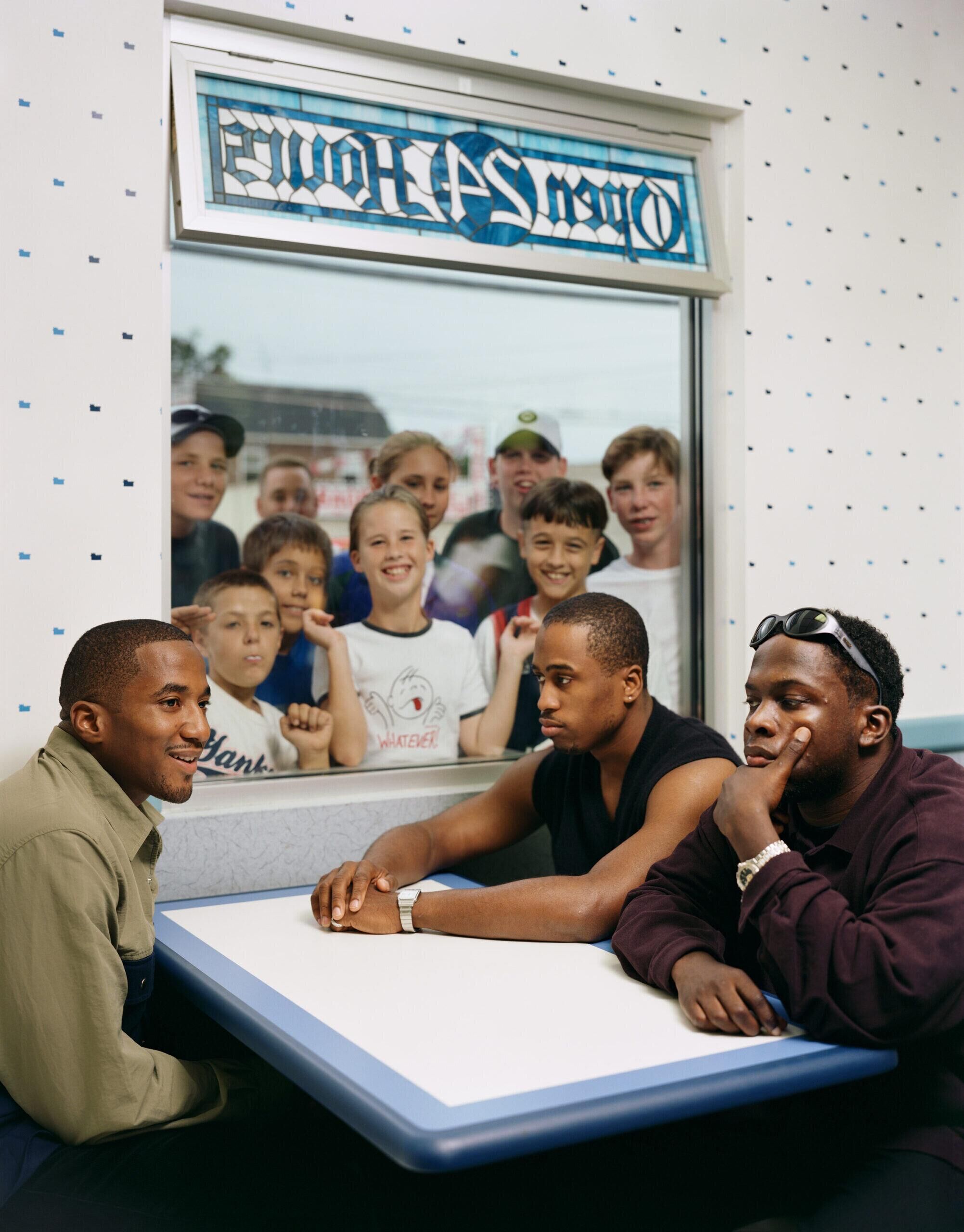
“Photography is like a slow dance,” the photographer declared. Far from being simply poetic or anecdotal, these words precisely sum up the method she has refined for over thirty years. A relational practice grounded in listening, patience, and trust quietly built with her subjects. To Dana Lixenberg, photography always begins with time. Not the hurried, productive time of a snapshot taken on the fly, but a stretched, almost stubborn temporality that requires waiting, watching for a long time before pressing the shutter.
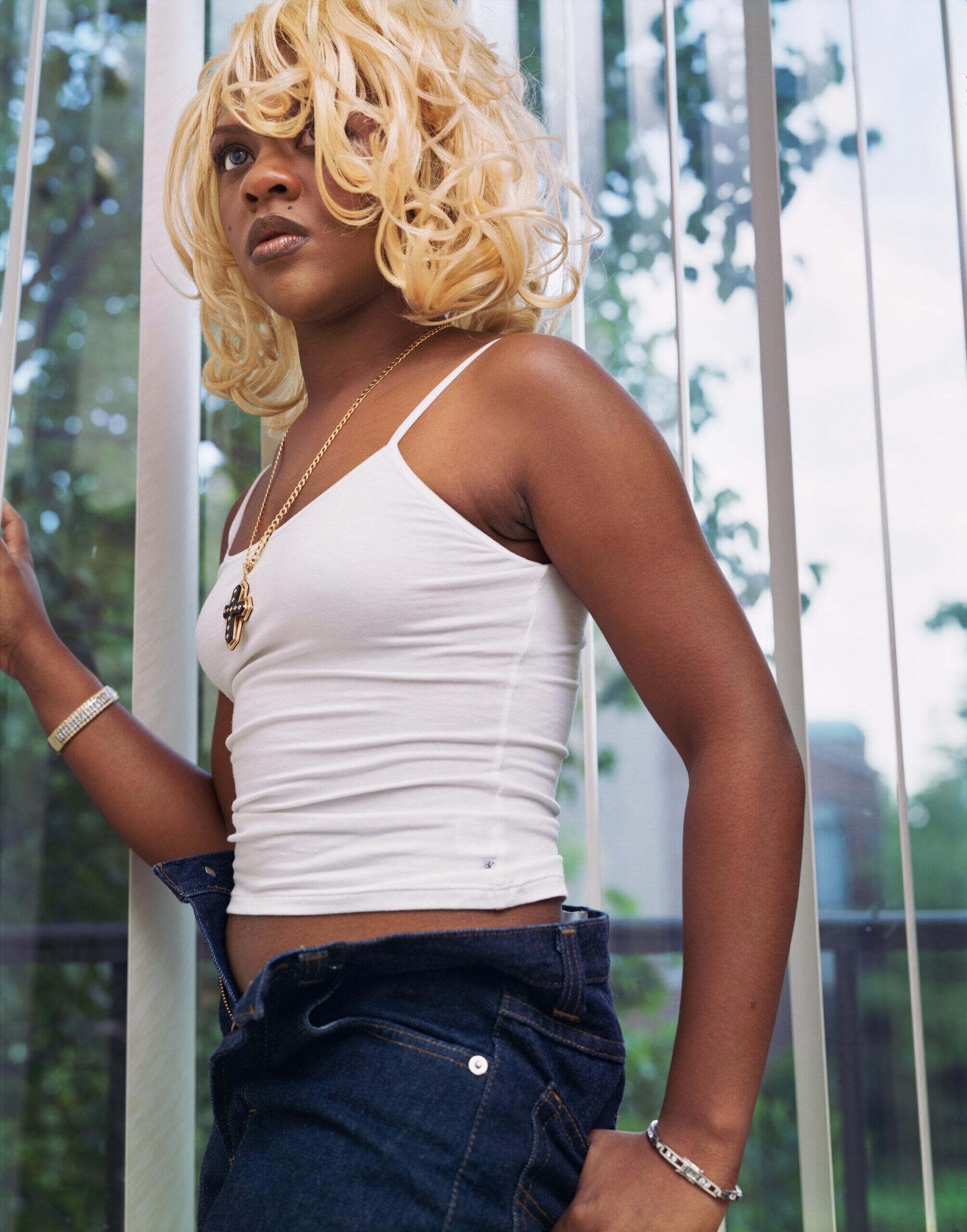
Born in Amsterdam in 1964 and based in New York since the late 1980s, the Dutch photographer has made the United States her primary field of observation. Yet, her approach is that of a lucid outsider watching from a distance and rejecting ready-made mythologies in favor of intimate narratives, faces, presences… Everything that composes a real America rather than a fantasized one.
The United States, Dana Lixenberg’s primary field of observation
Working almost exclusively with a 4×5-inch large-format camera – a slow and heavy device, which requires a tripod, a lot of preparation, and shared stillness – the photographer turns each session into a moment of silent negotiation.
An image is not stolen, but built together. This structural slowness produces portraits of remarkable precision, with rich details and textures. Nothing is spectacular, nothing is forced in her work. Everything appears controlled, measured, almost restrained, and it is precisely this restraint that gives her practice an ethical dimension, just like an act of care. Because it entails listening, returning, showing the images, allowing each person the time to feel at ease.
On ne vole pas une image, on la construit à deux. Cette lenteur structurelle produit des portraits d’une grande précision, riches en détails et en textures. Chez elle, rien n’est spectaculaire, rien n’est forcé ; tout semble tenu, mesuré, presque retenu, et c’est précisément cette retenue qui confère à son travail une dimension éthique, proche d’un geste de soin. Parce qu’elle implique d’écouter, de revenir, de montrer les images, de laisser à chacun le temps d’être à l’aise.
Whitney Houston et Jay-Z côtoient une femme condamnée à mort
This slowness runs through both her commissions for publications, such as The New Yorker, The New York Times Magazine, and Vibe, and her long-term personal projects. In her world, there is no hierarchy. Whitney Houston, Tupac Shakur, Leonard Cohen, Kate Moss, Jay-Z, and Iggy Pop stand alongside a woman on death row in Texas, sex workers in a Nevada brothel, or homeless families in a small town in Indiana. Nothing in the staging or composition distinguishes them from one another.
“I am less interested in the image a person wants to project than in what is actually happening within them at the moment of the encounter,” she explained in the press release for her exhibition at the MEP. Stripped of overly explicit contextual cues, her portraits put aside any social category. Celebrities reveal their vulnerability, while anonymous subjects gain in intensity. George Pitts, former director of photography at Vibe, aptly summed up this reversal: “With anonymous subjects, she brings out their charisma and individuality. With celebrities, she unveils their vulnerability.”
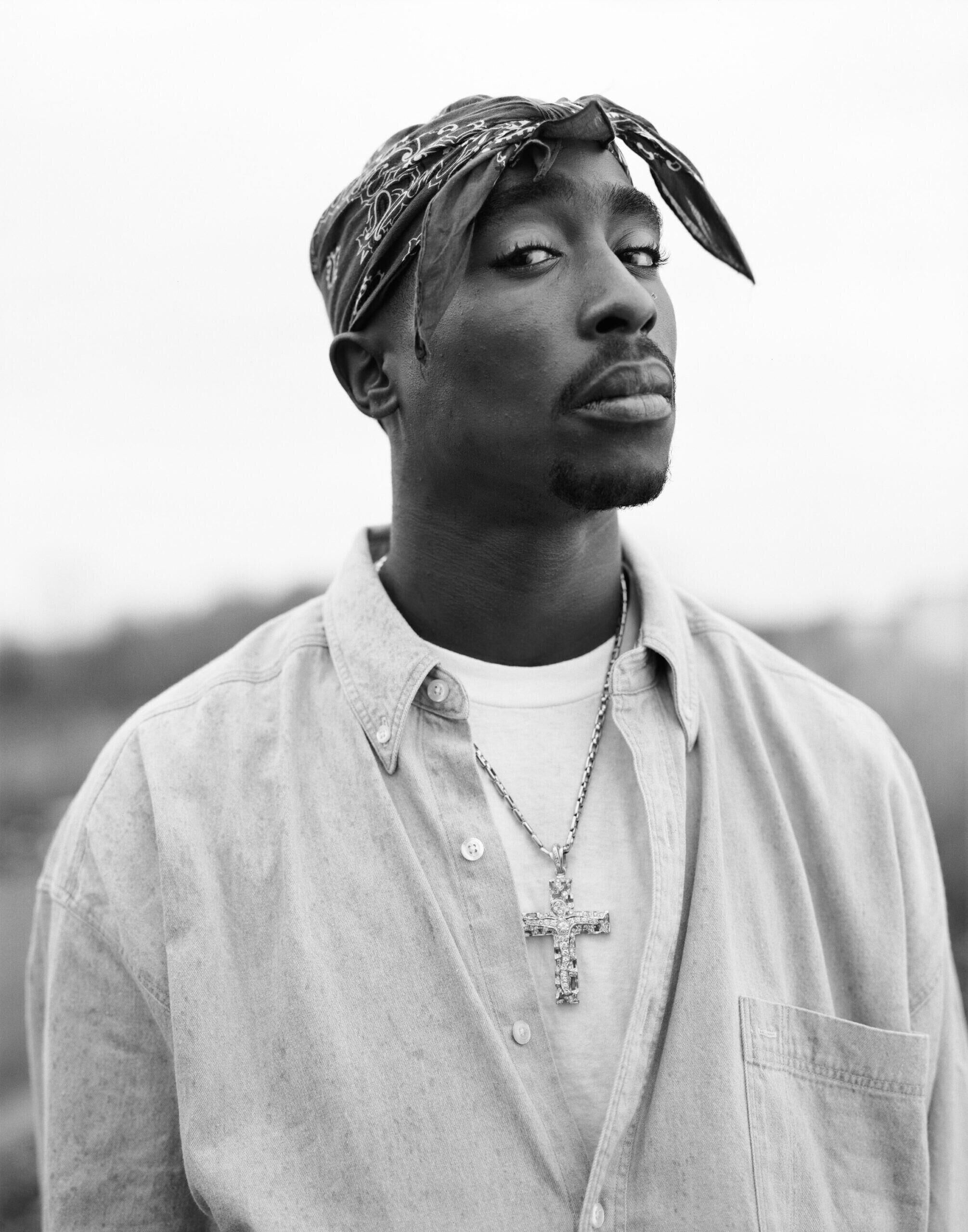
An emblematic portrait of Tupac Shakur
Her portrait of Tupac Shakur, taken in 1993 for Vibe magazine, remains emblematic in this regard. Photographed in Atlanta when he was only twenty-two, three years before his murder, the rapper appears in light rain, pensive, almost vulnerable. The image contrasts with the combative posture that pop culture remembers of him. The tilt of his head and the softness of his gaze suggest a complex inner world, that of a writer, a poet and a pop icon.
This refusal of spectacle also runs through her documentary series. Between 1997 and 2004, Dana Lixenberg photographed the residents of a shelter in Jeffersonville, Indiana, without indulging in the misery. In The Last Days of Shishmaref (2008), in Alaska, she put the climate threat in the background and focuses her attention on faces. The melting of permafrost, the permanently frozen ground of Arctic regions, are not the main topics here.
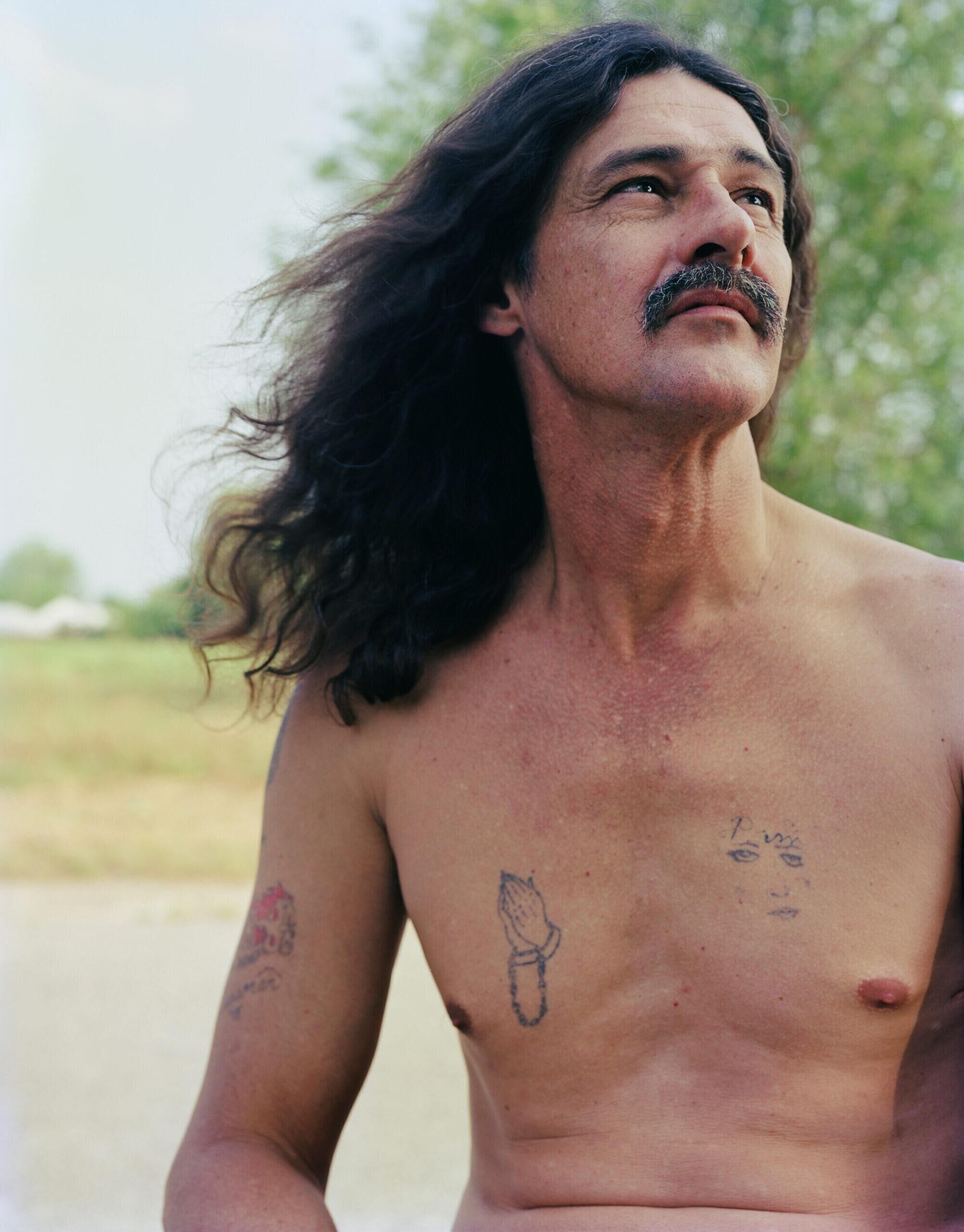

The Los Angeles riots: The birth of a long-term activism
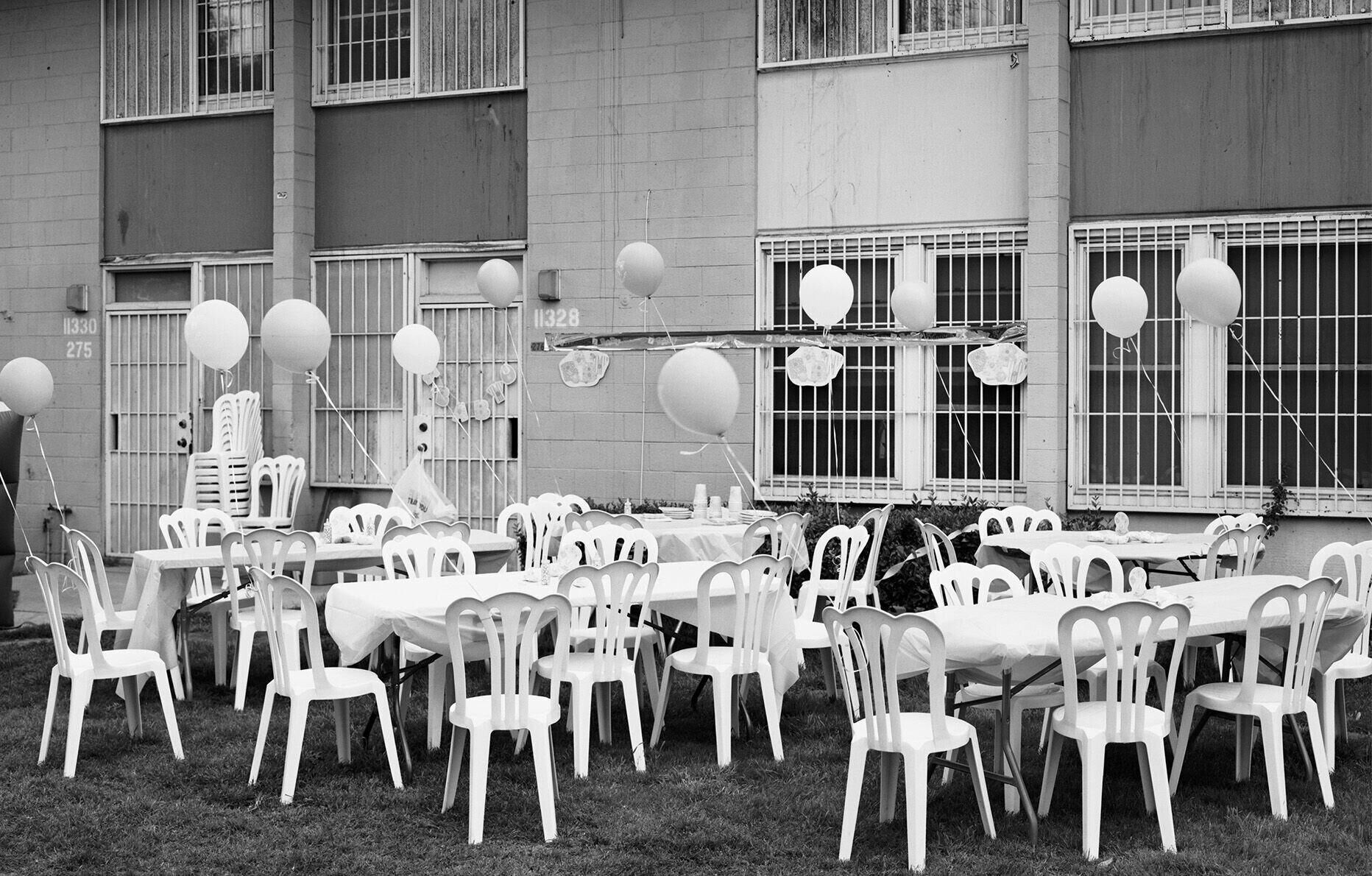
It is with Imperial Courts, an ongoing series started in 1993, that Dana Lixenberg’s activism fully takes shape. Sparked by the acquittal of four police officers filmed brutally beating Rodney King to death, the 1992 Los Angeles riots triggered six days of uprisings. More than fifty people died and thousands were injured, shedding a light on the city’s deep social fractures.
It was in this heavy context that the photographer chose to immerse herself over the long term in the Imperial Courts housing complex. For more than thirty years, Dana Lixenberg has returned to this public housing project in Watts, photographing residents across generations, bringing back prints, recording their voices, and gradually expanding the project to include sound and video. “I like to focus completely on what I’m looking at, to silence the noise around the subject in order to truly see them,” she explained. When the media have often reduced the neighborhood to violence, she composes an archive of presences, paying attention to both continuities and absences.
In an era of digital flows and instantaneous images, the Dutch photographer’s work thus appears as a form of quiet resistance. An art centered on relationships, refusing simplification and affirming, image after image, the true value of each individual.
“Dana Lixenberg. American Images,” exhibition on view until May 24th, 2026 at the Maison Européenne de la Photographie, 5/7 Rue de Fourcy, Paris, 4th arrondissement. Curated by Laurie Hurwitz at the MEP and Marcel Feil at the MAPFRE.