9
9


Vivian Maier, the mysterious housekeeper turned photographer
In January 2022, Vivian Maier unveils her largest retrospective in France to date at the Musée du Luxembourg. Unknown for a long time before being rediscovered in 2009, only a few days after her death, the American photographer is now considered as one of the major figures of “street photography” for her shots in New York and Chicago during the Thirty Glorious. Numéro dives into the posthumous success of a photography pioneer.
By Mathilde Cassan.
Published on 14 October 2021. Updated on 9 July 2026.
Chicago, 2009 — the owner of a storage unit filled with old boxes, long abandoned, decides to empty it and sells its contents for only a few dollars. The young man who bought it then discovered an incredible quantity of film and negatives by Vivian Maier. Thanks to a quick Google search, he learns that this mysterious person was a governess born in New York in 1926, who has just passed away. Fascinated by the photographs he discovered, the real estate agent, who was also an art lover, made it his mission to rehabilitate this name. Because the American photographer has left behind her an imposing body of work, made up of 120,000 black and white and color shots, undeveloped film and super-8 films made over three decades, relentlessly immortalizing the streets of New York and Chicago, the faces of anonymous people as well as the fleeting silhouettes of passers-by.
Vivian Maier, whose name has since been one of the major figures in street photography, has never tried to make a living from this activity. Since its rediscovery in 2009, his work has been the subject of several exhibitions, before his first museum retrospective opened in Paris in September. The Musée du Luxembourg in Paris brought together 260 photographs and films by the photographer for the first time. It was an opportunity to question the reasons that allowed the name of this self-taught woman to become inscribed, in just a few years, in the history of her medium.
A silhouette as famous as his photographs
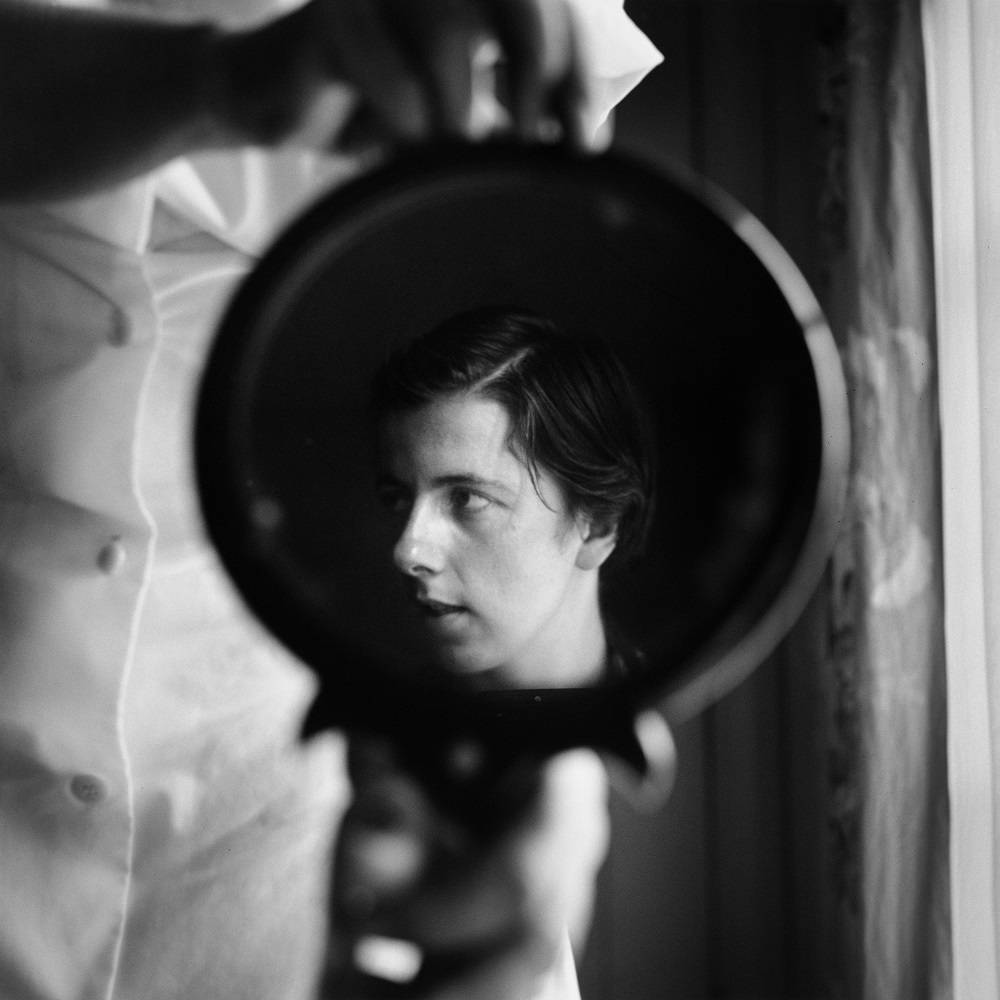
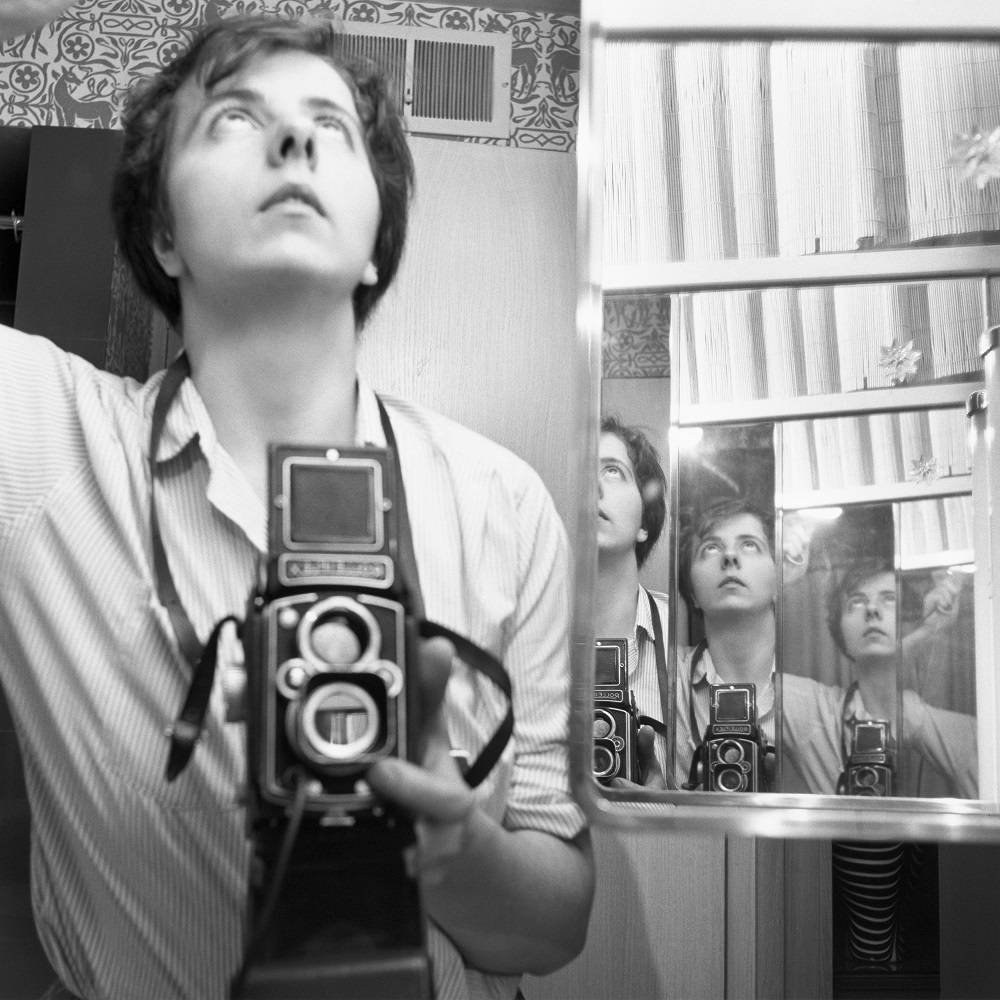
Dressed in a trench coat, her camera fixed to her chest, Vivian Maier‘s androgynous figure has become almost as famous as her photographs. Over the decades, her self-portraits have punctuated her work. Walking the streets of New York and Chicago from the 1950s onwards, the photographer captures her reflection at the bend of an alley or in a shop window. Through her self-portraits, Vivian Maier finds a way to include herself in her scenes. She treats herself as a subject in her own right, which still diffuses an aura of mystery. Because unlike the photographers celebrated during their lifetime, Vivian Maier was never able to express her intentions regarding her work because none of her comments on her approach could be recorded or reported.
While her biography has been reconstructed with precision, there is still doubt about the motivations that pushed her for decades to photograph the tiniest details of everyday life. Born to a French mother and a Hungarian father, who both immigrated to the United States, Vivian Maier spent her childhood tossed between America and France, juggling between her parents. On the eve of adolescence, she was a solitary and introspective child, preferring to take refuge in reading. But at the age of 25, the young woman took off when she moved permanently to New York and became a governess.
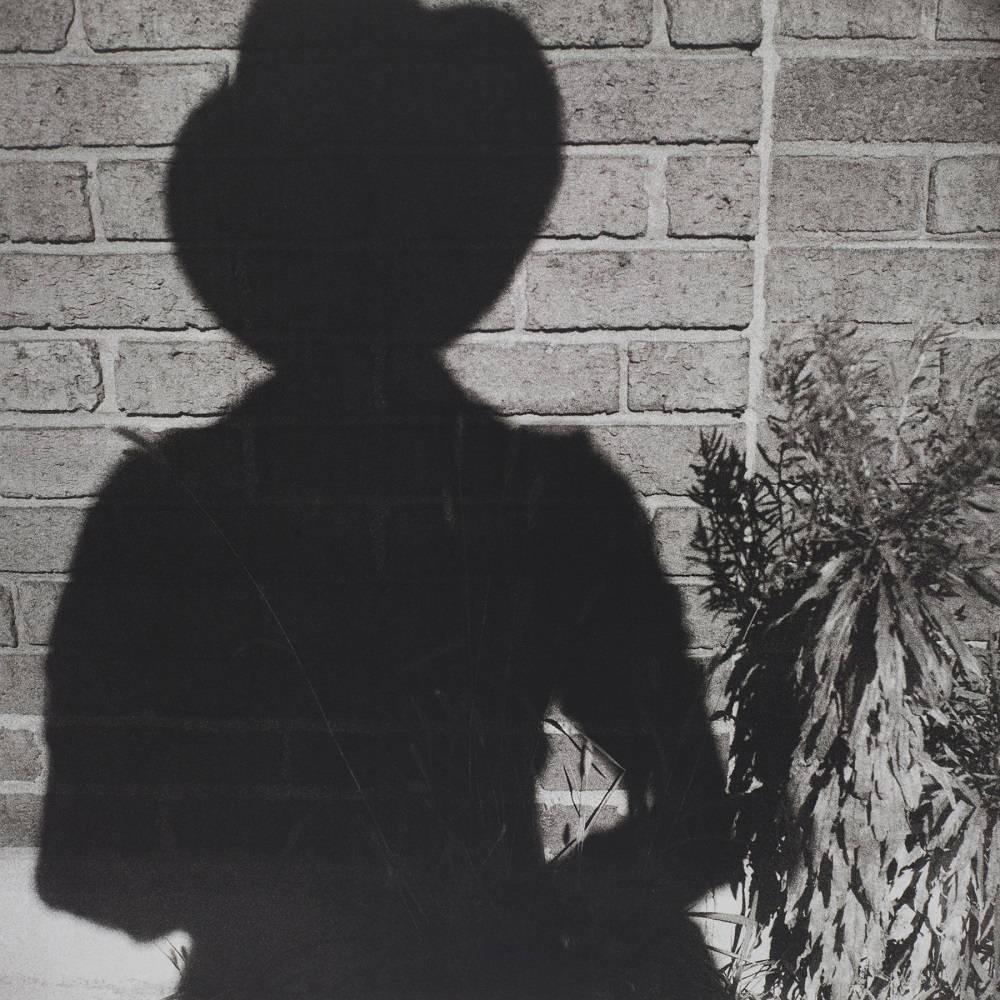
There, she began to roam the streets armed with her Rolleiflex in search of reflective surfaces on which to duplicate her image. Her self-portraits often require the installation of real shooting devices, constructed thanks to complex superimpositions of mirrors in front of and behind the lens, to play with his own body. Fascinated by its reflection, the photographer is just as fascinated by its shadow. Like her fellow photographer Walker Evans, whose work she surely knew, she frequently photographed her silhouette drawn on the ground by the tilt of the sun. As fleeting as it is constant, the presence of Vivian Maier in her photos testifies, over the years, to a young woman in perpetual search for herself.
The city as the stage of mundane life
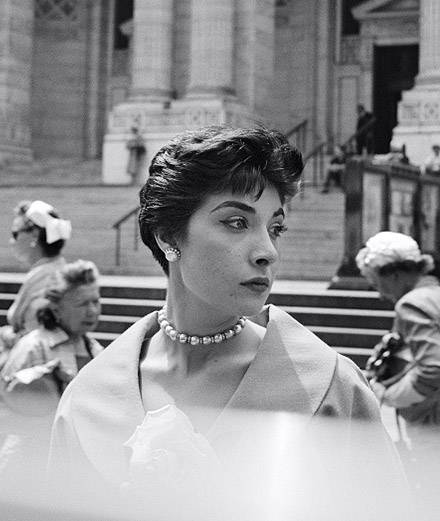
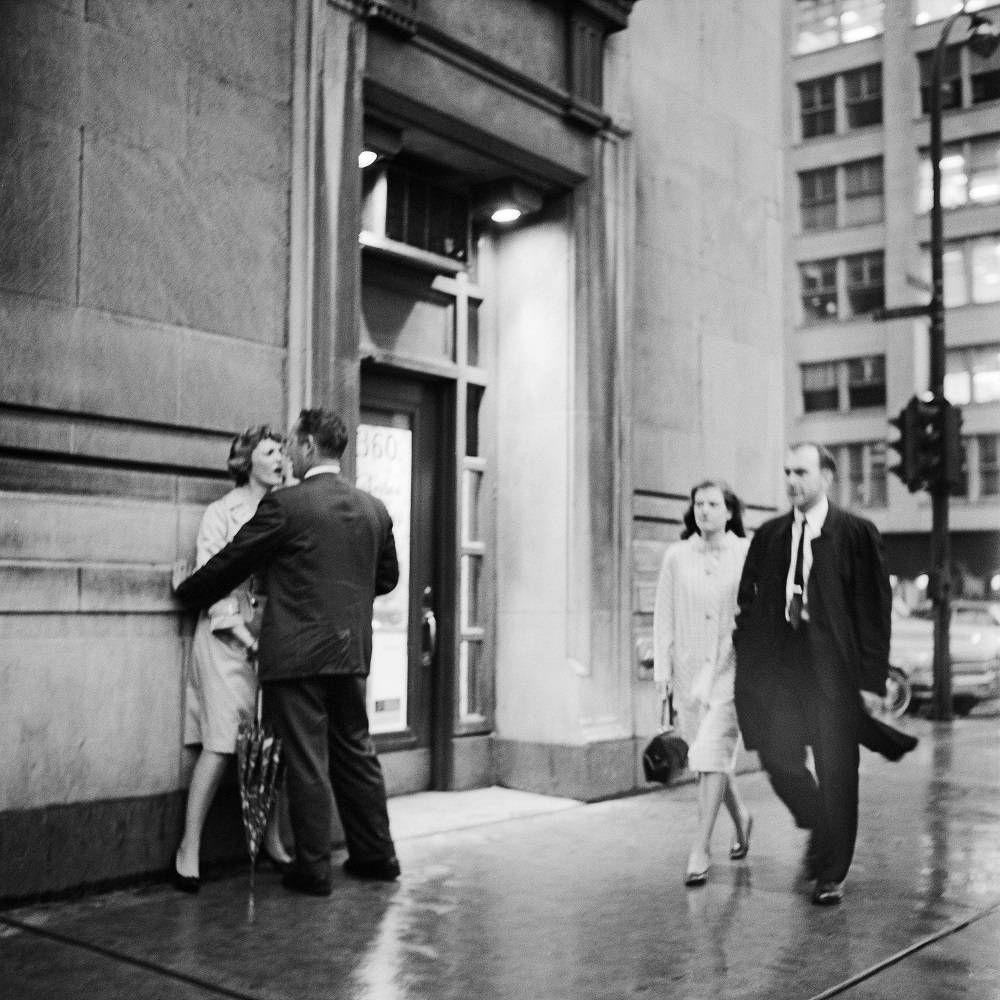
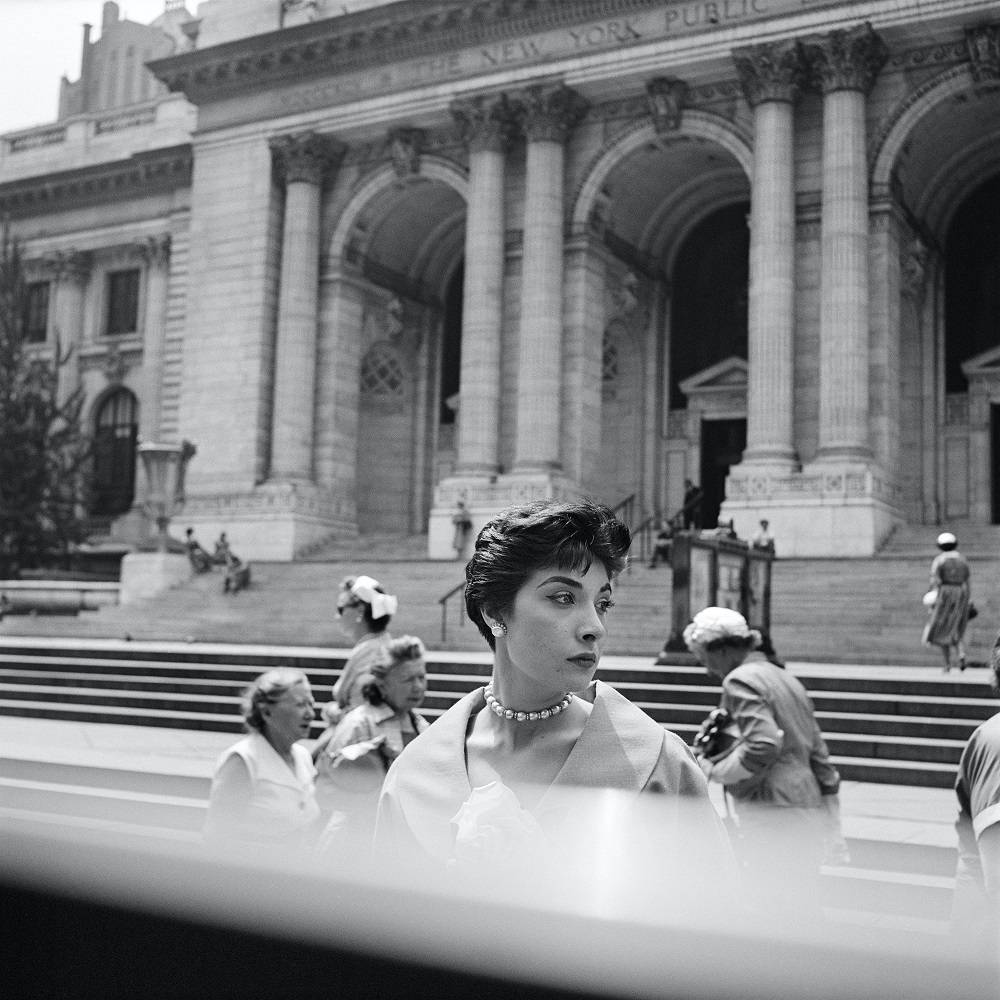
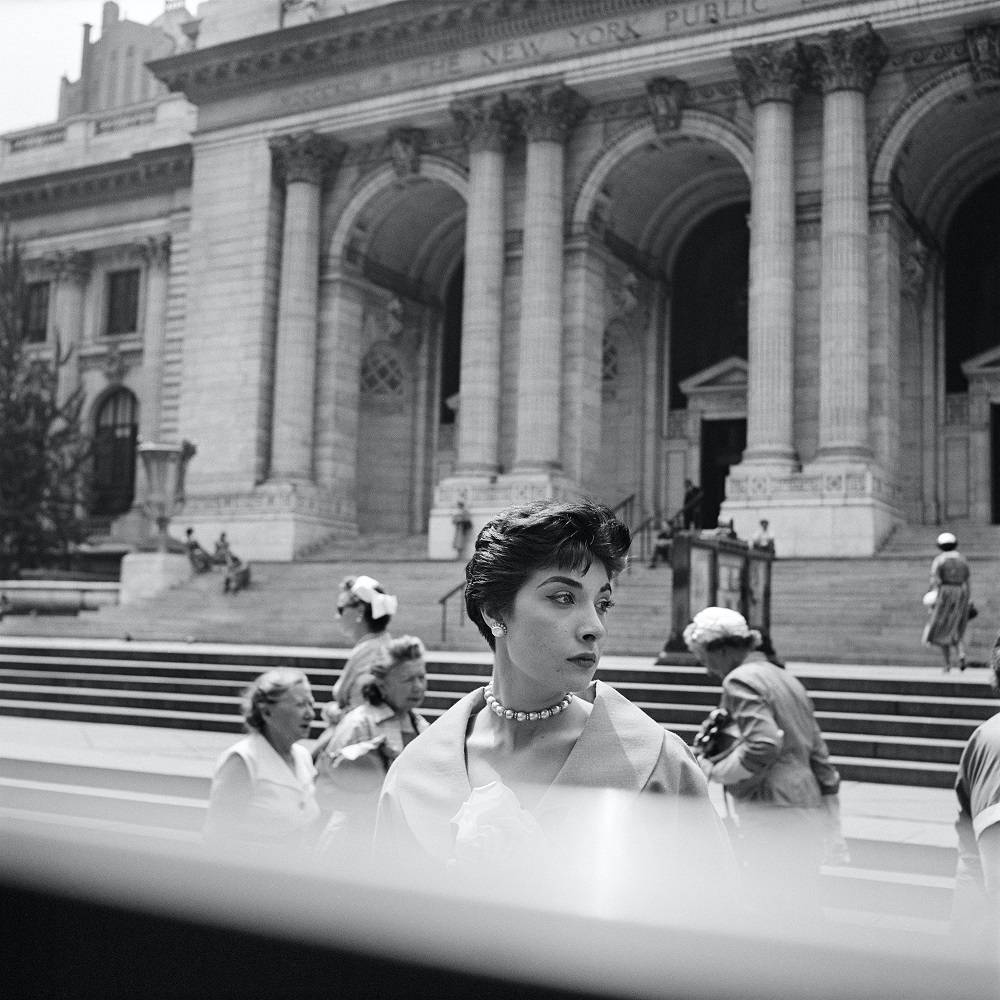
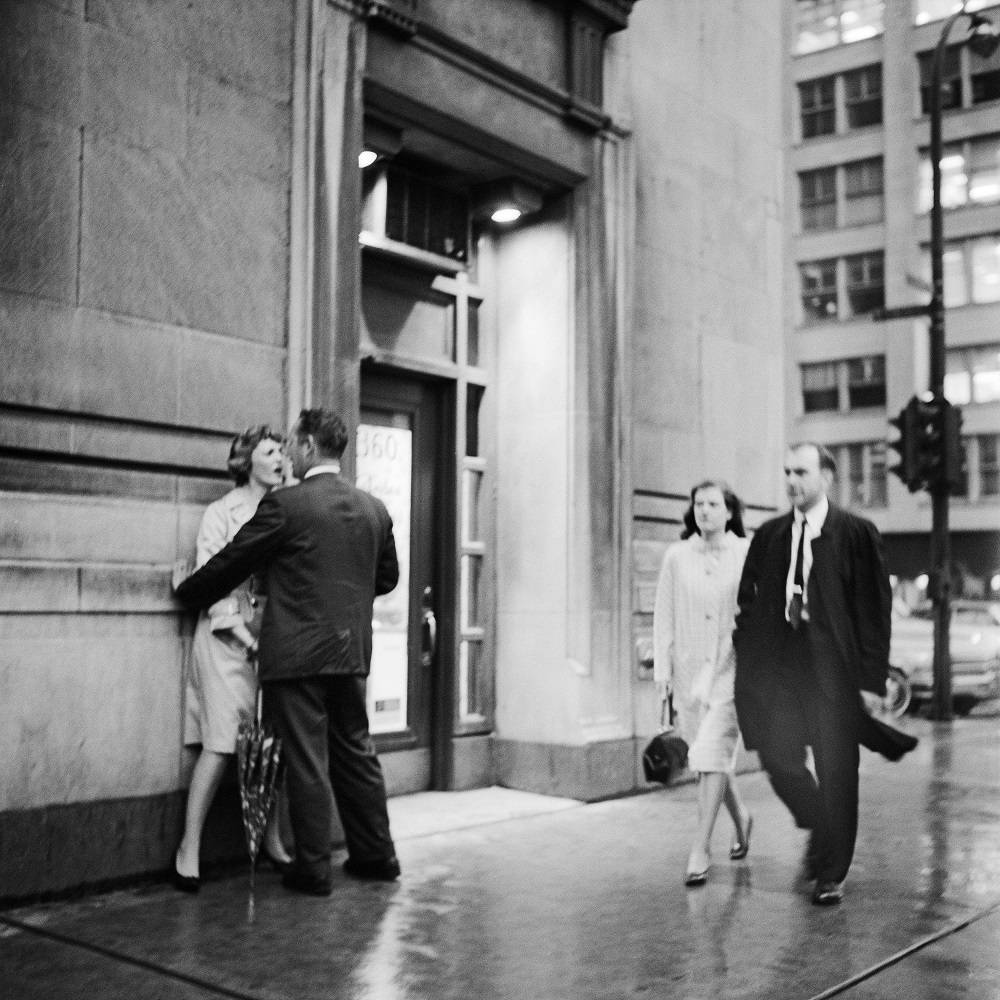
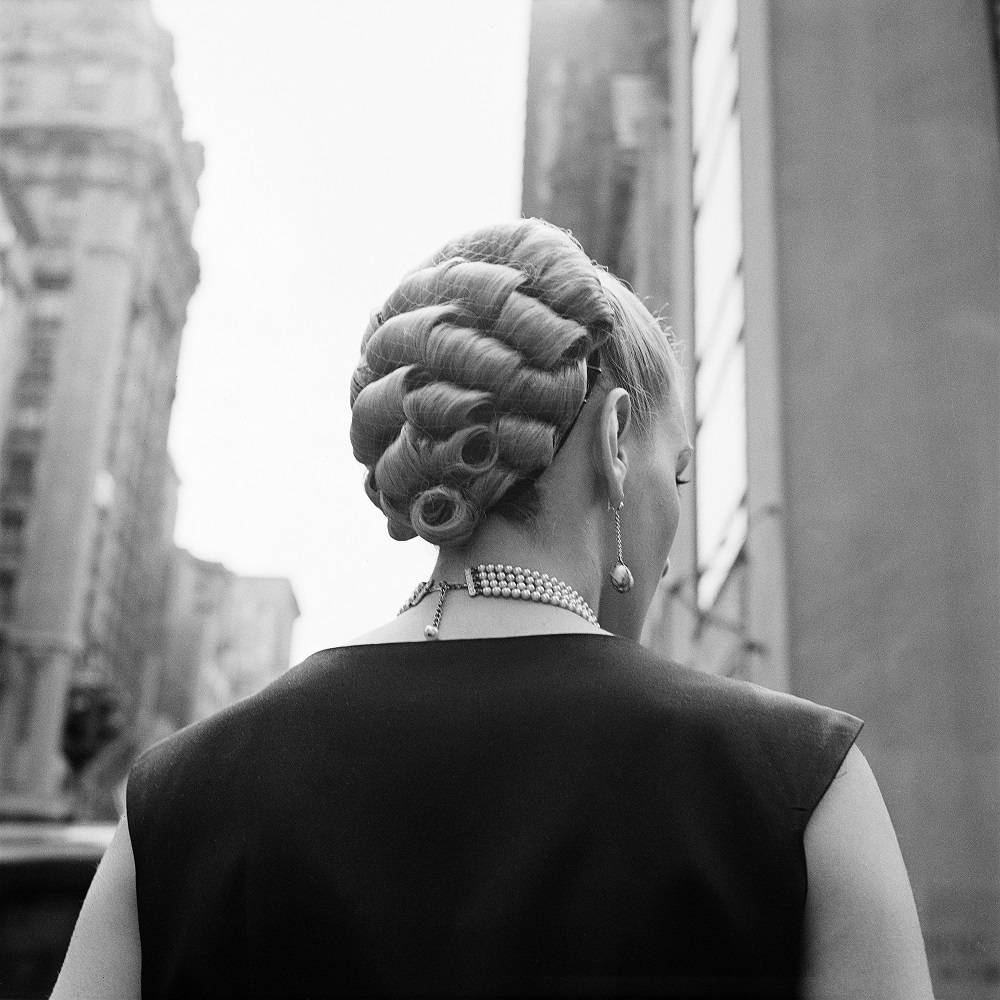
In New York as in Chicago, Vivian Maier also roams the streets in search of faces other than her own. His photographs then bear witness to daily life in the America of the Glorious Thirty. Like Henri Cartier-Bresson, Vivian Maier seizes the “decisive moment“. This expression refers to the fleeting moment, often a few seconds, when a photographer manages to capture a silhouette or a face through the density of the crowd. In front of the New York Public Library, while sitting on a bus in the mid-1950s, the artist captures the beautiful face of a young woman with a pearl necklace with a casual look. Attentive to the slightest movements of passers-by, she captures the facial expressions of the ladies dressed on Fifth Avenue. She also takes photographs the damaged faces of homeless people in Harlem. A hand slipped through her hair, a mocking smile, the spun stockings of a bourgeois woman…
Her photographs, sometimes full of humour, present so many fragments of life where details come to the fore. Through the streets where the crowd gathers, the nanny by profession makes an inventory of the unusual gestures of passers-by from the point of view of an ordinary walker. While her contemporary, Diane Arbus – from a wealthy New York family – expressly photographed the America of the marginalized, Vivian Maier – from a very modest background – is not interested in a particular social category. On the contrary, his position as an anonymous person imbues his photographs with a striking spontaneity.
Obsessive photographs with detailed composition
Vivian Maier, an outstanding collector, has many obsessions. While she photographs passers-by year after year, her attention is also focused on very specific objects such as newspapers or dolls, which she captures during her urban explorations. During the 70s, his fascination grew to such an extent that it resulted in many photographs of old newspapers left abandoned on sidewalks, benches and in garbage cans, treated in close-ups in the manner of still lives. She also focuses on urban landscapes, sensitive to vanishing lines as well as geometric and circular shapes. Old buildings, built at the end of the nineteenth century, give way at the time to new imposing buildings whose austere facades she captures. During her walks, she films the streets in super-8, multiplying panoramic views and tracking shots in order to capture the movement of a metropolis in full transformation.
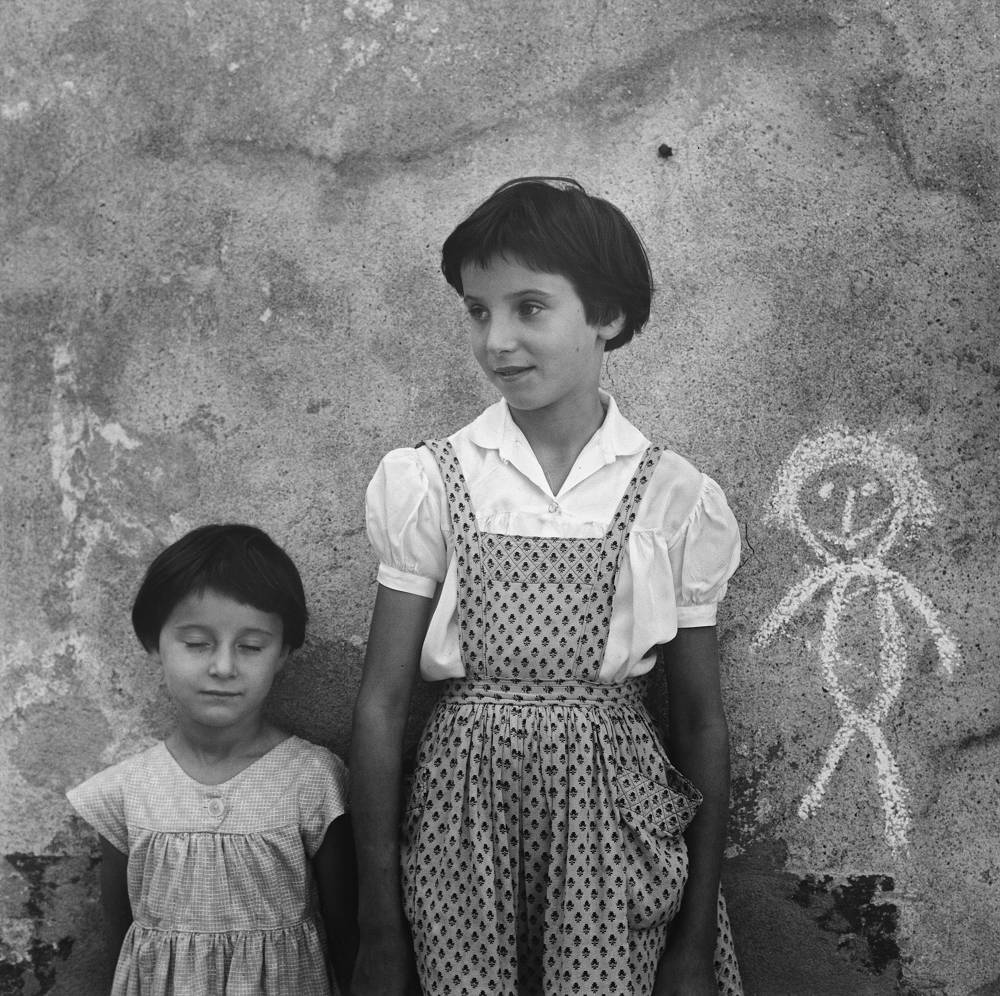
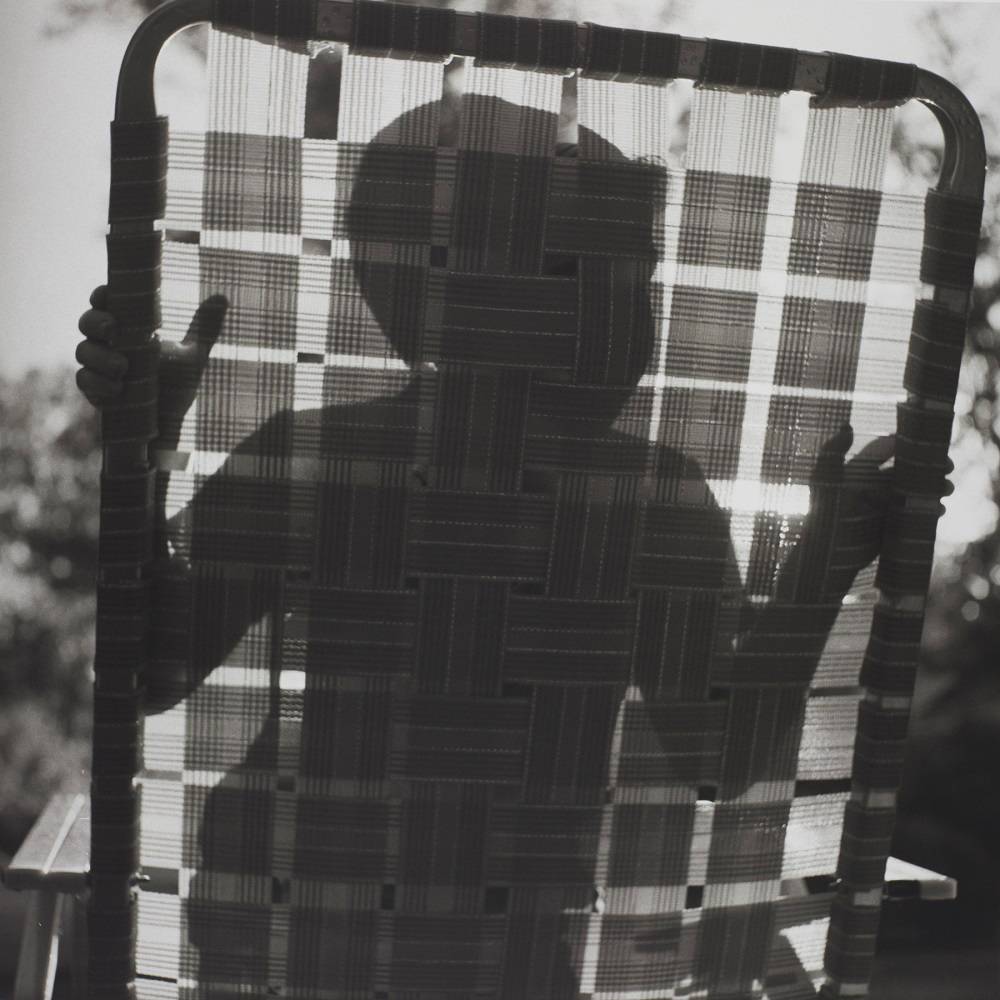
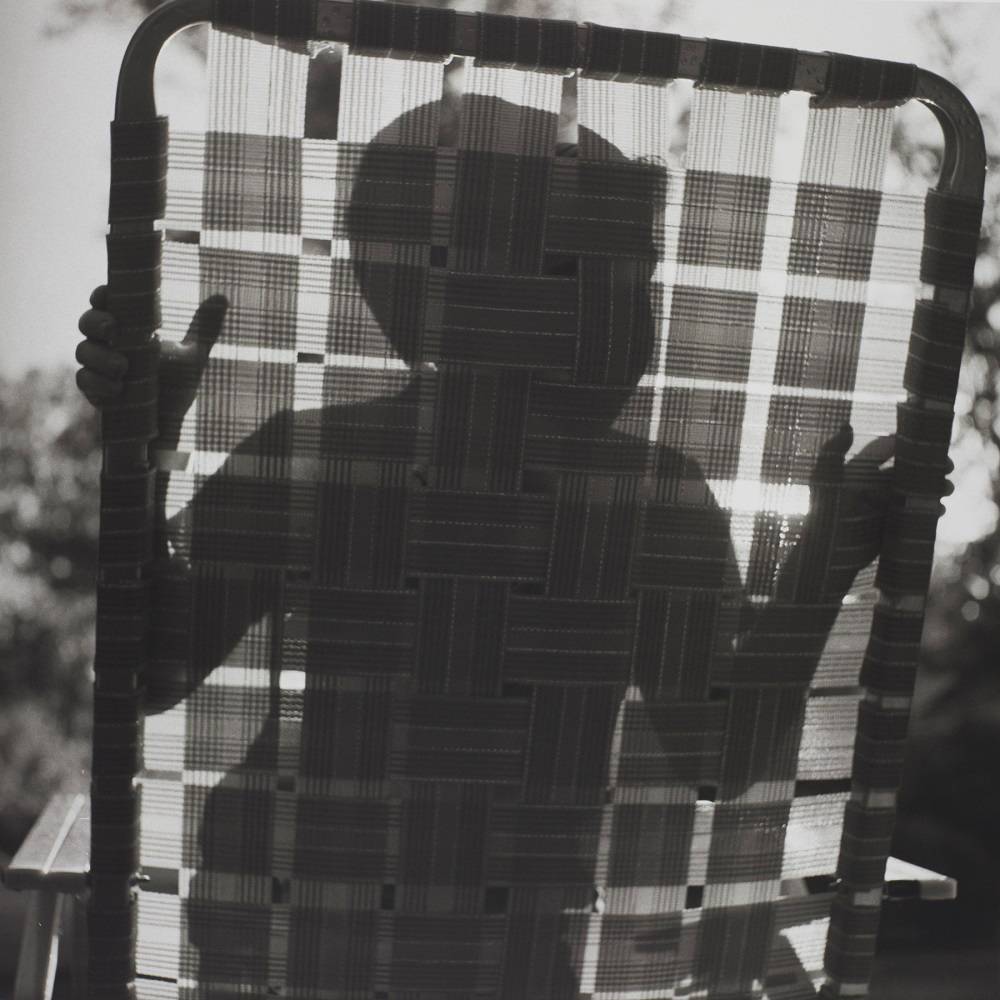
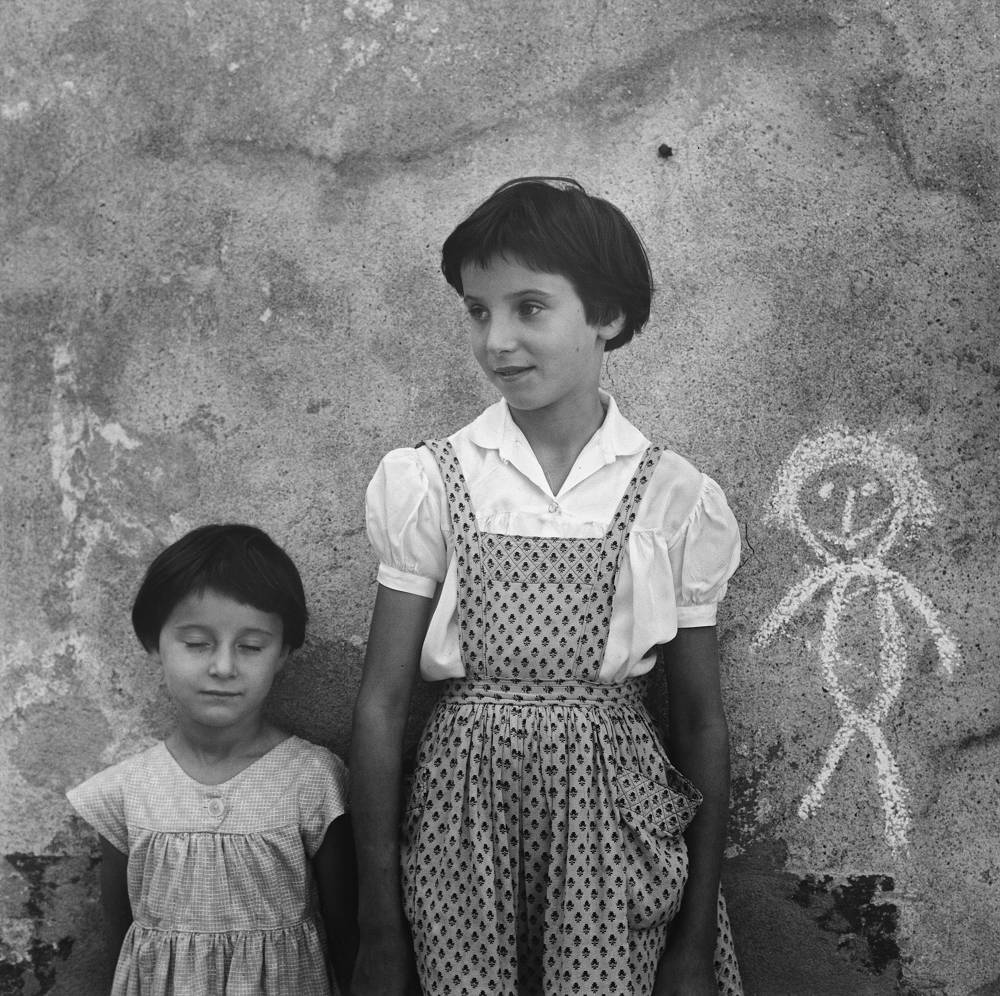
Regardless of the subject she is dealing with, the photographer attaches paramount importance to the framing of her shots and plays with textures and colours, precisely identifying the grids drawn by the shutters on the ground, the stripes of a garment or the cobblestones of the streets. But it is undoubtedly in the company of the children, whom she takes care of daily, that the artist seems to be most confident. Lulled by great tenderness, his intimate portraits of toddlers are enriched by more complex compositions, as evidenced by a series from 1960 that captures the shadow of a child drawn by the Chicago sun on a checkerboard chair.
In the last years of her life, however, the photographer grew tired of her activity as a governess. The manifestations of his negligence, such as during his outings to the park, even led him to be fired several times by his employers. Accompanied by the Gensburg family – whose children she had once looked after – until her last breath, she died in complete anonymity. Ironically, only a few days later, his photographs would emerge from the shadows to trigger a worldwide fascination.