7
7


How Pierpaolo Piccioli revisits Cristóbal Balenciaga’s legacy
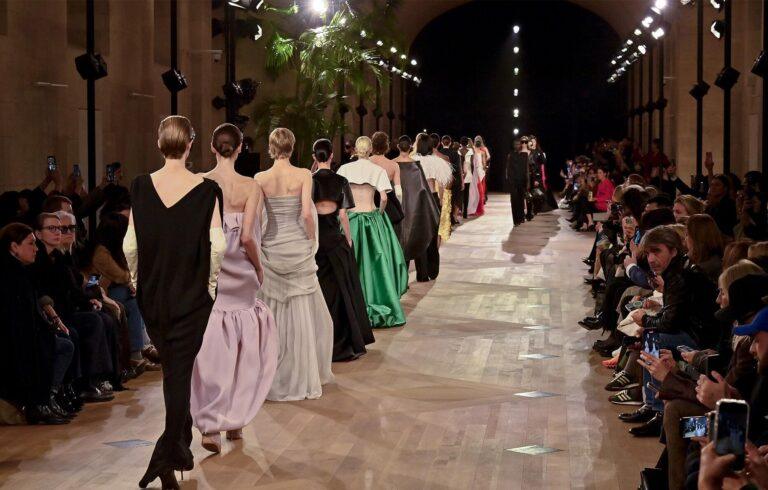
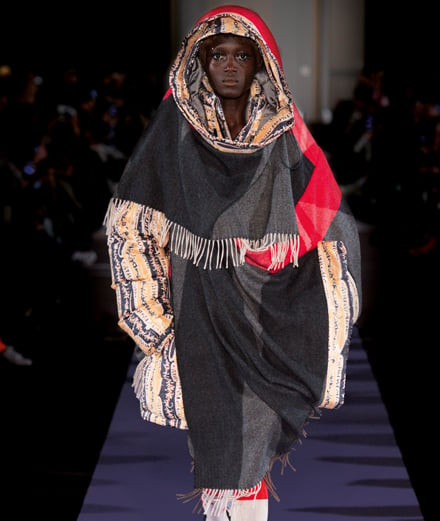
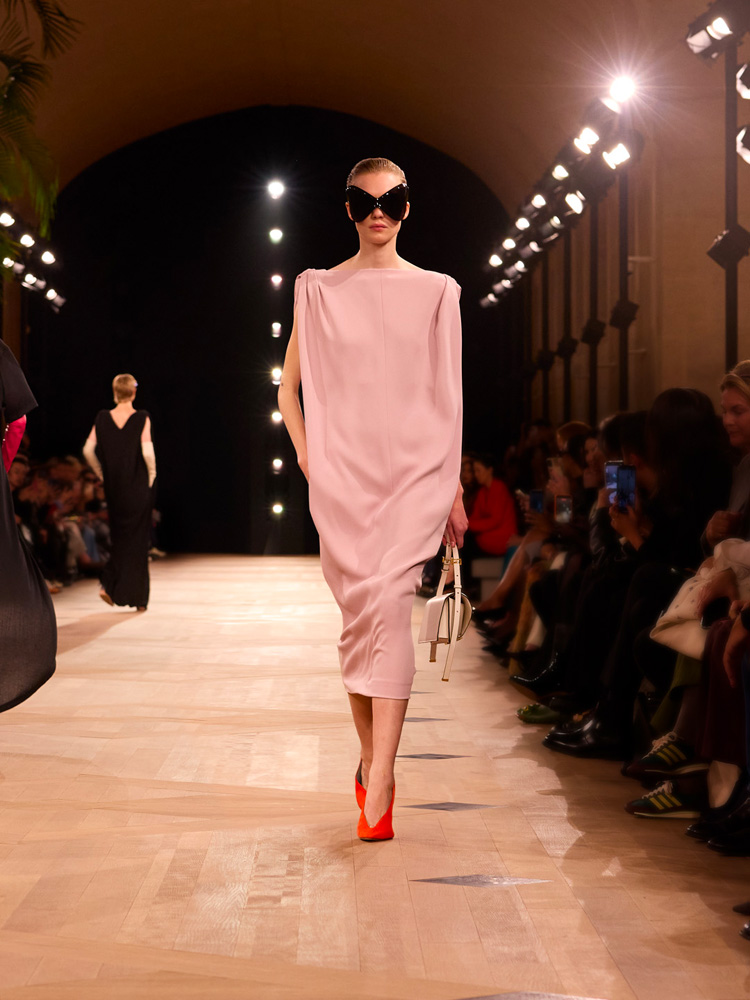
Appointed Balenciaga’s creative director in 2025, Roman-born Pierpaolo Piccioli unveiled his vision for the illustrious Paris fashion house this past autumn. Faithful to his poetic elegance, the designer’s Spring/Summer 2026 collection revisited founder Cristóbal Balenciaga’s formal audacity and sculptural inclinations, as well as his unique blend of ease and sophistication. Rather than a style, Piccioli proposed a philosophy of couture that sees it as a language of the heart, full of magic and emotion.
Interview by Delphine Roche.
Published on 7 March 2026. Updated on 9 March 2026.
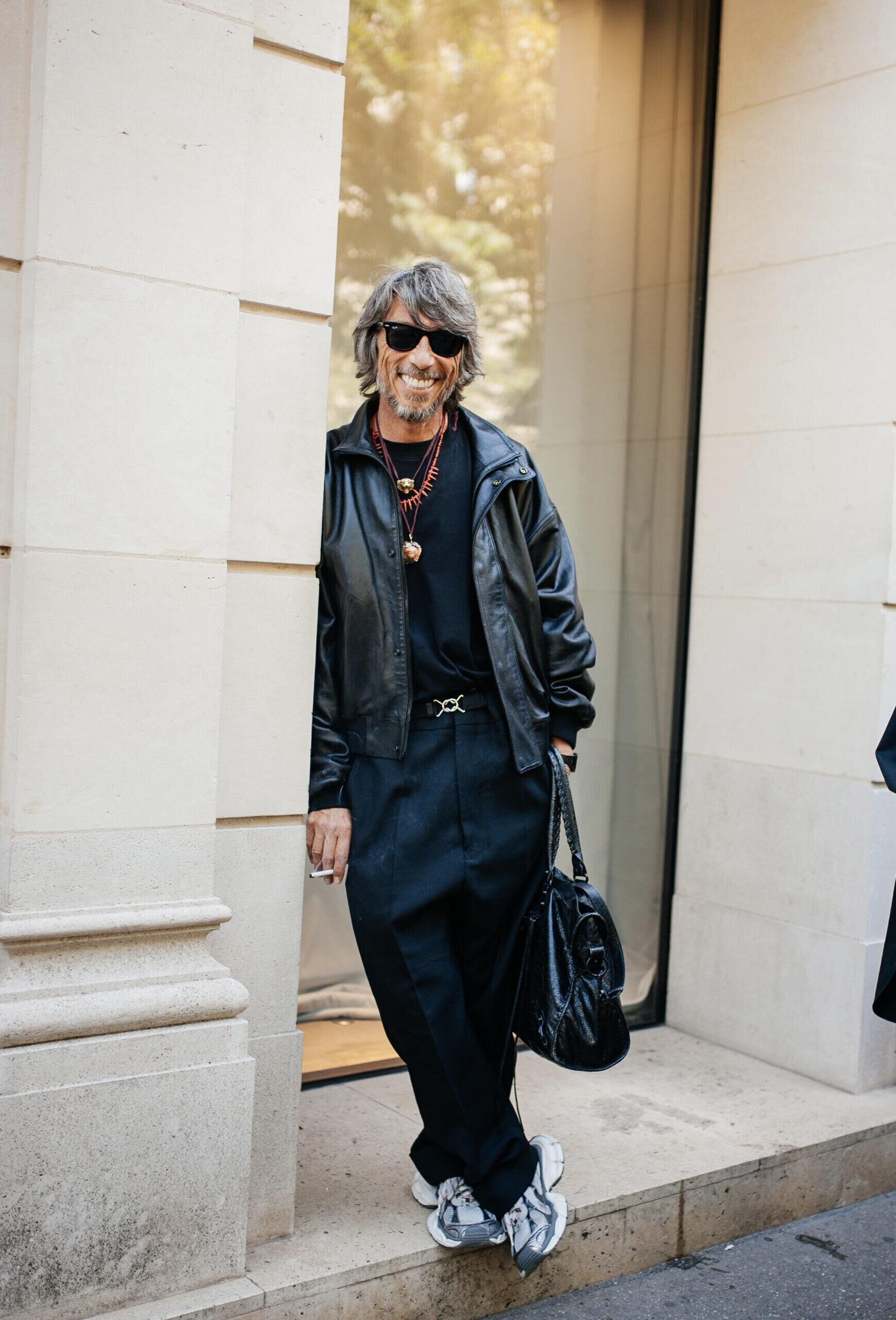
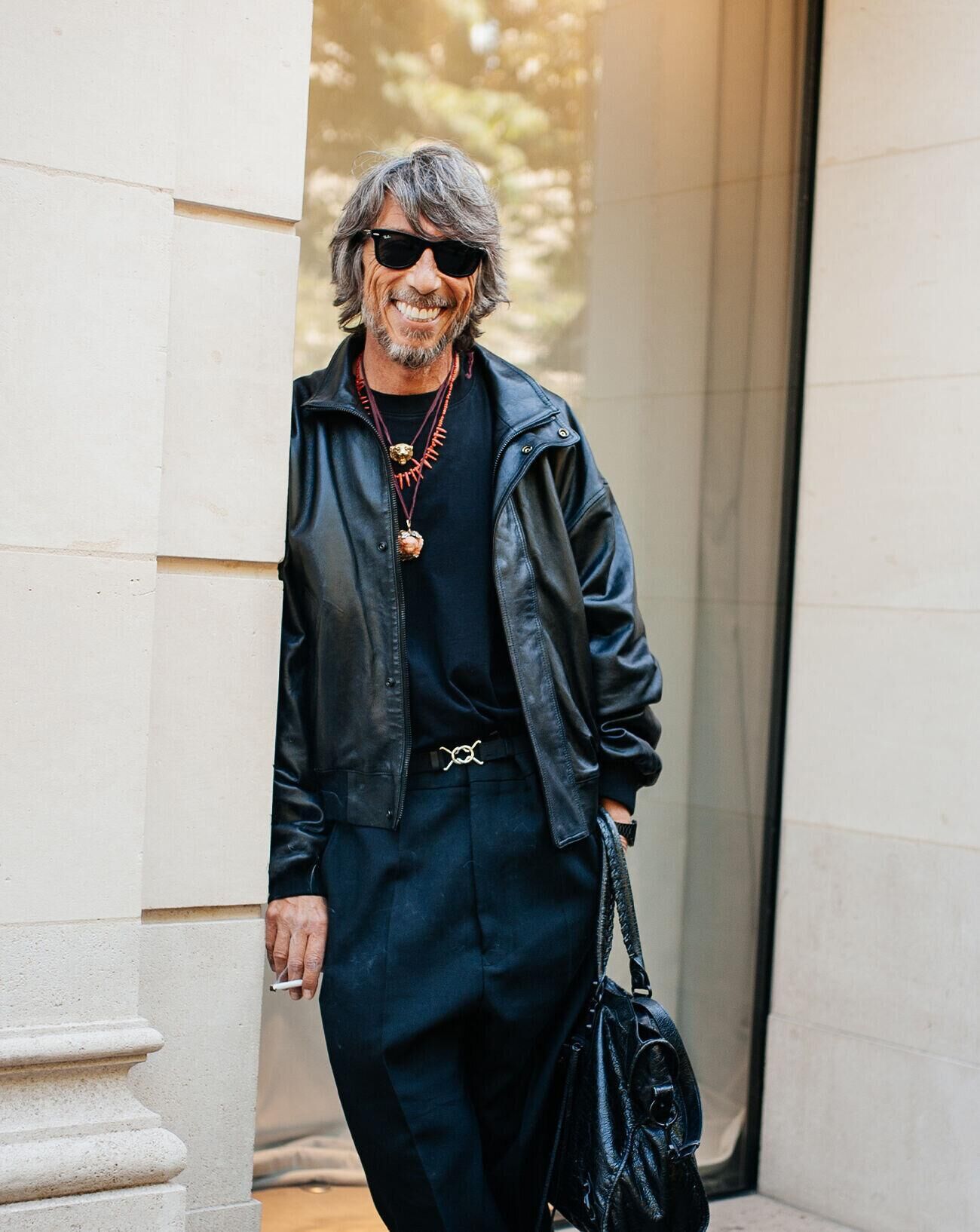
Pierpaolo Piccioli opens a chapter at Balenciaga
Numéro: How’s it going for you at Balenciaga?
Pierpaolo Piccioli: I feel I’m where I should be – it’s as though everything aligned so that I would land here today, at the right moment, just when I’ve learned to trust my intuition. When I was younger, I was very cerebral. Now, I think I’ve found the right balance between my instinct and my more rational side.
You’ve often said how much you were inspired by Cristóbal Balenciaga.
He was one of the very few who changed the way we think about fashion, tailoring, and volumes. He really achieved something, he was radical and truly innovative. Most couturiers are remembered for a particular silhouette. But, say Cristóbal’s name, and several silhouettes come to mind. Innovation was part of his method, of his way of thinking.
He’s often labelled an “architect,” which gives a false idea of his work as rigid and heavy. You, on the contrary, underline the lightness of his garments.
This lightness is one of the many things that inspire me in his work. He said that a couturier must be an architect for the forms and a painter for the colours. He thought like a philosopher, a sculptor, and a musician. Yet, he had no pretension of being any of those things, since art is autonomous, whereas fashion is subservient to the body.
Following in the footsteps of the “architect of fashion”
In your show notes, you mentioned how Balenciaga paid particular attention to the space between the body and the garment. If we accept that he was a sculptor, was it this space, this void, that he sculpted?
Absolutely. He didn’t produce his revolutionary shilhouettes by structuring the garment or stiffening the fabric. He studies the body’s freedom in the air around it. This vision arises from a true respect for the human being, and for me there’s nothing more important. Today, our culture is beginning to formulate an ethic of care that was too often absent in the past. It’s crucial to maintain this ethic of care and respect, while proposing a modern idea of beauty. At Balenciaga, the artistic directors who came before me, Nicolas Ghesquière and Demna Gvasalia, were both disruptive in their own way.
Today I get the impression that nothing is more disruptive than putting the human at the centre of your approach. As our culture is becoming ever more slick and the impact of artificial intelligence is growing, I want to talk about emotions, about the things that connect us at a profound level. With this job as creative director at Balenciaga, I can decide to promote a discourse that goes beyond the garment. I think that fashion can be political, that it can have a social impact. And, more than ever, as Barack Obama said in his last speech as president, we must fight for fundamental human rights.
Placing humans at the heart of the creative process
Is Balenciaga, with its workshop and all the talented people who make its heart beat, the perfect place to attempt this ideal of putting the human back at the centre of creation?
Yes, and I think that’s why I feel I’m a couturier. For me, couture is founded on human interaction, in respect. It’s about the body, not a mood board. Constructing a garment on the body is a very intimate affair, one that is rich in meaning. From my point of view, couture is a question of culture, of a way of thinking.
You then have to apply this approach to every product the brand proposes, and invest this love and care not only in the couture garments, which only a handful of people can afford, but also in the ready-to-wear and accessories. So it’s possible to keep the cool side of the brand while remodelling the culture of couture to adapt it to our times. At Balenciaga, I really want to marry the “cool” – which is a question of the real – with the beautiful, which I find is sometimes too distant from life. I want to create a beauty that’s close to life, to the human, to offer a different outlook on the world.
Casual attitude and sophisticated couture
At Valentino, you already demonstrated your unique way of blending a relaxed attitude with the sophistication of couture. Does this balance lie at the heart of your personality and your creativity? Yes, it is indeed very anchored in my way of thinking, this desire to make beauty less distant and more alive. The fact that I’m Roman is probably an important part of that. In Rome, you’re always looking at several strata of time at once: the antique, the baroque, and the contemporary. Statues of the Virgin sit cheek by jowl with the infernal traffic and chaos of the city. Beauty isn’t distant and absolute, it’s at the heart of the everyday. I have the feeling that Cristóbal Balenciaga was also moved by an idea of beauty that is alive, effortless, assured, audacious even, and allowing the body to move freely is part of that.
I’m from Nettuno, a small town not far from Rome [on the Tyrrhenian coast, in Lazio, ed.], and I recently came to realize that the fact I grew up on the periphery, far from the centre, allows me to see the world through a different lens. And I’ve understood that I want to maintain that point of view, because it defines me profoundly. I’m very much of the opinion that one should develop a particular point of view, a very personal vision, in order to bring something authentic to the world.
“I’m very much of the opinion that one should develop a particular point of view, a very personal vision, in order to bring something authentic to the world.” – Pierpaolo Piccioli.
When I started out at Valentino, I remember going through the archives and discovering that the garments weren’t quite what I’d imagined. I’ve always had a passion for the image, both cinematographic and photographic. It was through those media that I had been viewing the pieces. But, on seeing that they were different, I understood that my identity lay in this disparity. That’s why I’ve always insisted on maintaining my peripheral point of view.
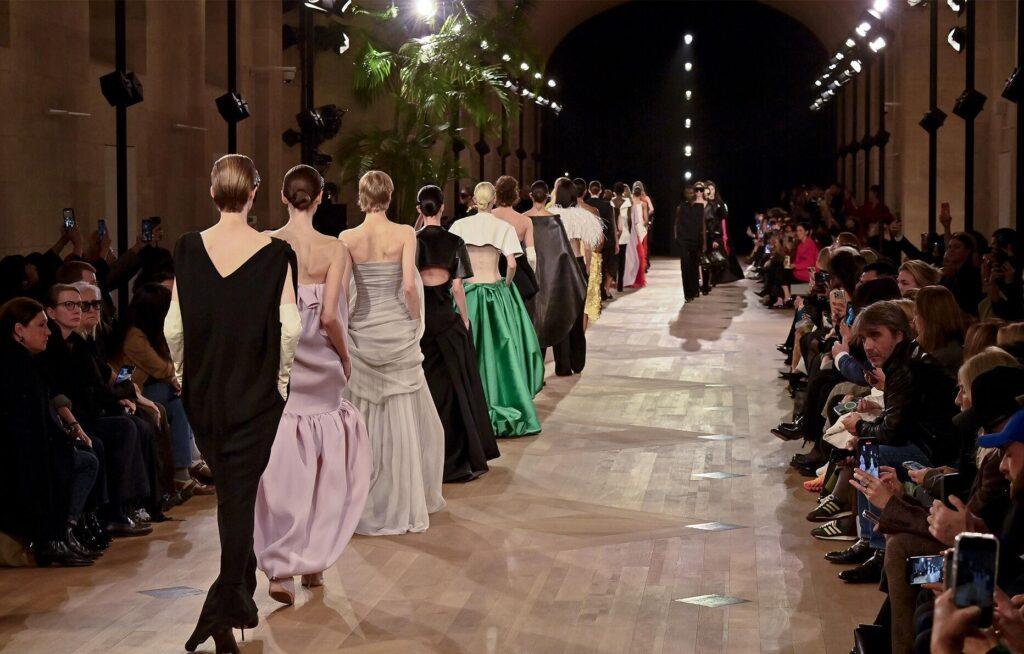
An attempt at understanding Cristóbal Balenciaga’s method
How does this peripheral point of view come through in your approach to designing clothes for Balenciaga?
I think that when you come from the periphery, you have a vision that’s at once close and distant. And it’s in the movement between these two visions that a very personal way of seeing things can come to the fore. When I arrived at Balenciaga, I wanted to see the archives and go to Getaria [Balenciaga’s birthplace in the Basque Country, where the most complete archives are kept, ed.]. It wasn’t so much in order to study the clothes themselves as to understand what drove Balenciaga to dedicate himself to fashion, and to try to understand his method.
My intuition was telling me that the austere, even severe image that is often associated with him had its counterpoint in a certain lightness and a way of putting the body at the centre of what he did, just as Leonardo da Vinci or Le Corbusier had done, the latter with his Modulor [an architectural system of standardized proportions based on the body, ed.]. It’s a typically Renaissance way of thinking, and in our current global context, I believe that that particular period of history, which sought to put the human at the centre of thought, has a lot to teach us [in contrast to the Middle Ages, which placed god at the centre of the universe, ed.].
“The austere, even severe image that is often associated with Cristóbal Balenciaga had its counterpoint in a certain lightness and a way of putting the body at the centre of what he did, just like Leonardo da Vinci. It’s a typically Renaissance way of thinking, and in our current global context I believe that that particular period of history, which sought to put the human at the centre of thought, has a lot to teach us” – Pierpaolo Piccioli.
People often forget that Balenciaga pioneered certain garments that have become fashion staples – the baby-doll dress, the sack dress, the cocoon coat, and so on…
Yes, and if people have forgotten it’s because the fashion world has the memory of a goldfish and only recalls what happened last week. Balenciaga was indeed behind many innovations. For my first collection, I wanted to avoid the trap of simply paying homage to him and instead try to combine his way of thinking with mine. This also has to do with the fact that, as I said earlier, I feel much more relaxed nowadays. I love my work, and I’ve understood that it’s a part of me and that fashion is the language through which I’m able to express myself. When I was younger, I needed to maintain very strict boundaries between my work life and my private life. Today that’s no longer the case. Now, everything is mixed up, perhaps in a rather chaotic way, but frankly, that’s okay with me, since it’s my own personal chaos.
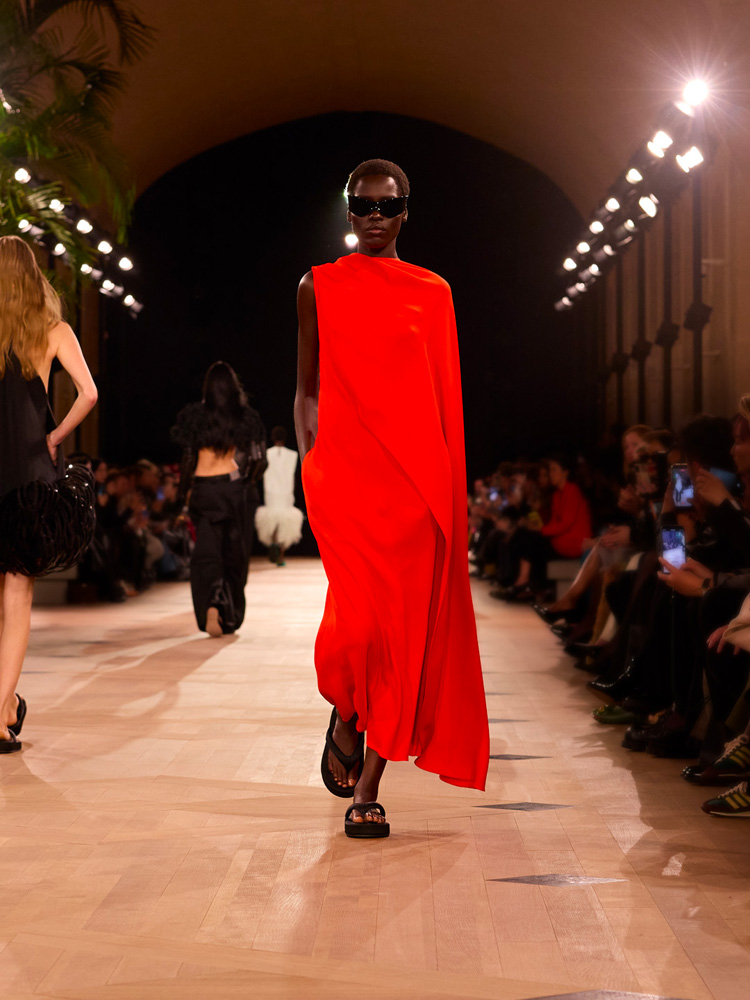
Moving from Nettuno to Paris
Is it this new relaxed mode that’s at last allowed you to leave Nettuno? The past few times I interviewed you, you told me it was very important for you to remain there.
I’ve understood that belonging to a place doesn’t actually prevent me from leaving it. I can always go back there, to the people who love me for who I am, to those who don’t see me as the “creative director” or as some kind of celebrity. Paradoxically, being emotionally attached to a place allows you to go far away from it, because there’s no risk of losing yourself. I had the feeling that I needed to take that step and move to Paris. I didn’t even think twice. And I feel perfectly in sync with myself. I travel in my mind between Nettuno and Paris.
Did you already have a vision in mind when you accepted the job at Balenciaga?
Not really. I asked myself what should be kept and what should evolve and how to project the brand into the future. Demna Gvasalia was truly innovatory, proposing a new generational image. But that was already ten years ago – we’re in another time now. For me, it wasn’t enough simply to propose a colour, a silhouette, or an attitude, I had to find my own method.
Pierpaolo Piccioli, a continuation from Valentino to Balenciaga
You spent 25 years at Valentino, so the way you reinterpreted that brand’s codes is now a part of you. What did you keep of that legacy when you left?
As I said earlier, it was at Valentino that I discovered that the disparity created by my imagination and my peripheral point of view constitutes my method. That’s part of me. So when it came to moving on, there was no question of leaving that behind. There is, of course, a continuity in my vision. Today I feel serene, and I think that this authenticity will resonate with others. Something personal, authentic, and in tune with our emotions will likely find more take-up than something that’s been over-thought. All the more so since fashion has become pop, which means we must be able to address a huge number of people. In such a globalized world, the very personal becomes more universal. You have to be able to tell your own story, because what connects us is our emotions and our dreams.
Neo-gazar, an interpretation of Cristóbal Balenciaga
In his quest to renew the forms of fashion, Balenciaga developed his own fabric, Gazar, which you’ve reinterpreted as Néo-Gazar.
Cristóbal Balenciaga needed a fabric that could sculpt a form while remaining lightweight. To start with, I wanted to understand how it worked from a technical point of view. Most types of fabric are made up of a single warp and weft, but Gazar has a double warp and a double weft, which is what gives it structure and also, paradoxically, lightens it. It’s like a kind of magic. I used the same method for both a cotton and a wool Gazar to make a chino that’s both very light and able to hold a form.
Those are some of the things you can do when you work with material properties rather than from a mood board. Materials are a whole story unto themselves. Here, “storytelling” – a word that usually tries to hide a gaping void – is very simple. It describes how a garment is made, and allows the creation of elegant, contemporary pieces that respect the body while still being sculptural. I’m not here to create a “lifestyle,” a community of people who have the same lamp or the same car, but rather a community of people who share the same values and approach to life.
A sublime first Balenciaga show on the verge of rupture and rebirth
Your first Balenciaga runway show was for the spring-summer 2026 ready-to-wear collection. Does couture produce a different emotion in you?
Designing a couture collection is a privilege that does indeed produce a special emotion. And that, in turn, is what produces emotion in the audience. If I didn’t feel that way, fashion would be just a job, but I prefer to hang onto my peripheral point of view and my enchanted vision. My ambition was never to be a cool designer. When I was starting out and still working for a small label, I remember going to the Paris fabric fair Première Vision.
I heard all the cool designers complaining that they couldn’t find anything interesting, and I understood that it was a posture, that they were conforming to a cliché. Personally, I don’t find that attitude terribly satisfactory. You can do wonderful things with very humble materials, because what counts is the way you love and transform them. That’s what couture is about: finding value in the human mind and hand. Not to mention the emotions. Because even if technical mastery can produce beauty, that isn’t enough for me. It’s the magic of fashion that interests me, for it’s that magic that produces emotion.