5
5


Interview with Theodora, phenomenal star of the We Love Green Festival
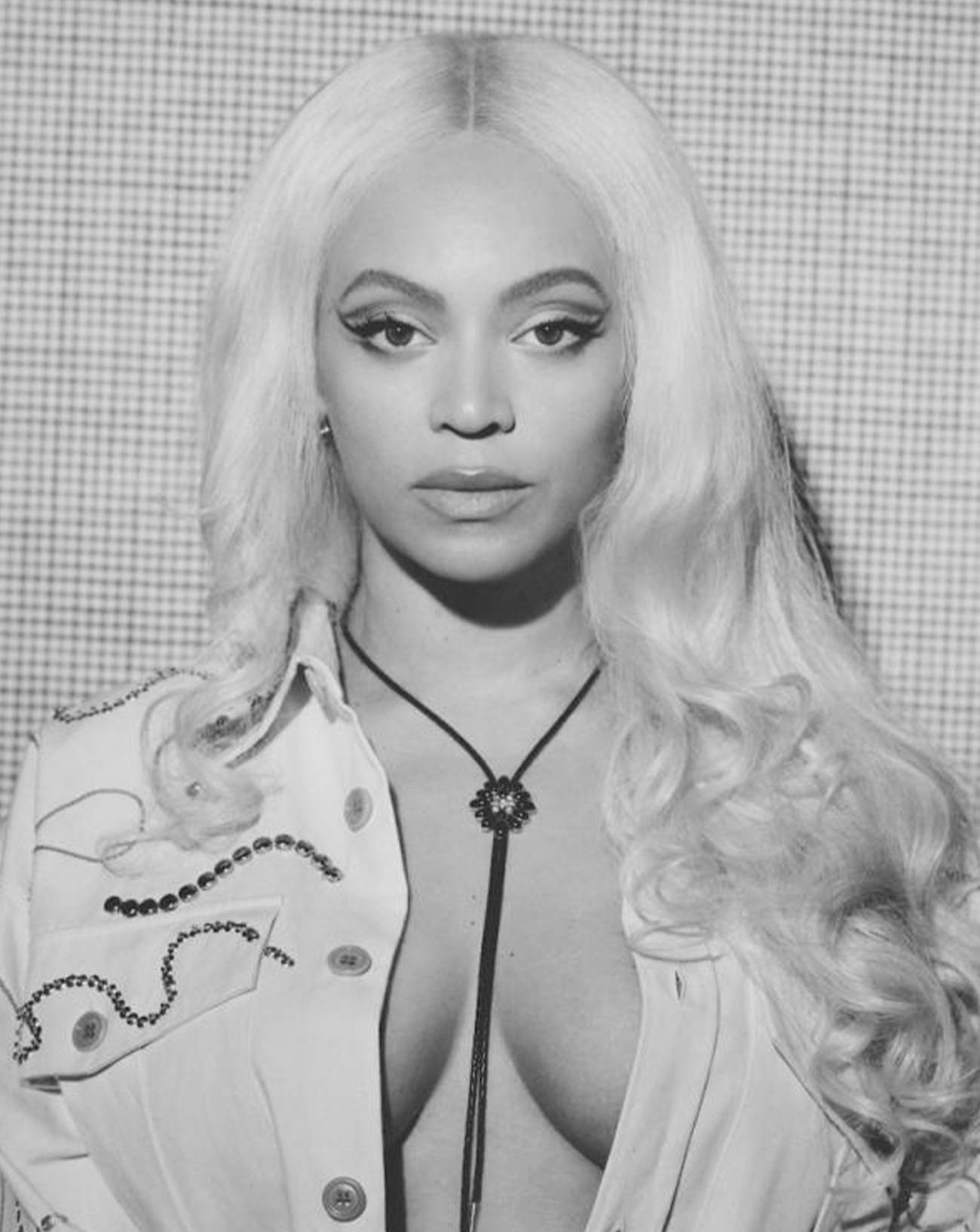
Theodora, 23, has already been racking up the streams with her Caribbean-inspired track Kongolese Sous BBL. In just a few months, she has established herself as one of the most striking voices on the French scene. Blending pop, bouyon, and unapologetic ego-trips, her reissue MÉGA BBL, released on May 30th, builds on the momentum of her mixtape Bad Boy Lovestory. As for her four concerts at the Zénith in Paris – from March 30th to April 1st, 2026 – they immediately sold out. Numéro met with the French-Congolese singer, who once dreamt of being a politician.
By Alexis Thibault.
Published on 29 September 2025. Updated on 5 June 2026.
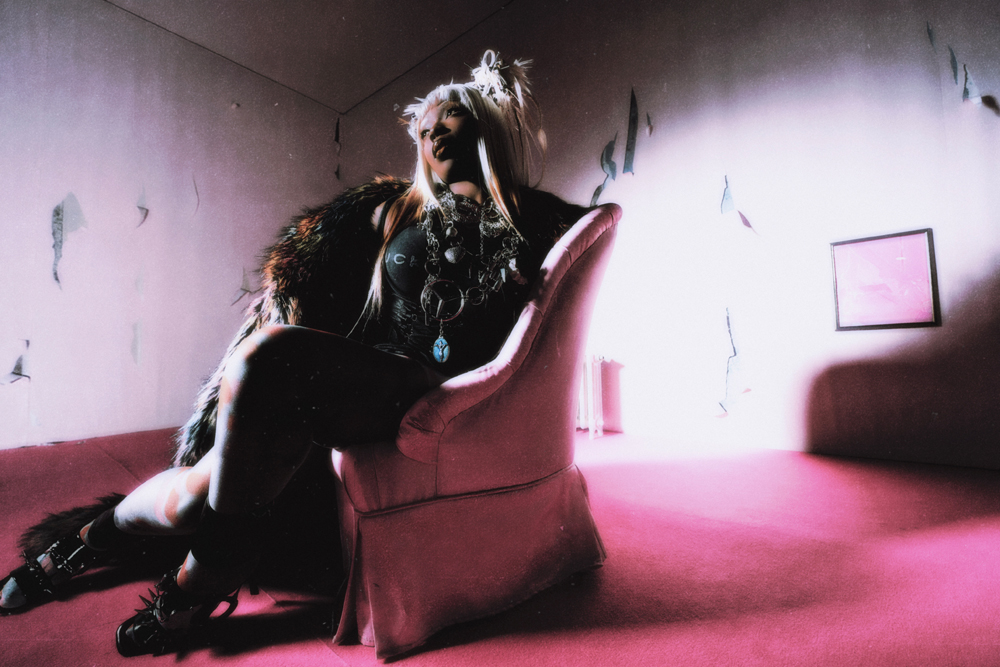
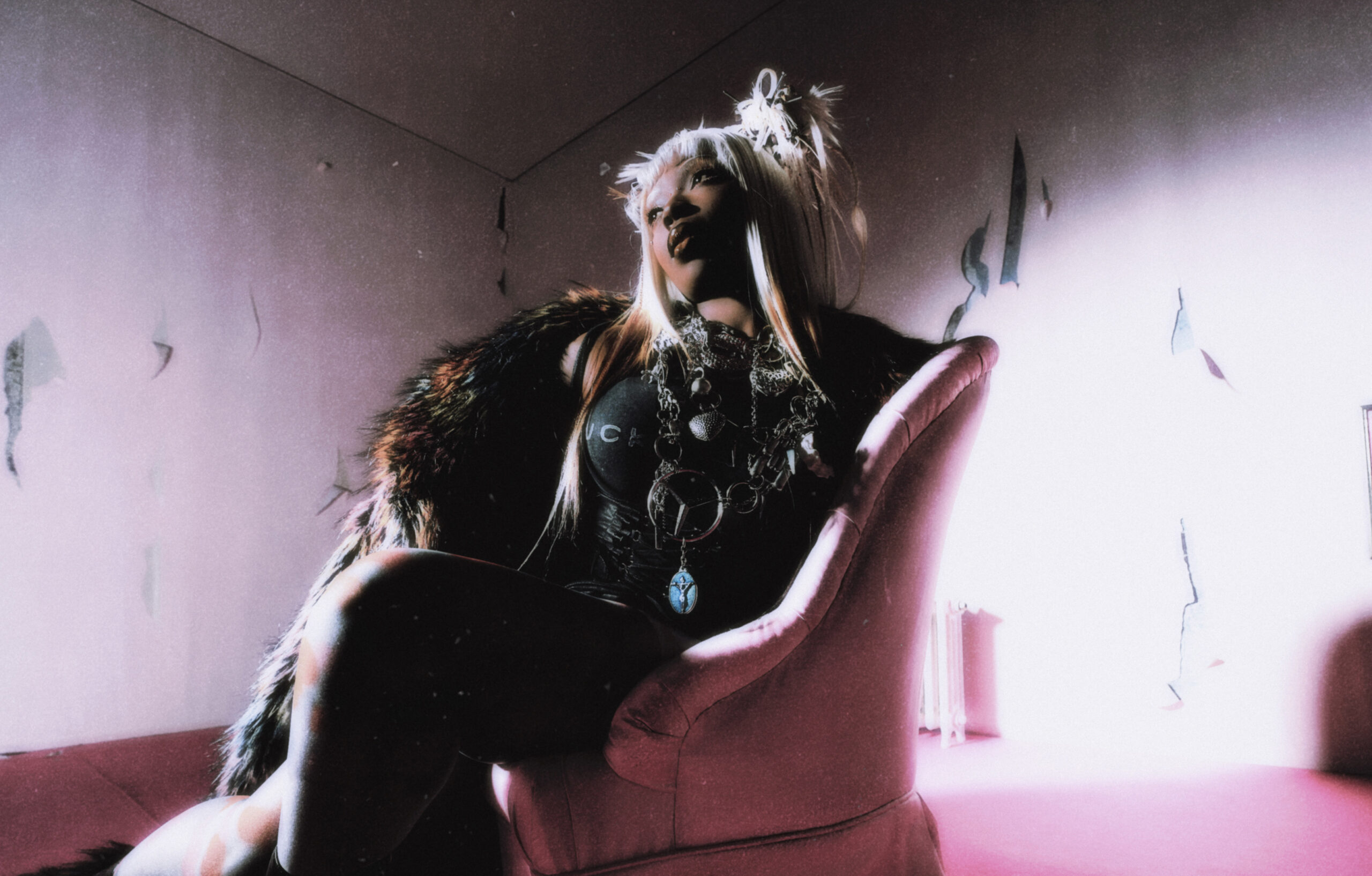
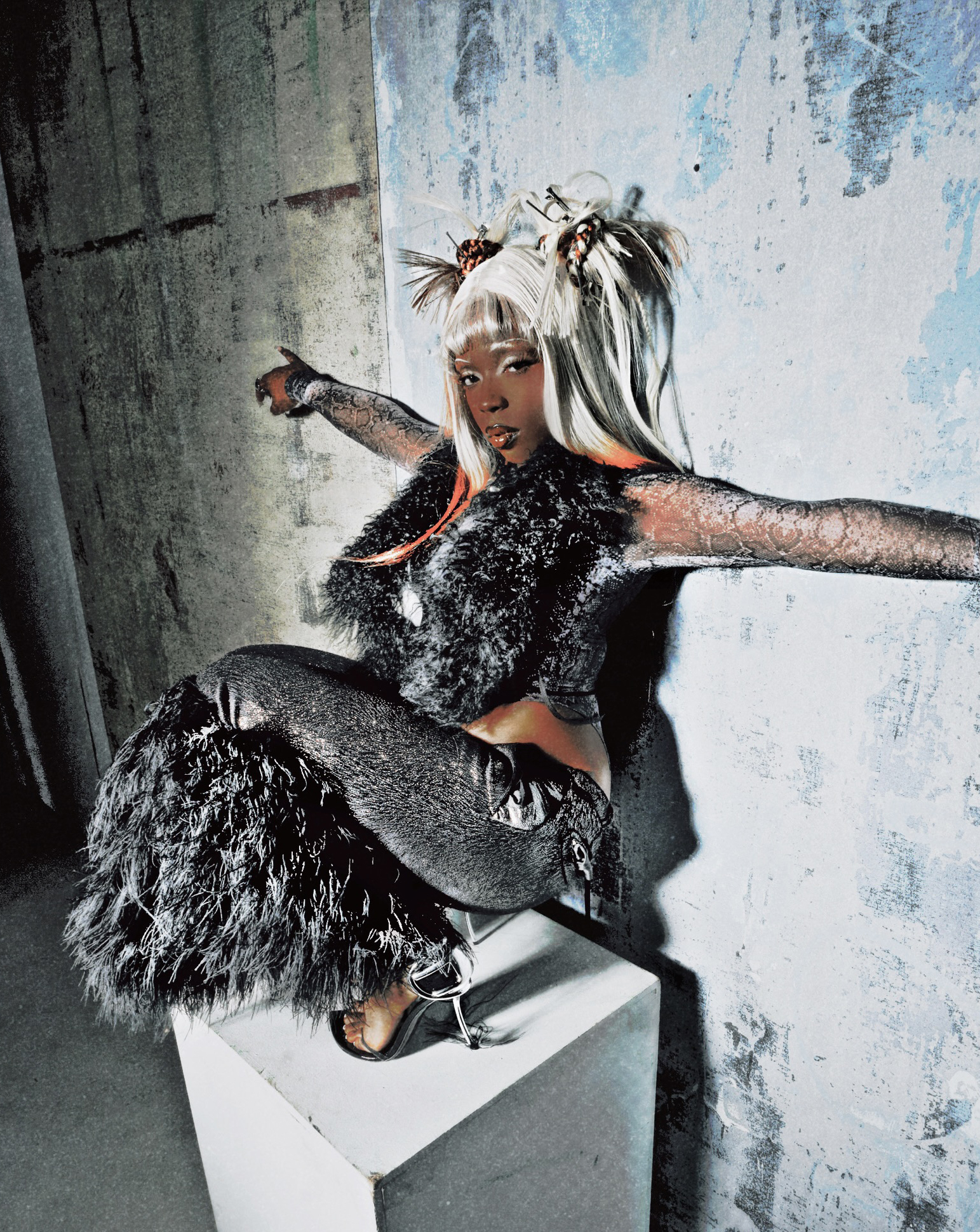
Theodora, the phenomenon who took social media by storm
If one had to pick an image to illustrate Theodora’s music, it would be a sun-drenched, purple-hued landscape. An idyllic setting in A4 format, with a few gloomy tones scattered here and there… This scenery would sum up everything the 23-year-old artist has already been through with her older brother, who works behind the scenes under the alias Jeez Suave. The latter composes every one of her tracks, including those on the mixtape Bad Boy Lovestory, reissued as MÉGA BBL on May 30th, 2025.
It includes Kongolese sous BBL, a brash, electrifying ego-trip track packed with sharp insights that, on closer listen, bring a freshness to today’s somewhat stagnant musical landscape. After hyperpop, rap and pure pop, Theodora now turns to West Indian bouyon – an irresistible music genre from the Carribean akin to a wild zouk with a dancehall vibe. A total hit. Her song Kongolese sous BBL was streamed several million times on Spotify.
Sold-out concerts at the Zénith in Paris, four awards at the 2026 Victoires de la Musique, a duet with PLK… The young singer has become a key figure on the French music scene. On May 12th, 2026, she will perform at the opening ceremony of the Cannes Film Festival.
An artist acclaimed at the 2026 Victoires de la Musique
On that photograph, there would also be the Eiffel Tower. That’s what she says. Because France is the place where Lily Theodora, her real name, finally settled with her family, after countless moves. Just a few months ago, her name was known to her followers only. Today, everyone is talking about this extravagant young woman appearing with a fuchsia headpiece in her music videos. A phenomenon born on social media, as is often the case today, with tracks that now soundtrack the videos made by sharp-eyed TikTokers.
Since then, Theodora has performed alongside pianist Chilly Gonzales, collaborated with singer Juliette Armanet, taken the stage at the We Love Green Festival, and released the stunning video Fashion Designa, which evokes both the iconic hero of Saint-Exupéry and Charles Laughton’s The Night of the Hunter (1955). On stage, she plays to sold-out Zénith crowds. She embodies an artist with a magnetic and unapologetic presence. Theodora breaks all the rules, making people dance as much as she makes them think. As the artist just won four awards at the 2026 Victoires de la Musique, let’s take a look back at our interview with the singer.
Interview with singer Theodora
Numéro: Let’s say we lived in a world where music didn’t exist, in which field would you have excelled?
Theodora: I’ve been fascinated by politics since I was a child. My grandfather was a passionate political opponent. As a matter of fact, he got all his children involved. We eventually all became fierce political opponents. He even ended up in prison, you know.
Tell me more about it.
My mother always taught us a very strict rule: If someone insults you at school, you must stand up for yourself, you have to respond. Never come home just to complain. As for me… I had a desire to change the world. I attended a prep school to enter the ENS (École Normale Supérieure), became a member of the Brittany regional council, and chaired a culture commission. Eventually, I changed course and left politics behind. Even now, I think there’s a problem with how memories are passed down. We think about it, then suddenly we realize we don’t really know much about our parents’ lives…

“My father came from a very poor family. So did my mother. But they were both very educated.” – Theodora
Your parents were political refugees, is that right?
My father came from a very poor family. So did my mother. But they were both very educated. My grandfather, the one I mentioned earlier, was a member of the Union for Democracy and Social Progress (UDPS) [a party founded in 1982 by Étienne Tshisekedi, former Prime Minister of Zaire, the name of the Democratic Republic of Congo under Mobutu]. He was a lawyer and an opponent of President Joseph Kabila [in office from 2001 to 2019]. At the time, my father joined the army to go on a study-abroad program. He went to Greece, but once he got there, Mobutu was overthrown.
What happened then?
All the military students were left on their own by the government. There was no more money, nothing. So my father decided to put his studies on hold. Well, this is the part where I start to have memory lapses that make it hard to tell the story properly… In any case, he moved to Switzerland two or three years later. I was born there. If I’m not mistaken, I think we didn’t even have the refugee status in Switzerland, but were classified as “undocumented.” In the meantime, we went back to Greece, spent some time in La Réunion, and finally ended up in France, in the Saine-et-Marne (a French department).
“People quickly understood that I truly mean what I say in my songs.” – Theodora
In a previous interview, you mentioned that most radio stations and many media outlets in general aren’t available to Caribbean artists. What did you mean by that?
I mean that it is a form of racism. If your music isn’t in the Top 50, radio stations won’t play it. And very few tracks by African and Caribbean artists make it onto that chart. Listening habits are different over there. People use YouTube more than Spotify, for instance. I think it’s also a matter of language, as if Creole had no place on national radio…
On that note, how would you explain your music to a ten-year-old girl?
I’d start by forbidding her from listening to some of my songs… Because I think there’s a specific time for everything! [Laughs.] There’s an age when you discover or say certain things… I think my brother and I are trying to bring together everything that defines us in this music. To inject all the pop influences we’ve absorbed so far into it. Our music is like an identity card. We don’t want to hide our attempts. I’m talking about the less successful stuff, you know? Sometimes we lose our way because we want to prove to people that we’re also capable of making pop music.
Like the track Un meilleur nous (“A better us”), which really stands out from the rest of the album and recalls the syrupy pop hits of the 2000s. It’s funny how you are so different in real life. I would never have pictured you like that. What do you think people like about you?
I think that my audience appreciates the authenticity of my voice. People quickly understood that I truly mean what I say in my songs. Maybe it has to do with the way I sing… For a long time, people didn’t understand what I was saying, even though the lyrics were very important to me. So I asked them: “But what do you like then, if you can’t understand a thing?” And they said: “That gloomy thing that comes from your heart.”
If your face could be displayed on a giant billboard in the city, which fashion house would you want to represent?
Oh! I’m not sure. Probably a brand that would make me feel free. I’d need something a bit wild. I think I really like Balenciaga for its offbeat, deceptively underground vibe…
Mega BBL (2025) and Miss Kitoko (2026) by Theodora, available now.