3
3


Vivienne Westwood, the pioneer of ethical fashion
Following in the wake of legendary British designer Vivienne Westwood, a young generation of designers is reinventing fashion through the prism of ecological and ethical values, putting the accent on craftsmanship, upcycling or new methods of sustainable production. Numéro shines a light on environmentally conscious pioneers, starting with Vivienne Westwood.
By Léa Zetlaoui.
Published on 6 June 2019. Updated on 3 June 2026.
The grande dame of fashion, well-known for her distinctive designs playing with the codes of punk and Britishness, Vivienne Westwood is also renowned as a pioneer of sustainable clothing. Nine years ago she discovered James Lovelock’s Gaia hypothesis, which views the biosphere as a living being and all its inhabitants as organs of Mother Earth. Since then, the British designer has been working for the protection of the planet and ecosystems, seeking to raise awareness, particularly through her digital publication, climaterevolution.co.uk.
Over time, her commitment has intensified, to the point where today she is just as well known for her historically inspired collections as for her ecological militancy. One of her best-known slogans is “buy less, choose well, make it last.” A call for reasonable consumption in fashion and everywhere in general. Practicing what she preaches, Vivienne Westwood is herself setting an example by slowly transforming her brand via the use of recycled or eco-friendly fabrics and environmentally sustainable production methods.
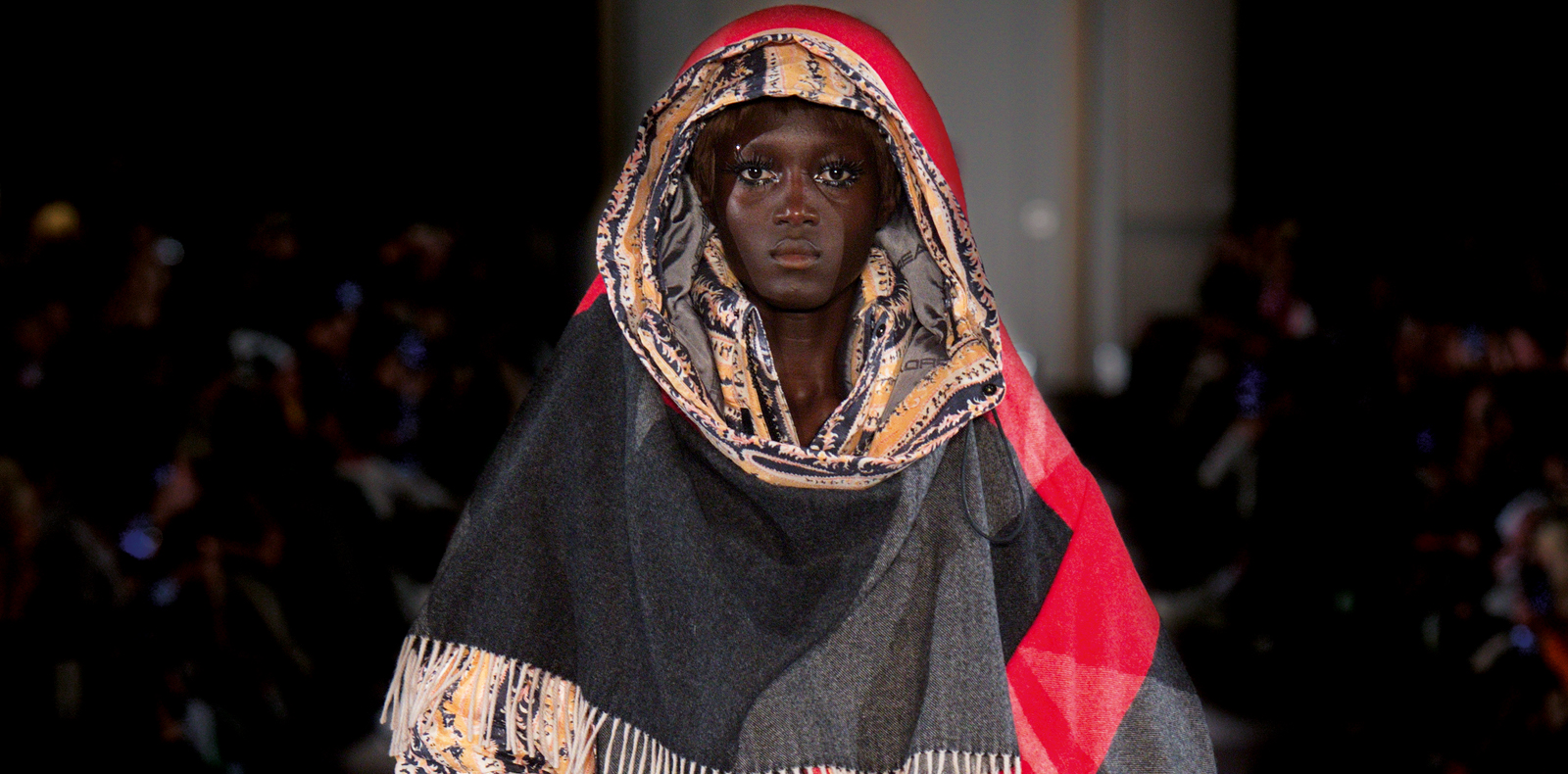
In her collections, one can find organic linen and cotton being used for T-shirts, hoodies and trousers, bamboo fiber for certain shirts. Her precious and colourful jacquards are made with cellulose acetate produced from wood fiber sourced from a reforestation program. Close to the charities Greenpeace and Peta, the iconic designer actively campaigns through positive actions, viral videos and fundraisings.
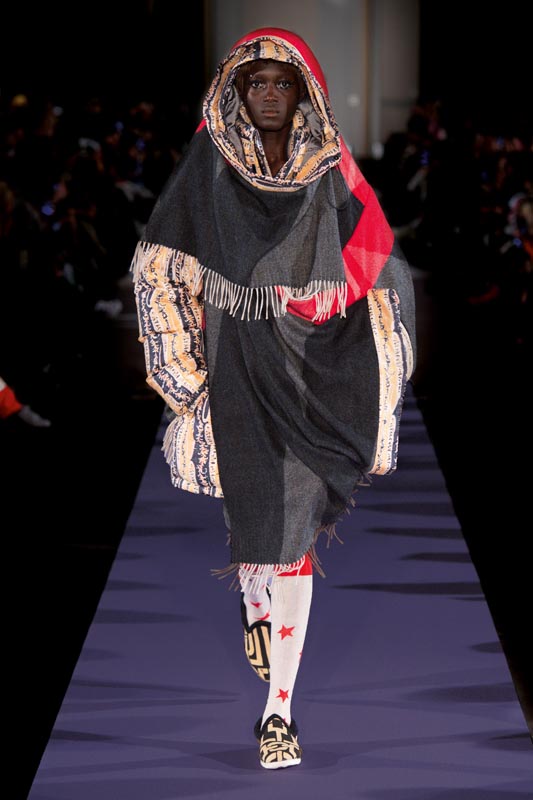
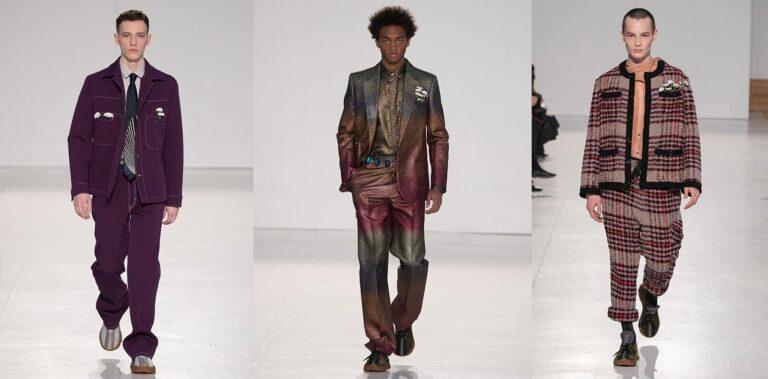
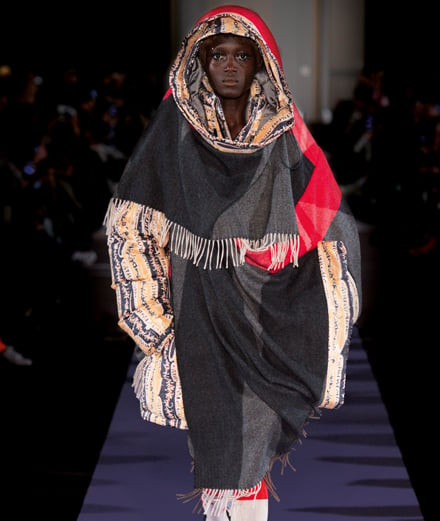
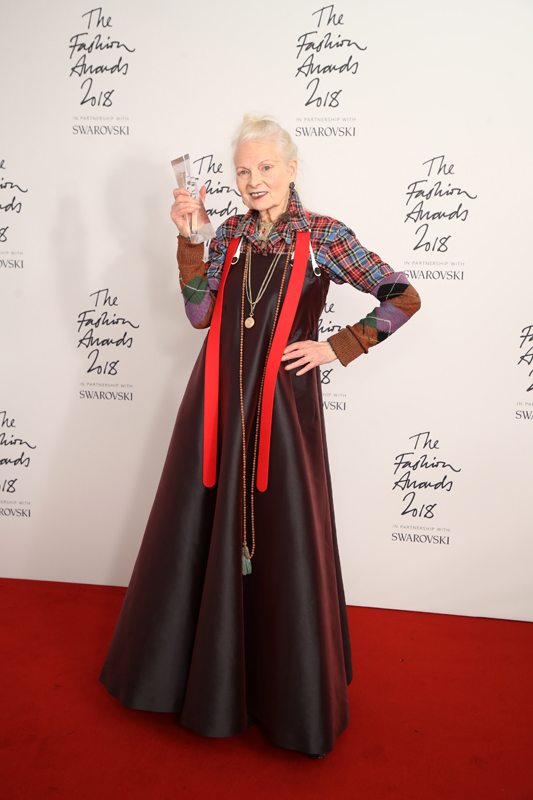
In December 2018, the fashion industry finally recognized Westwood’s exceptional personal involvement and strong commitment, awarding her the Swarovski Award for Positive Change at the British Fashion Awards. That prize celebrated both her iconoclastic collections and her many years of social and societal activism. Naturally, the designer is not sitting back on her laurels. At London Fashion Week, she put on a demonstration-like runway show during which questions about climate change and sustainable development rather stole the limelight from the collection (which was just as radical as always).
A few weeks later, for International Water Day, her Paris shop hosted an event that mixed art, fashion and sustainable development, with an exhibition showing monumental aquatic canvases by César Bardoux, and the sale of a steel water bottle, created in partnership with 24Bottles, as part of the fight against plastic pollution and in favour of preservation of the Earth’s water resources. Through her various commitments, Vivienne Westwood has opened the way for a new generation of designers who care just as passionately about the planet.