9

9


3 takeaways from the Schiaparelli Fall/Winter 2026-2027 show
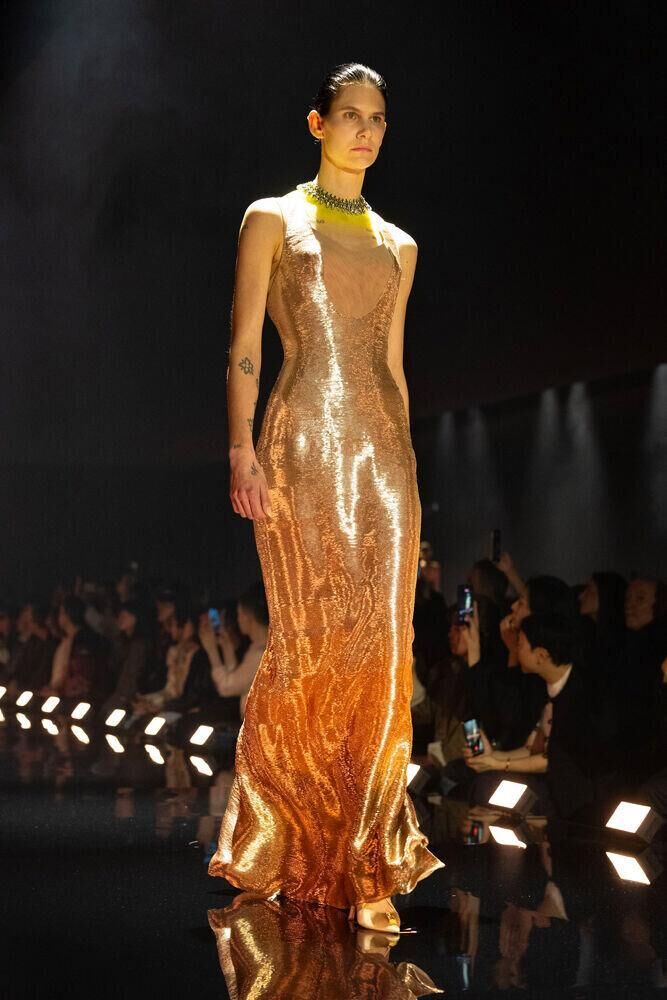
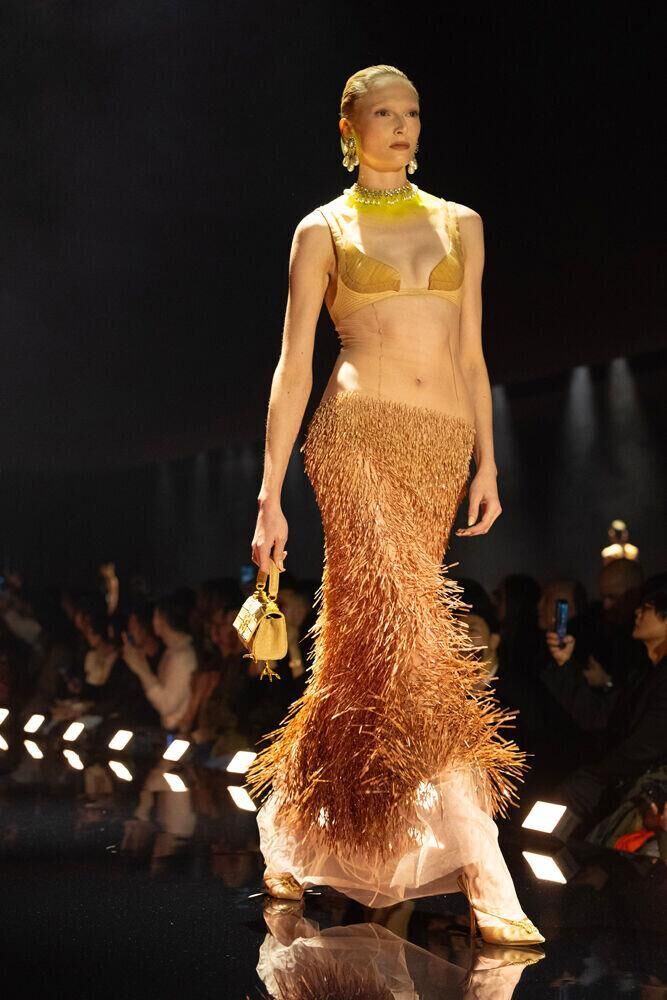
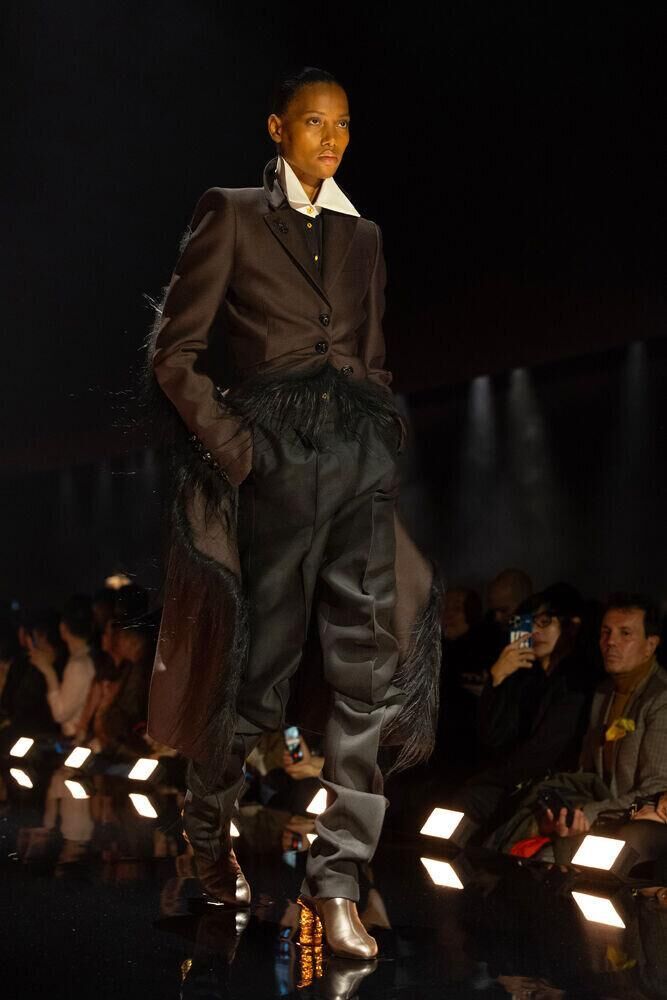
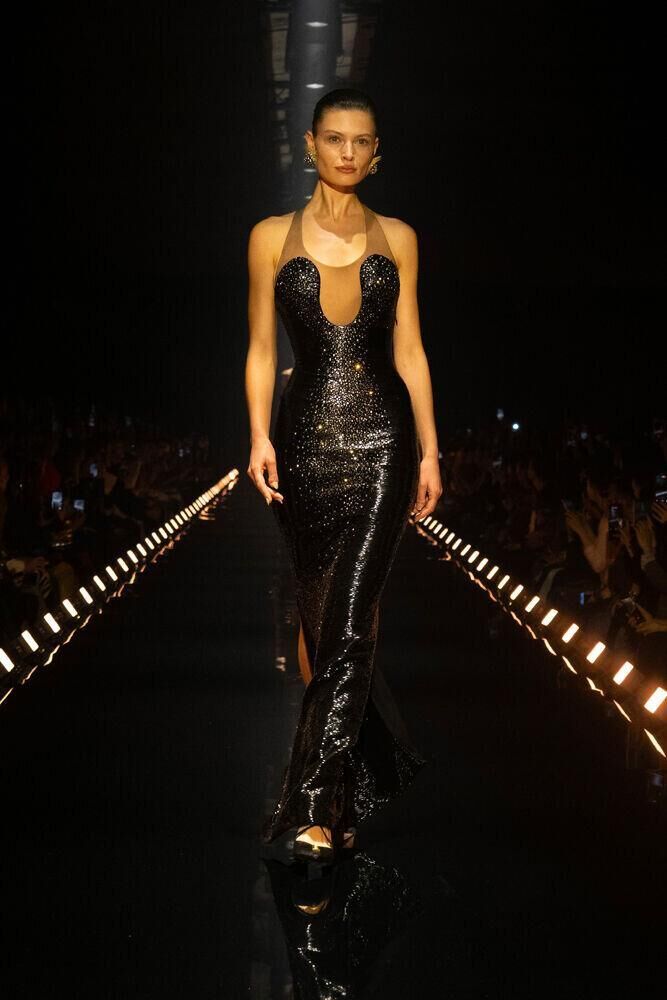
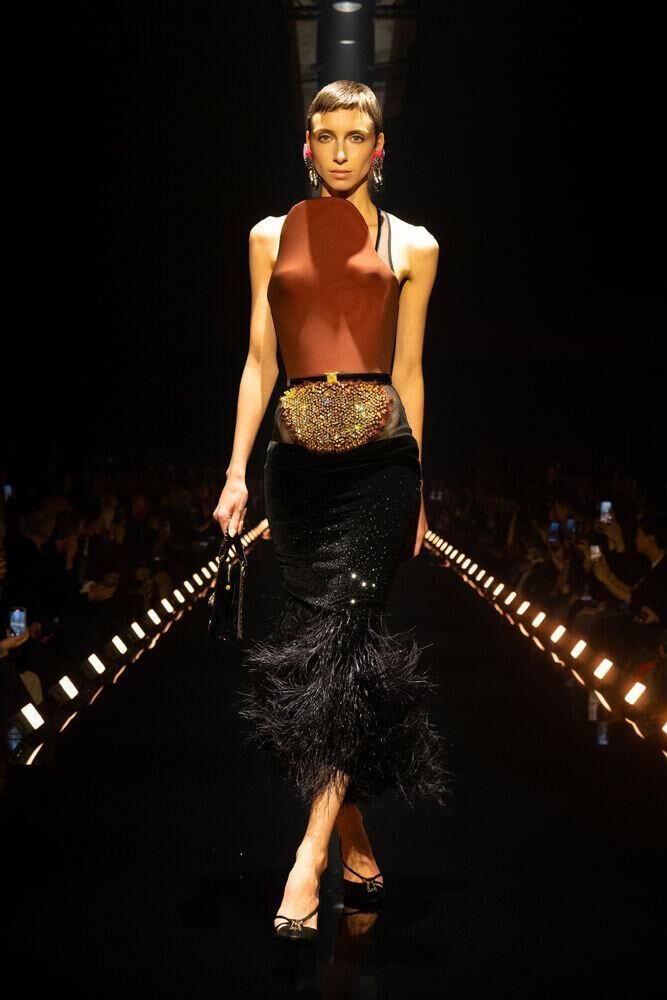
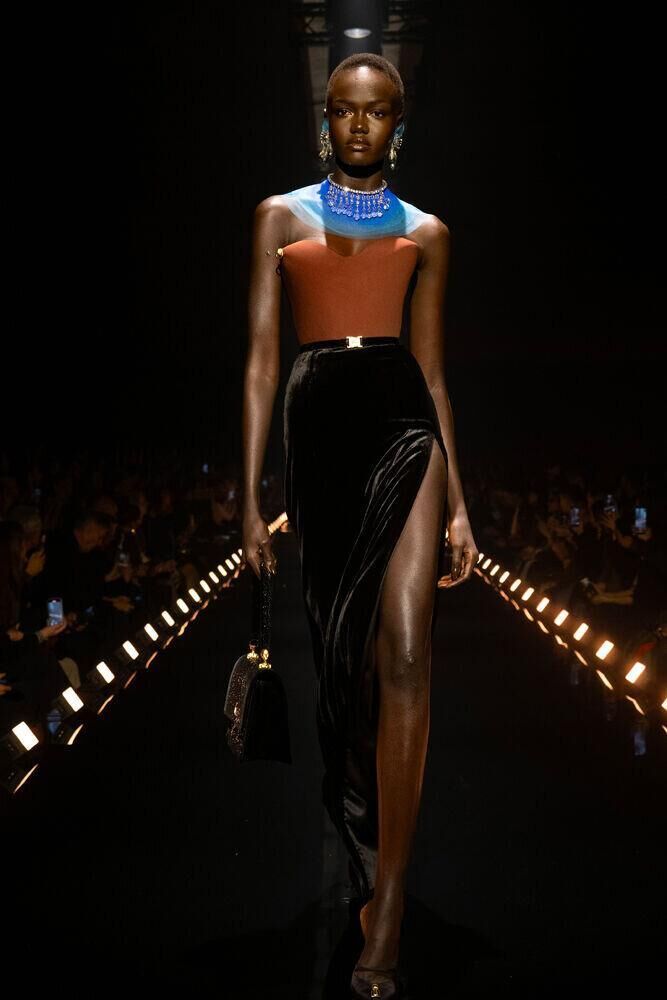
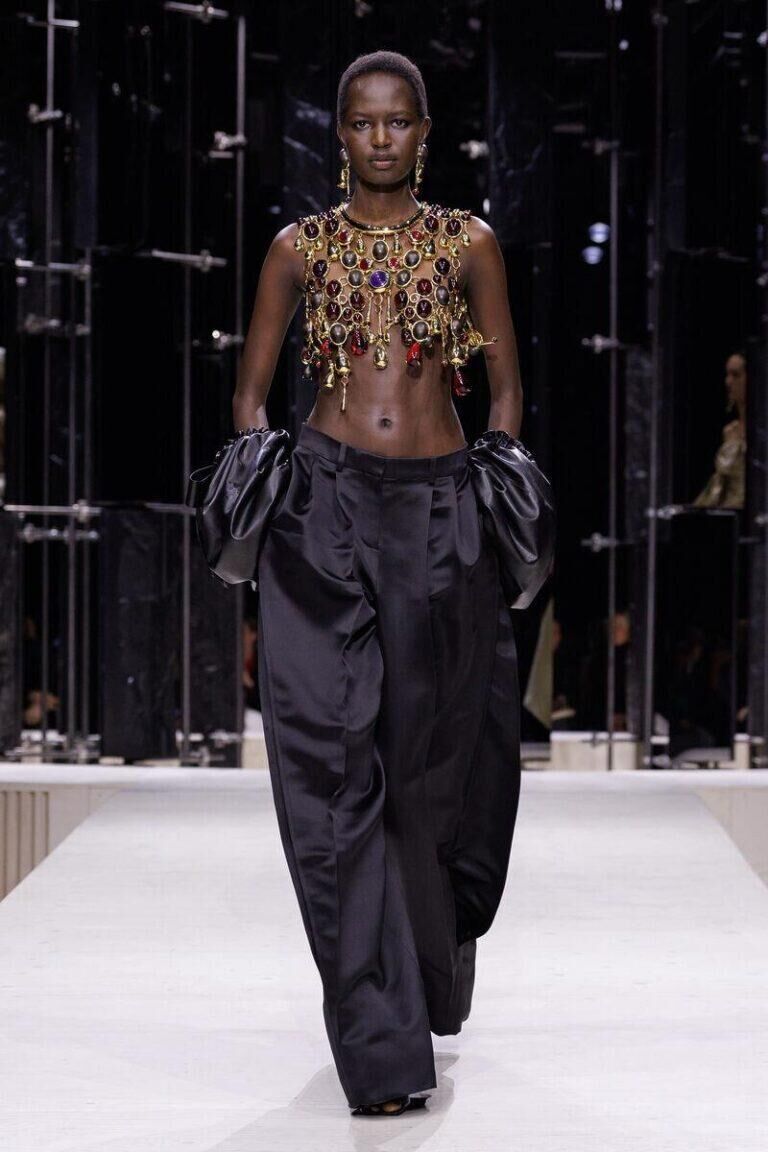
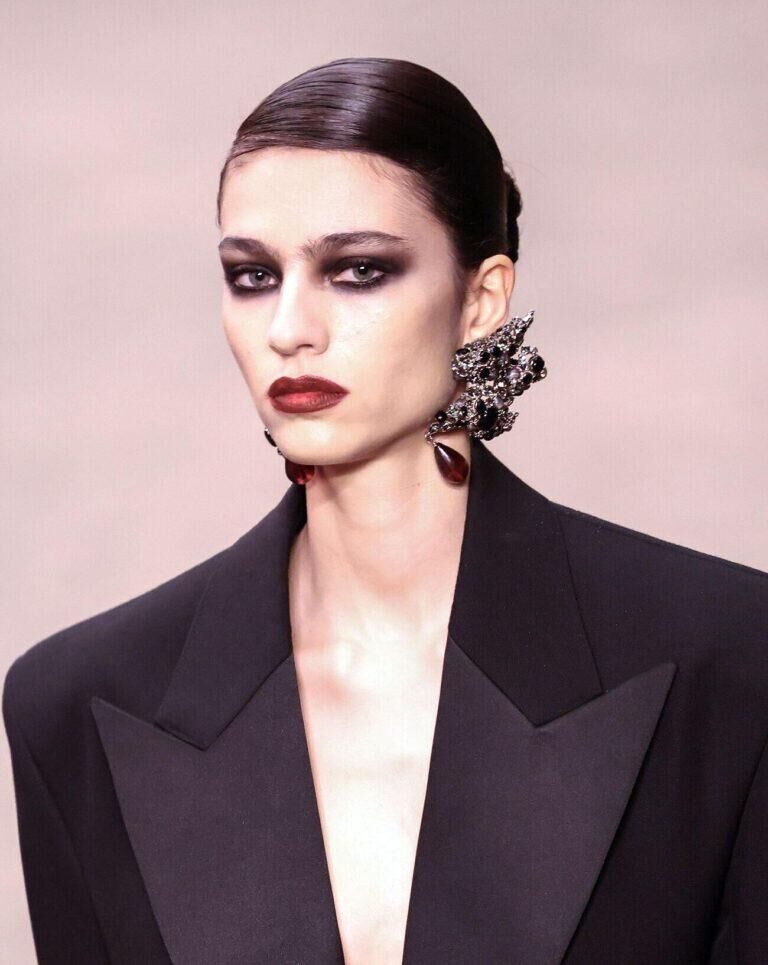
As the Victoria and Albert Museum in London is about to open a retrospective dedicated to the life and work of Elsa Schiaparelli on March 26th, 2026, designer Daniel Roseberry used his Fall/Winter 2026-2027 show to pay tribute to the house’s signature codes. Among them the keyhole motif. Numéro offers a guide to understanding them.

The keyhole, an emblem of the house
Since its founding by Elsa Schiaparelli in 1927, the French house has developed its creations throughout its history around iconic motifs. Among them is the keyhole, originally imagined in 1931 to decorate the clasp of a handbag. It belongs to the many surrealist symbols embraced by the designer, who was notably close to Dalí and Meret Oppenheim.
Echoing the retrospective opening on March 26th, 2026, at the Victoria and Albert Museum, Daniel Roseberry also wanted to pay tribute to Ella Schiaparelli‘s rich legacy. In his Fall/Winter 2026–2027 show, he reinvents the emblematic motif across both accessories and clothes.
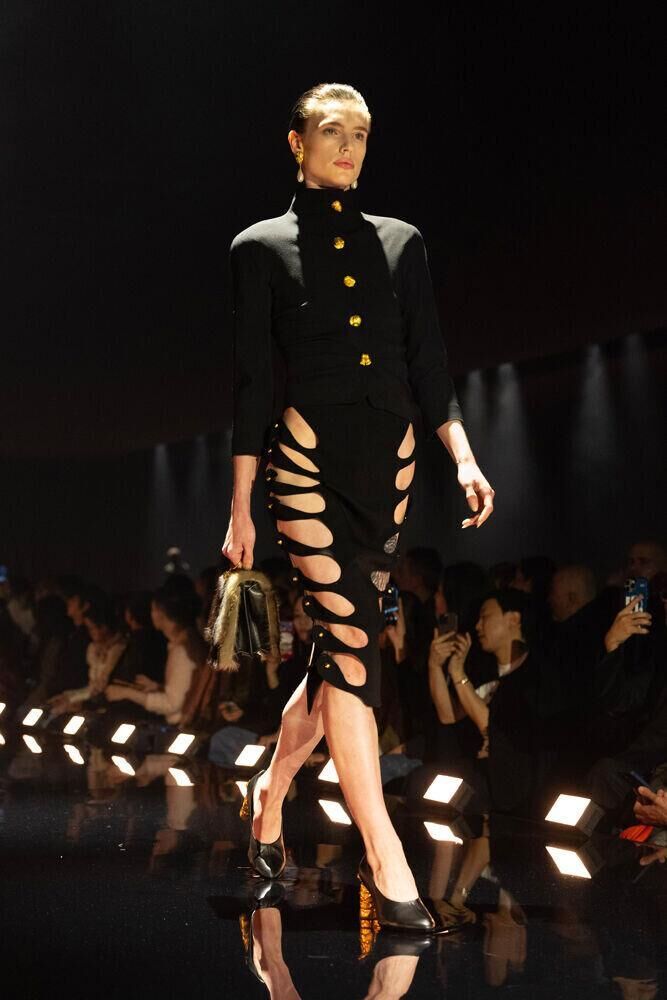
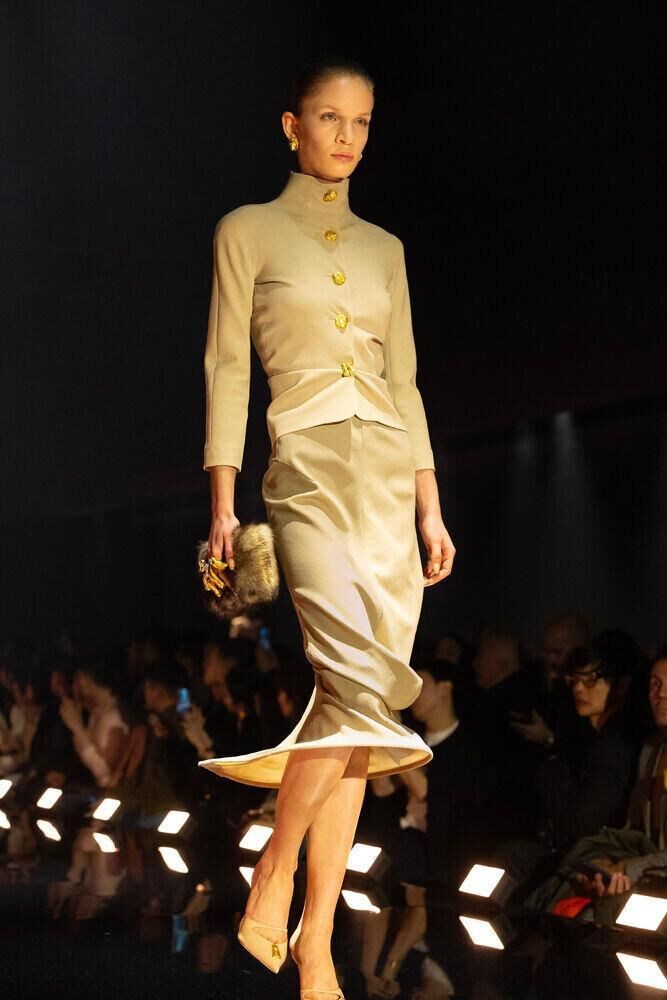
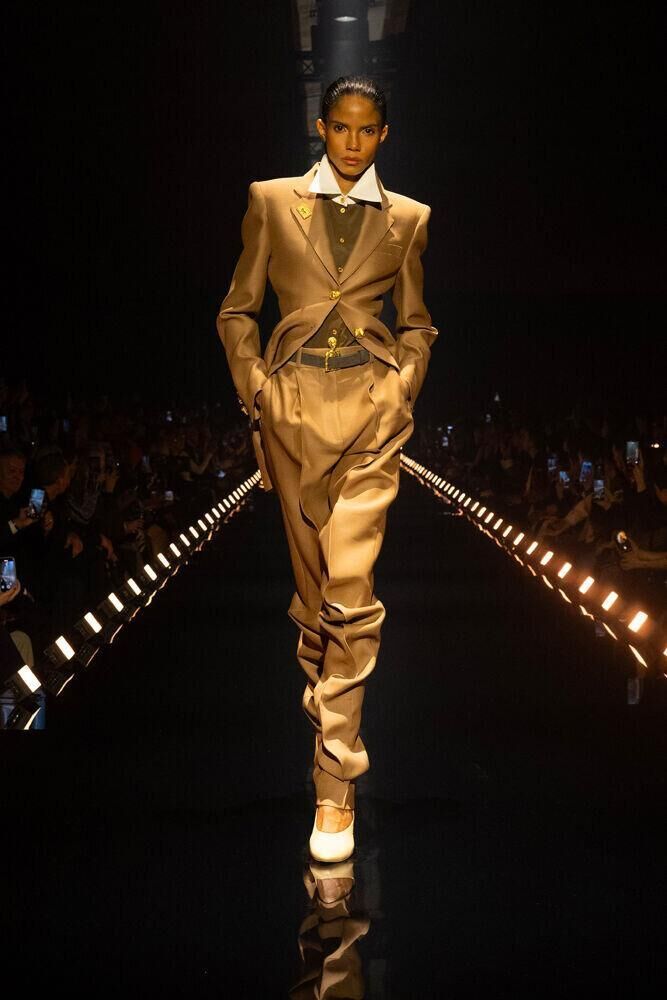
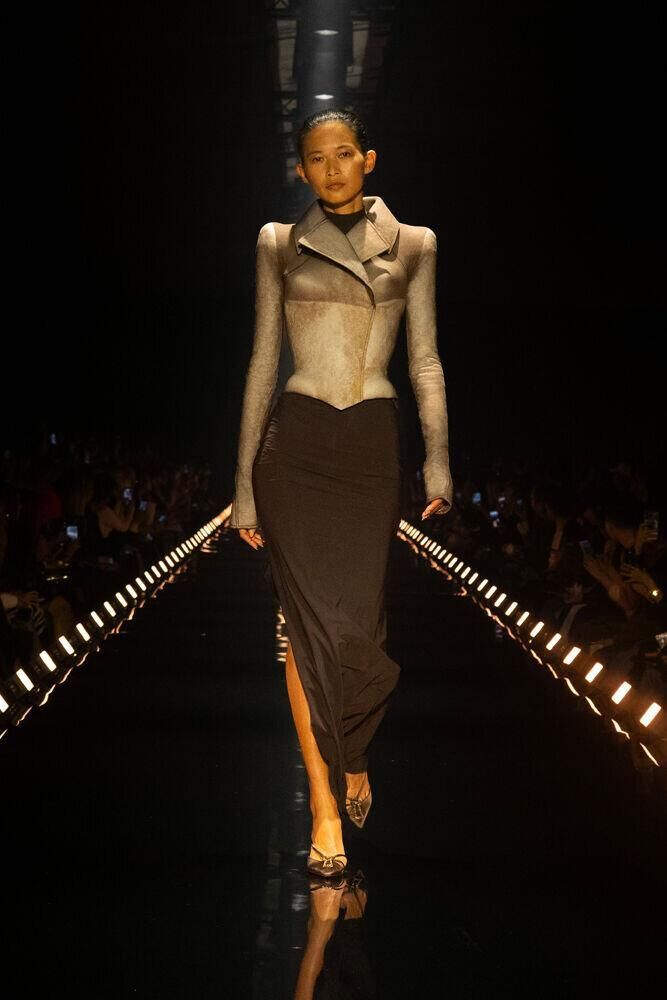
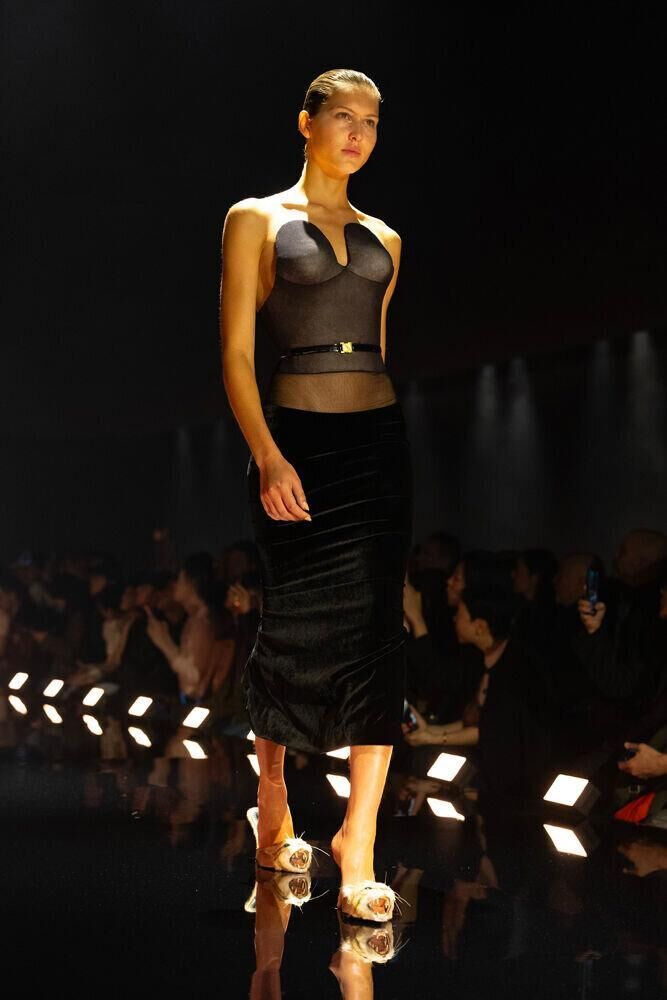
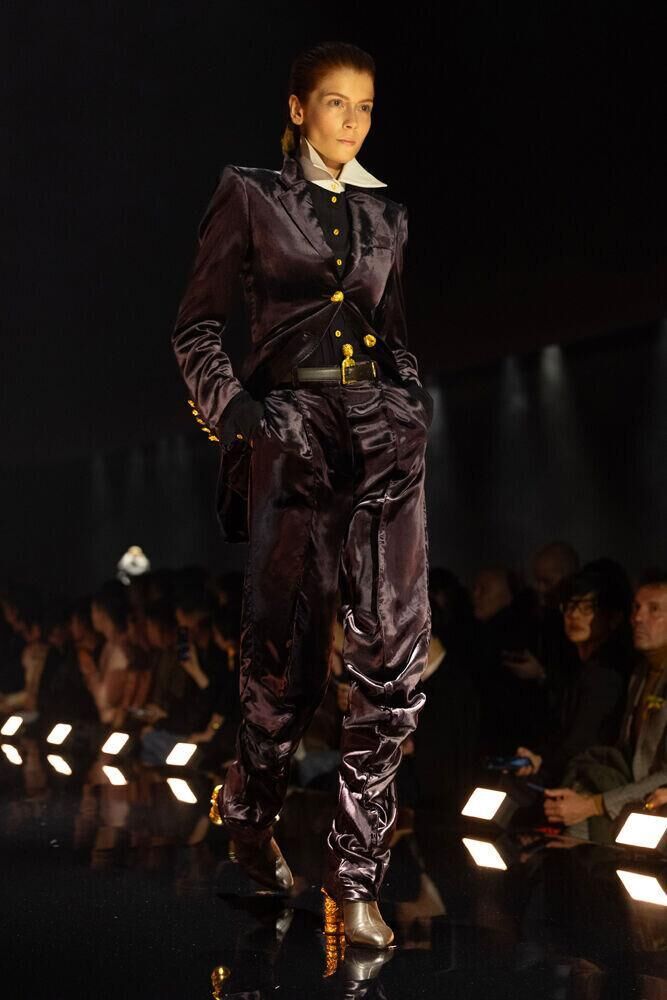
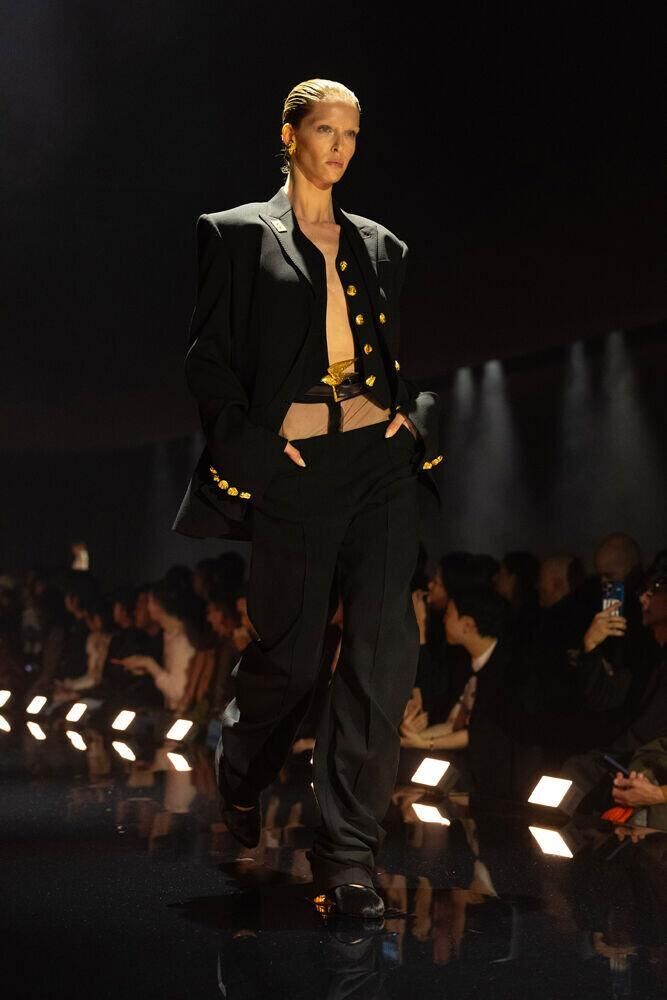
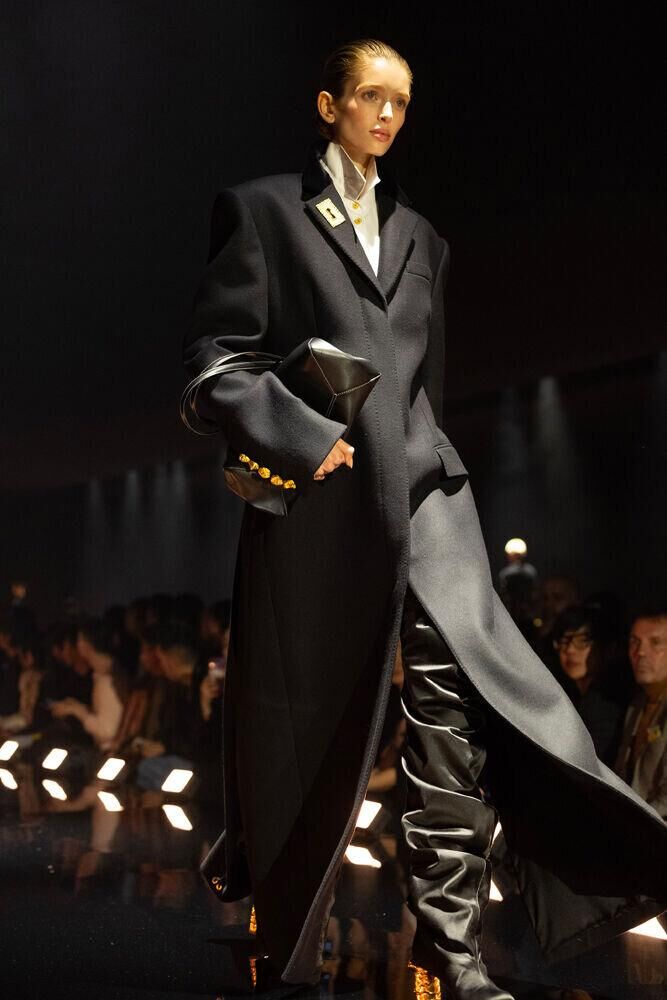
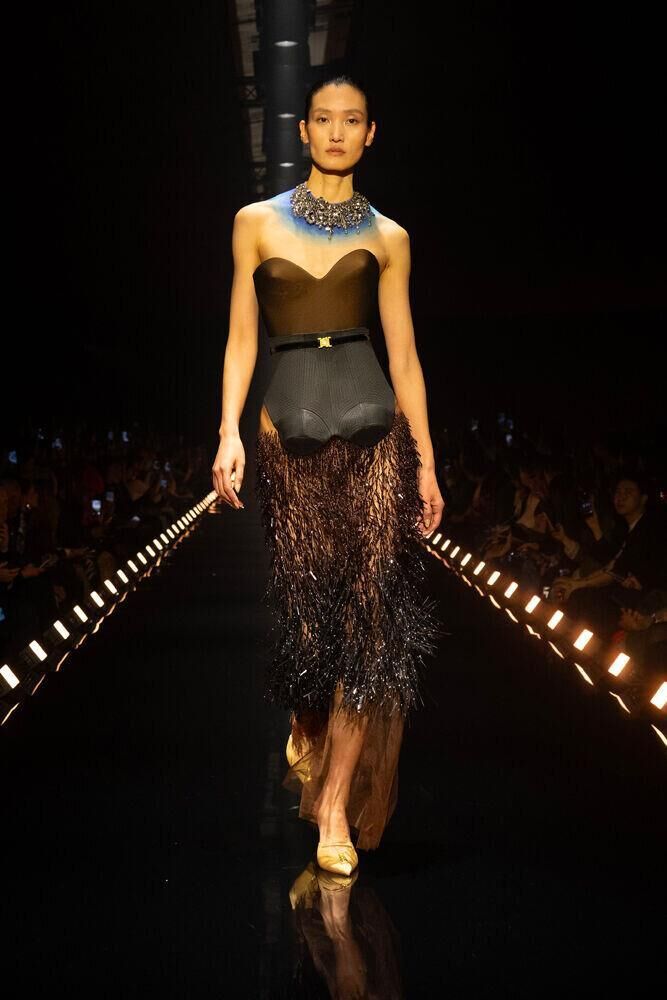
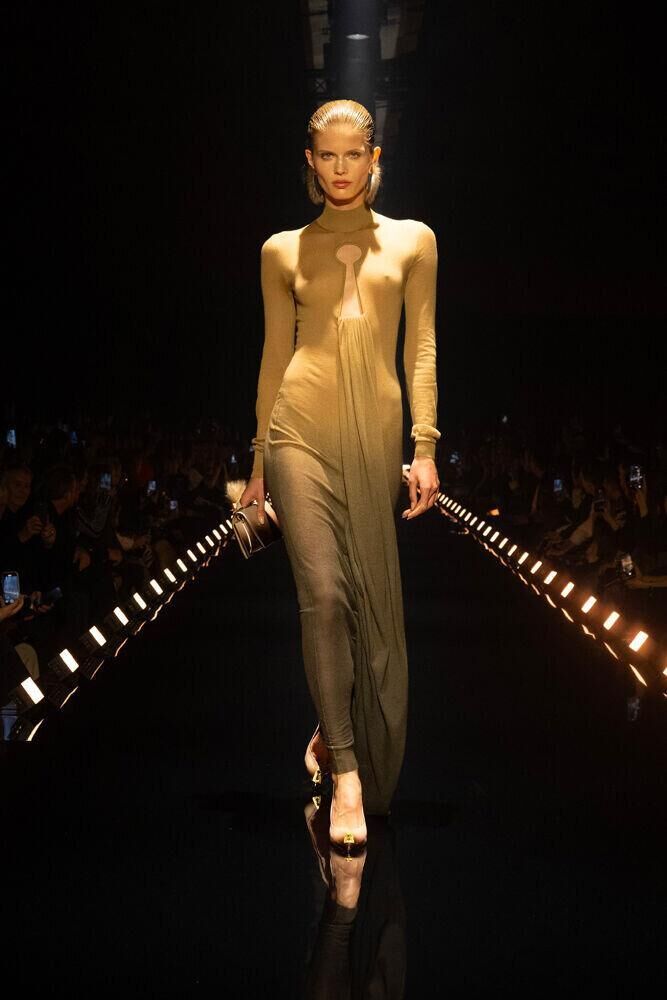
A testament to the centuries-old craftsmanship of the Schiaparelli ateliers, the keyhole had previously appeared as a zipper pull on bomber jackets, as an ornament on the toe of a pump, or on the buckle of a belt or necklace. Today, it reveals itself in the curve of a neckline on a long, bodycon, camel cashmere dress with long sleeves. It also appears as a rivet on the lapel of a straight wool-and-silk jacket, visible from the back as well.
A wardrobe thriving on contradictions
More than symbols or signature motifs, Schiaparelli stands out for its avant-garde history. In the 1930s, when fashion was governed by numerous conventions that left little room for innovation, its founder challenged these established rules. She approached clothing as a medium, much like a painting or a sculpture. She adorned the pockets of her dresses with drawer handles, and embroidered a lobster on the hem of an immaculate gown…
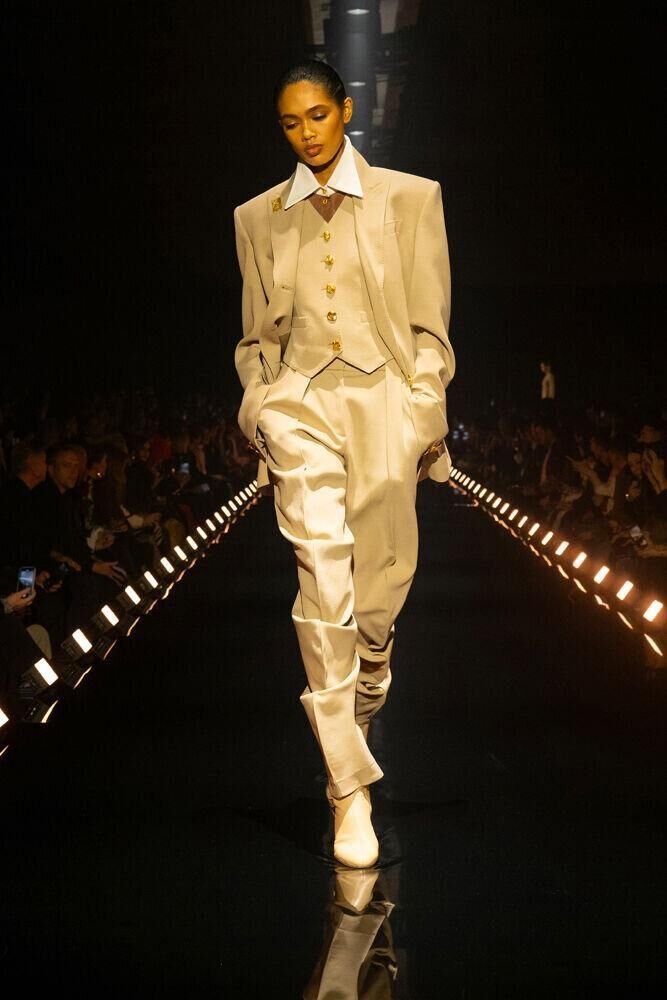
“Fashion is a two-trillion-dollar industry, but it is also the ultimate forum for self-expression,” Daniel Roseberry writes in his show notes. “This tension between fashion and commerce, between fashion and dream-making, between what a dress should be and what it can be […] inspired the entire collection. Every piece, every accessory presents an apparent contradiction.”
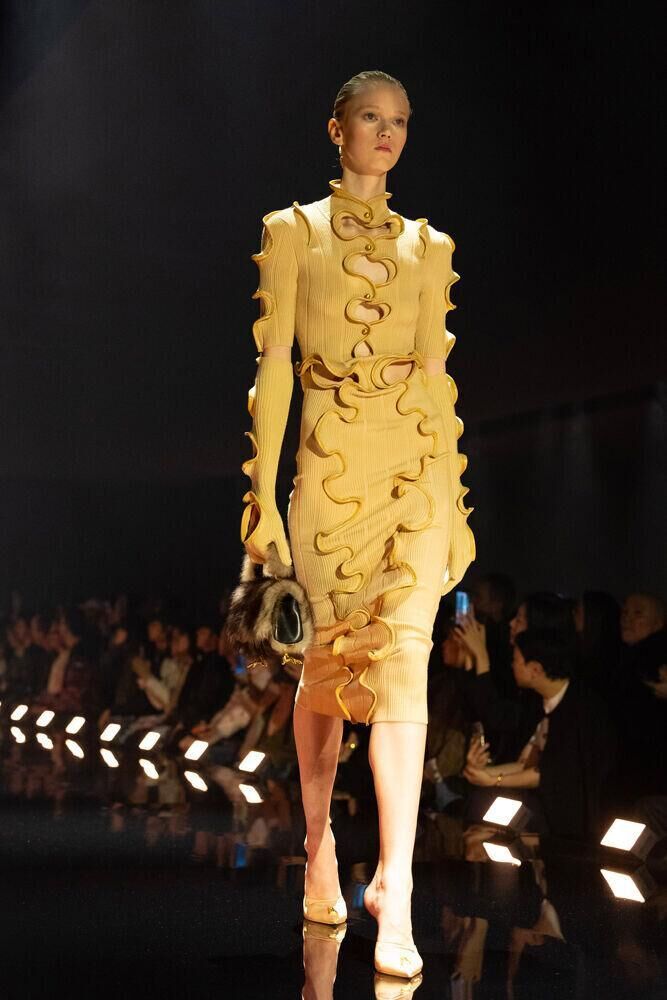
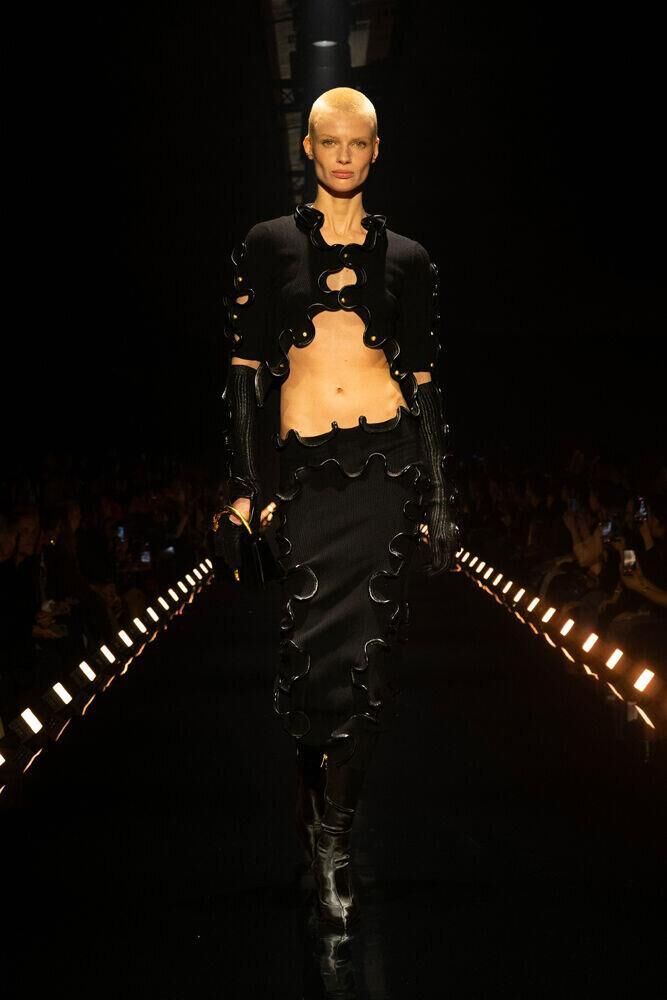
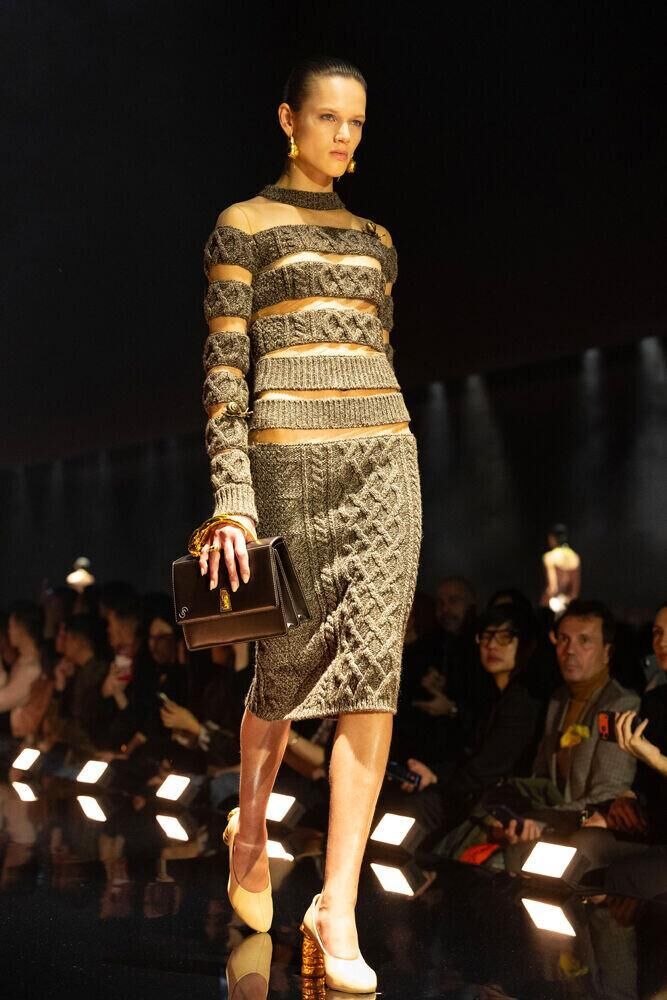
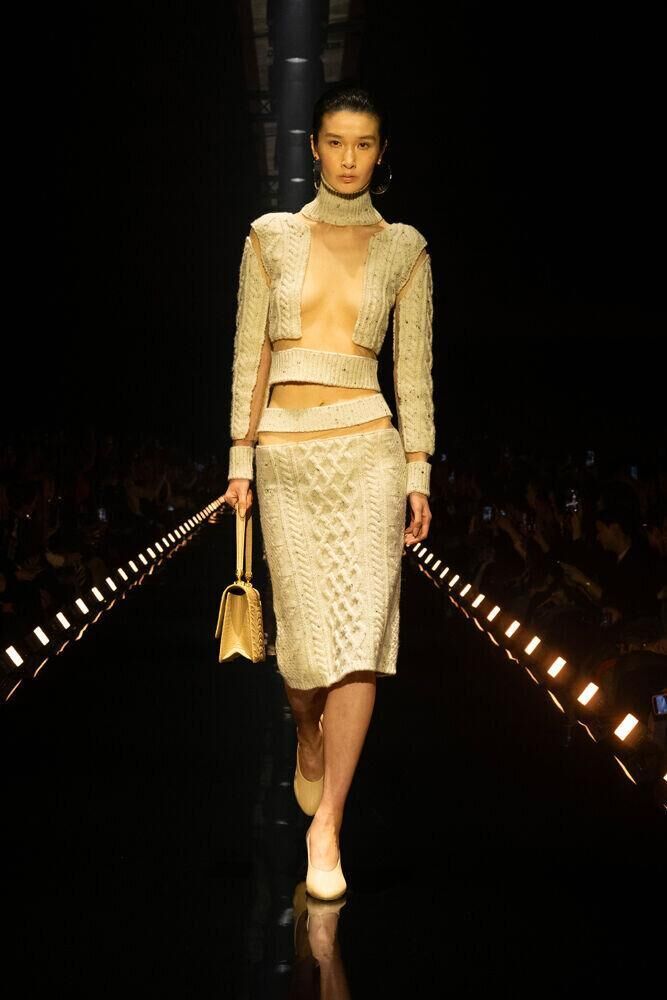
A contradiction that the American designer translates through what he describes as “impossible knitwear.” By juxtaposing Aran cable knits with panels of tulle, he creates the effect of a heavy fabric that nonetheless seems to float around the body. Edged with knit, these looks shape a fascinating silhouette that appears to hang by a thread…
Trompe-l’œil effects, Schiaparelli’s signature
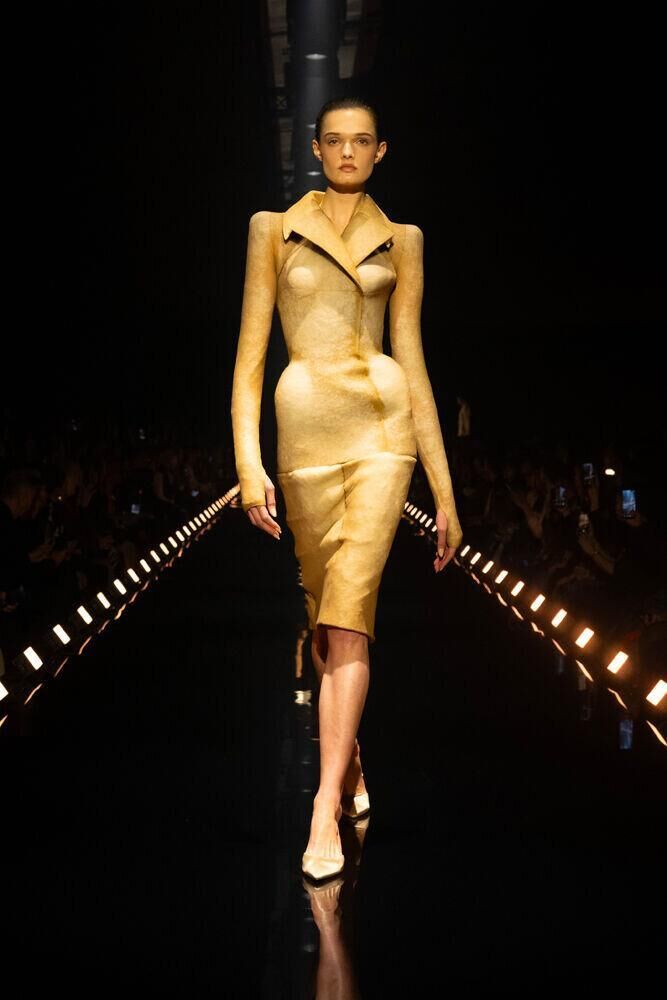
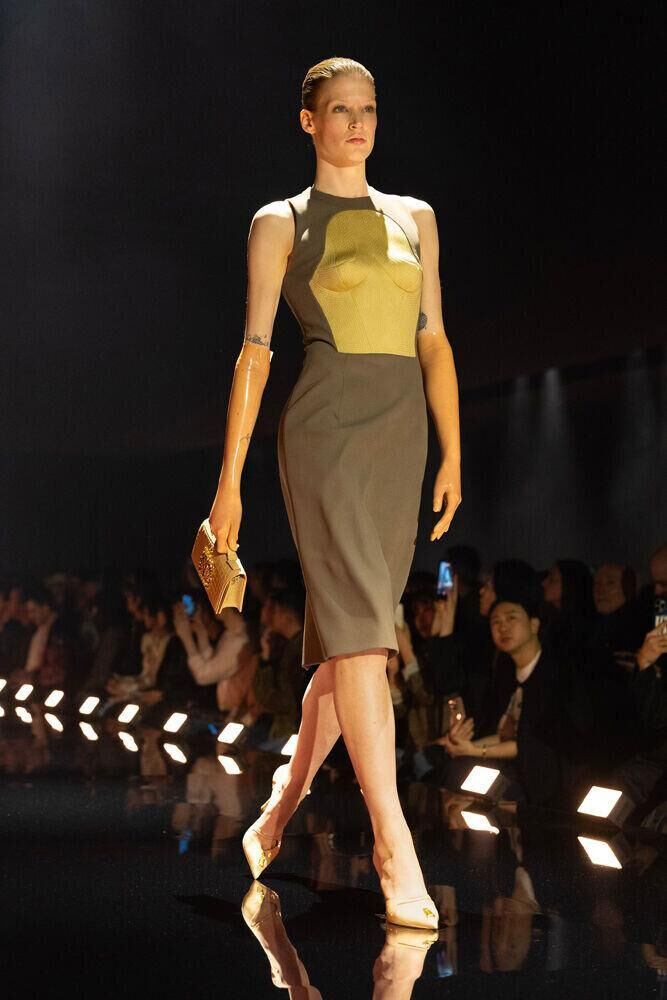
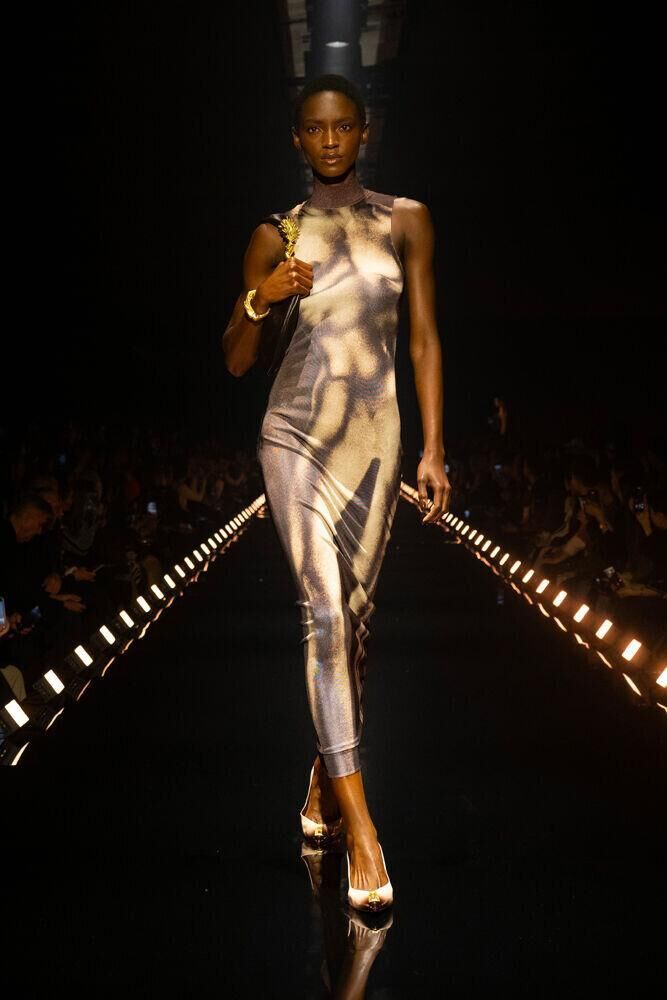
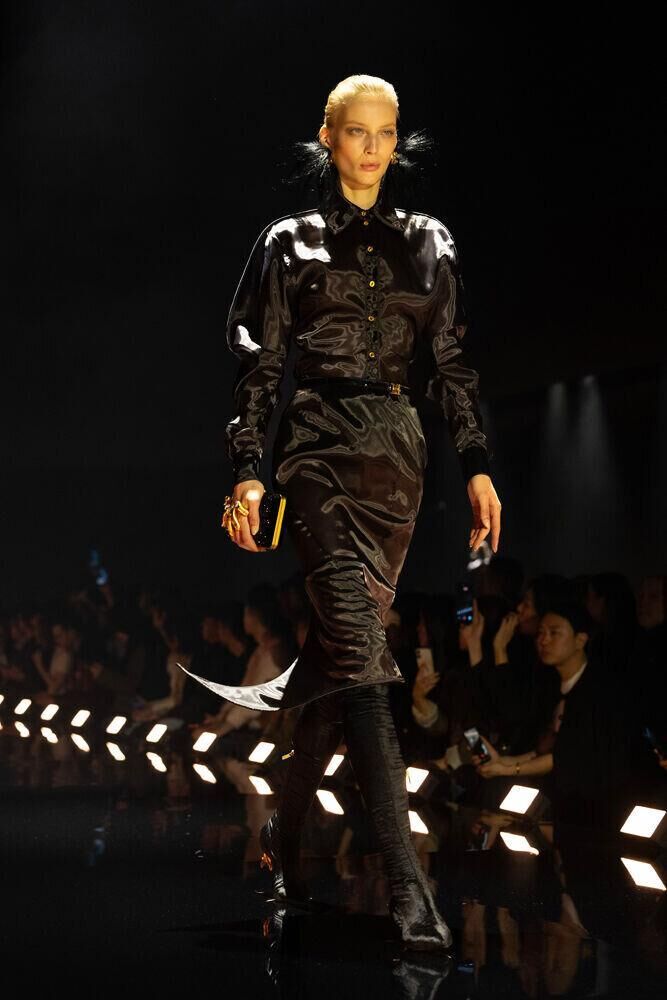
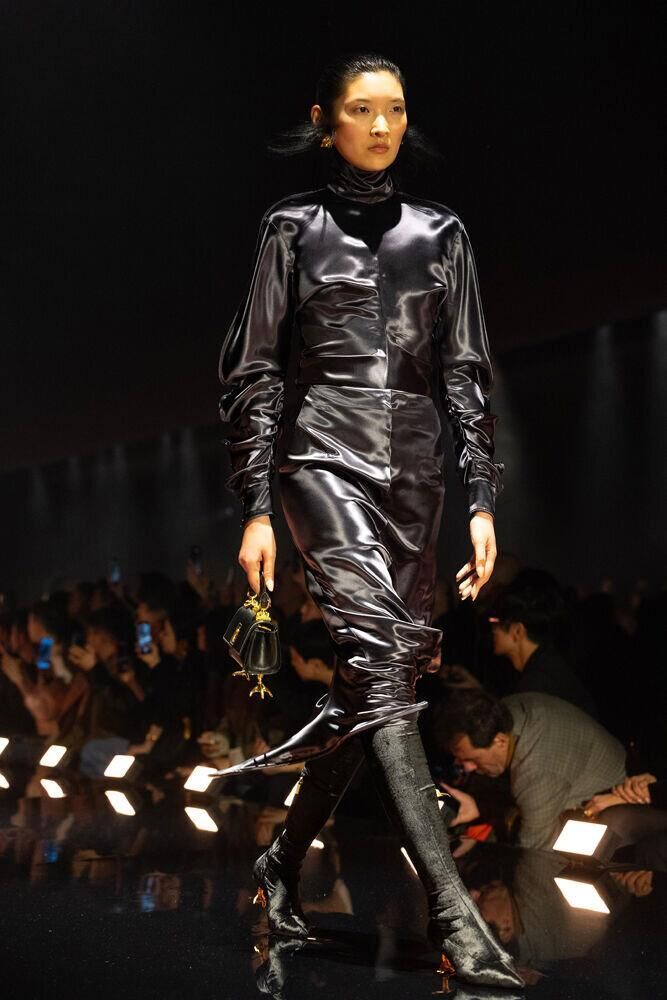
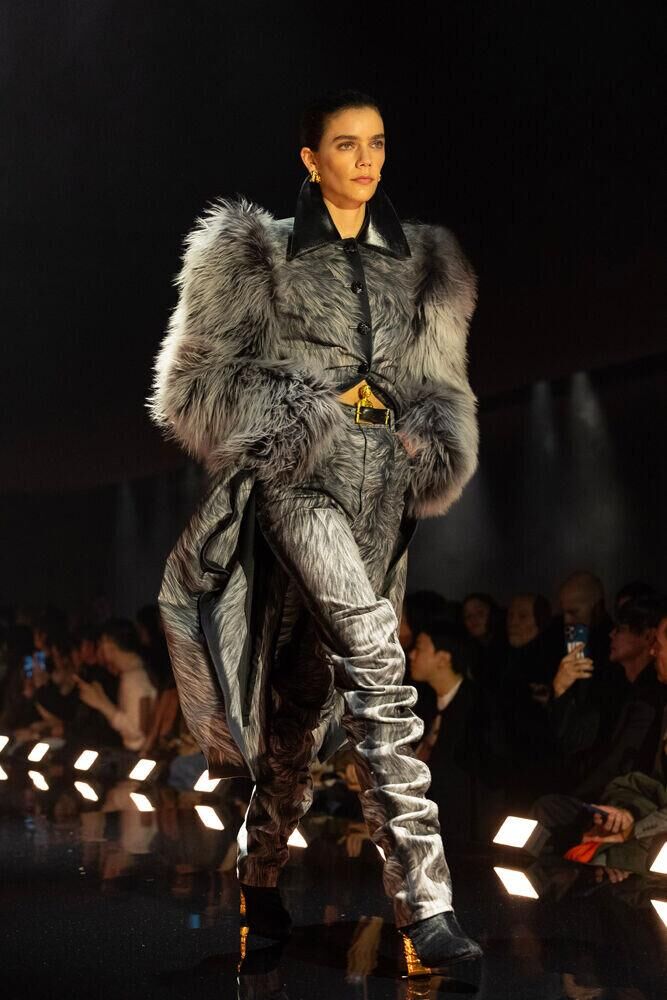
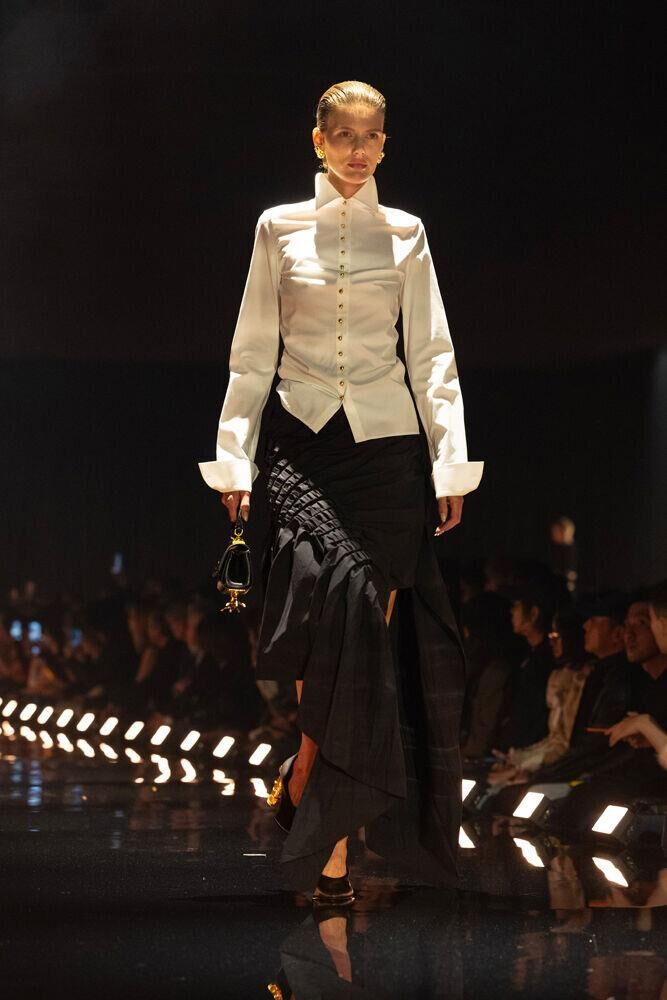
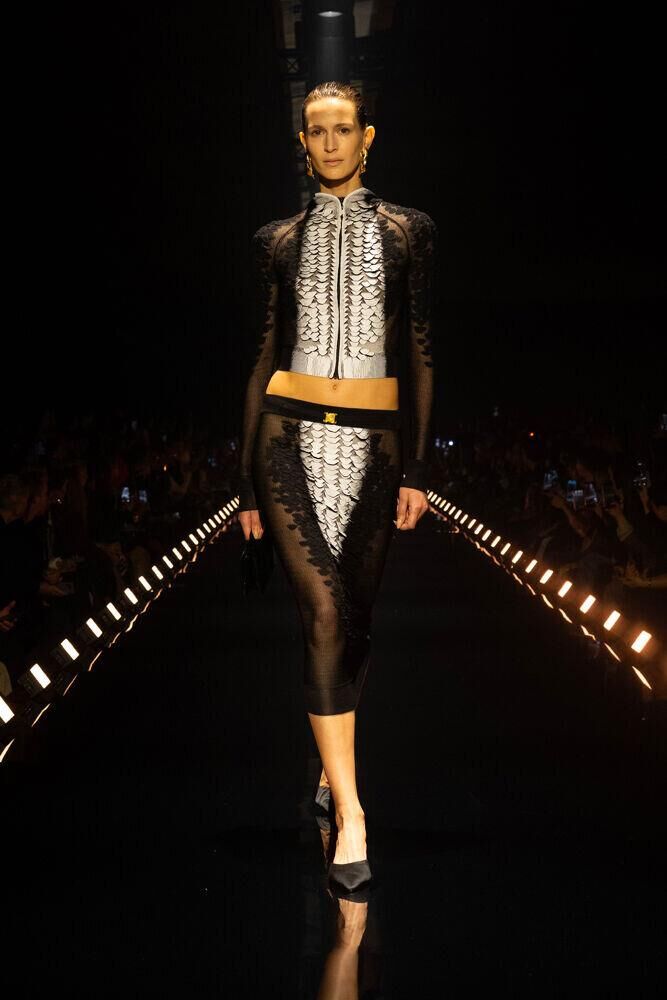
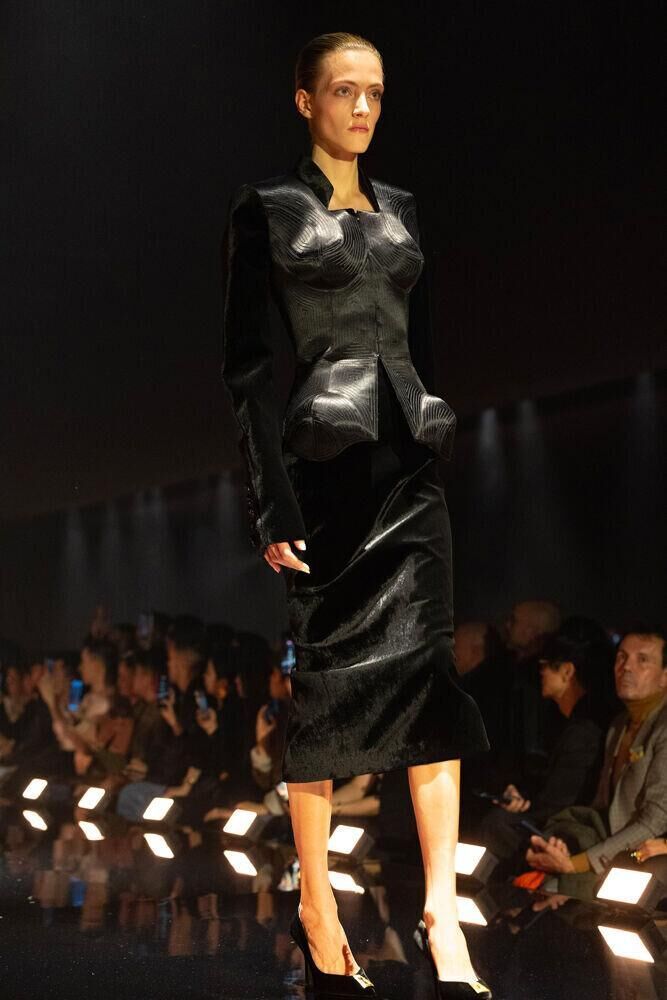
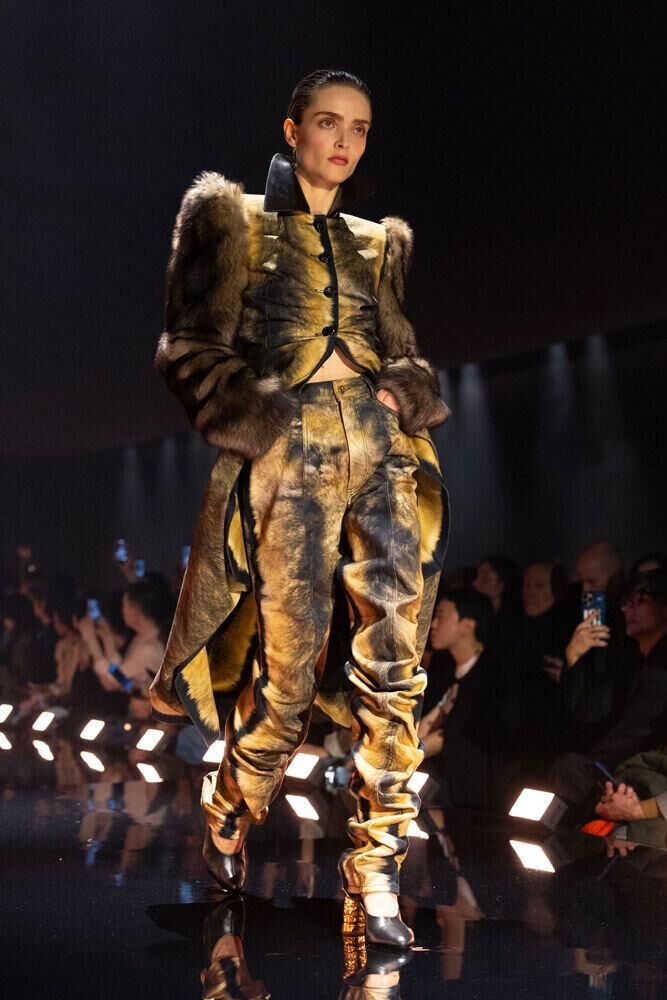
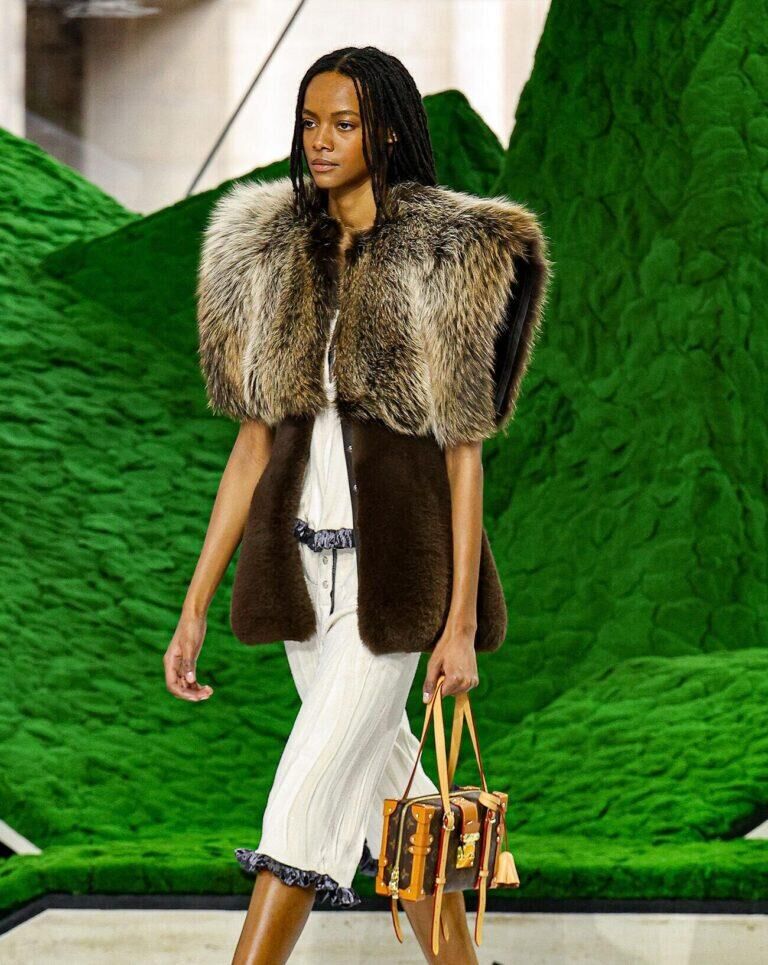
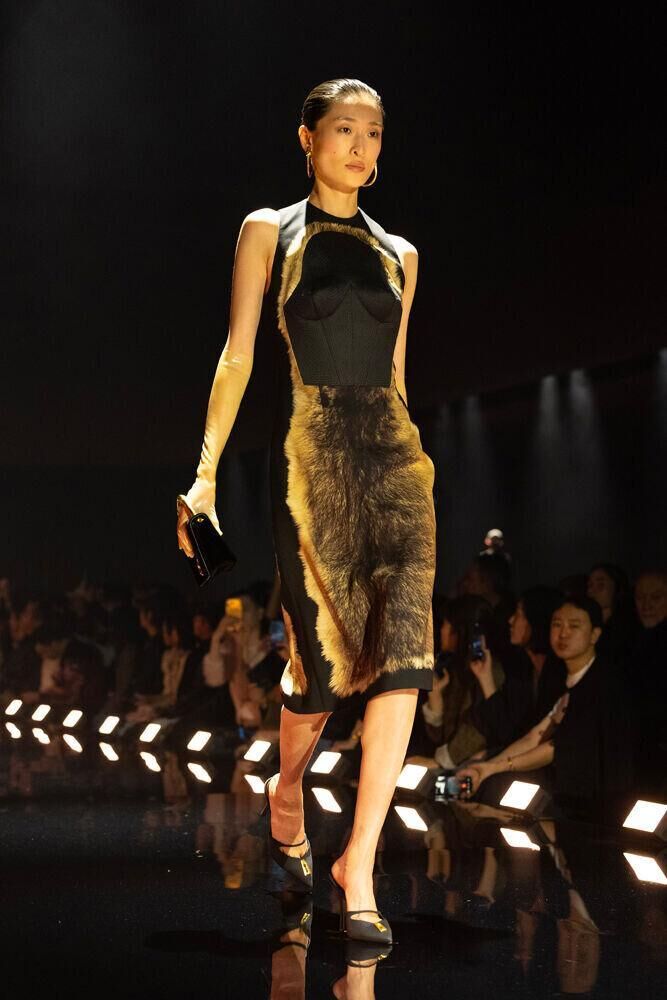
Another hallmark of the Parisian fashion house’s history, the trompe-l’œil effect has long run through Schiaparelli collections, designed by Elsa (influenced by the Surrealists) or by Daniel Roseberry. It appears explicitly in prints that create the illusion of fur on a black sheath dress, or in a look whose patterns echo the curves of the female body. Yet, the designer pushes the illusion even further through the fabrics themselves.
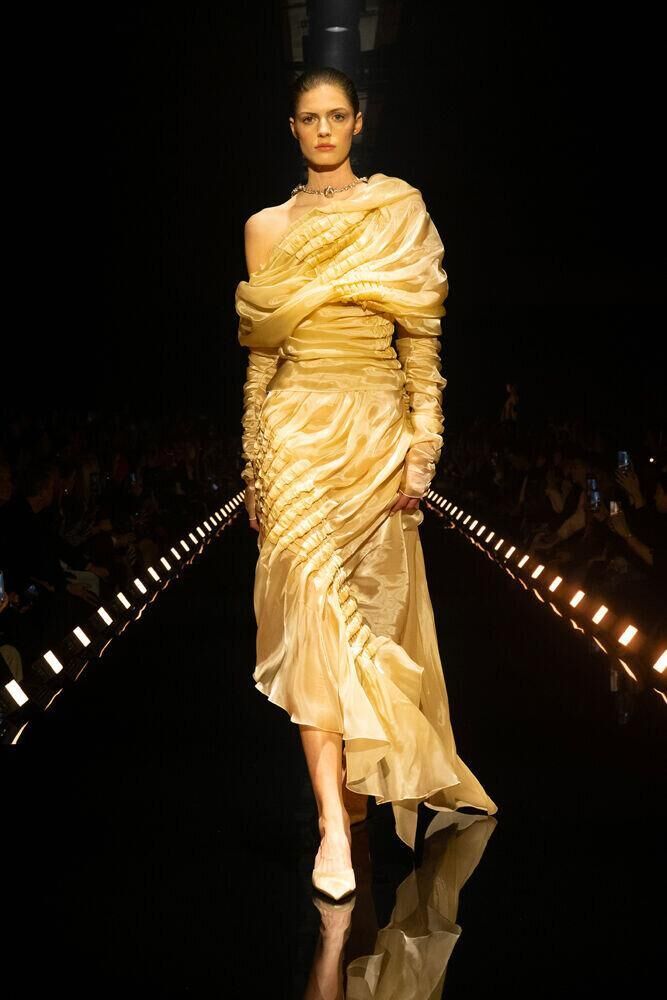
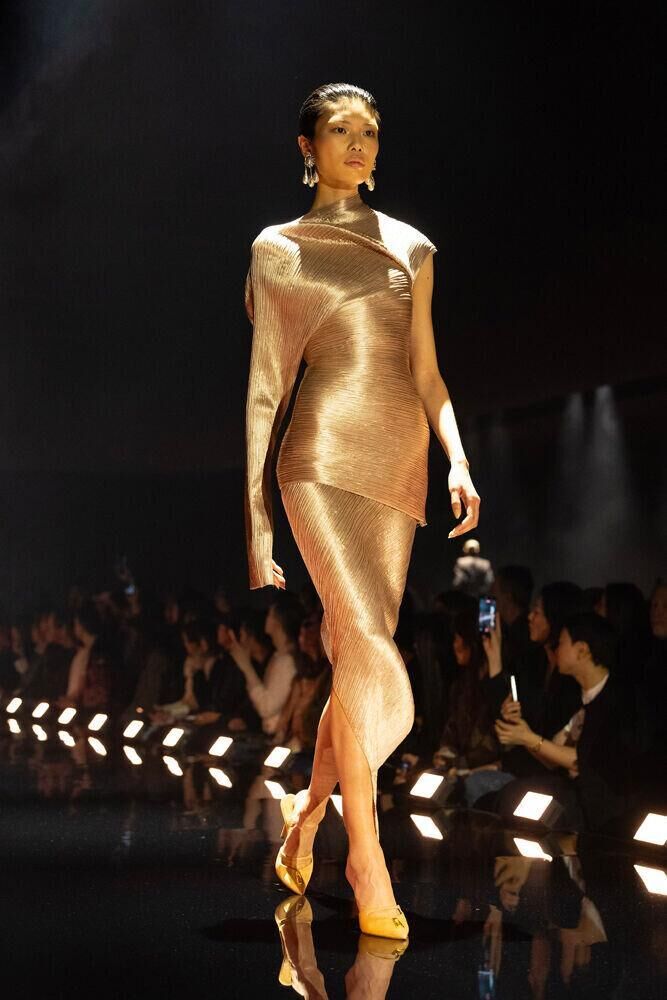
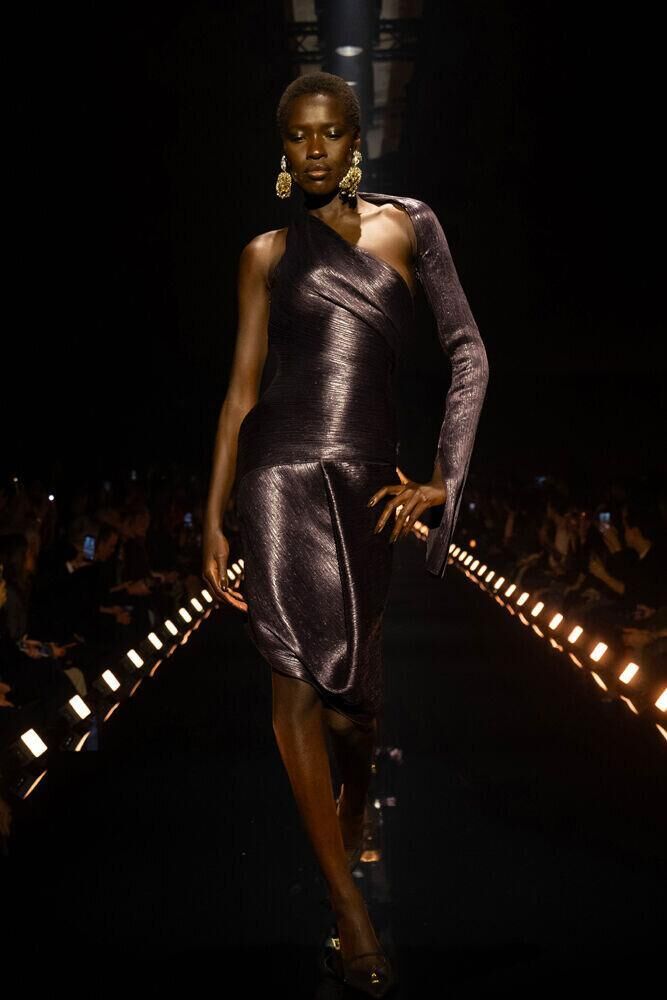
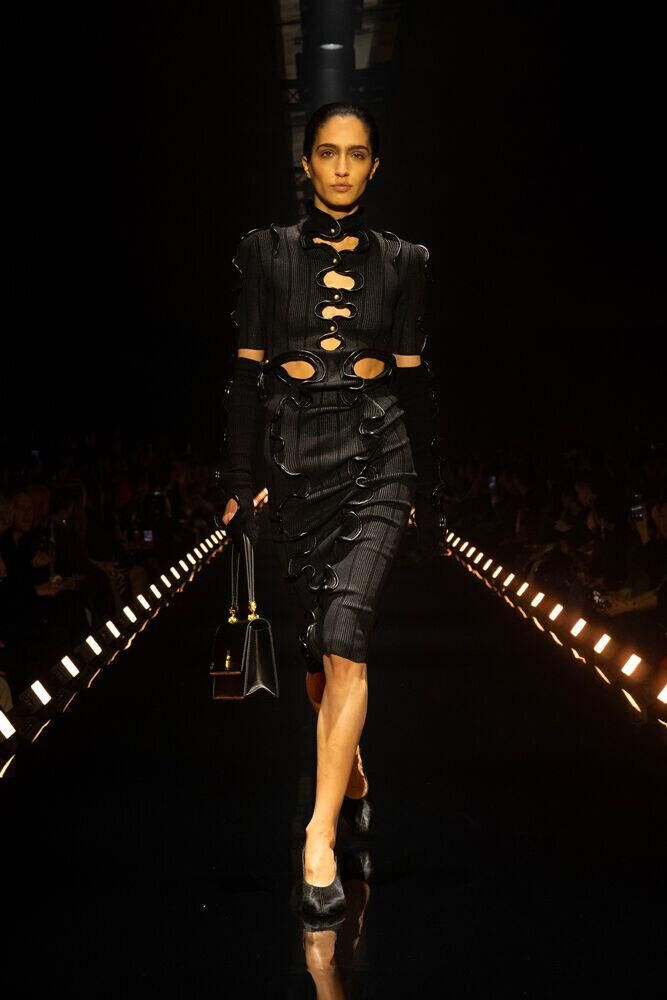
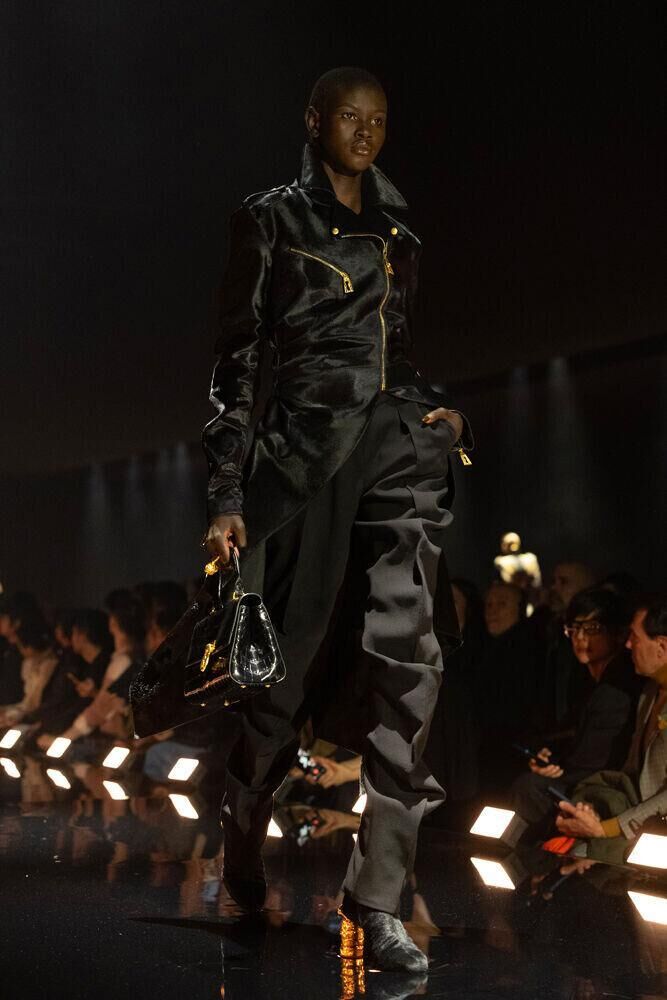
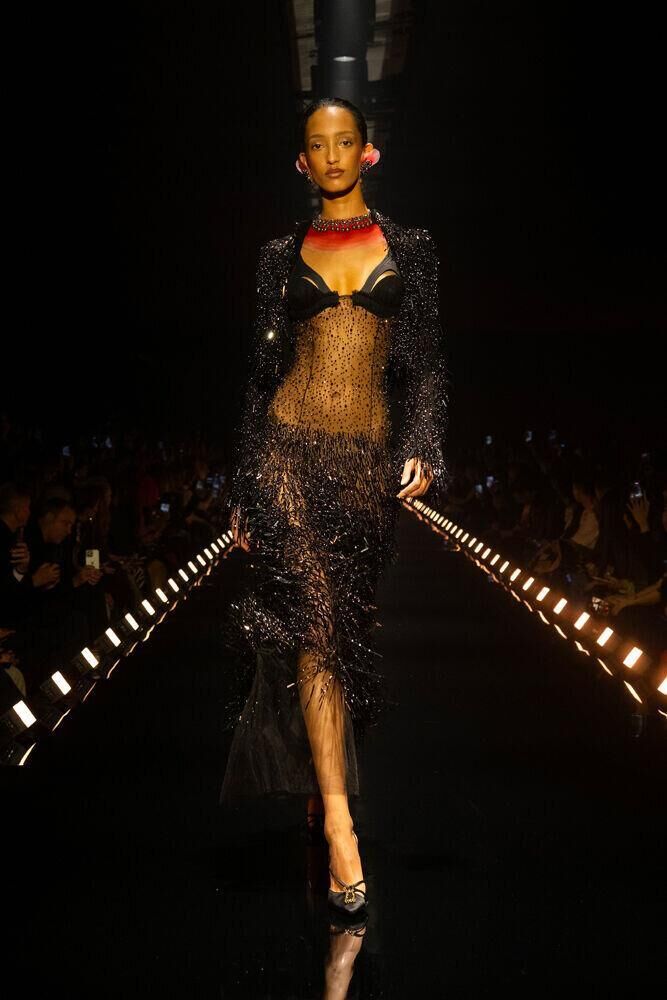
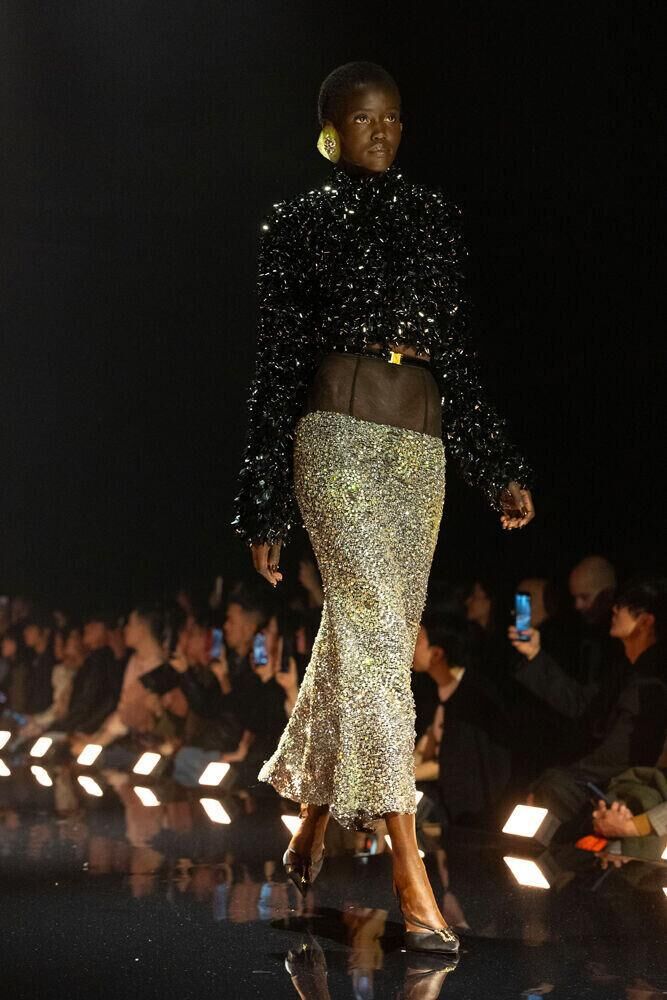
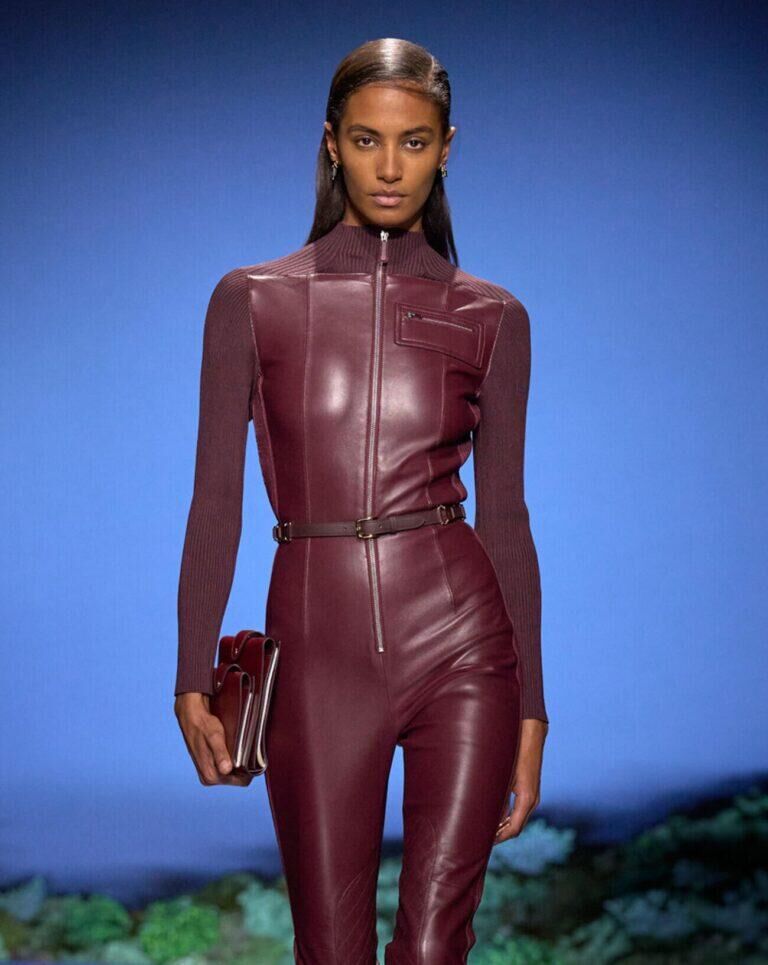
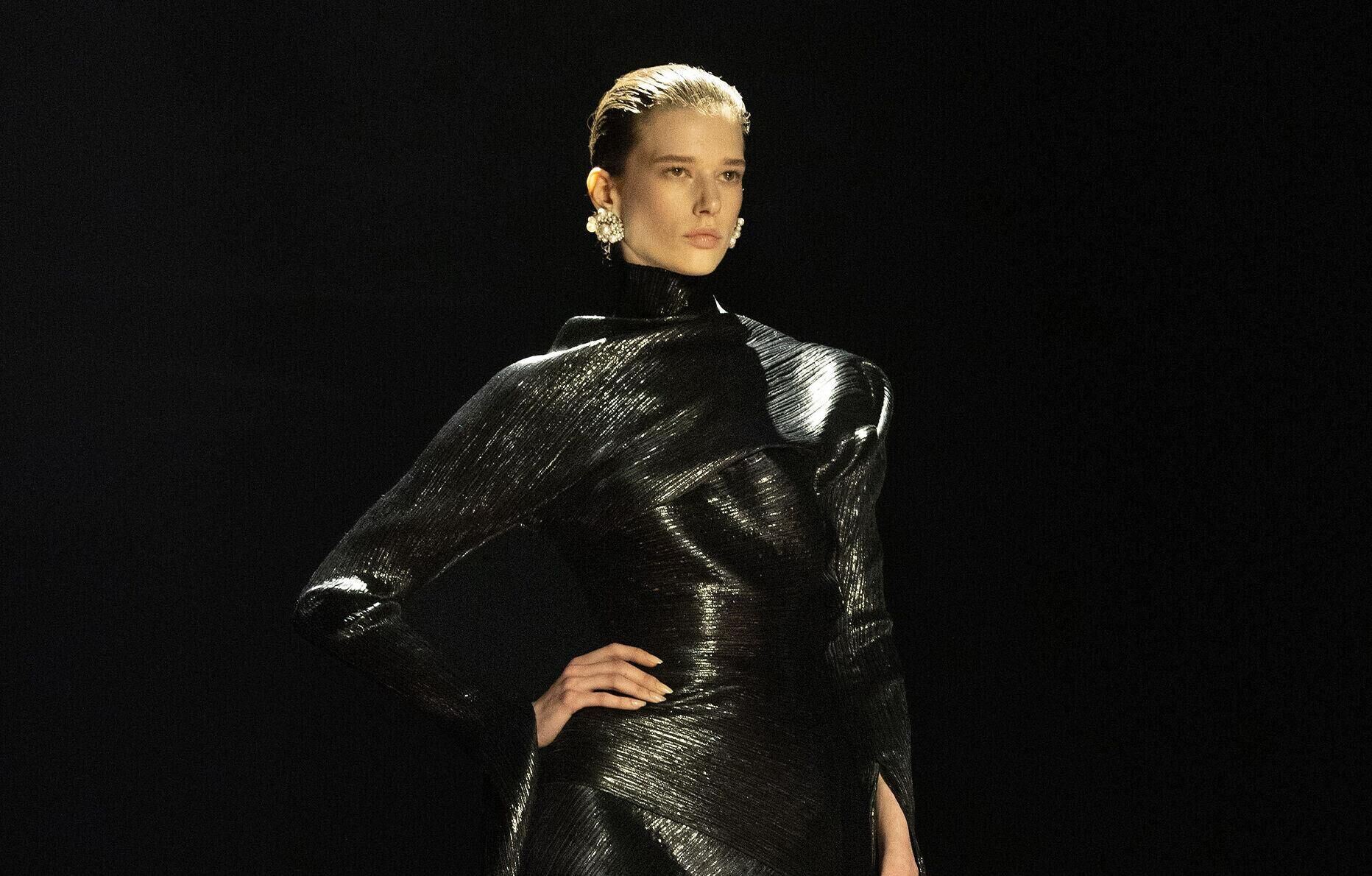
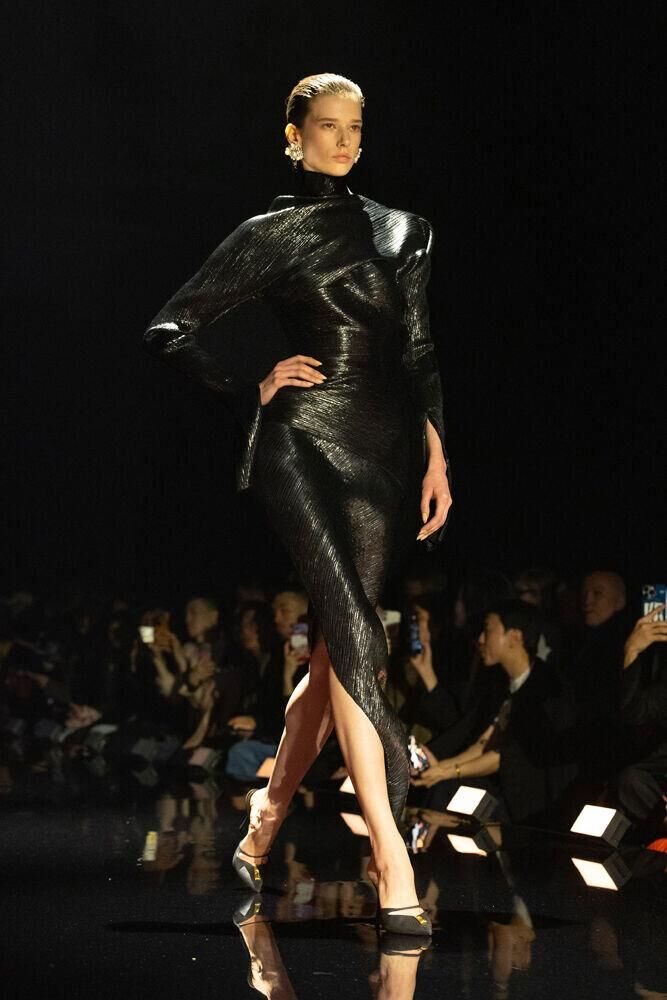
For instance, he uses a pleated fabric known as “tree bark,” a silk blend coated with a transparent laminate. Dresses and ensembles reveal spiral cut-outs that suggest a structure governed by boning, even though they remain fluid and supple. Daniel Roseberry also presents glossy black silhouettes whose leather-like effect is in fact achieved with printed silk wool. “The kind of trompe-l’œil craftsmanship that has always defined the house,” he concludes in the show notes.
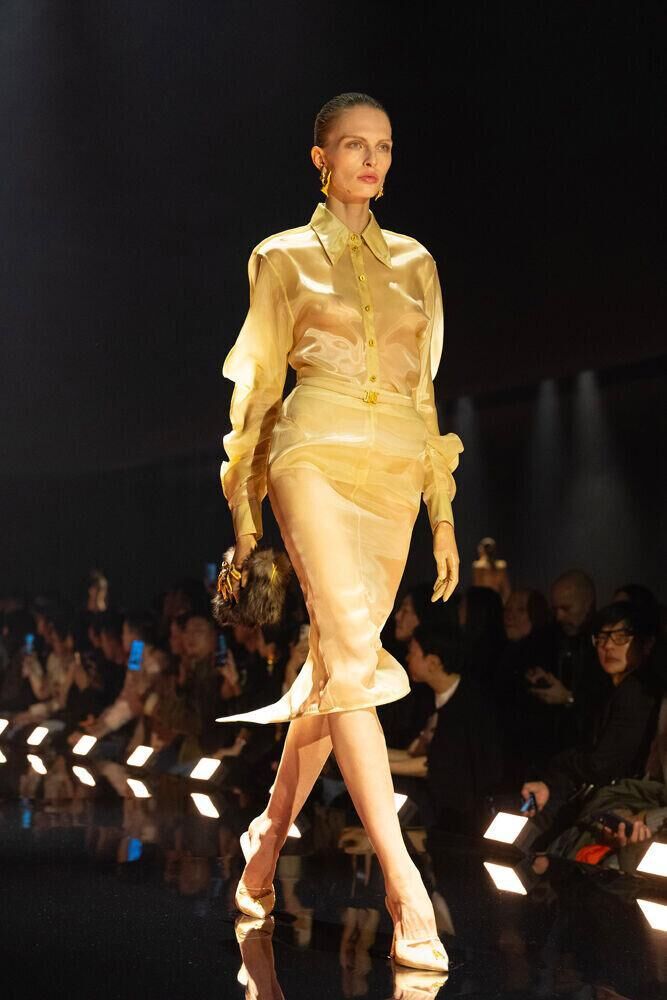
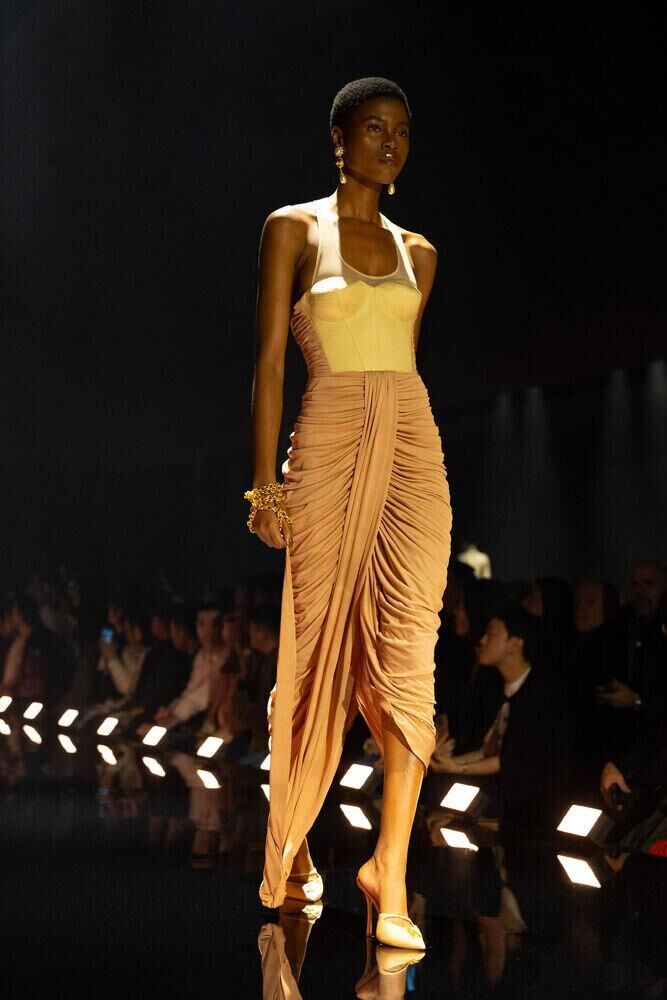
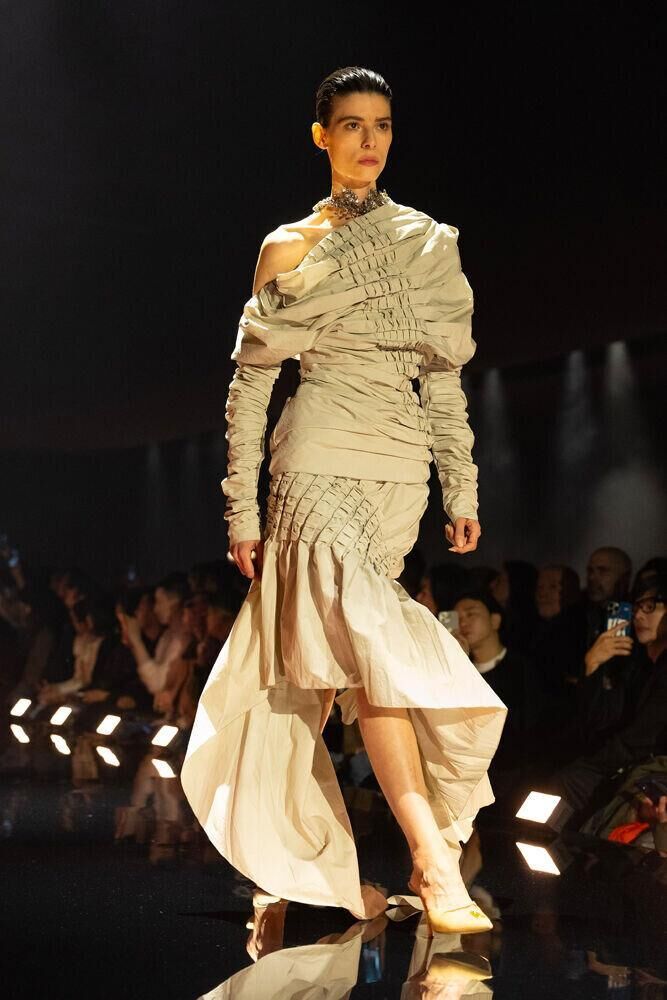
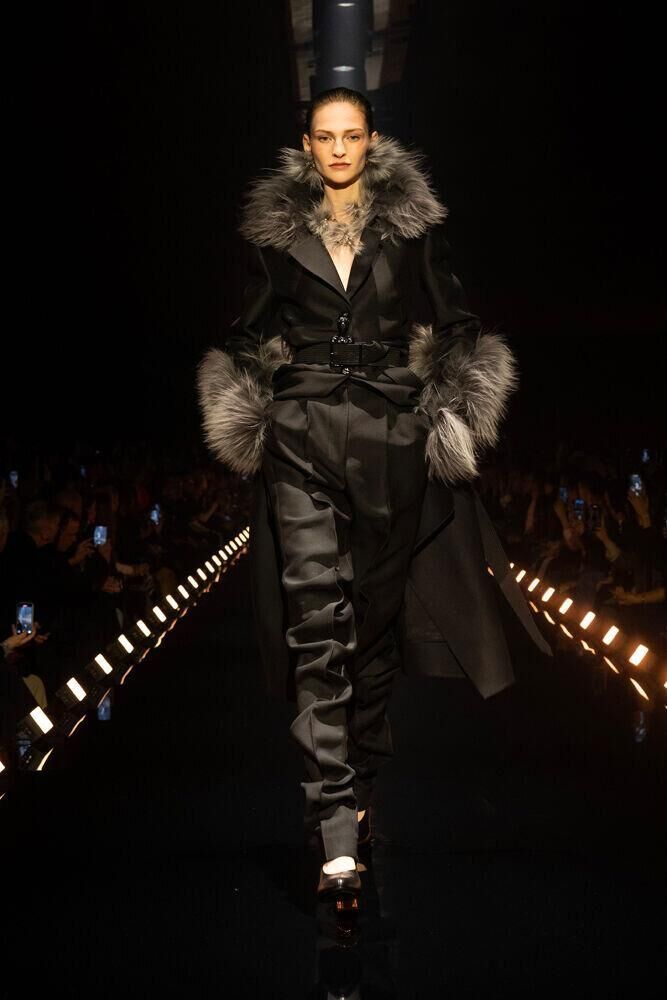
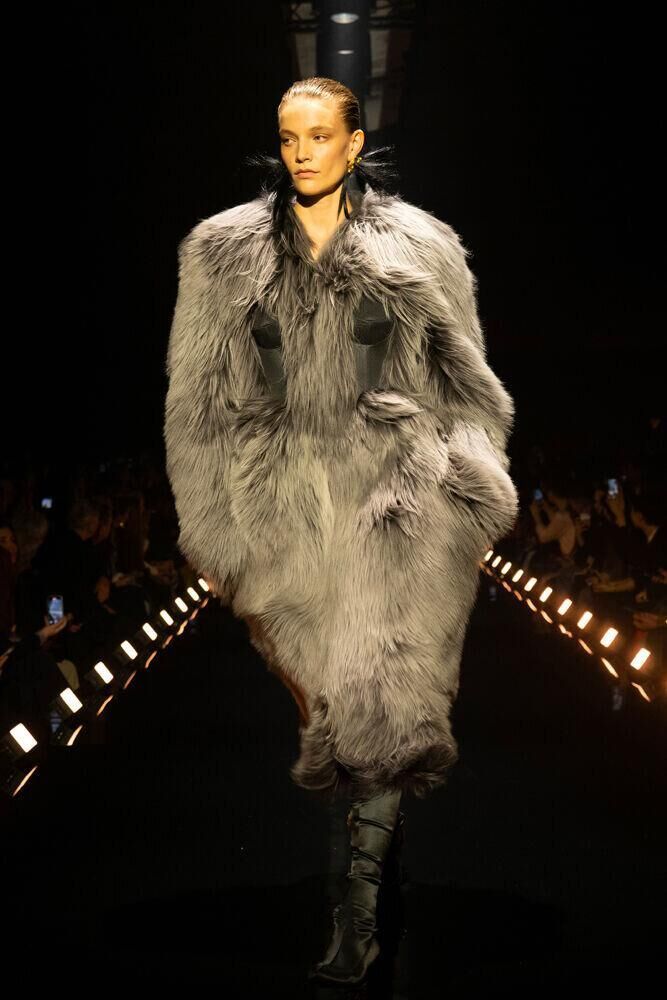
All the looks from the Schiaparelli Fall/Winter 2026-2027 show