24

24


Interview with Mickalene Thomas, the artist who celebrates black bodies at the Grand Palais
Until April 5th, the celebrated African American artist has taken up residence at Paris’s Grand Palais with the exhibition All About Love. In the manner of bell hooks’s eponymous feminist manifesto, her oeuvre foregrounds Black women – so long ignored by the history of art – in a humanist gesture of love and resistance.
Interview by Nicolas Trembley.
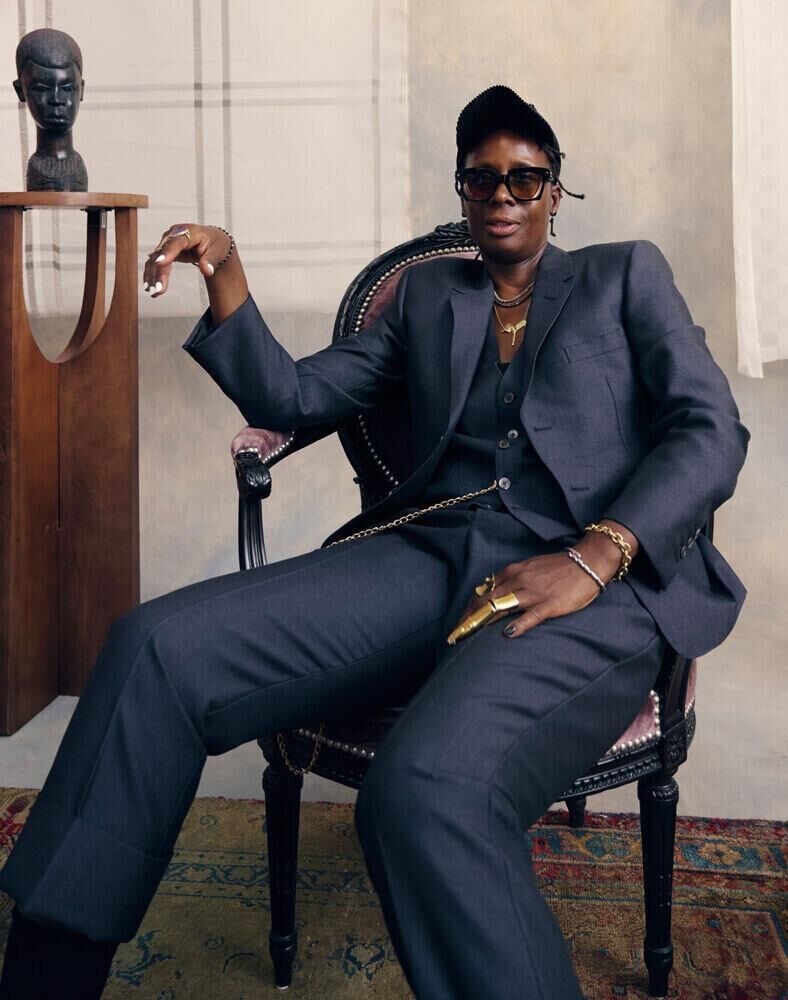
Mickalene Thomas’s art as a political act
With All About Love, her exhibition at the Grand Palais in Paris, African American artist Mickalene Thomas has put together a show that sets in tension art history, pop culture, and the very conditions in which images are produced. Rather than a retrospective, the exhibition is a journey through visual situations that mix painting, photography, collage, film, and installation. In parallel to his exploration of love, desire, and resistance, she is showing new works at Galerie Nathalie Obadia, prolonging her investigations in a smaller-scale context.
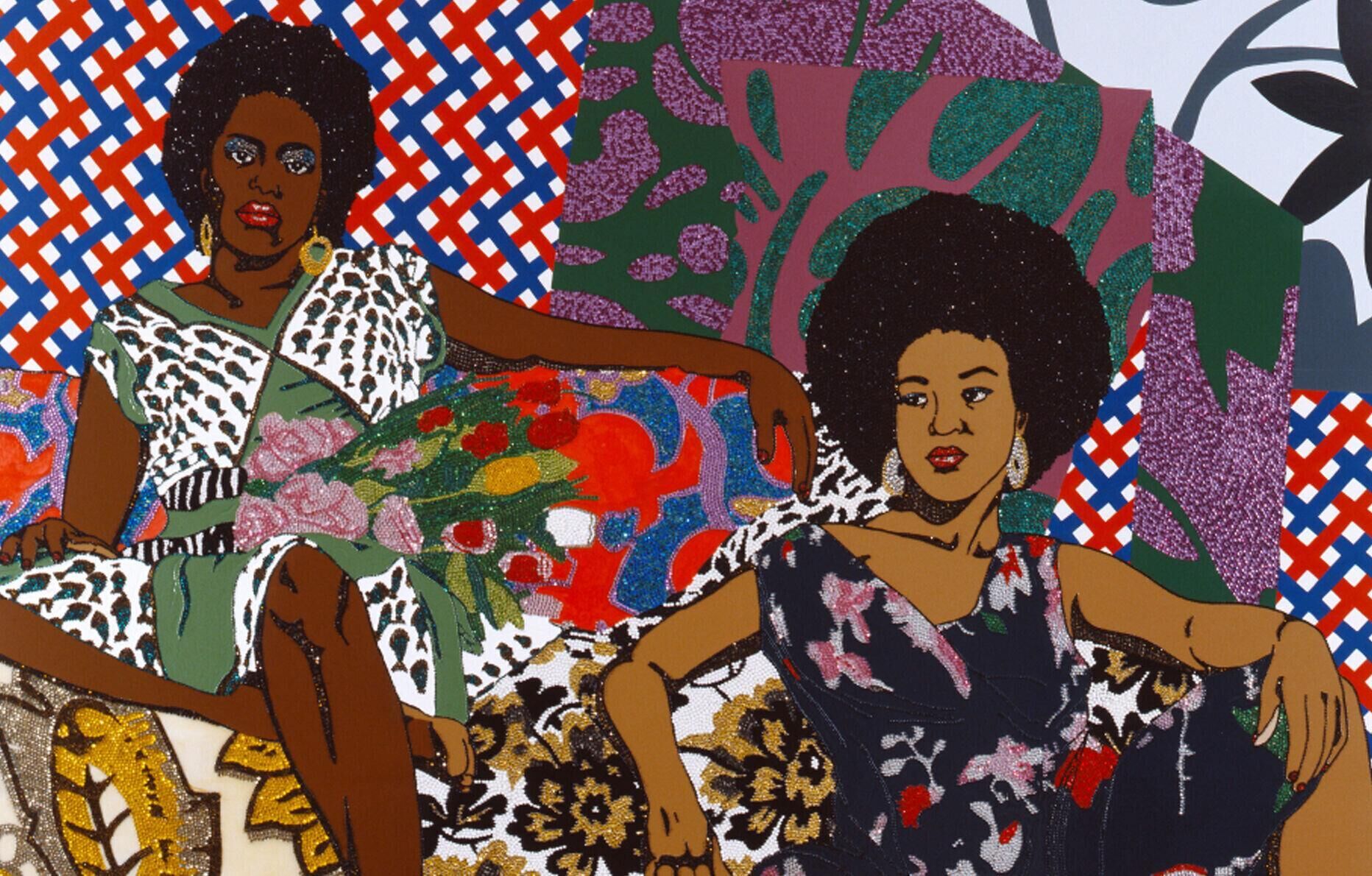
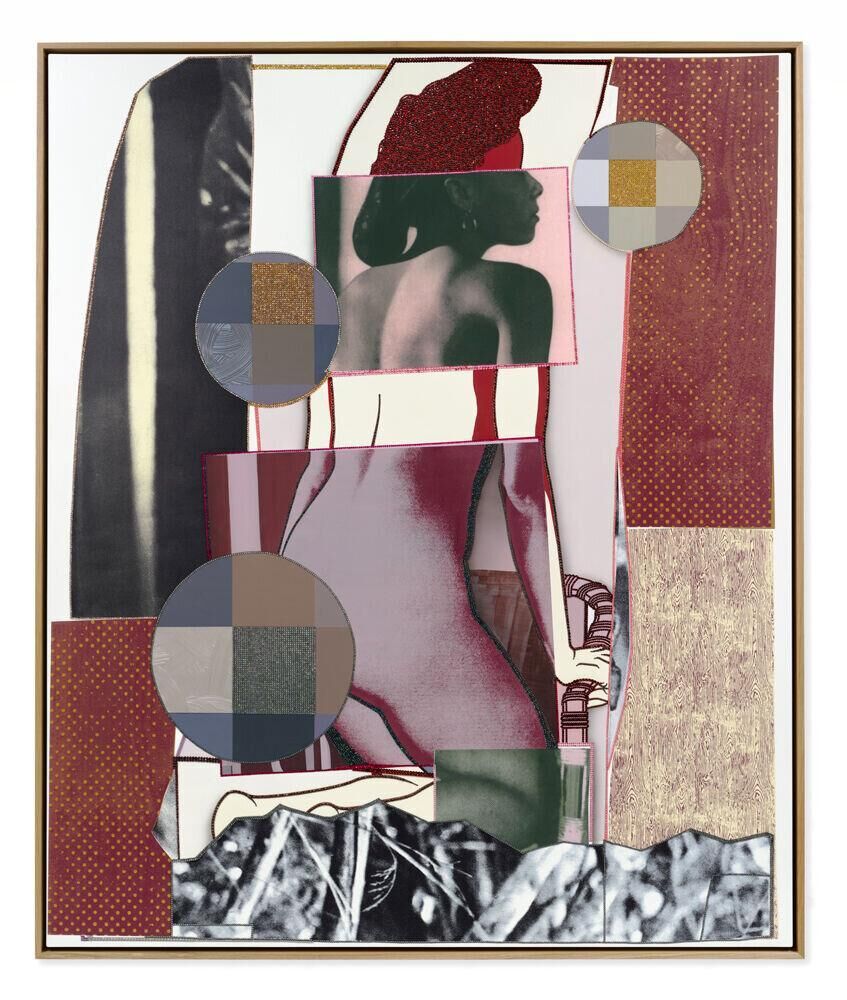
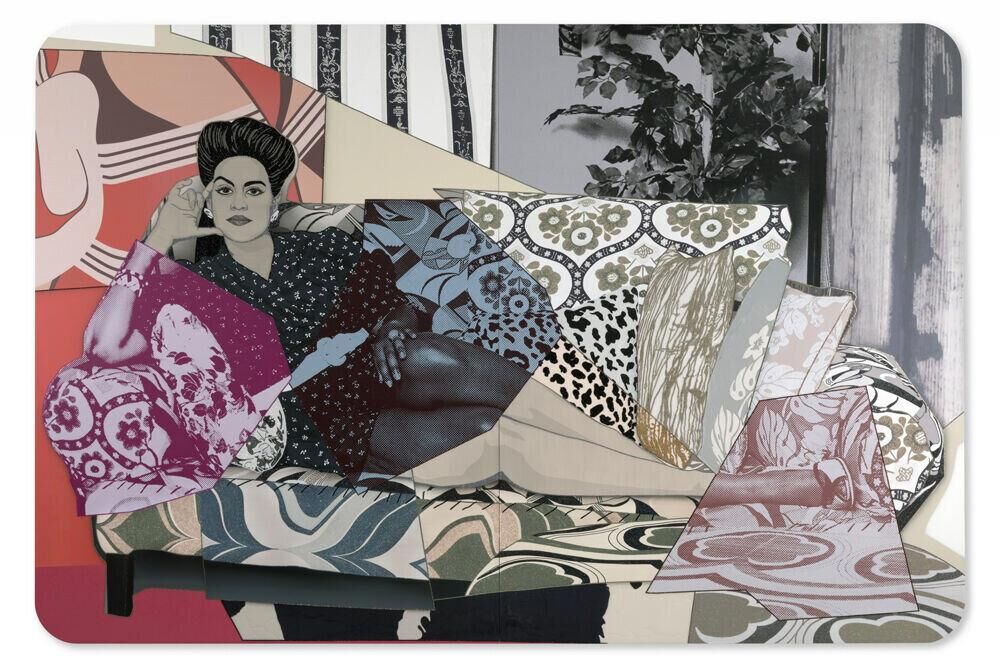
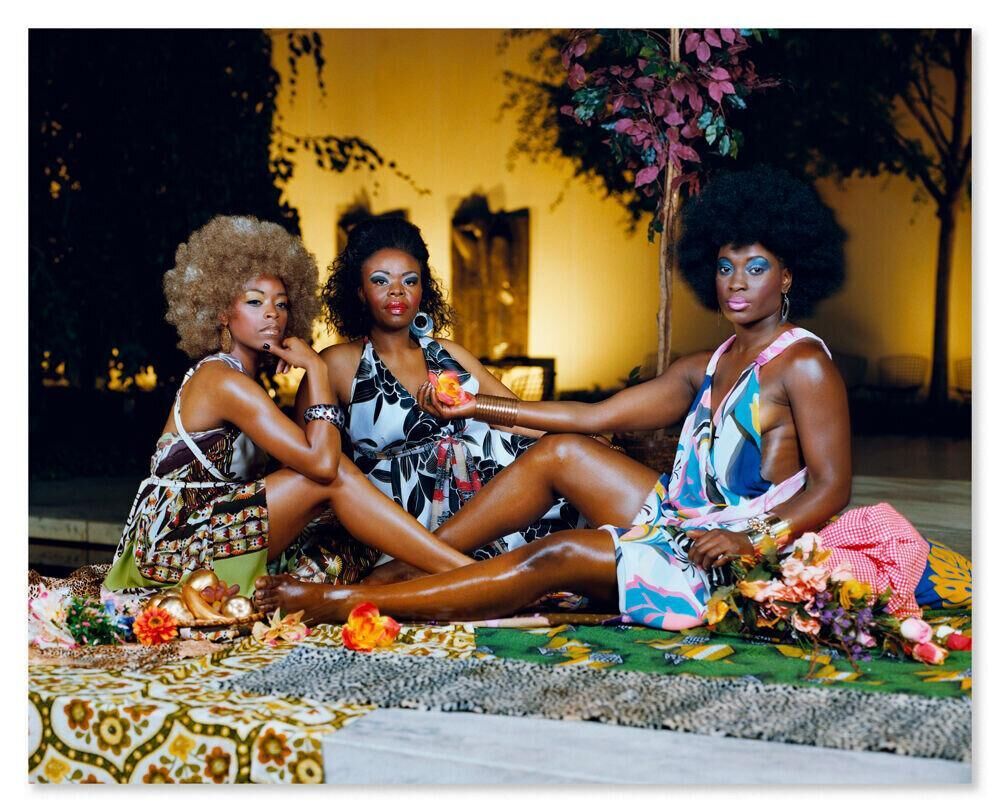
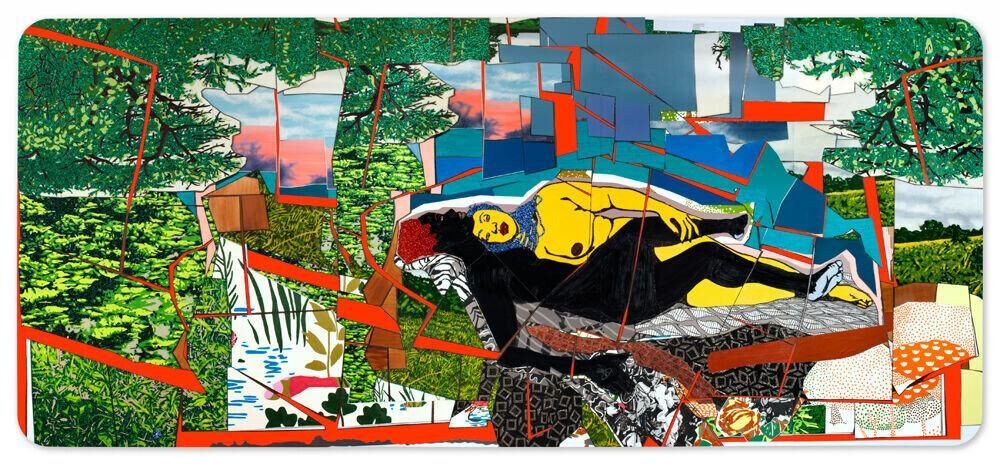
Thomas’s oeuvre maintains a constant dialogue with the history of European art, in particular French painting, with multiple references to Courbet, Ingres, Manet, and Monet. Rather than direct quotations, her borrowings take the form of structures she subverts. By breathing new life into the great canonical motifs – the nude, the depiction of leisure, the domestic interior – she shifts the gaze so that Black women take centre stage in a narrative from which they were so long excluded. Technique is key to this approach; painting, silkscreen, photography, and collage combine according to very precise processes in which the hand remains determinant.
All about love, love as an act of resistance
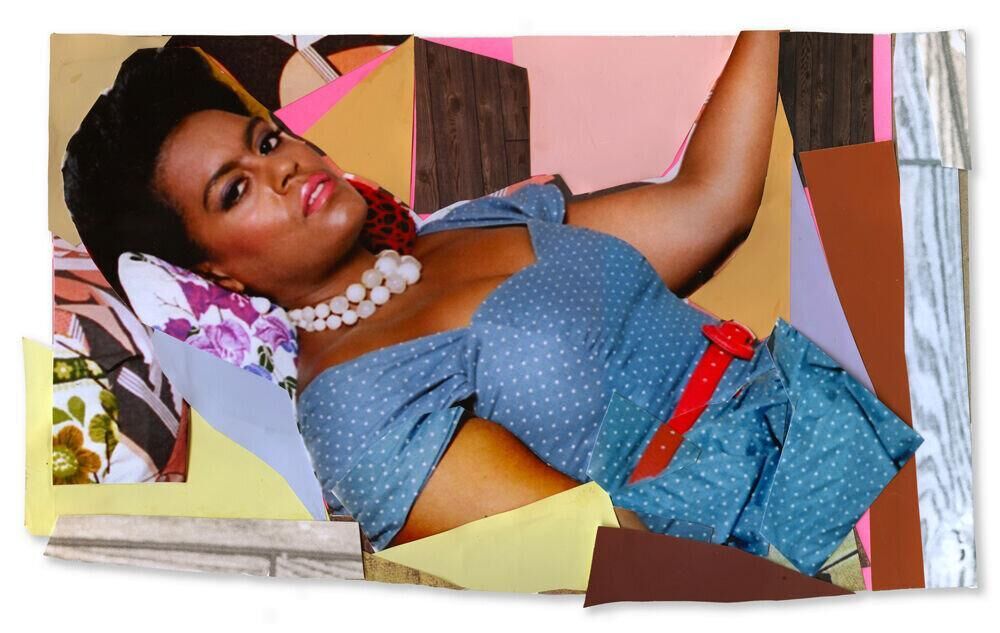
Thomas’s approach also involves the appropriation of images from popular culture, in particular Jet, a magazine emblematic of the African-American press. By transforming photos of Black women from the magazine’s archives, Thomas questions the regimes of visibility and desire, all the while affirming the visual sovereignty of the bodies she depicts. Her Grand Palais show envisages love as both a formal and political question in which time, doing, and materiality are indissociable from representation.
Interview with artist Mickalene Thomas for Numéro art
Numéro: Can you say something about the title of your exhibition?
Mickalene Thomas: All About Love is borrowed from the title of a book by bell hooks in which she talks about love as an action. Love requires responsibility. It’s work. It’s not just a feeling. For me, this exhibition comes from a personal place. My relationship with my mother. My childhood. My body. Desire. Queerness. Tenderness. Beauty. But also resistance.
What do you mean by resistance?
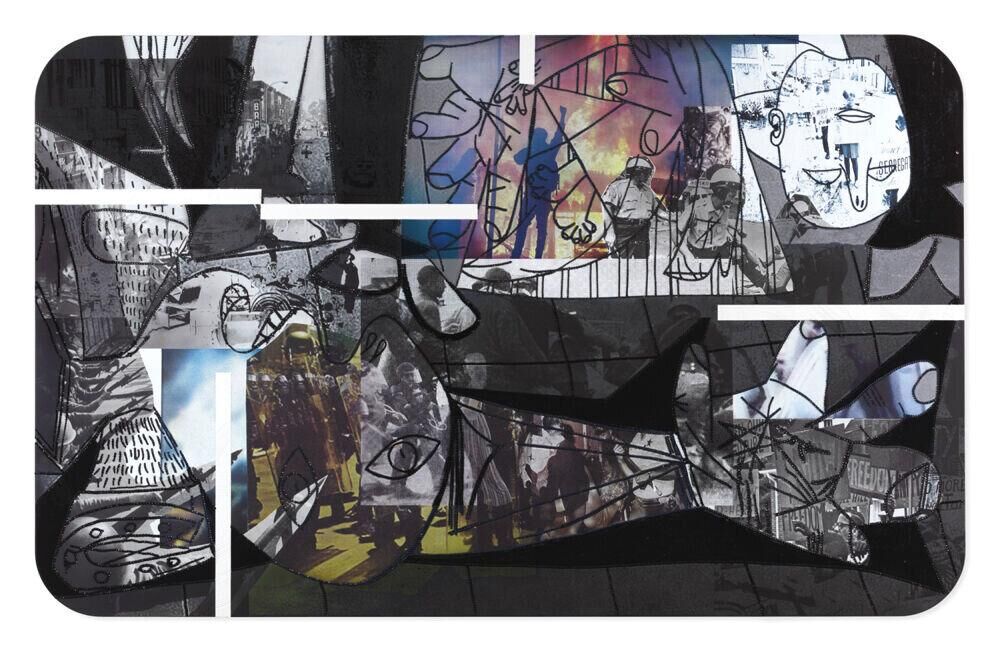
In the show, I included pieces from my Resist series that contextualize images of violence and activism across history – from civil rights to Black Lives Matter. It’s not only about Black bodies, but about all bodies that have been dehumanized. For me, making this work was a way to process grief without imploding. Art becomes a language when words aren’t enough. Culture matters because it reminds us, again and again, of our humanity. That’s why the Resist series is present. It reminds us that even rest is political. For Black bodies, rest has historically been denied. Leisure becomes a radical gesture.
“Even rest is political.” — Mickalene Thomas
Where did you grow up, and what’s your background?
I’m originally from New Jersey. I was raised by my mother, but also spent time with my grandmother. My family was very matriarchal. Education was important. Music was central – gospel, church, family gatherings. I was athletic, shy, moved schools a lot. At 16, I came out, moved to Portland, Oregon with my girlfriend, became independent very young. That experience shaped everything. It opened my world. Portland was where art became serious for me. I was surrounded by queer creatives, activists, and musicians. That community is still my family today.
“I’m interested in how certain graphic processes become painterly.” — Mickalene Thomas
In your work, you’ve developed some very specific techniques.
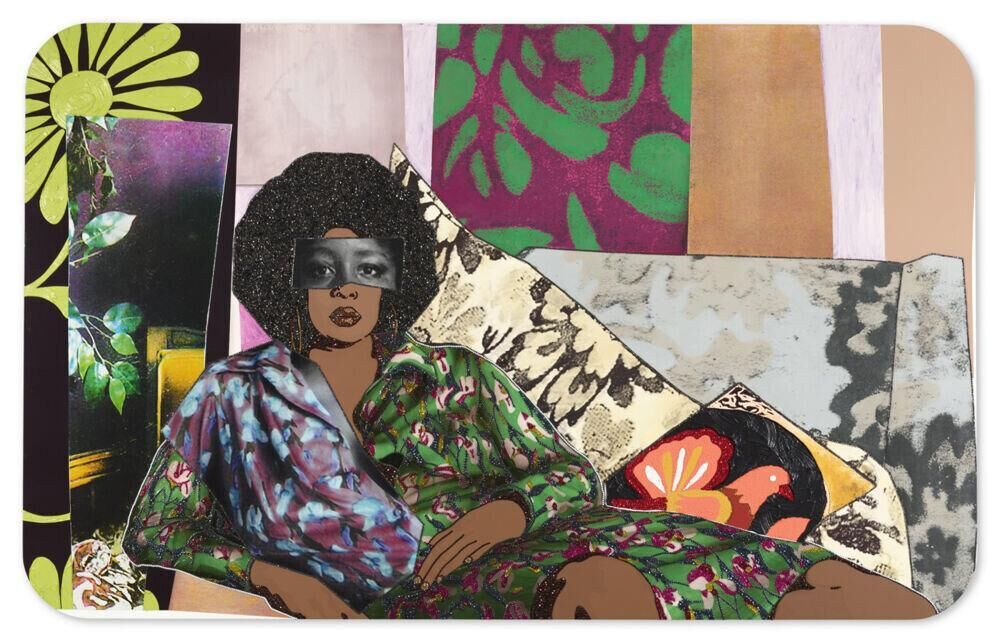
Yes, technique is very important for me. I’m interested in how certain graphic processes become painterly. When Andy Warhol was working with silkscreen, he used a very graphic technique but turned it into something expressive. He would do a lot of one-offs, experimenting, playing. With my silkscreen work, everything begins with my hand – I draw directly onto the acetate. Then we transfer that drawing onto the screen and print it. So it’s a two-part process: my hand is present, then it’s removed. It’s pushed through another system. That tension is important to me.
“Though it’s not literal collage, even if it often looks like collage.” — Mickalene Thomas
Where do your patterns come from?
The patterns are all mine. We take them and create prints, often using several colours – four, sometimes more. Some elements are painted directly onto the canvas, sometimes with tape that I later remove. Everything else is screen-printed. Because of the way I integrate techniques, you get a trompe-l’oeil effect. It can look like something is collaged or applied, even though it isn’t. The edges, the layering, the way things meet – all of that creates an illusion.
Might one therefore say your favourite technique is collage?
Yes, though it’s not literal collage, even if it often looks like collage. The language of materials is important, but it’s never one-to- one. The source material might be paper or magazine images, but once it enters the painting, it becomes something else.
“Chance plays a role, but not in a loose way.” — Mickalene Thomas
I always make a physical model first – not a digital one. I only use digital tools when I need to scale something up. I scan the original layers and then adjust them digitally if the work is going to become a mural or be adapted to a specific architectural space. But the image itself is always handmade. There’s no digital manipulation in terms of composition – just scale and placement.
Do you control absolutely everything in the process?
Chance plays a role, but not in a loose way. I make decisions, but allow myself to change my mind. Not everything planned in the collage ends up in the painting. When I paint, new gestures appear, new marks. The relationship to material shifts. You have to let the materials do something else. You can’t stay married to the original source. Sometimes I step back and realize something feels too flat, or the depth isn’t moving. Then I intervene. That’s where painting takes over.
“There’s a sense of play in this body of work. It’s very organic, very intuitive. Almost childlike.” — Mickalene Thomas
You often refer to Picasso’s Têtes de femme series. What interests you in it?
Initially, I was interested in Picasso’s films, but it really emerged from a conversation with my makeup artist during a photoshoot. I wanted to collaborate with the people I work with behind the scenes – my makeup artist, my hair stylist, the people who help construct the image.
How do you translate it on canvas?
We began by looking at faces, but abstracting them. I would cut a shape, place it, then my makeup artist would make a mark. Then I’d respond with another shape. These works are composites of multiple portraits – sometimes my sisters, sometimes other muses. There’s a sense of play in this body of work. It’s very organic, very intuitive. Almost childlike. Many of the pieces are made from scraps – negative shapes left over from other works. I don’t throw anything away. Everything is recycled, reactivated, transformed into something else.
“I don’t throw anything away. Everything is recycled, reactivated, transformed into something else.” — Mickalene Thomas
Do you only work in series?
Yes. Series allow me to communicate more clearly with the viewer. A single work can say something, but a series builds a language. Some series are numbered, others use dates.
You also produce shaped canvases. Why?
Shaped panels are something I’ve worked with for a long time. I wanted to move beyond the traditional frame. Early on, I was looking at artists like Elizabeth Murray and Frank Stella, thinking about how the frame itself is part of the work. If someone else frames the image, they control how it’s seen. I don’t want that. I design the frame as part of the work. Collectors can’t reframe it. The edge is conceptually integral. Originally, many of the shapes I used referenced Victorian mirrors – ovals, ornamental forms. The idea was to push beyond containment, to question how images are held and presented.
“I think about how the body moves through space, how the experience begins before you even enter the exhibition.” — Mickalene Thomas
How important are the setting and the exhibition design to you?
Display is extremely important to me. I’m not interested in work simply hanging on walls. I think about how the body moves through space, how the experience begins before you even enter the exhibition. If I have the opportunity and the budget, I want to be involved from the very beginning, even on the outside of the museum – the façade, the entrance, the transition. Once the doors open, everything matters: sound, light, props, colour. I want people to feel like they’re entering a home. Low light. Brown walls. Screens. Sound. I want to set a tone of intimacy. I want visitors to forget where they came from and enter a space of imagination.
“It’s not enough to show an artist – you have to support the communities connected to that work. Programming, education, access. Otherwise, it’s just symbolic” — Mickalene Thomas
In your Grand Palais show, you’ve even reproduced rooms from your mom and grandma’s apartments.
Yes, I want people to feel that sense of lived memory. Art comes from places you don’t always consciously understand. You just know you have to make it. My grandmother’s chair is a recurring image for me. She used to patch furniture with scraps of fabric. When I started making chairs in my installations, I didn’t immediately realize why. Then it clicked – that memory was stored in my body.
What do you want people to take away from this exhibition?
I want people to feel something deeply. Beauty. Politics. Life. A moment of transformation. I want the experience to hit the gut. Paris is different from New York. The language, the structures, the pace of change. But the support from Black communities here has been very meaningful. Institutions have responsibilities. It’s not enough to show an artist – you have to support the communities connected to that work. Programming, education, access. Otherwise, it’s just symbolic. I don’t want to be the first Black female artist if there’s no second or third. That’s meaningless.
“Mickalene Thomas. All About Love”, exhibition until April 5th, 2026, at the Grand Palais, Paris 8th. Mickalene Thomas is represented by Galerie Nathalie Obadia.