24
24


Interview with Kehlani, the spiritual and sensual R’n’B singer praised by Jay-Z and Drake
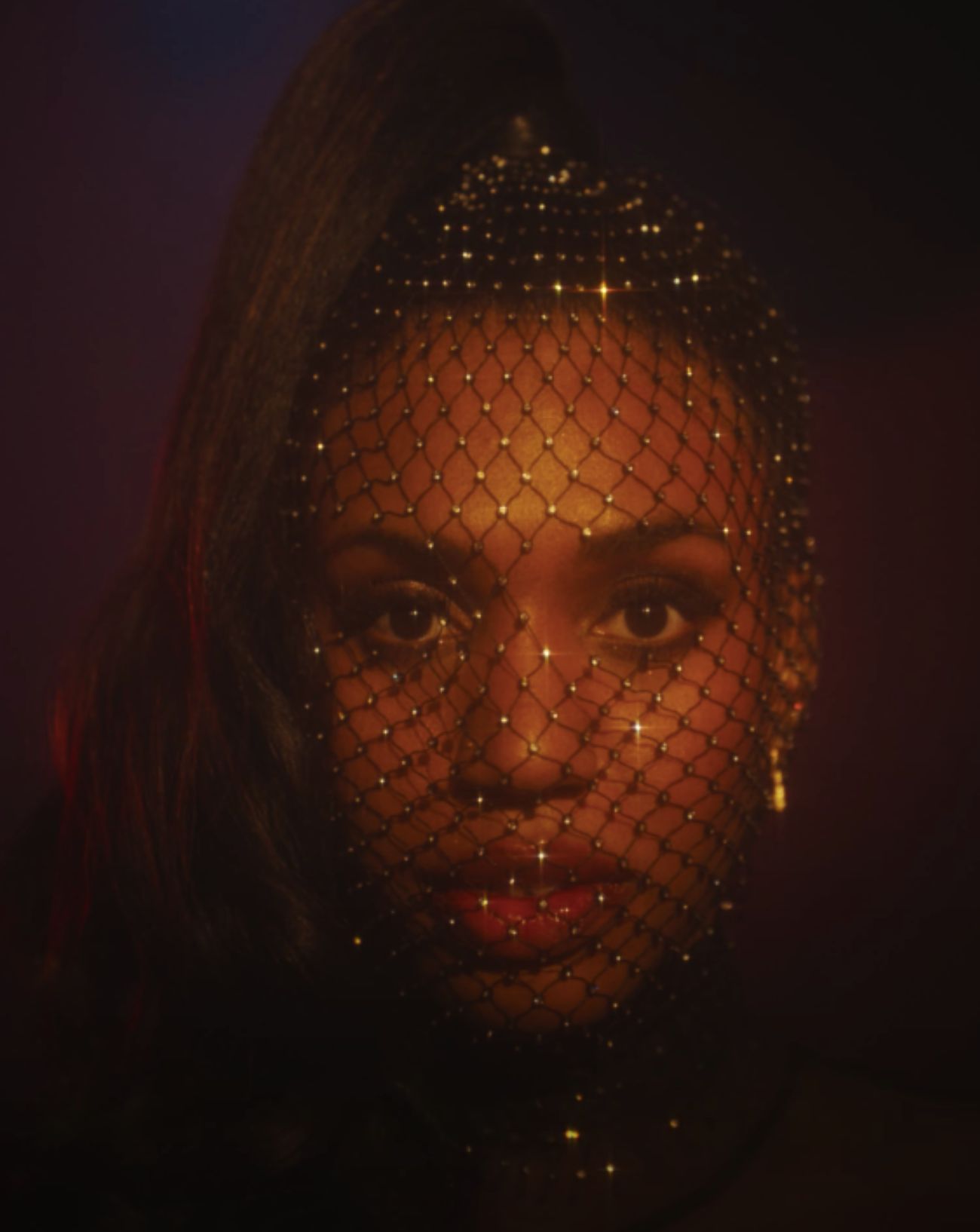
American singer Kehlani is one of the most beautiful voices in modern R’n’B music. The two-time Grammy-recipient is unveiling her new album, Kehlani, on April 24th, 2026. Numéro met the star acclaimed by Jay-Z and Drake when she released the single, After Hours (2024). Throwback to our interview with the spiritual and sensual artist.
Interview by Violaine Schütz,
translation by Emma Naroumbo Armaing .
Published on 24 April 2024. Updated on 24 April 2026.
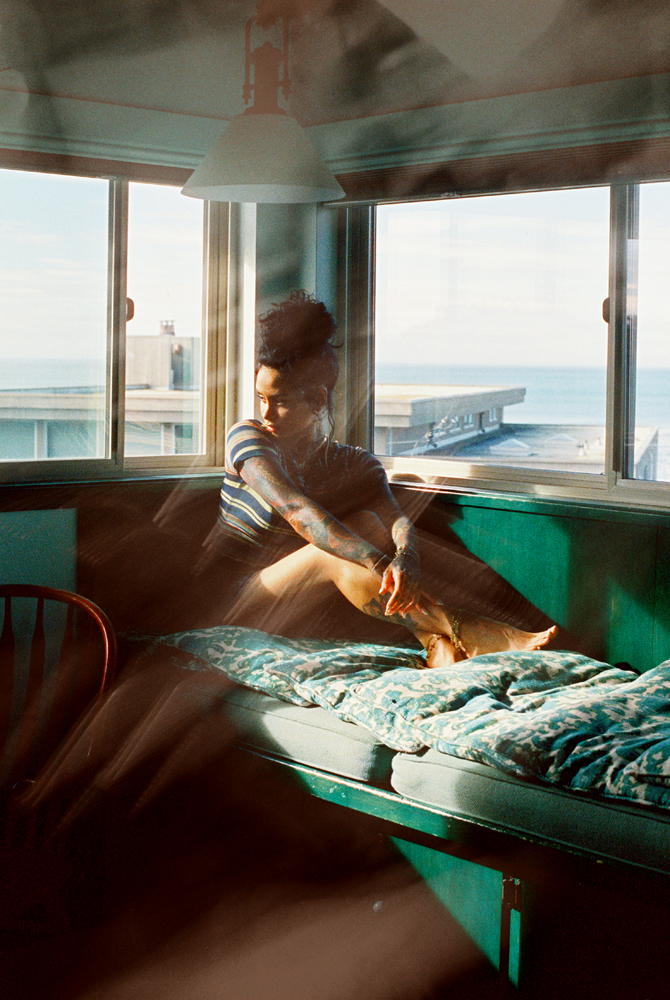
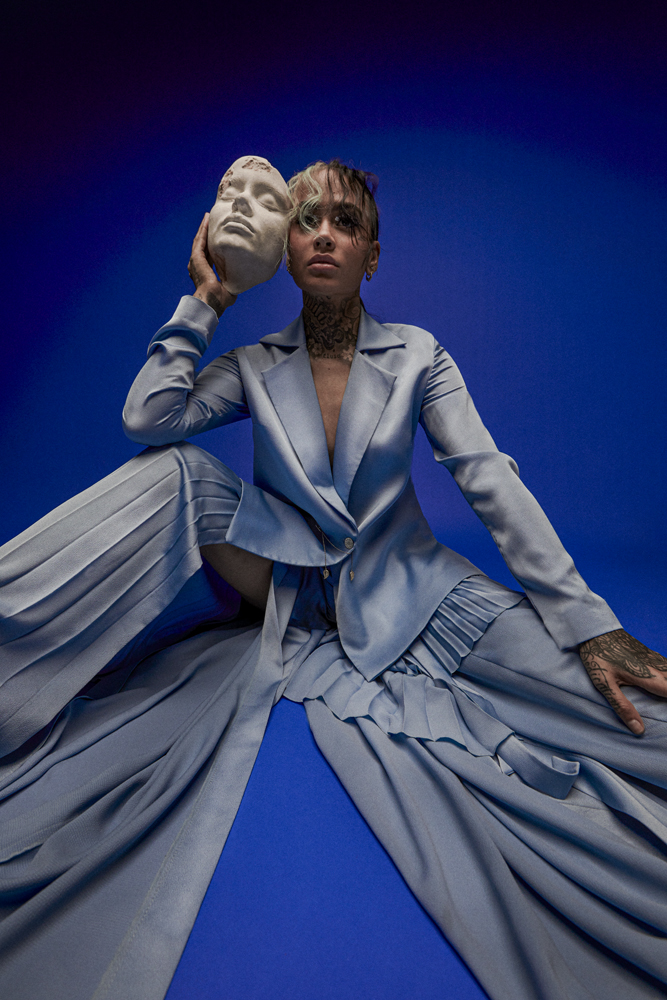
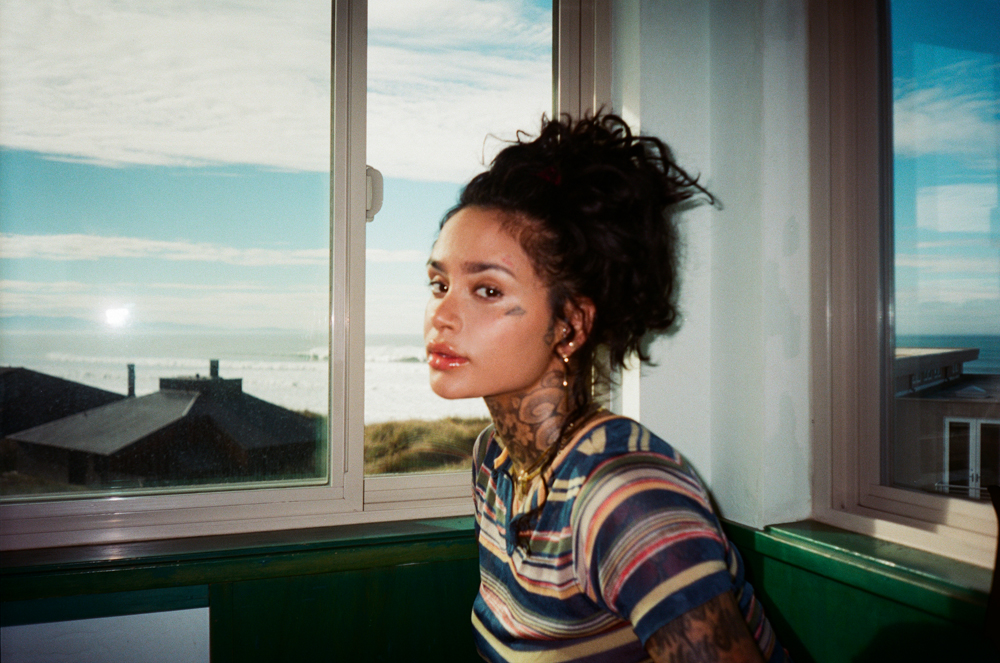
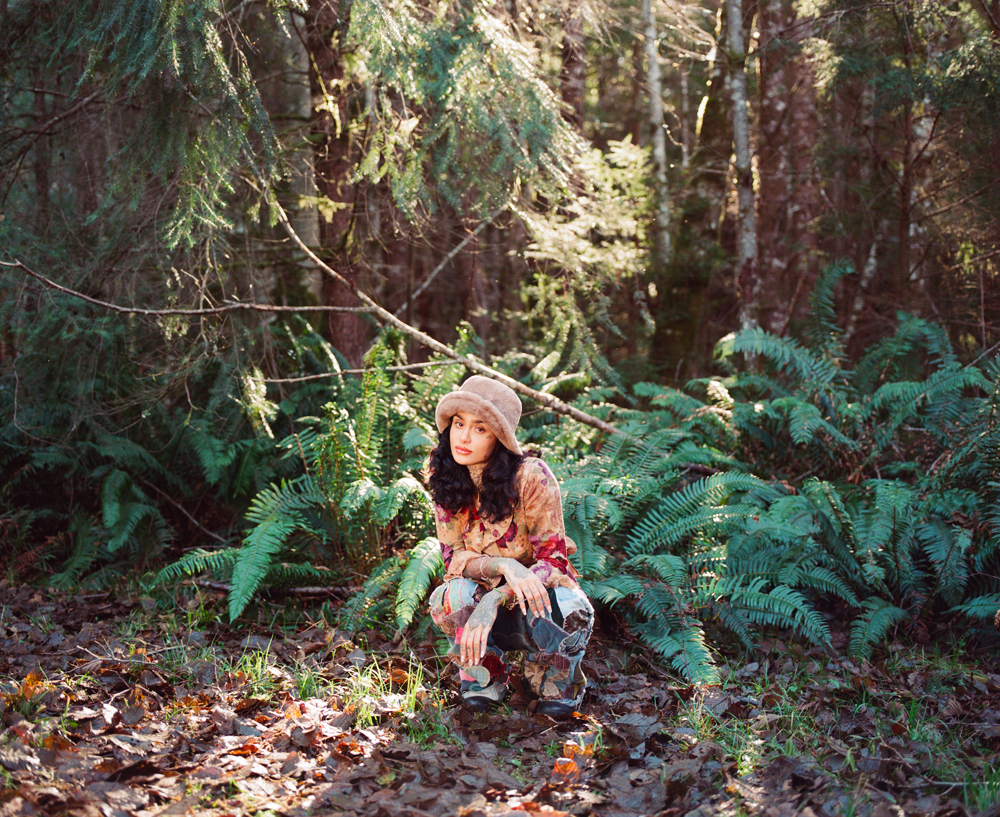
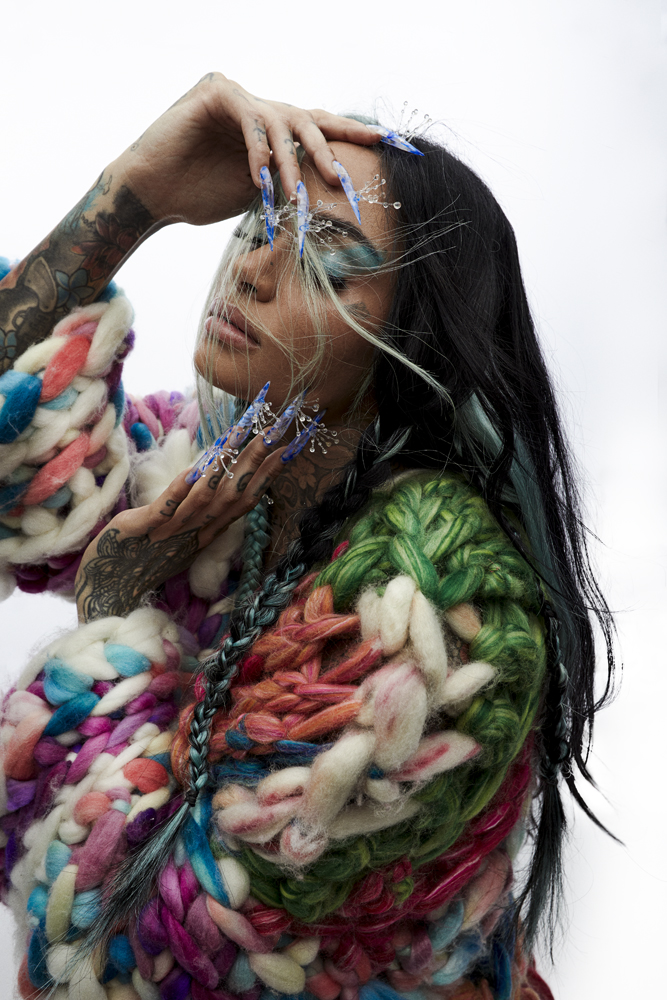
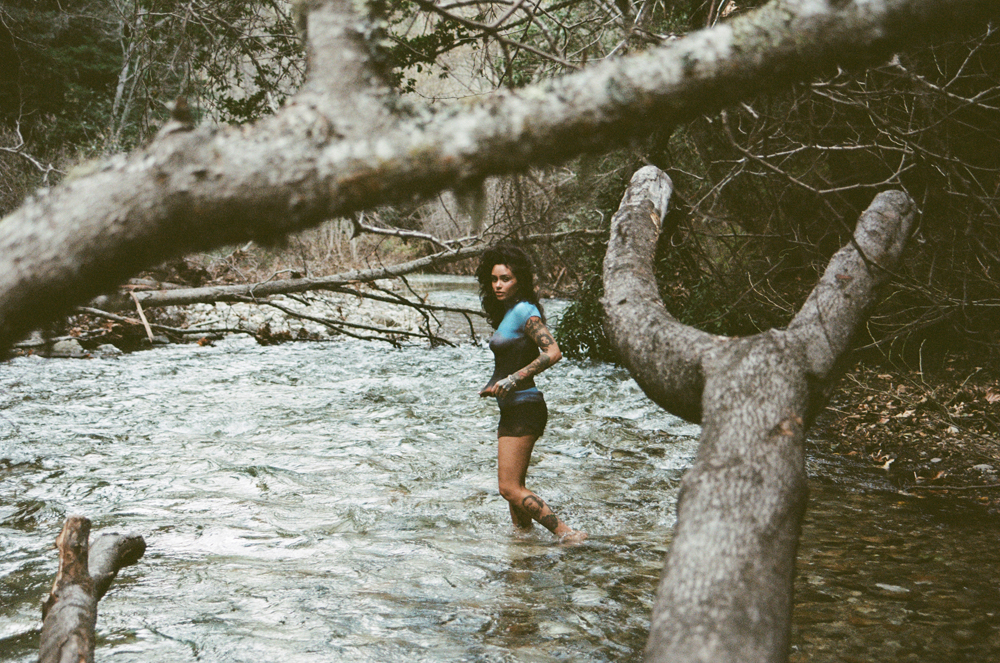
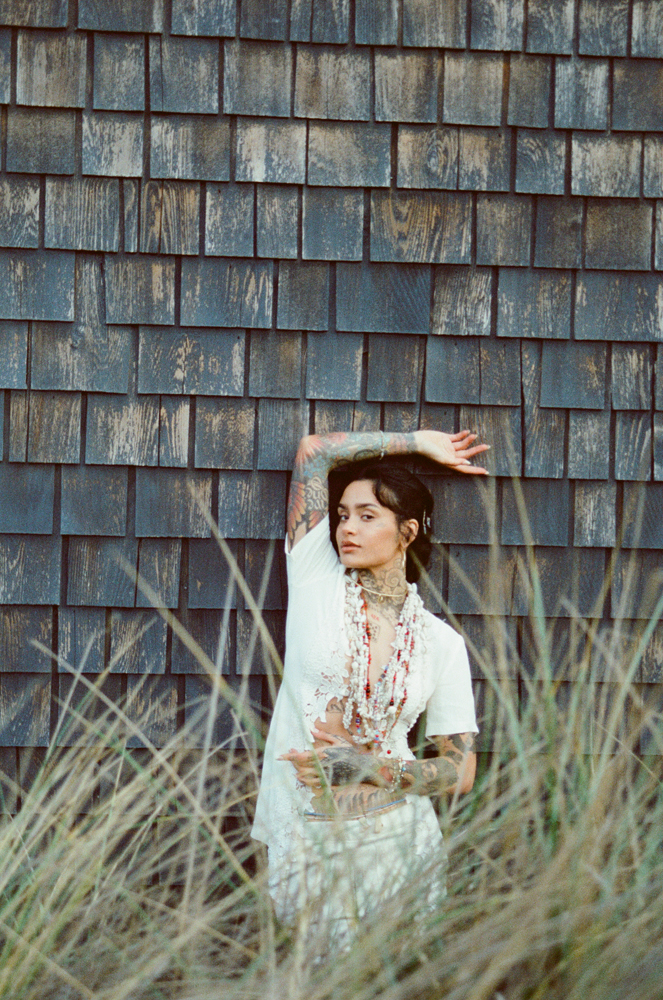
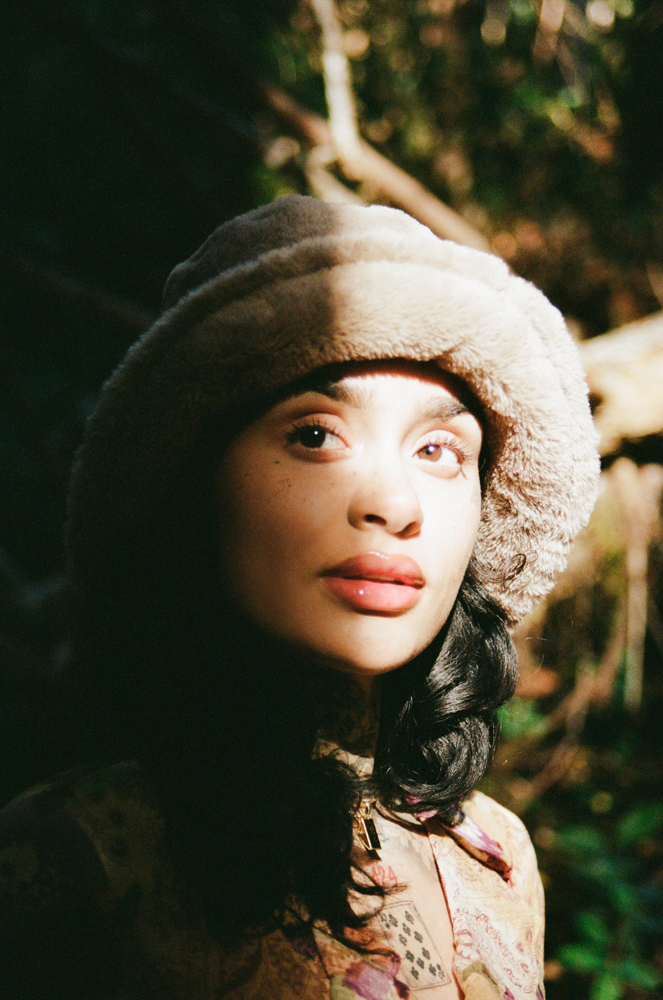
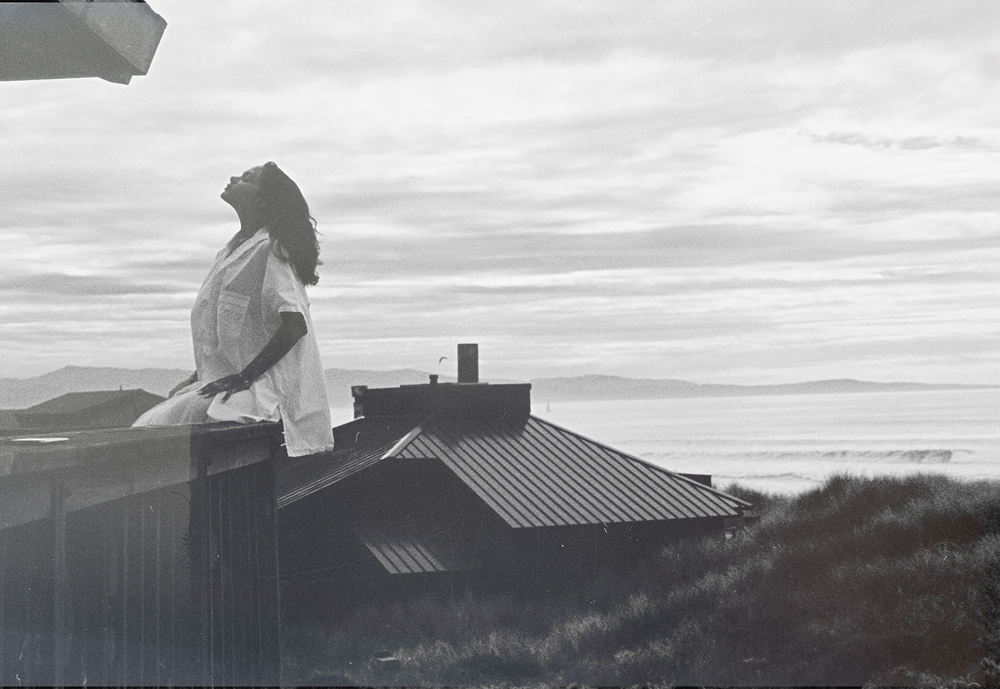
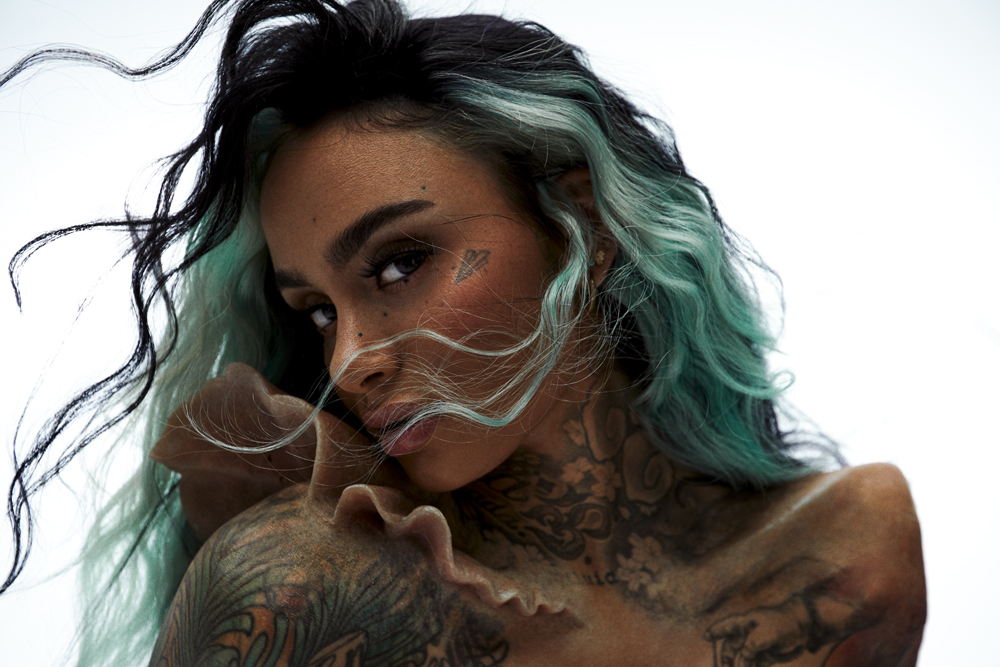
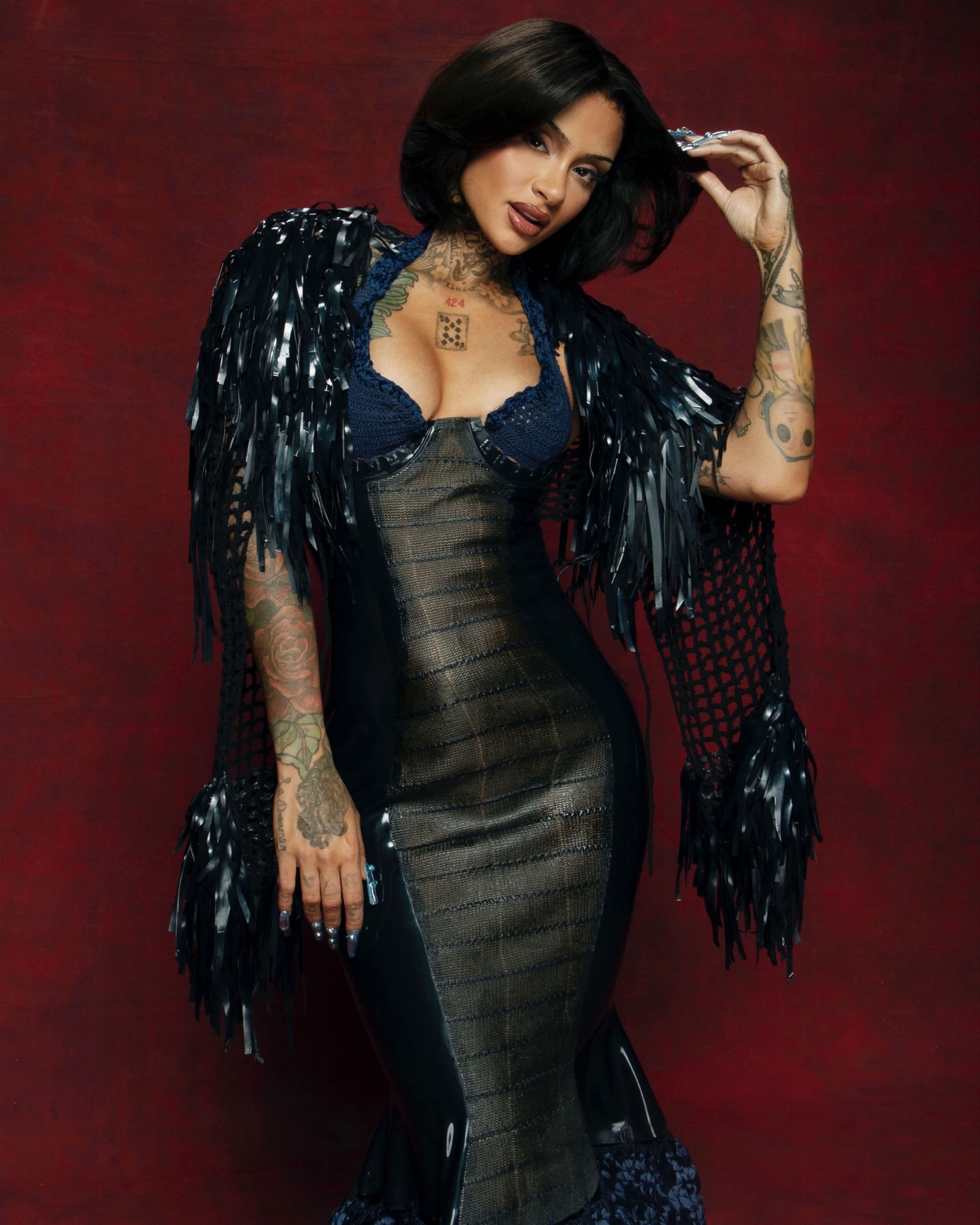
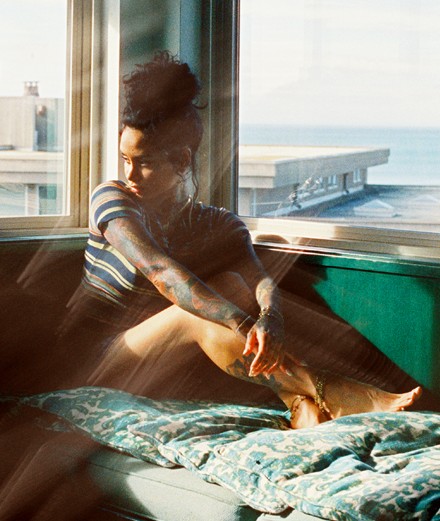
Kehlani is undoubtedly one of the most beautiful voices in modern R’n’B. A reminder of that came with her feature on Cardi B’s new single Safe, released in September 2025. The track was released a year after her album Crash. This sexy, eclectic, summery record featured the stunning After Hours, as well as her mixtape While We Wait 2. To top it all off, the American singer won two Grammy Awards in February 2026 for her song Folded (2025). She is back in April 2026 with a splendid opus, simply titled Kehlani, featuring Usher and Missy Elliott.
A two-time Grammy Award-winning artist
The California-born singer, songwriter and dancer has collaborated with Cardi B, Eminem, Burna Boy and Justin Bieber. She is already a superstar in her home country. With nearly 10 billion streams, 17 million followers on Instagram, and famous admirers, like Jay-Z and Drake, the 31-year-old artist has nothing left to prove.
Yet, she was putting her crown back on with her third album, the stripped-down, powerful and moving Blue Water Road (2022). Having experienced a difficult childhood and intense periods of doubt, she delivered a spiritual journey through self-love, healing and gender with that record. One that will surely transform its listeners.
Numéro met her on Zoom. The charismatic artist beautifully demonstrates that the path toward inner peace can be a captivating journey, infused with sensuality and warmth.
A free, troubled spirit
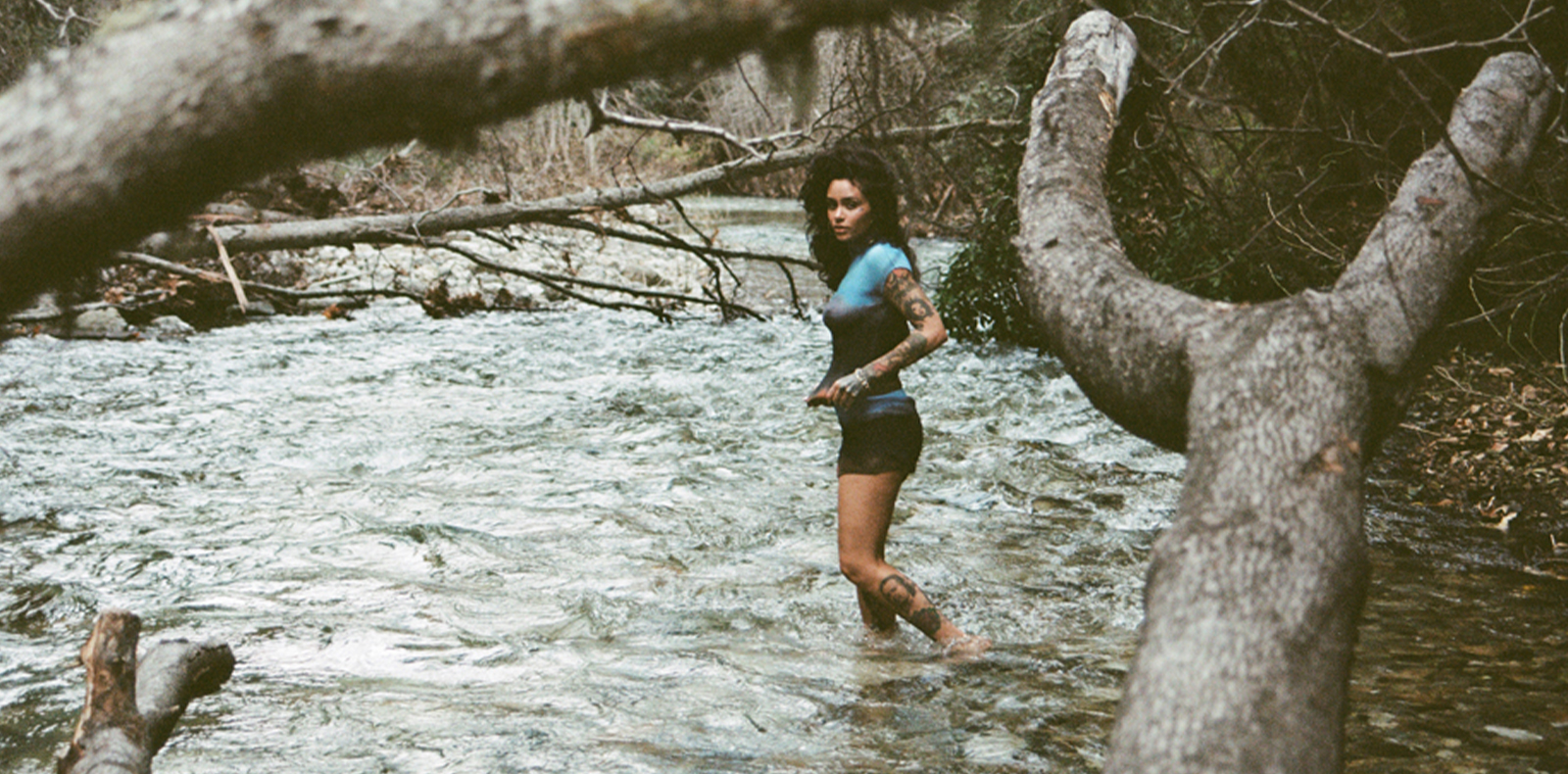
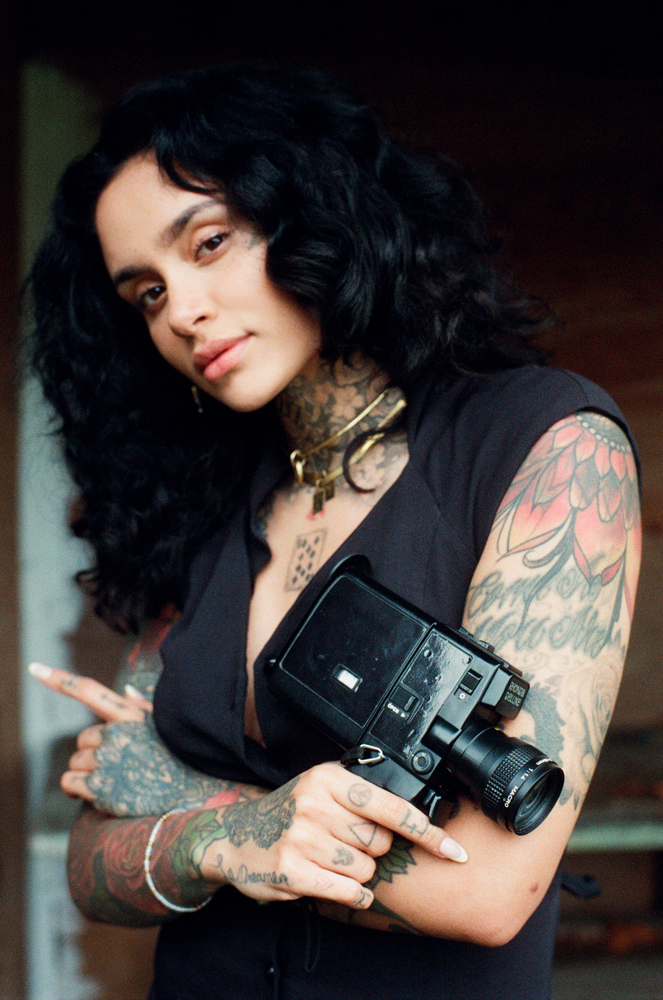
Kehlani’s body must be looked upon like an open book. Tattooed from her head to toe, the Californian singer has carved meanigful words into her flesh. “Espíritu libre” (Spanish for “free spirit”), “perdida y encontrada” (“lost and found”), “fluid” and “woke”, as well as the first name of her daughter, Adeya. Her skin also displays drawings of paper airplanes, flowers, a skateboard. But also the faces of icons Lauryn Hill and Frida Kahlo, and silhouettes of the heroes of Pulp Fiction, Uma Thurman and John Travolta, dancing the twist. Even more symbolic, the epidermis of her sternum reads the mantra “forgive yourself” written in Arabic. As for her back, it reads Nietzsche’s famous maxim, “What doesn’t kill you, makes you stronger.”
Indeed, the artist has come a long way. Kehlani Ashley Parrish was born in 1995 in Oakland, California. She defines herself as a “black, white, Native American, Spanish, Mexican and Filipino” woman. A definition that has empowered her. One that is channeled through her third album, Blue Water Road, as the hushed guitars and velvety vocalist translates a long mental and physical journey. At the time of the composition, Kehlani had broken up with loved ones, while some close friends had died of overdoses. The R’n’B star then embarked on a long spiritual detox during which she remained sober, went out occasionally, covered her hair, worshiped her ancestors and had her breast implants removed, eager to break free with her past, sultry image.
Zendaya’s childhood friend
Kehlani used to be known for her naked appearances in sensual music videos and for the risqué video she shot after having a little too much red wine, as she shared with the media. On Blue Water Road, her voice sounds so vulnerable, soothed, and connected to the elements. Her album cover shows her in a white shirt, appearing virginal and stunning, reflected by the ocean. The singer possesses the wisdom and beauty of those who have come back from hell. The young Kehlani was adopted and raised by her aunt, while her mother, a drug addict, served time in jail. Her father, who was also addicted to illegal substances, passed away when the Californian artist was still a child. Not to mention the times when Kehlani found herself homeless and forced to steal food from grocery stores to survive.
Lauryn Hill and Erykah Badu as main influences
As a teenager, she found refuge in dance, and ballet in particular. However, a bad injury prompted her to change direction when she was in high school. Influenced by Lauryn Hill, Erykah Badu and Jill Scott, she began singing, joining the mainstream pop group PopLyfe at the age of 14. From then on, the young artist, who had been childhood friends with Zendaya and musical prodigy H.E.R., went on to release a string of mixtapes, singles and prestigious collaborations, including Cardi B, Eminem, Justin Bieber, Stormzy, Calvin Harris, Teyana Taylor… Her soft, sensual voice, full of humanity, seems charged with soothing virtues, and her addictive, adventurous melodies (Gangsta, Toxic, Good Thing) are often about the throes of love.
But if Kehlani has become an icon, she also owes it to her magnetic aura and the battles she fights once the lights are turned off. The artist has always spoken openly about the ups and downs of her mental health — including periods of depression — and about her sexuality. She has been in a relationship with rapper 070 Shake, and has alternately defined herself as non-binary, pansexual, queer and lesbian. Gay love is at the heart of her new songs. Calm, happy, inspired and free, the singer talks about her emotional and musical endeavors.
Interview with R’n’B star Kehlani
Numéro: Your album is called Blue Water Road and, in the booklet of the record you wrote: “Blue water road is a destination in my mind. I’m giving everyone access. It’s an emotional, a sexual and spiritual journey. To me, the album is like a glass house. It’s light, transparent, and the sun is shining right through it.” Can you tell us more about it?
Kehlani: While I was recording my previous album, It Was Good Until It Wasn’t [released in 2020], I was in a heavy, dark state [the singer had just split up with rapper YG]. Whereas for Blue Water Road, I was in the process of transitioning out of harmful patterns. So I was in a much happier, brighter and more peaceful mindset. This new album represents my inner journey to rebirth.
I recorded the tracks in a beautiful studio in Malibu, nearby trees and the ocean. That’s also why I tried to achieve a sound that resonates organically. I wanted to be very present on that record, energetically speaking. Along with the album, I shared a documentary on YouTube that follows me on a road trip. The images symbolize the feelings I went through. This way, my fans have access to the world I’ve created and know where I’m at in my life.
Between your previous album, It Was Good Until It Wasn’t, and this new one, you explain that you underwent some kind of detox or spiritual cleansing. What was that all about?
I tried to get rid of the part of me that was depressed and constantly acting like a victim. I was caught up in a cycle, a spiral of negativity that went on and on. It was all linked to personal things that happened in childhood. I kept falling back into the same patterns, as if I was fighting with an entity outside me, so I had to detach myself from it. My greatest enlightenment was to realize that I no longer wanted to play a role in my own suffering. Even if horrible things happen to you in life, you can decide whether you want to participate in those unfortunate events.
How did you reach that rebirth?
For a year, I didn’t smoke or drink. I was completely sober and focused on my music. The pandemic also helped me refocus. I went to the exact opposite of my usual way of thinking and behaving, and I surrounded myself with people I could trust. For this album, I undressed emotionally. I’m more exposed, vulnerable and simple than ever. Right now, I’m in my purest form. When I was going through my spiritual process, I began to stop wearing make-up, to free myself from vanity, to stop looking after my nails and hair, and to stop wearing fake eyelashes.
My sense of style translated into my mental transformation. I got rid of pieces that were too energetically charged, in which you could no longer distinguish the person who wore them. During the pandemic, I gave away a lot of my clothes, almost everything I owned. I only kept designer archive pieces that were dear to me. I no longer buy something new just because I think it’s cute, but because I like it and because it defines me above all.
“I remember a young woman who told me that she quit her job and ended a toxic romantic relationship after listening to my music.” – Kehlani
How did you renew yourself while keeping your musical identity on this record?
I’ve never bought into the idea that, in order to become a new version of yourself, you have to let other versions of yourself die. You don’t have to cling to every part of you, just the ones you admire. When I look at the other versions of myself, even the wildest ones, I’m learning something or realizing how they have made me grow. Without them, I couldn’t be who I am today.
You have been doing a lot of signing sessions with your fans in record stores for this album. Is this a way for you to not forget where you come from?
It’s not only to keep in touch with the old me, but to stay close to my fans. I still have a very devoted fan base. I’ve never forced myself to do things to please anyone, be it the beatmakers, labels or my peers. However, I always try to please my fans, because they’re the ones who tell me that I’ve changed their lives, not the label bosses. I’m here for the people who tell me I’ve saved them or changed them and those who write to tell me that my songs have given them strength to be who they want to be. When I’m signing autographs, I’m nurturing my relationship with them. I can see their faces, touch their hands, hear their stories…
Do you remember a specific message sent by a fan that moved you?
I remember a young woman in particular, who told me that she quit her job, ended a toxic romantic relationship and began an inner journey to find out who she was after listening to my music. She was depressed and aware that she was surrounded by the wrong people. One day, as she was listening to my songs, she said to herself: “Come on, that’s it, I want to change my life.” So she embarked on her self-love journey, and set off on a trip around the world. She thanked me, but then I pointed out to her: “You’re giving me too much credit. I may have been the spark that set off this journey, but you’re the one who made it all happen.”
“My daughter and Zendaya love each other.” — Kehlani
What are your latest favorite artistic pieces?
I listened to a lot of classical music while making this album, but also to Frank Ocean. When I’m working on my music, I listen to records that are far removed from what I do, like jazz or funk bands. I also tend to listen to music sung in a foreign language in order to not to be influenced by the English lyrics. For me, the only way to do something new is to listen to sounds at the opposite spectrum of my own universe. I’ve also watched a lot of Wes Anderson features, and removed any action movies. I wanted my new record to have that cinematic sound, like a film soundtrack.
You were childhood friends with actress Zendaya (with whom you almost formed a band), as well as singer and musician H.E.R. Can you tell us more about your friendships?
Yes, absolutely, we were all part of the same group of friends. We respect and love each other, and we still hang out together. My daughter and Zendaya love each other. They’ve both remained very “normal” people despite their success. Even with the crazy things they’ve accomplished today, I see them as sisters.
You have collaborated with Justin Bieber, Cardi B, Eminem, Post Malone and Teyana Taylor. How do you choose who you work with?
I’m lucky enough to have become friends with most of the artists I admire. I’m someone who relies a lot on my gut feeling, so if it doesn’t feel natural with someone, I won’t collaborate with them even if I love their artistic universe. If I feel that someone is resisting, that it’s not flowing, then I’m not going to force it.
“I turned to music to help people who would relate to what I was saying.” — Kehlani
Do you write songs for the teenage girl you once were?
I was very lucky to grow up listening to India Arie, Lauryn Hill and Erykah Badu. Their music helped me, as did the image these strong women embodied in their interviews. The fact that they spoke openly about how they felt was crucial for me. It made me realize how much you can do with music, and how much influence you can have on someone with songs. In fact, I turned to music to help people who would relate to what I was saying. For a while, I kind of lost sight of that goal, but I’m getting back to it. So yes, now I can say that I write music that my younger self would have listened to, or that others should have listened to if they wanted to seduce me at the time…
In addition to music, you are also passionate about photography…
Yes, I’ve had several cameras since I was a child, including a Nikon I inherited from my grandmother when I was 9. I’ve only taken a more serious interest over the last two or three years. At the moment, I’m trying to learn as much as I can about it and researching photographers to find out which visuals and artists move me, learning about their stories, motivations, the reasons why they choose one material in particular.
Vivian Maier is one of my favorite photographers. I think her story is completely wild. While she used to work as a nanny, she would take photographs just because she liked them, without trying to show them to anyone or to look for money or fame. The fact that her work hasn’t been during her lifetime is very powerful. For me, it represents the core of any artistic practice — doing things because you love doing them, and they make you happy, not for fame. And if it then has an impact on others, if it helps them, the practice will resonate all the more authentically. Keep in mind that in the beginning, we made art for ourselves, not to be in the limelight.
Blue Water Road (2022) and Kehlani (2026) by Kehlani are available now.