11
11


Faka, the queer duo ruling over South Africa
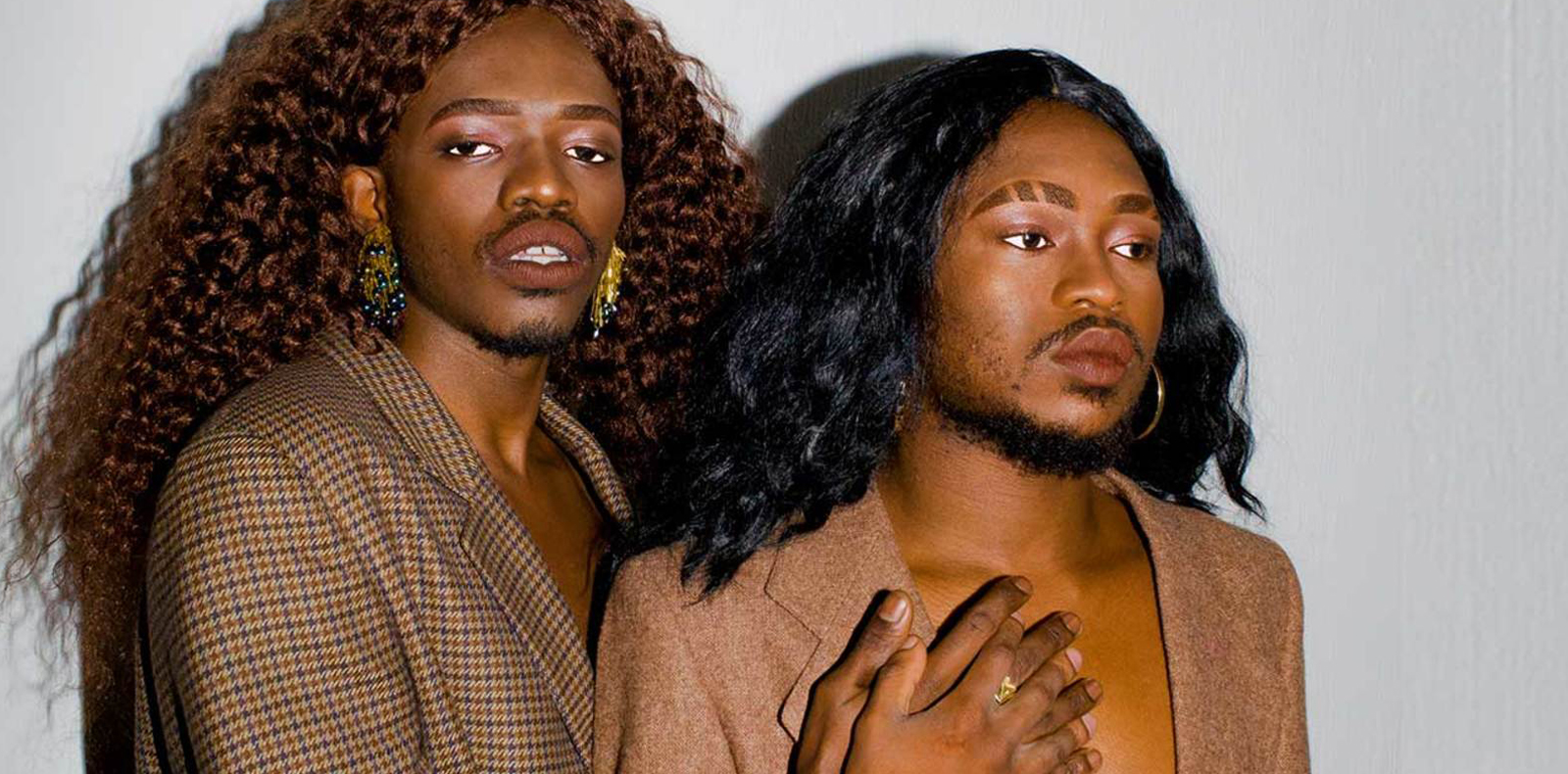
The music duo Faka have left their mark as the leading figures of queer culture in Johannesburg, South Africa. Sporting high heels, Desire Marea and Fela Gucci are celebrated for their kwaito sound, a South-African rap genre imbued with post-apartheid house music.
By Alexis Thibault.
Published on 2 September 2020. Updated on 11 June 2026.
In the midst of the lush vegetation of Johannesburg, a rather odd couple dance, sway and strike poses like supermodels. With their high heels, tight red leatherette trousers and white silk gloves emphasizing their voguing moves, Desire Marea and Fela Gucci abandon themselves to the music. Uyang’khumbula (2017) is a music video created by Faka, a musical project founded in 2010. Just like kwaito — a rap music genre with African accents diluted by a post-apartheid house — Faka have dragged themselves out of the hell of South African townships.
Celebrating queerness through music
Kwaito, literaly “anger” in Afrikaans, became the preferred means of expression for black South African people in the 1990s. While apartheid was tearing the country apart, this musical and dance genre was channeling violence. When Nelson Mandela called for peace after twenty years in prison, he tried to pacify, then depoliticize kwaito music and its raging drum machines.
Fifteen years later, the musical duo Faka screamed their thirst for freedom through kwaito music, or rather its heir, gqom music. That musical genre, meaning “to hit” in Zulu, was born in the 2010s and sounded more minimalist than South African house. With their red lipstick on and glitter on their eyelids, Desire Marea and Fela Gucci encompass the suffocating, yet sensual ambiance of gay nightclubs into their music collages. Among psychedelic performances and love songs, they engage in a languid mass and host their own “Cunty Power” parties in Johannesburg.
A rejection of society’s norms and hierarchies
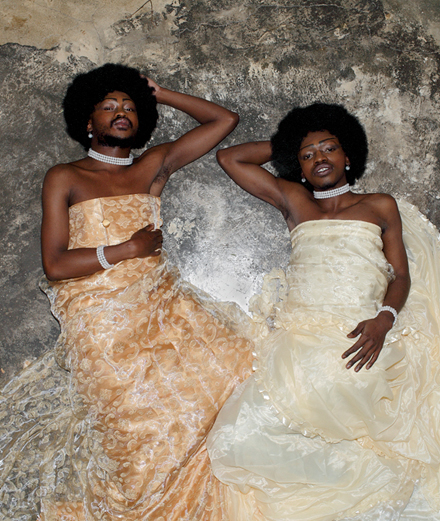
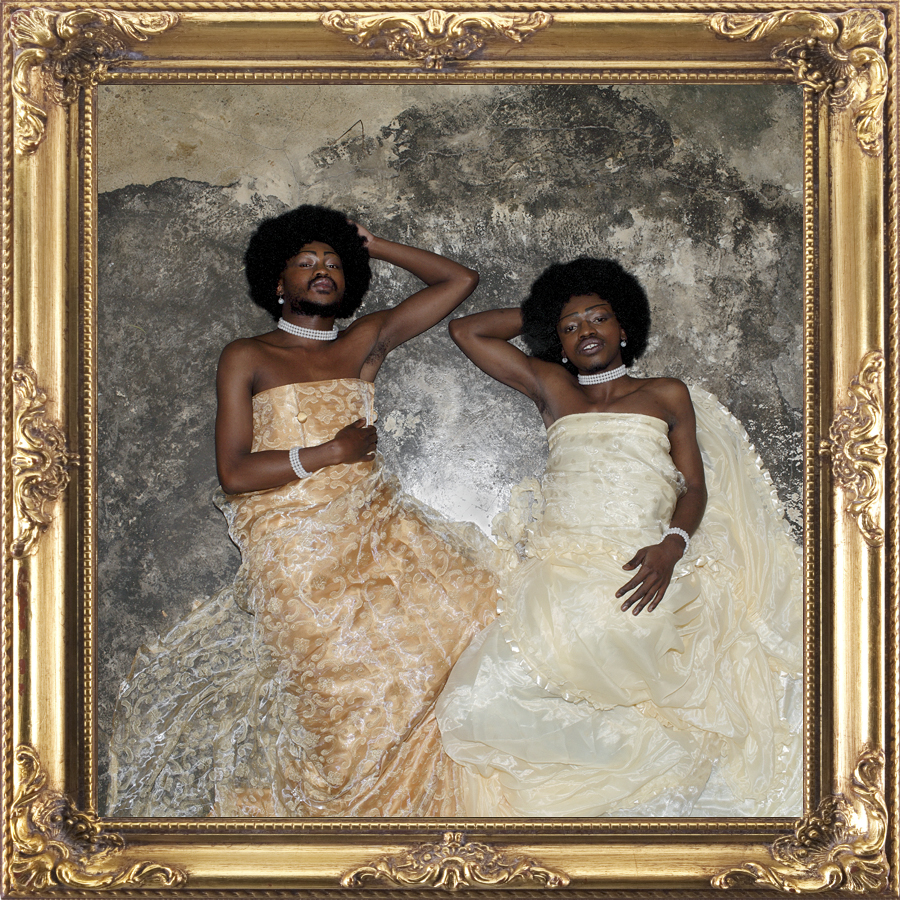
Acclaimed by American rapper Mikky Blanco, the creative tandem poses a lot for South-African photographer and filmmaker Kristin-Lee Moolman. Stylist IB Kamara dresses these queer performers in openwork leopard print jumpsuits, transparent crop tops and 1990s low-rise trousers.
Faka fully rejects heterocentrism and ultra-masculine values at the heart of post-apartheid South Africa. In their home country, identities are subject to hierarchies – racial, gender and sexual – that prohibit any type of self-awareness, self-expression and ambiguity. We were looking forward to catching the duo at the Loud & Proud festival at the Gaîté Lyrique in Paris in 2020 — a celebration of queer culture — but unfortunately, they didn’t receive their visas.