23
23


Ceysson & Bénétière: The meteoric rise of a French art gallery
Founded in 2006 in Saint-Étienne, the Ceysson & Bénétière gallery has carved out a place for itself in contemporary art in just fifteen years. After setting up in Luxembourg, Paris, Geneva and New York, the gallery , known in particular for defending the artists of the Supports/Surfaces movement, inaugurated one of its largest spaces on 18 September … in Saint-Étienne. A surprising choice for the most French of international galleries, which takes advantage of this 1000 m2 surface to present the monumental sculptures of Bernar Venet. Let’s take a look at the reasons for this exceptional growth.
By Matthieu Jacquet.
Published on 14 October 2021. Updated on 23 July 2026.
French art is undergoing major changes. After Marseille or Montpellier, it is the department of the Loire that could benefit from decentralization next. Could Saint-Étienne, a former mining town with a population of barely 200,000, be the next stronghold of contemporary art? In any case, this is the project that the Ceysson & Bénétière gallery is proud to support. Fifteen years after opening their first space in the town of Saint-Étienne, its founders have just built a vast building whose 1000 m2 of exhibition space has nothing to envy to the 80 m2 they opened at first.
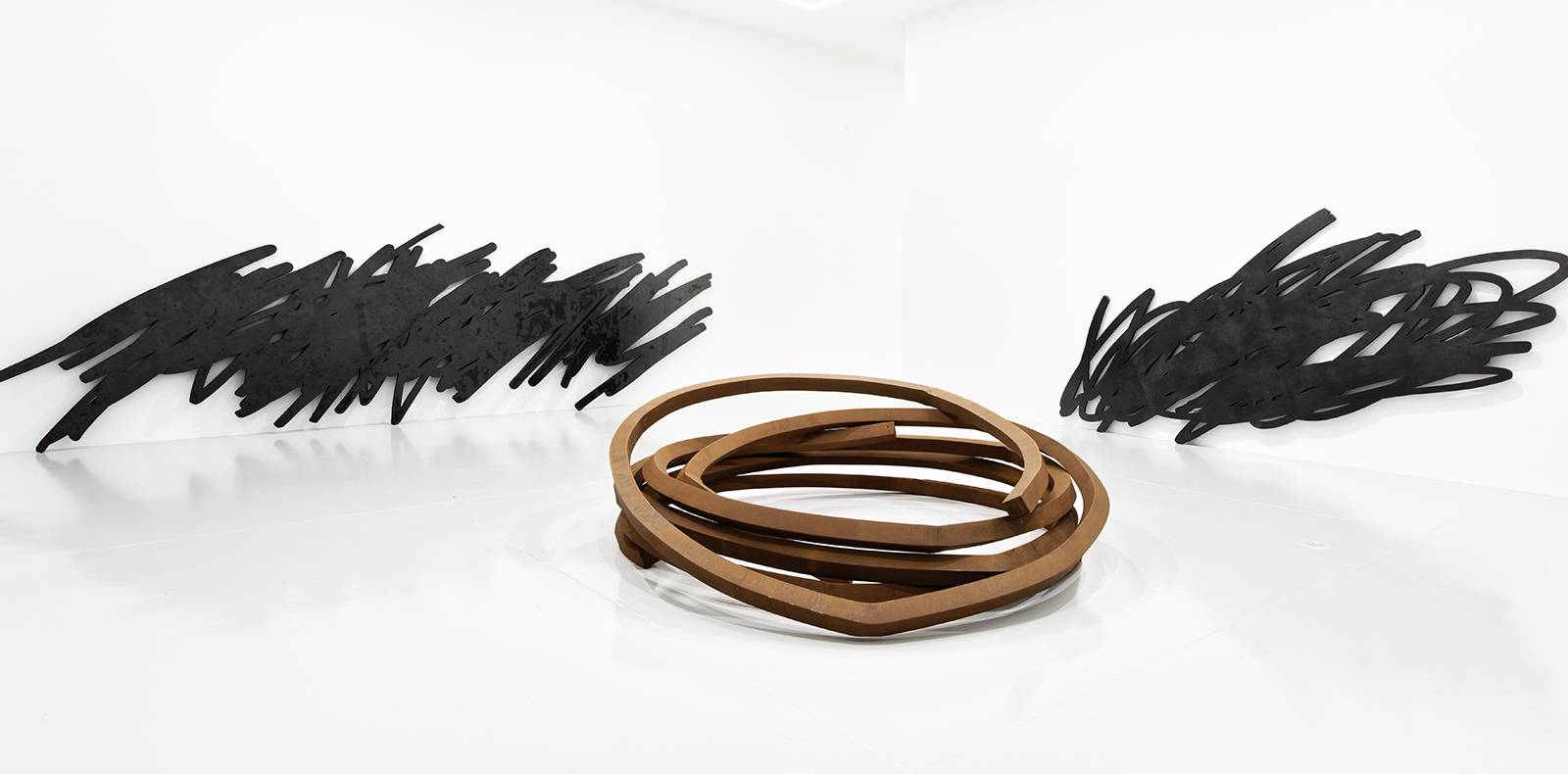
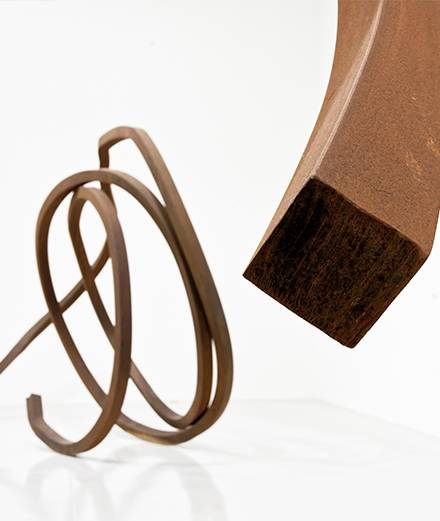
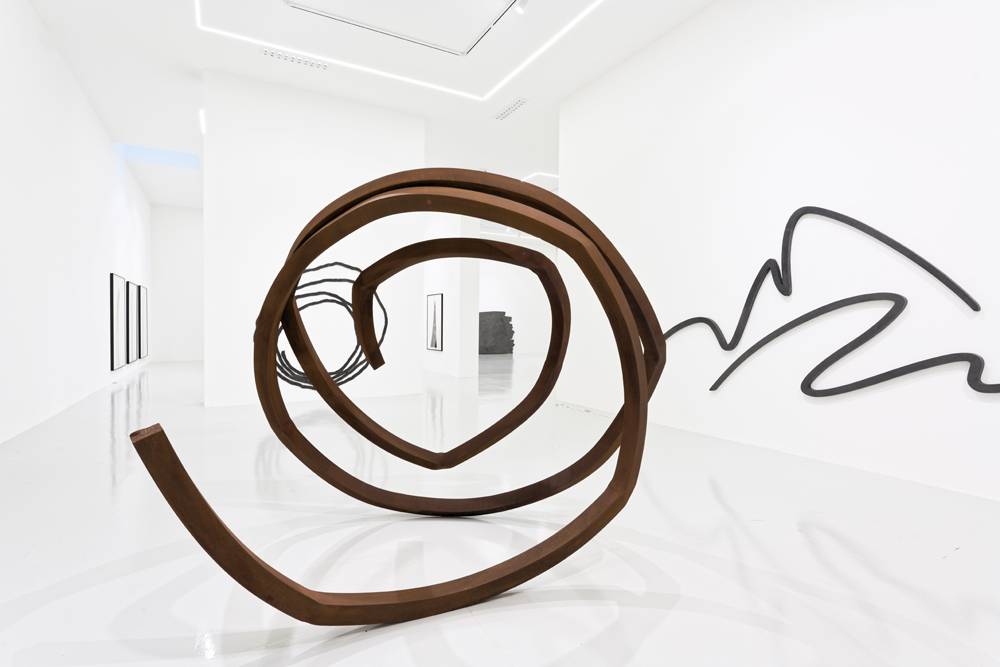
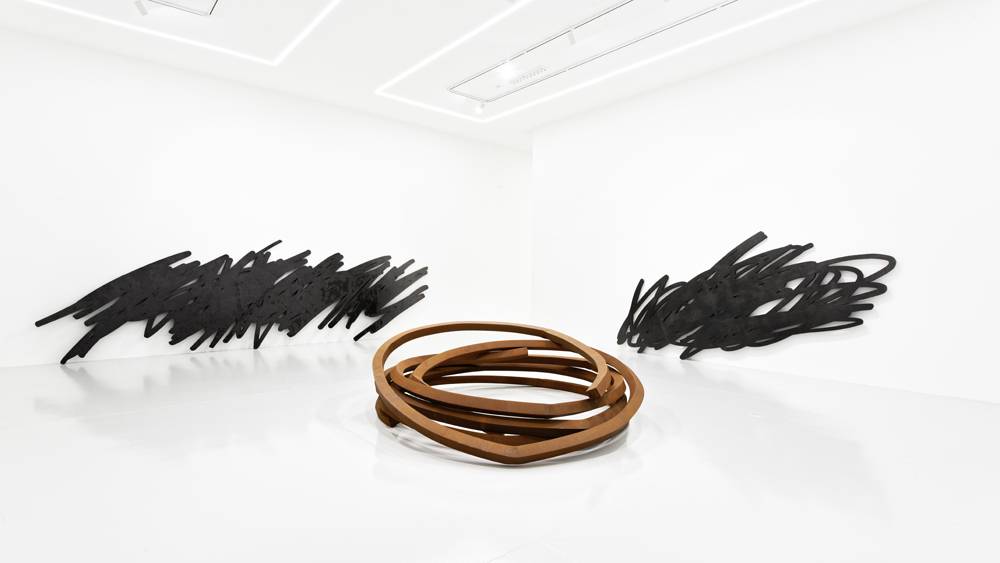
Located in the city’s industrial district, between Saint-Étienne’s Zenith and Comédie, the black façade of this sheet steel block houses four bright, six-meters-high rooms. There, artist Bernar Venet displayed his monumental works in 2021, including his famous Indeterminate lines in rust-colored weathering steel, to his metal reliefs on the wall, to his charcoal and graphite drawings on paper. Rarely have we seen a contemporary art gallery outside Paris rivaling the spaces like the Thaddaeus Ropac and Gagosian galleries. Although Ceysson & Bénétière does not have the long history of its counterparts born in the 1980s, it is nevertheless a resounding success. Numéro dissects the gallery’s exceptional growth.
A family-run business
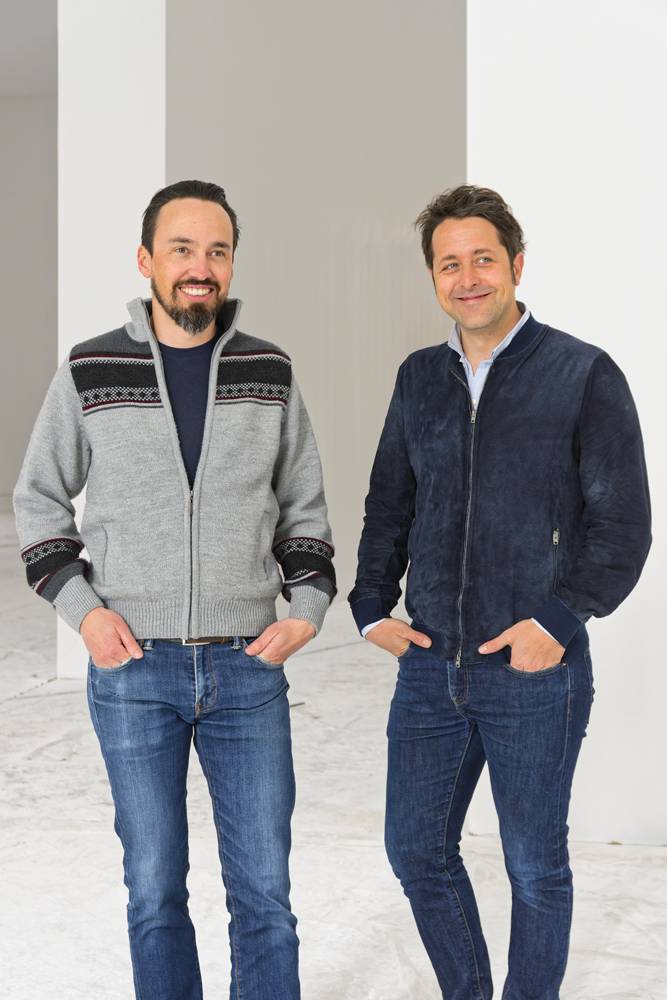
It all started with the gamble of a triumvirate, which is similar to the beginning of a game of the seven families. First, we want Bernard, the father of the Ceysson family, an art historian and former director of the National Museum of Modern and Contemporary Art (MAMC+) in Saint-Étienne, inaugurated in 1987. Then, we want his son, François, an art history student and digital enthusiast who began in the early 2000s to assist him on the exhibitions he curated. Loïc Bénétière, a friend of François Ceysson since middle school, first joined the father-son duo as an intern. The two former classmates then had an idea — to set up an art gallery defending the founding artists of the Supports/Surfaces movement, of which Bernard Ceysson was a close and strond advocate.
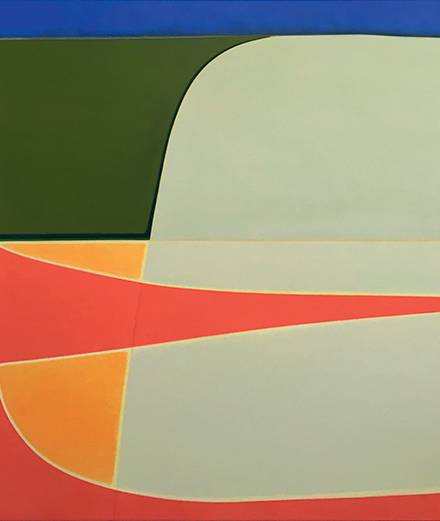
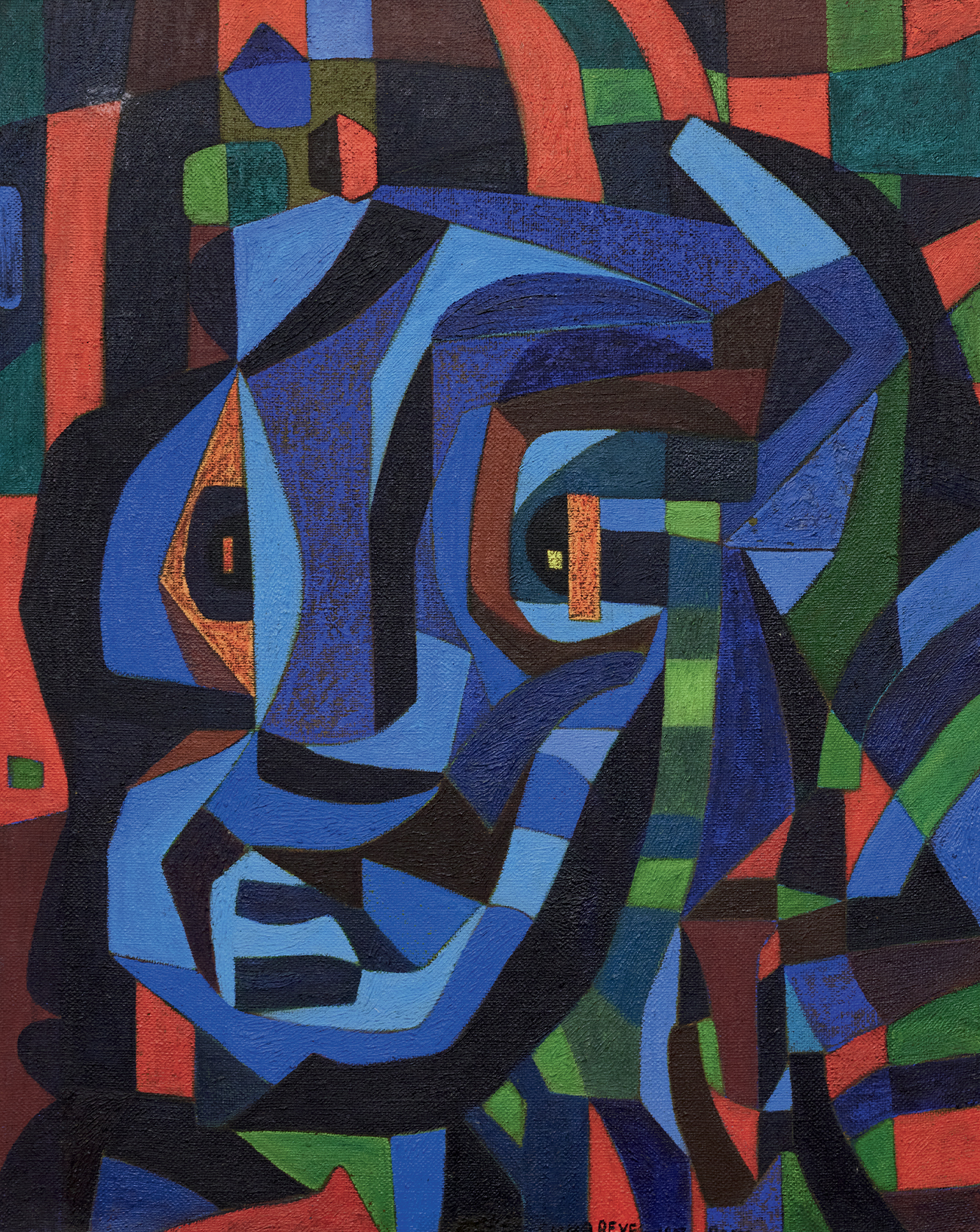
This leading group of French contemporary art, composed of visual artists Noël Dolla, Patrick Saytour and Daniel Dezeuze, among others, wanted to restore the image of painting by rethinking its tools and supports at the end of the 60s. Often shunned in the following decades by institutions, the movement began to regain the notoriety it deserved at the dawn of the twenty-first century, notably with the opening of a dedicated room in the permanent collections of the Centre Pompidou.
The planets seemed to align. In April 2006, while still relatively limited financially-speaking, the three founders of Ceysson & Bénétière inaugurated their first gallery in their hometown, Saint-Étienne. They took advantage of Bernard Ceysson’s network of collectors, already well established in the Auvergne-Rhône-Alpes region. On the walls of the inaugural exhibition, visitor discovered about fifteen paintings by Claude Viallat on which the same long and sinuous line is tirelessly declined in painting, between the sponge and the knucklebone. The artist and co-founder of Supports/Surfaces based in Nîmes marked the beginning of a tradition for the gallery. For the opening of each new space, he became the poster for the first exhibition.
An original implementation strategy
The sauce sets very quickly. With its network of collectors and a growing interest in the movement, the gallery finds its audience and clientele in France, but also massively in Luxembourg, where François Ceysson now receives “half [ses] of the phone calls”. “During the first years of the gallery, the three of us spent our time at the front of a 20 m3 apartment full of works,” recalls the gallery owner with emotion, “on the way to Luxembourg with works from our region.” In 2008, the trio opened a second space in this country, a haunt of major collectors. Paris, Geneva, New York, and finally Lyon will follow in June 2021.
Are these establishments motivated by a specific target? Loïc Bénétière and François Ceysson add some nuance. “Often, gallery owners behave as if art were a field where it is a question of responding to a demand. Our logic is different. For us, it’s first of all a question of creating an offer, deciding which artist we can show, according to our surface area, and opening up spaces according to opportunities.” Thus, their Parisian branch, a stone’s throw from the Centre Pompidou, belonged to the painter Louis Cane, one of their historical artists. Their address in the heart of the Lyon Peninsula is owned by Didier Courbon, a loyal collector of the gallery.
For the occasion, the company manager invited the architect William Wilmotte, son of Jean-Michel Wilmotte, to transform his ground floor and basement into a warm exhibition space full of mouldings and woodwork, against the cold and persistent image of the white cube. “We realised that this system of antennas, which we did not invent at all, offered our artists great national and international visibility and created exchanges with collectors in their region,” adds Loïc Bénétière. Each of the six spaces has its own programming and identity, and no exhibition will be presented twice in two different locations.
A family organization
With such a wide geographical range, it is impossible today for a gallery to properly function without meticulous organization. However, the team remains relatively family-oriented with three to four employees only. That includes a director for each space — Loïc Garrier in Paris, Maëlle Ebelle in Luxembourg, François Ceysson and Loïc Bénétière as supervisors of the whole project. If Bernard Ceysson, now 87 years old, has since let his partners continue as a duo, the two of them know how to play to their strengths, which they schematize themselves. Where Loïc is very talented for the Front Office – public relations and exchanges with collectors – François is particularly distinguished in the Back Office, digital logistics, inventory, and communication, although their responsibilities remain interchangeable.
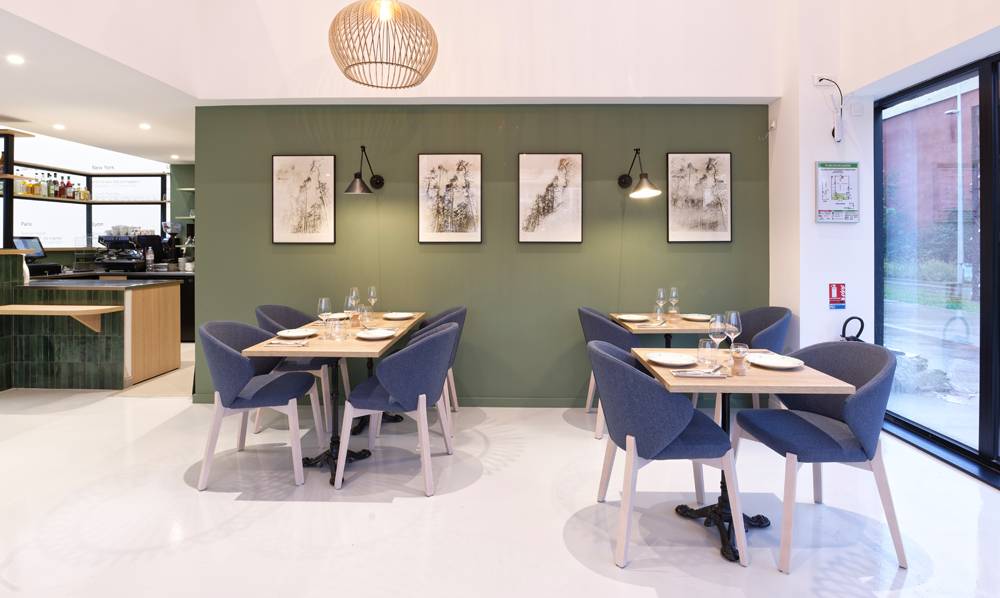
Used to working remotely on centralized servers, thanks to a high-performance computer system and an efficient control room, the gallery was not too weakened by the lockdown. It allowed the structure to focus on its programming and the construction of its new space from scratch in Saint-Étienne, following its Luxembourg branch. A bookshop, offices for his publishing house and even a restaurant… A rare advantage for a gallery that completes his artistic vision of regional cuisine and thus creates a real place to live.
It was an opportunity to reaffirm a position against the tide: where many French galleries have left their region for Paris, Ceysson & Bénétière is betting big on its hometown. “It’s not overt chauvinism, but the result of a real desire to democratize art,” François Ceysson declared, while sharing his admiration for the renowned gallery owner Emmanuel Perrotin. By being tirelessly involved in this area, the two founders have strengthened the attractiveness of their region for collectors, who are now used to making a detour there during their travels where they are invited to spend as much time as possible.
42 artists from different walks of life
Today, Ceysson & Bénétière has expanded its original territory. Among its 42 artists, the gallery represents figures as major as they are unclassifiable in contemporary art, such as Orlan and Tania Mouraud. Others have been pushing back the list of their mediums for several decades, like Mounir Fatmi and Daniel Firman. And younger talents, such as the photographer and visual artist Aurélie Pétrel or the duo Pugnaire & Raffini, joined the gallery. A wide spectrum that allows it to participate in this abundant fair, a breeding ground for emerging artistic creation, as well as maintaining its presence and credibility within the biggest international art fairs thanks to its established names.
As for Supports/Surfaces, Ceysson & Bénétière maintains its leading position in the movement, whose market value has exploded over the past ten years, thanks in particular to its work in bringing together artists and their works, and recurring exhibitions around the world. On the opening day of its space in Saint-Étienne, September 18th, 2021, the gallery chose another artist rather than Claude Viallat for the first time. It offered its inaugural exhibition to one of its most famous and lucrative artists, Bernar Venet.
A godsend both for Ceysson & Bénétière, which immediately proves the interest of such a large area, and the French visual artist, who was delighted to show his works in a museum-sized gallery. “What I wanted was a beautiful exhibition to show what I could do,” confides the man who celebrated his 80th birthday a few months ago. Today, that’s my only goal. Afterwards, whether collectors take it or not, I have overcome this anxiety for a long time.” On the evening of the opening, almost all of his works were sold.