20
20


Tadashi Kawamata takes the Palais de Tokyo by storm
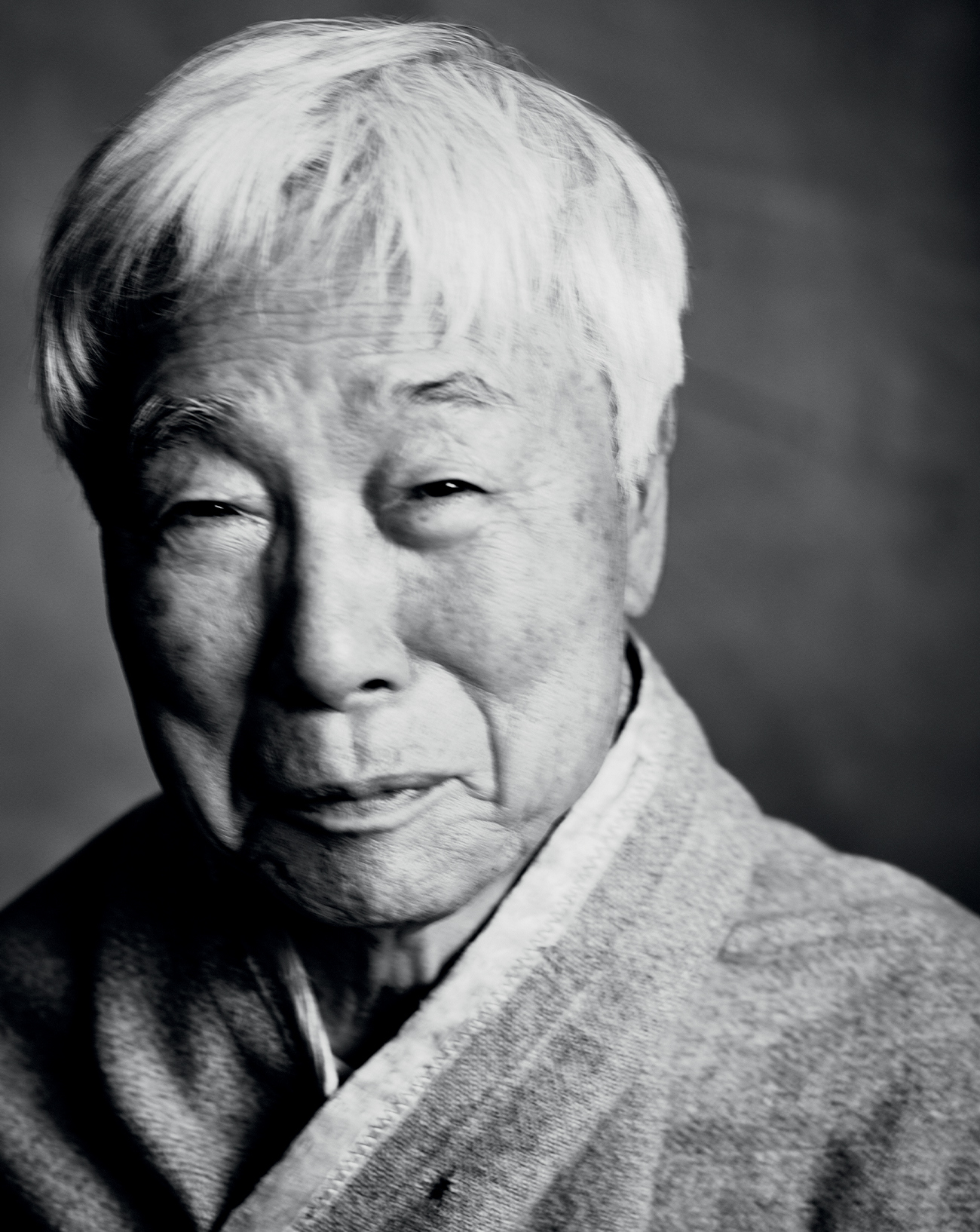
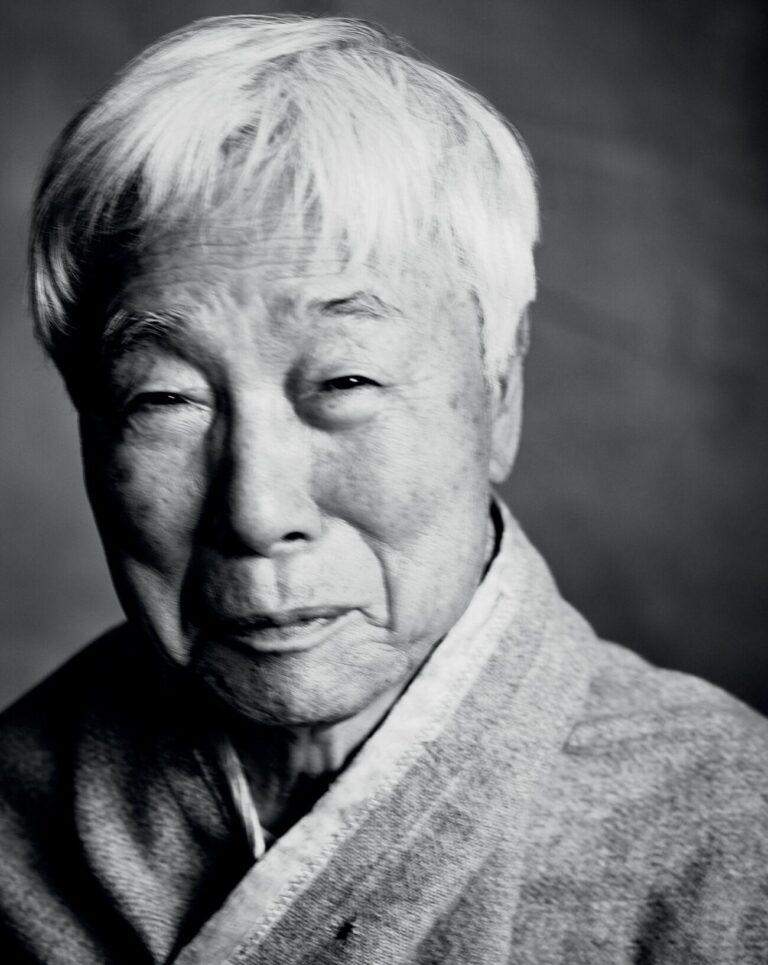
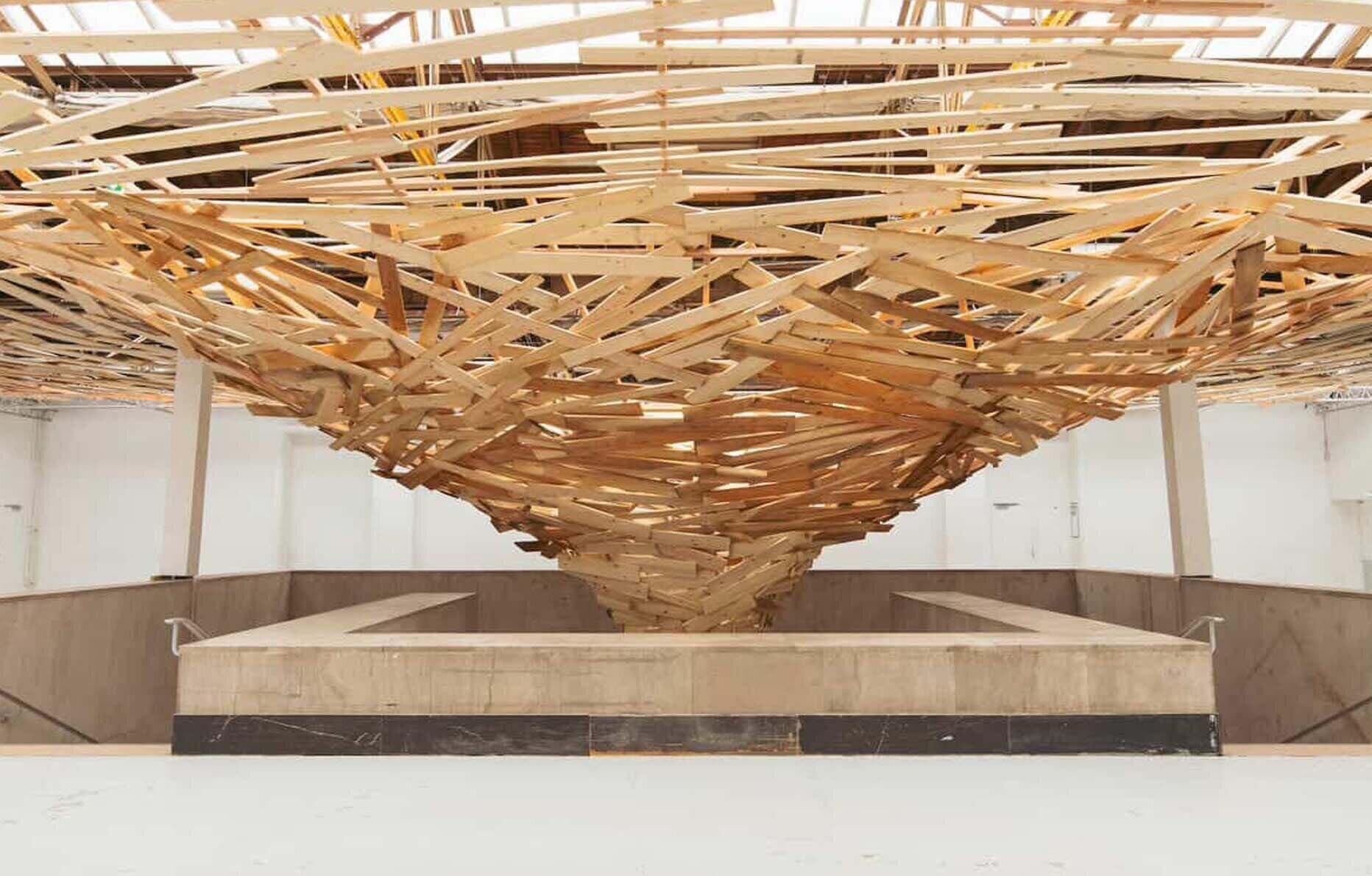
Hosted by Ruinart, this event celebrates the champagne house’s collaboration with the renowned Japanese artist through two monumental installations. Tadashi Kawamata will then create three new large-scale installations at the heart of the Ruinart estate in Reims, France, unveiled at the end of May. In the meantime, the Japanese artist’s impressive wooden tornado will be visible at the Palais de Tokyo for two weeks only.
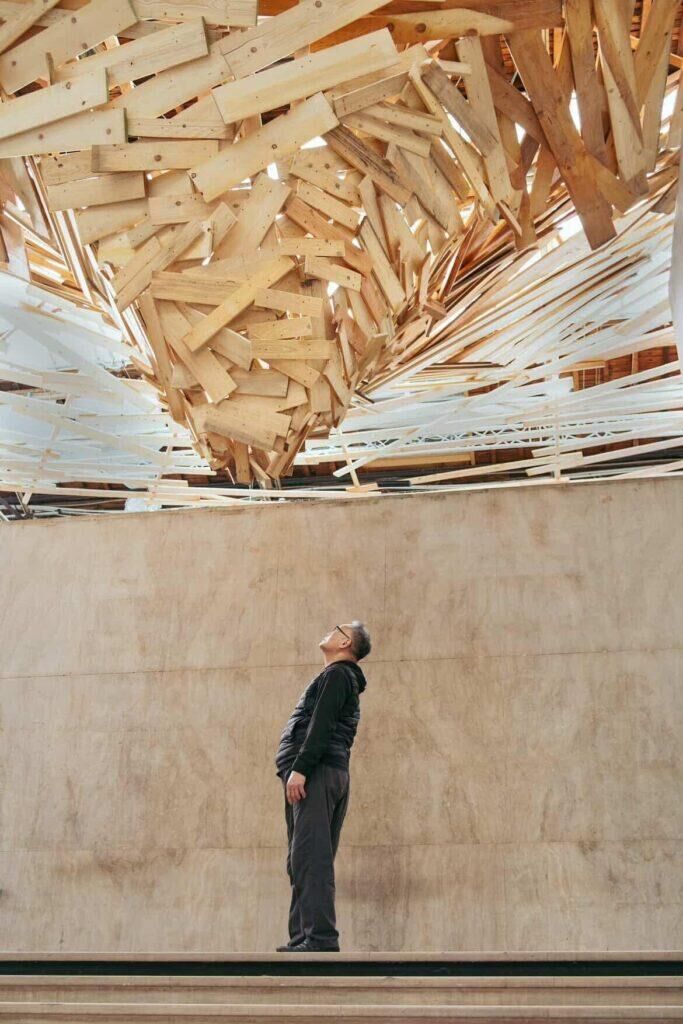
Tadashi Kawamata’s tornado invades the staircase of the Palais de Tokyo
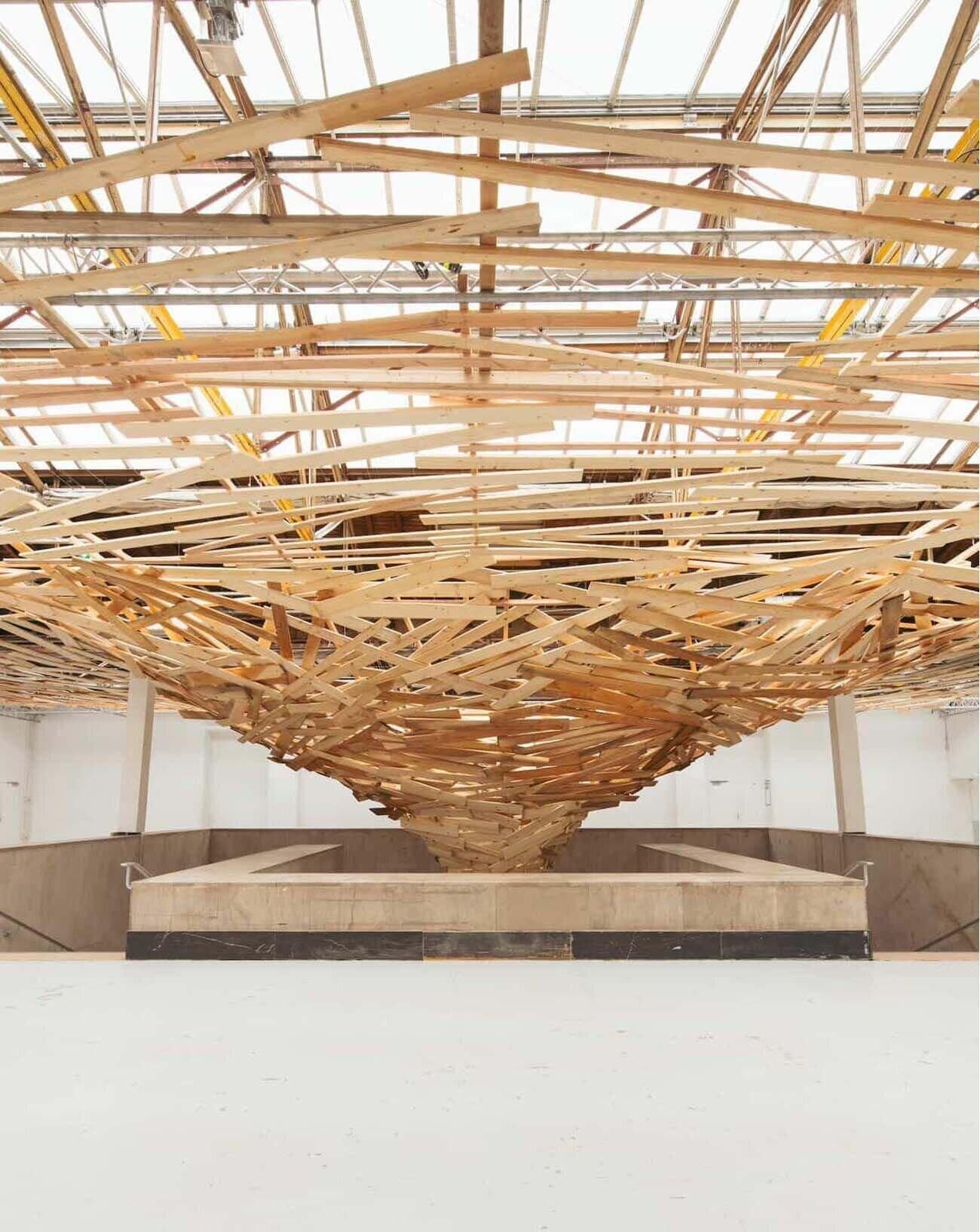
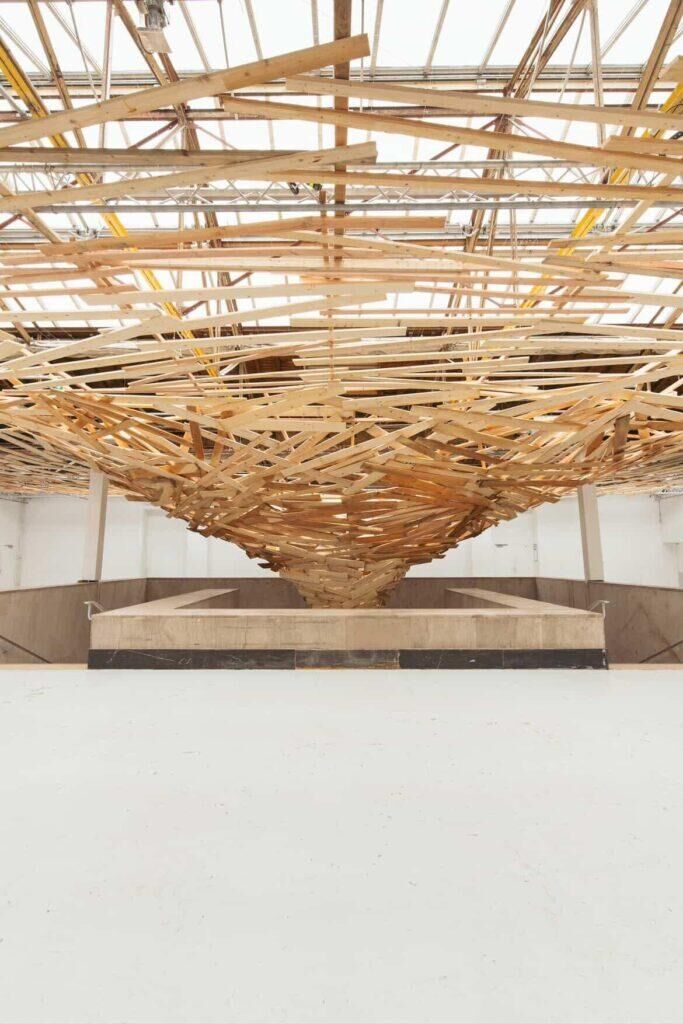
The installation Tornado, which dramatically towers over the viewer on top of the large staircase at the Palais de Tokyo, required no fewer than three tonnes of wood… Reused and reusable wood, rest assured. This structure of twenty meters in diameter, built from recycled timber reclaimed from the artist’s previous projects, seems animated by an inner breath. The planks, arranged in a carefully orchestrated irregular pattern, suggest a spiraling movement, a swirling force ready to engulf space. “Yes, I believe in simplicity. Doing more with less, and with precision. That doesn’t mean lack. Quite the opposite, in fact. It means close attention,” Tadashi Kawamata explained.
The viewer stands quite literally at the heart of the storm. Tornado can be seen as an extension of the structure of the nest, as its metamorphosis from a protective cocoon to an explosive burst of energy. The Japanese artist told us on the evening of the opening that it was the first time he had created an installation based on this motif. An unmistakable allusion to natural disasters, intensified by the climate crisis, but also to the fragility of all human constructions.
A nest suspended on the museum’s facade
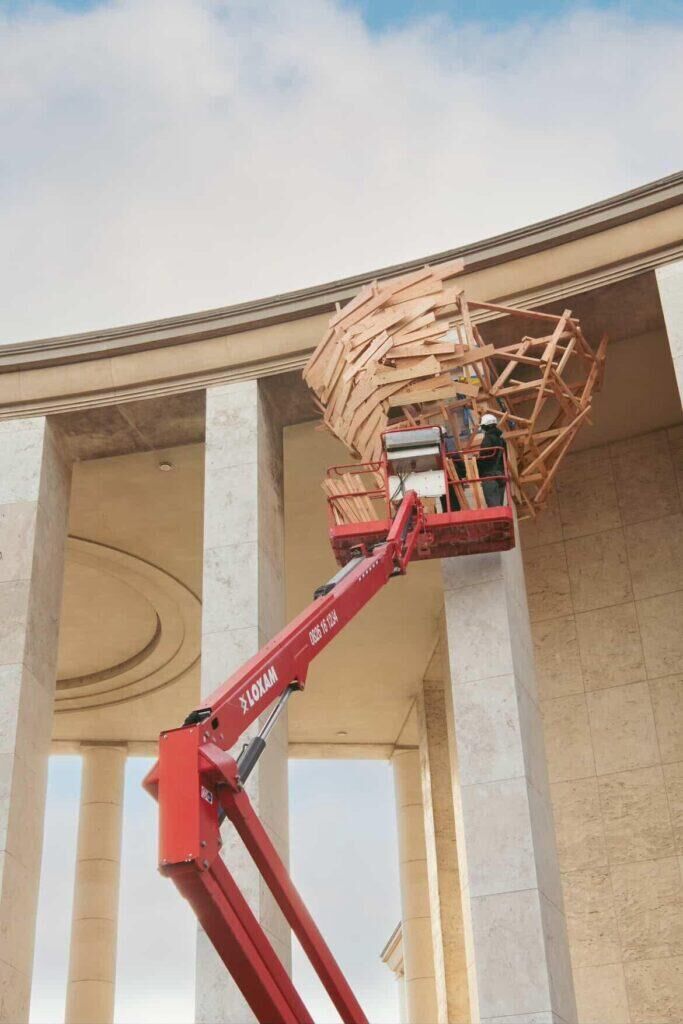
Outside, perched some fifteen metres above Avenue du Président Wilson, Nest clings to a column like a clandestine shelter. The nest, a recurring motif in Kawamata’s work, like the cabin, inscribes itself within the building’s austere geometry only to disrupt it. This assemblage of untreated, irregular wood planks evokes both a primitive shelter and an urban lookout post. The solid, yet fundamentally ephemeral structure questions the way we inhabit the world. What does it mean to “make a home” in a public, exposed environment, crossed by the constant flow of urban life? “Each plank tells a story. Wood is like skin. It breathes, changes colour, transforms,” according to the artist.
This monumental project at the Palais de Tokyo stems from Ruinart’s artistic program Conversation with Nature, which invites artists and creators whose approach resonates with the house’s environmental commitment. Tadashi Kawamata will extend this initiative at Ruinart in Reims, France. The Parisian materials will be given a second life there, transformed into three permanent installations — Tree Hut, Nest and Observatory. The Palais de Tokyo is already displaying promising models of those works.
“I think art can teach us all to be a little more humble.” These are the words written directly on the walls of the exhibition, like an ominous thread, as the visitor enters the space.
The art of elevation according to Kawamata at Ruinart
At the centre of the installation, Kawamata explains: “Nest is a metaphor for shelter, home and trust. Birds do not build their nests just anywhere. Observatory invites the viewer to take a step back and change perspective. One protects, the other elevates. Together, they form a symbolic ecosystem.”
In Reims, the artist was struck by the harmony of the place. The morning mist drifting over the vines, the dampness of the chalky soils, the warm light filtering through the foliage, the almost invisible presence of birds and insects… From this “first impression” came drawings and models, essential preludes to any in-situ installation. Tree Hut will unfold as a resting space at the heart of the estate, offering an offbeat vantage point over the rows of vines.
Nest, a reinterpretation of the original motif, will open a dialogue with the topography and local wildlife, inviting viewers to consider the fragility of ecosystems. As for Observatory, the artwork will offer an experience of elevation. The wooden structure will encourage visitors to take a look at the Champagne landscape and grasp the intimate bond between terroir and craftsmanship. These new installations will be visible by the end of May 2026.
“Nest” and “Tornado,” two installations by Takashi Kawamata, on view until 23rd February 2026 at the Palais de Tokyo. Takashi Kawamata is represented by Galerie Mennour in Paris.