18

18


Exhibition of the week: Contemporary artist Huma Bhabha becomes one with Alberto Giacometti
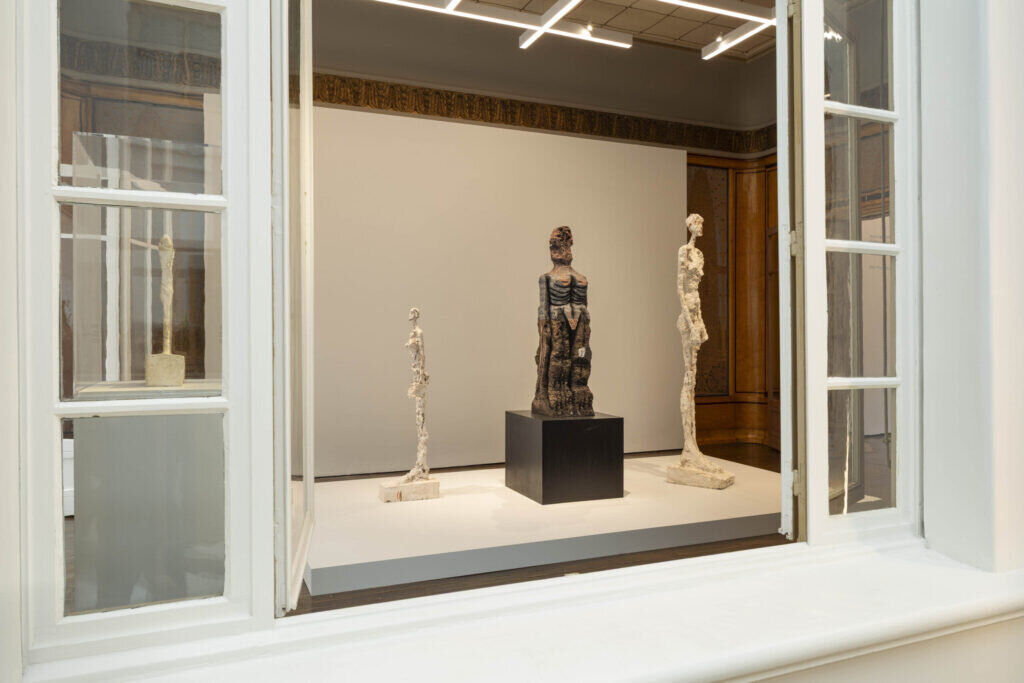
Until May 24th, 2026, the Institut Giacometti is staging an unprecedented encounter between Huma Bhabha and Alberto Giacometti. A century apart, the Pakistani-American sculptor and the Swiss maestro share the same obsession with the human body, shaped and charged with emotion. More than a historical dialogue, the exhibition sketches out a sensitive companionship in which bodies become the vessels for raw feeling.
Published on 18 February 2026. Updated on 1 April 2026.
A dialogue between Huma Bhabha and Alberto Giacometti
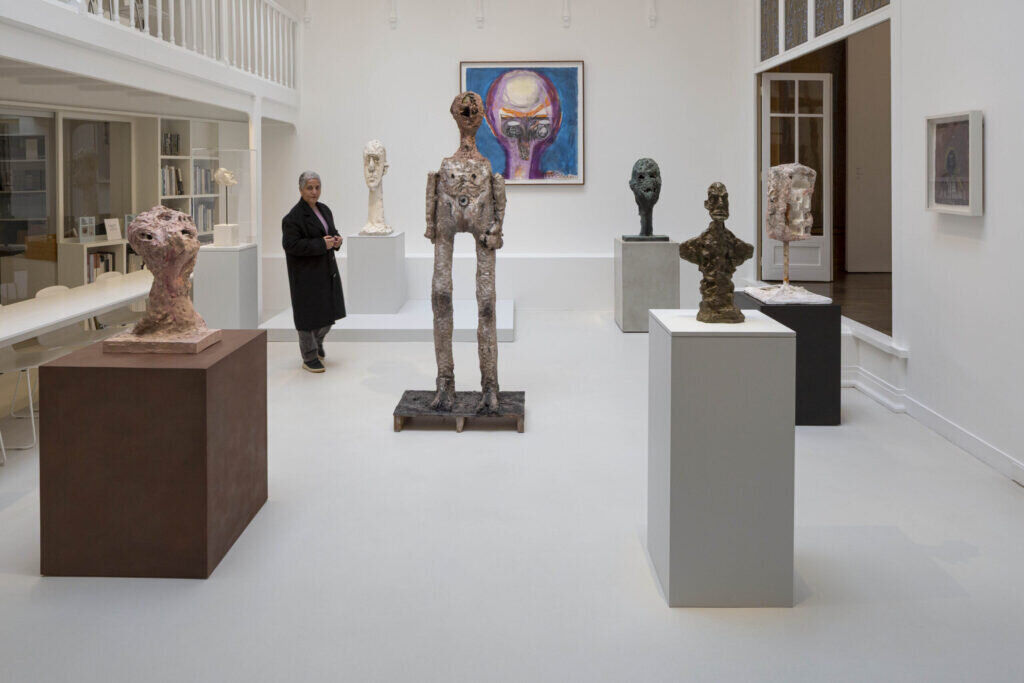
At the Institut Giacometti, the dialogue between Huma Bhabha and Alberto Giacometti doesn’t take the form of a tribute nor of an obvious conservation. Instead, the visitor is witnessing a “companionship,” in the words of curator Émilie Bouvard. An almost organic closeness between two artists who, although separated by a century, share the same obsession for the human body and the emotional charge a sculpted body can hold.
Huma Bhabha quickly emerged as an obvious choice for the Institut. “She has forged her practice over the past twenty years while looking at Giacometti,” Bouvard points out. She is not someone being asked to discover Giacometti. He is already there, at the very core of her work. In both of the artists’ practices, the body is never presented as stable.
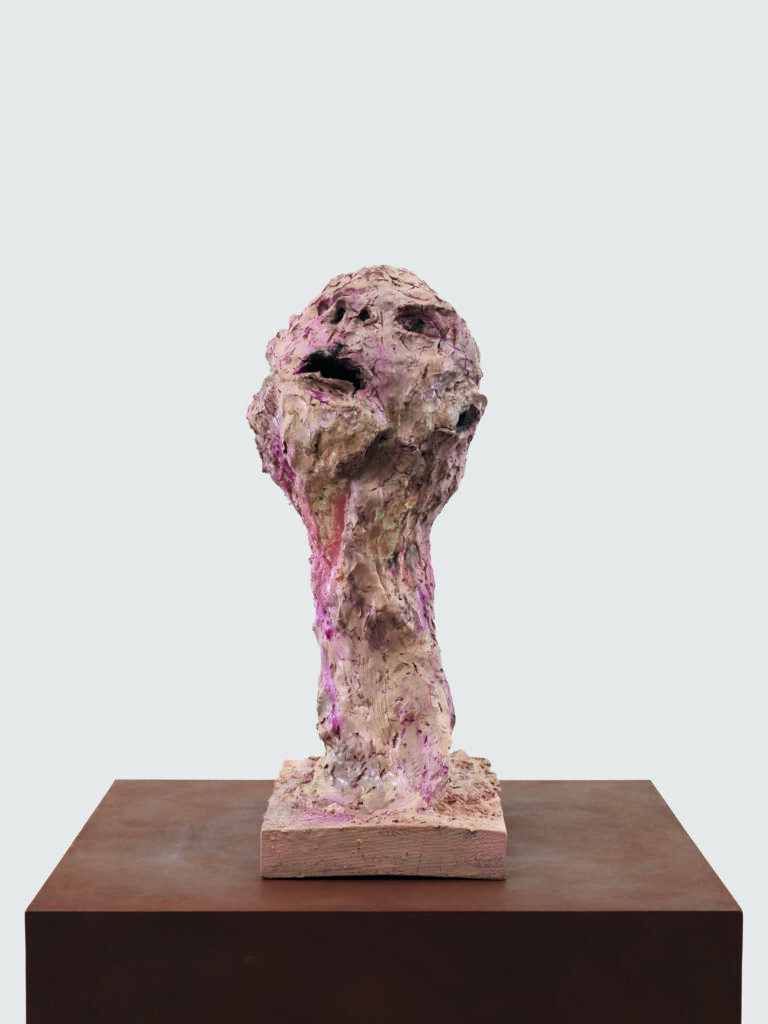
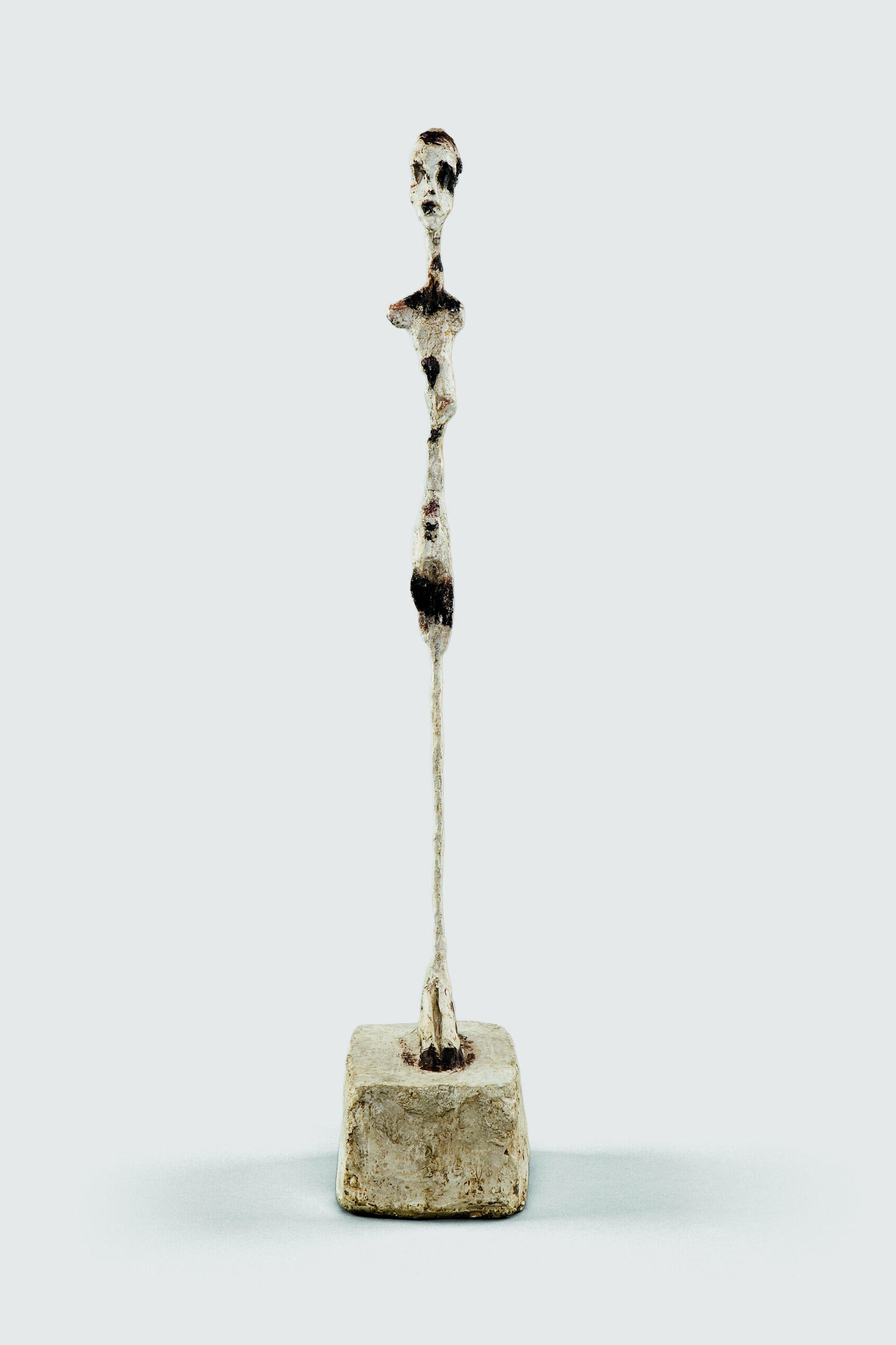
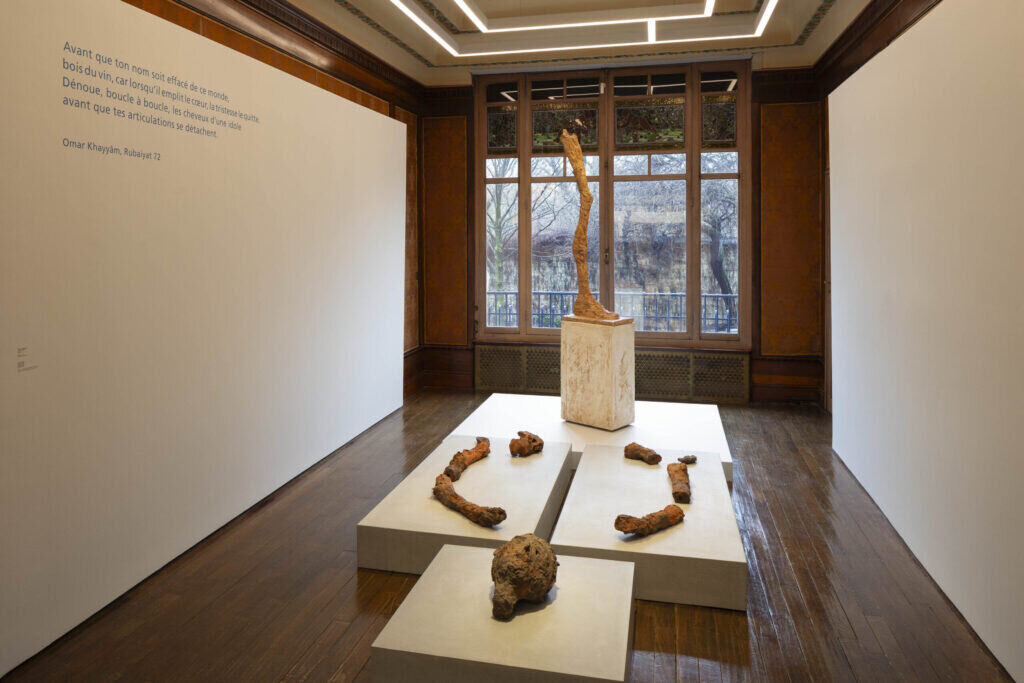
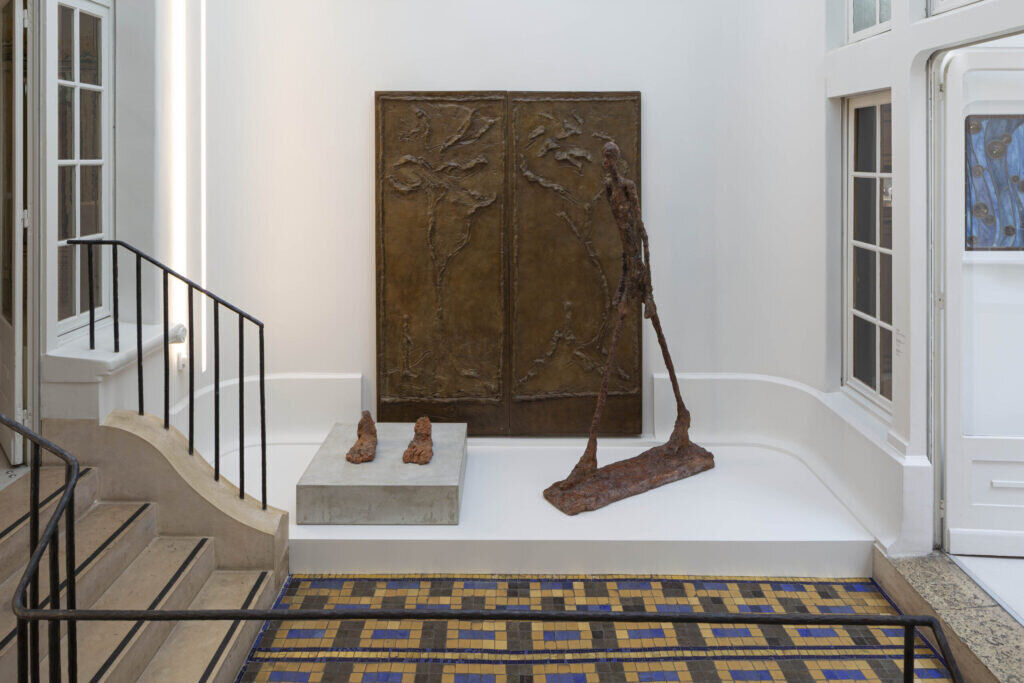
On the patio, Man Walking continues along its solitary path, a stretched silhouette that seems to cleave through space. Further on, Bhabha’s sculptures take over in another register, that of fragmented bodies, almost hollowed out, disjointed limbs, isolated feet or severed heads. So many dislocated forms that evoke both archaeological relics and figures coming out of a science-fiction film.
Huma Bhabha and Giacometti
This taste for fragmentation dates back to her early experiments with modelling. After years of Rauschenberg-like assemblages, she discovered clay almost by chance during a residency in Mexico. Giacometti then became a structuring reference. “In 1998, I went to a major retrospective showing Alberto Giacometti’s sculptures and paintings that deeply impressed me. At the time, I hadn’t yet begun sculpting or modelling clay, and my relationship to him was more that of a voyeur.” Three years later, she created her first foot.
What drew her to his work had less to do with style than with intensity. “I’m a formal artist. I’m quite interested in figuration. […] The idea of making a beautiful sculpture is very present in my mind.” Above all, she was drawn to the trace. “The marks Giacometti leaves on his sculptures almost look like graffiti,” the artist shared. The surface becomes the location of emotion.
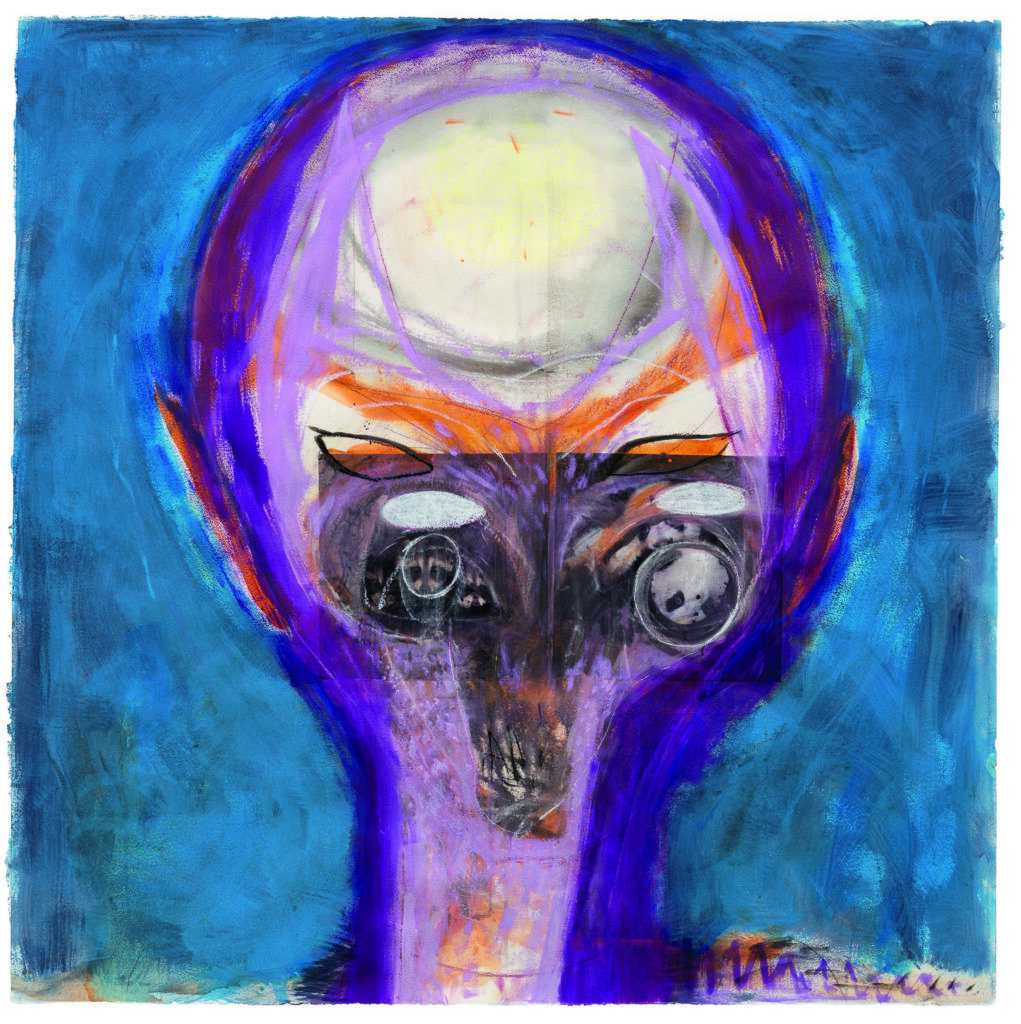
Émilie Bouvard speaks of “affects” — those subterranean sensations, neither joy nor sadness, but something more physical. To the human eye, modelling suggests agitation, emotion, a body coursed through by unseen forces. Before these open, amputated, sometimes dual figures, the viewer oscillates between terror and compassion. The narrative is absent, and yet a raw presence emerges.
Cinema at the heart of both practices
Another thread connects the two artists: cinema. Bhabha describes Giacometti as “post-cinema.” Even when he claims to work from a live model, his vision is steeped in a cinematic aesthetic. The figures seem blurred. He creates perspective out of something directly in front of him, a kind of cinematic distance.
The graphic cabinet makes it visible through previously unseen contact sheets by Ernst Scheidegger, in which Giacometti’s sculptures are photographed outdoors like sequences or storyboards. Bhabha works in a similar way. Her early wire sculptures were conceived to be photographed, almost like staged scenes. The question of distance is raised once more, but never that of the monument.
“So much figuration!,” the artist gasped when discovering the installation. In contrast to the dominant conceptual trends from the 1990s in New York, she has never abandoned the human body. “Everything resolves around the body,” Bouvard sums up. A humanism shared with Giacometti, yet without heroism. Fragile and ambivalent figures are humorous at times, or unsettling, and filled with the violence of the world.
Rather than staging a historical face-to-face, the exhibition offers a continuity of gestures. Two practices that simply remind us that sculpture can still produce an immediate experience.
“Huma Bhabha / Alberto Giacometti. And loose the loved one’s tresses knot by knot. Or e’er the knots your limbs bind, rend apart,” exhibition on view until May 24th, 2026, at the Institut Giacometti, Paris 14th.