26
26


Interview with Aya Nakamura, the music icon performing at the Stade de France
An invitation to the Met Gala, a memorable performance at the Olympic Games opening ceremony, and a wax figure at the Musée Grévin… The reigning Aya Nakamura is triumphing worldwide. At just 30 years old, the charismatic and talented singer has been endorsed by Rihanna, Alicia Keys, and Madonna. To coincide with the release of Destinée, her new album, this artist, one of the most listened-to French artists in the world, will give three concerts at the Stade de France in May 2026. An interview with a star whose destiny is dazzling.
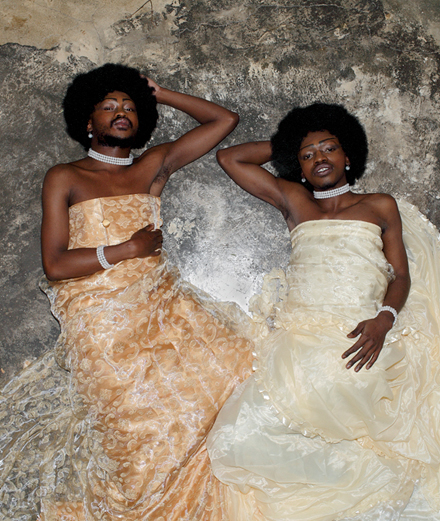
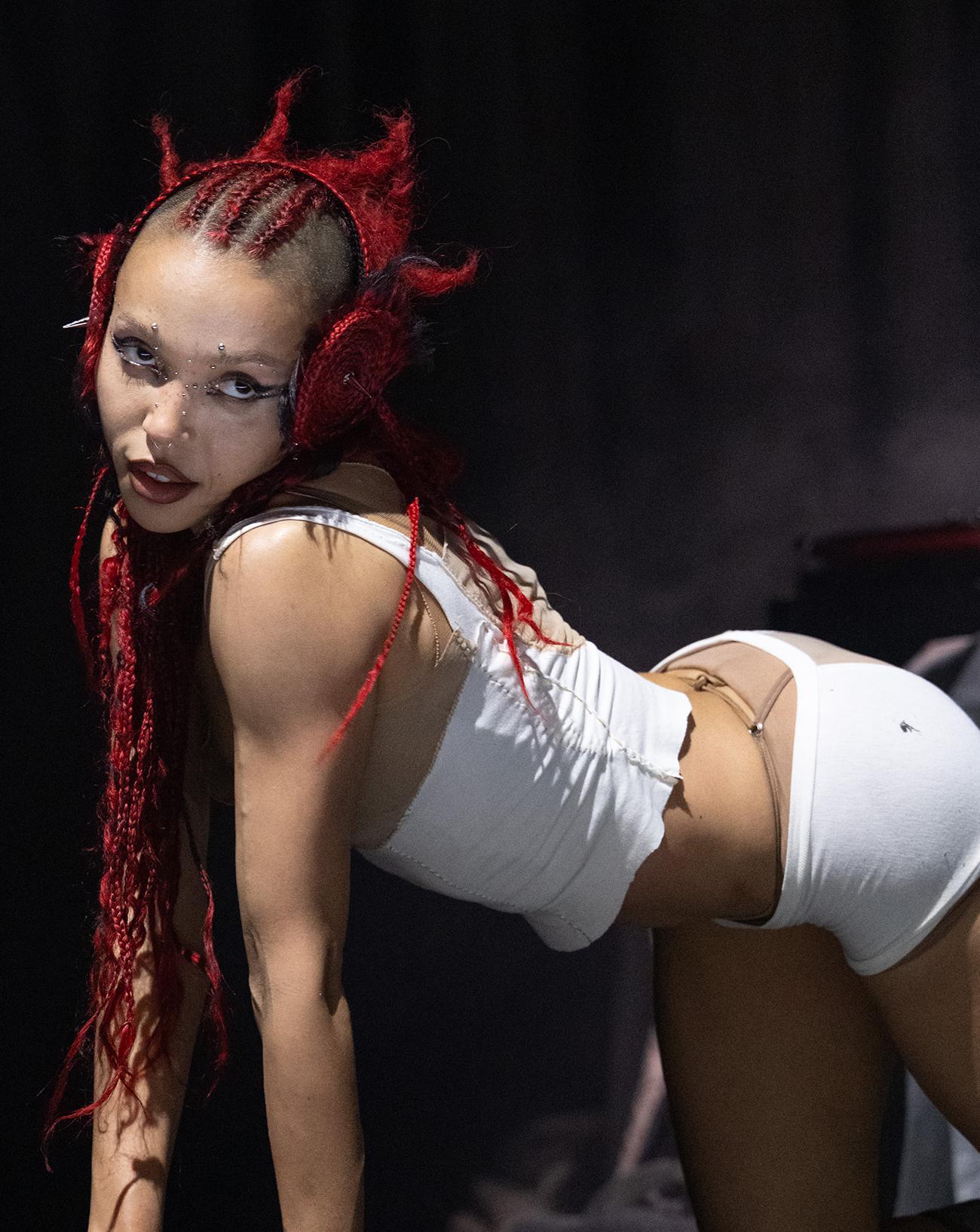
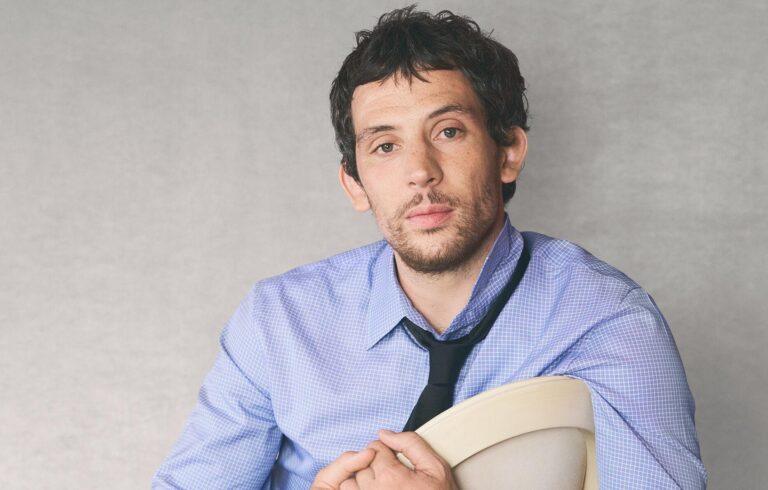
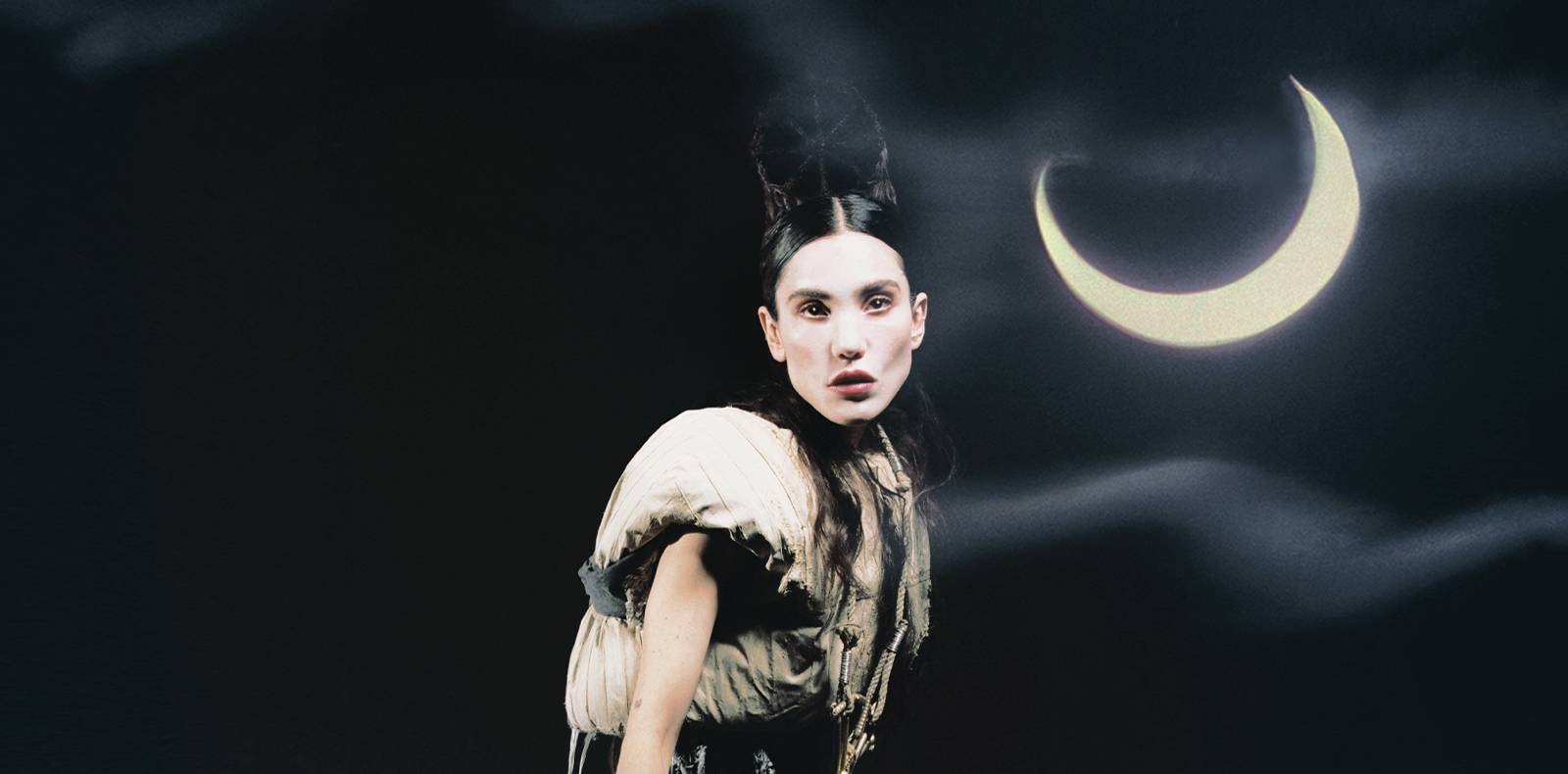
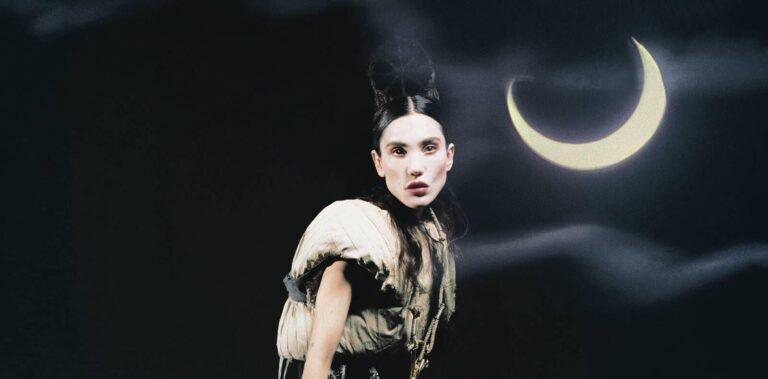
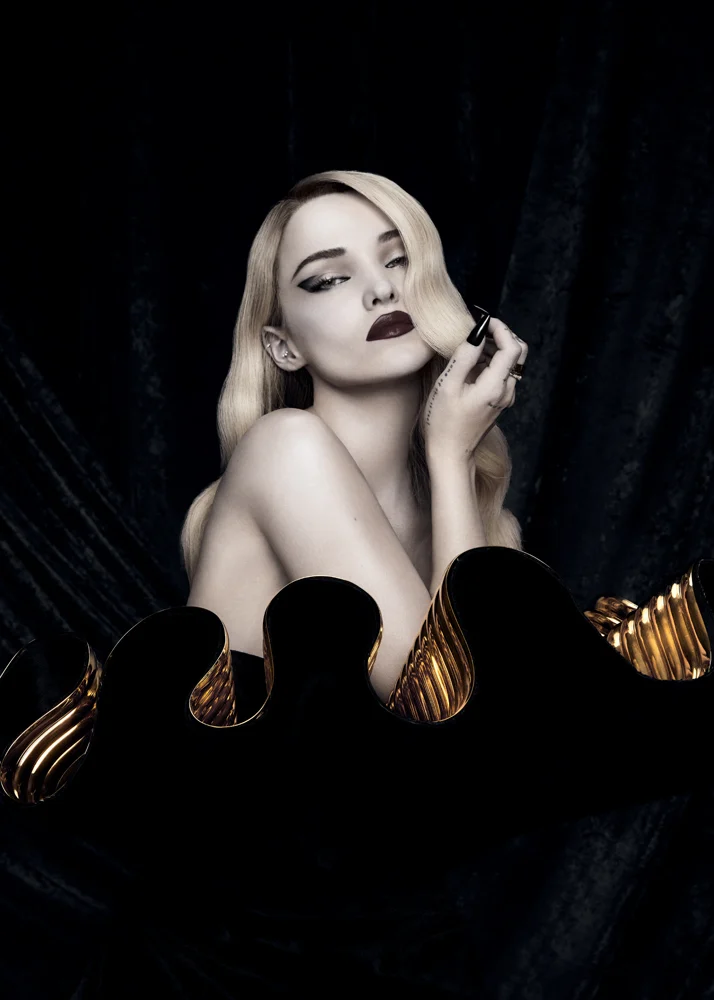
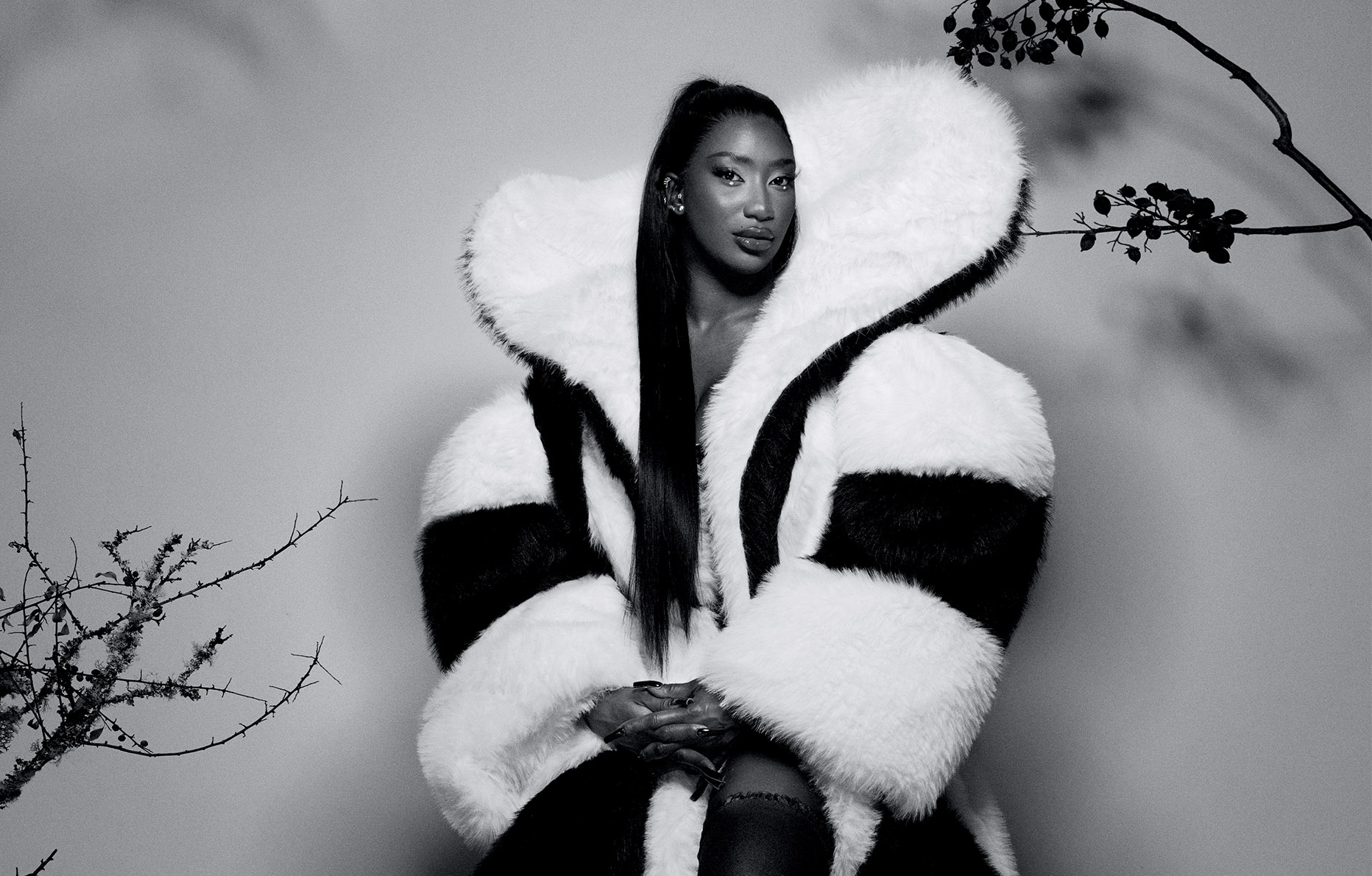
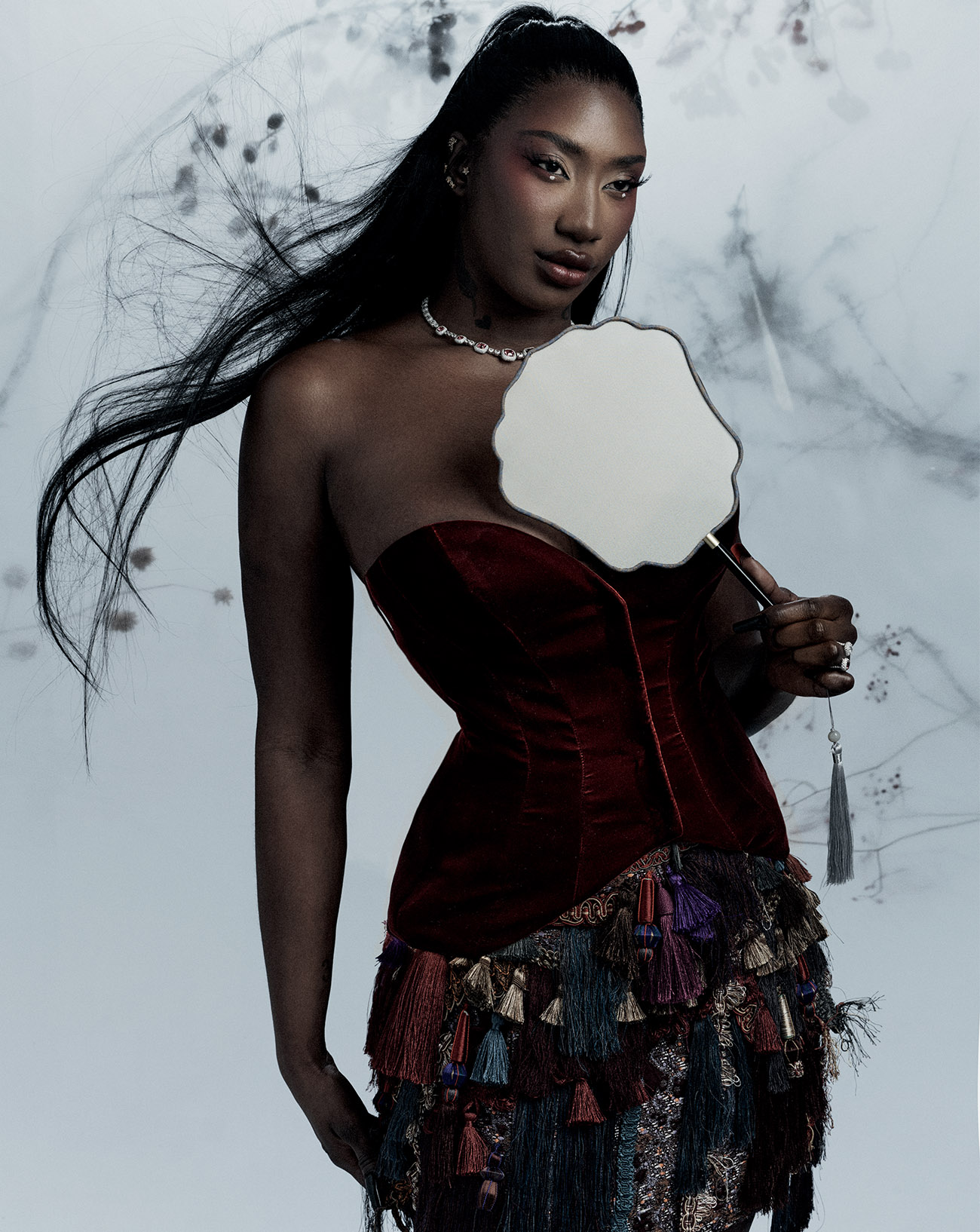
Portraits by Jean-Baptiste Mondino,
interview by Violaine Schütz,
styling by Ayoub Agourram and Anna Castan.
Published on 23 January 2026. Updated on 26 May 2026.
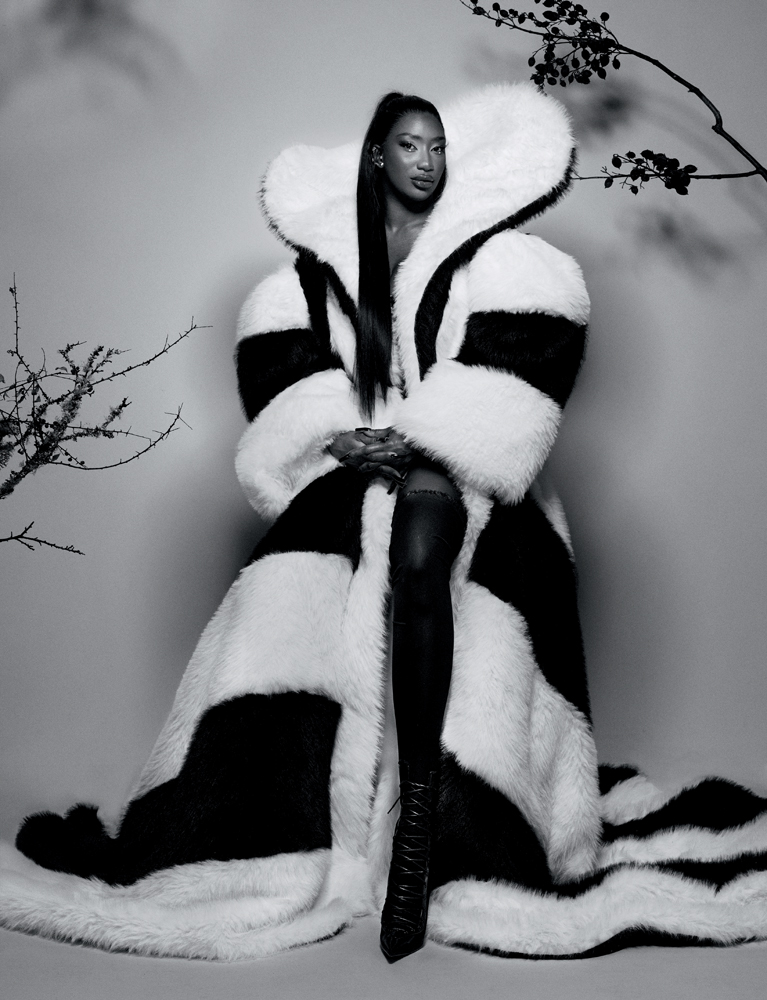
She owes her stage name to a character from the series Heroes who possesses the gift of traveling through space and time. And that’s exactly what Aya Nakamura has accomplished through her meteoric rise in the music world. From Aulnay-sous-Bois to the steps of the Met Gala, by way of the opening ceremony of the Olympic Games and a wax figure at the Musée Grévin, the singer, at just 30 years old, has become a role model for an entire generation and a free, proud, and commanding icon whose aura shines far beyond borders.
Destinée, Aya Nakamura’s new album
Endorsed by Madonna, Alicia Keys, Kali Uchis, and Rihanna, the talented and charismatic French-Malian singer has amassed a collection of hits, clever wordplay, and prestigious collaborations (Balenciaga, Lancôme), as well as dazzling appearances at Fashion Week (for Jean Paul Gaultier, Chanel, Jacquemus), carving a bright and inspiring path in the pantheon of music while remaining natural, authentic, sincere, and genuine. And the reign of this powerful and independent woman, born into a family of griots from Bamako, shows no signs of fading.
One of the ten most listened-to French-speaking artists in the world, will give three concerts at the Stade de France in May 2026. Known to her fans as the Queen or “The Queen of France,” she will be promoting her brand-new album, the moving and danceable Destinée, released in November 2025. This album, which speaks of love, empowerment, and mental health, blends musical genres (pop, R&B, shatta, zouk, kompa, amapiano, jazz, afrobeat, and soul), establishing her as one of our brightest and most audacious stars of the last decade. Interview with a star whose destiny is dazzling.
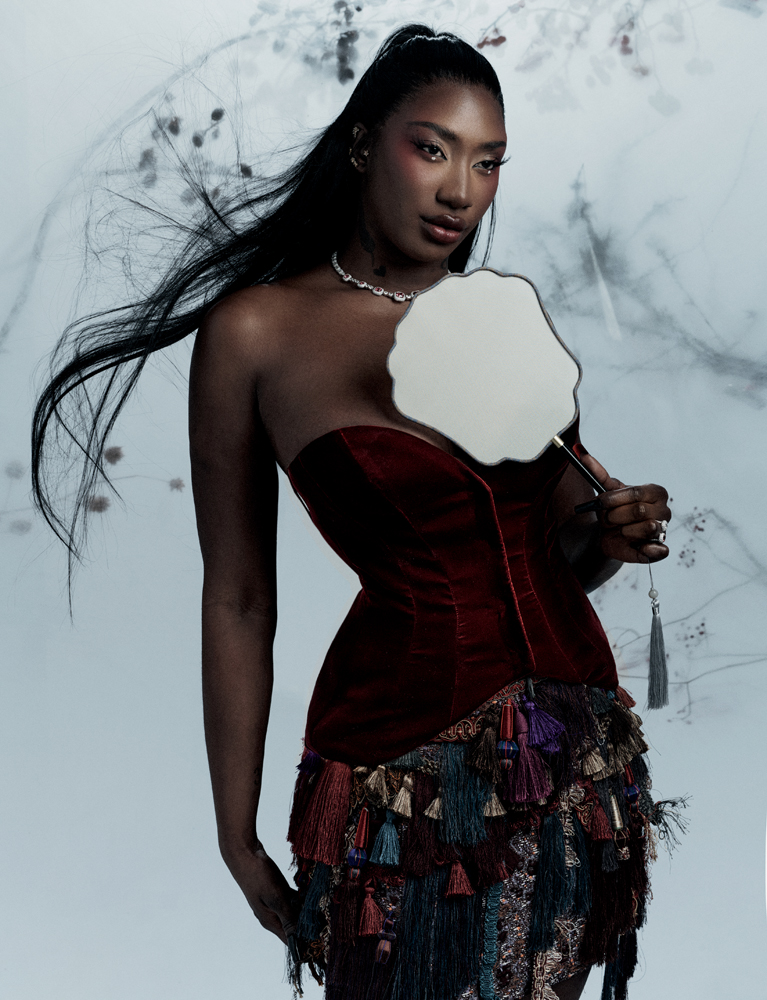
Interview with singer Aya Nakamura
Numéro: You have just released your new album entitled Destinée. Why did you choose this title?
Aya Nakamura: Because I was at a point in my life where I needed to follow my own path. I felt like everything I did was an accomplishment. So I decided to call this album Destinée (Destiny), a word that suggests everything is already planned. I believe in destiny. I’m convinced that everything in the world is connected. Spirituality plays an important role in my life. I think I have a lucky star, and I’m attentive to my energy.
When you were younger, you dreamed of being a fashion designer. Was it your destiny to become a singer?
Frankly, I think that, most of the time, things happen as they’re meant to happen. I don’t know if I was “destined” to become a singer, but in any case, it’s a desire that has always been with me.
“Love is a universal theme. It’s a feeling capable of connecting all human beings.” — Aya Nakamura
You say this album is a part of you, that it reflects who you are. Is it the one you’re most proud of?
Today, yes, because it’s impossible for me to compare it to the previous ones, quite simply, as they correspond to different stages of my life. It seems to me that this album is clearer and more raw in terms of the lyrics. To me, it’s more sincere. I wanted a very musical album in terms of lyrics and vocals. I wanted them to be the focus. And I also wanted to diversify and have fun.
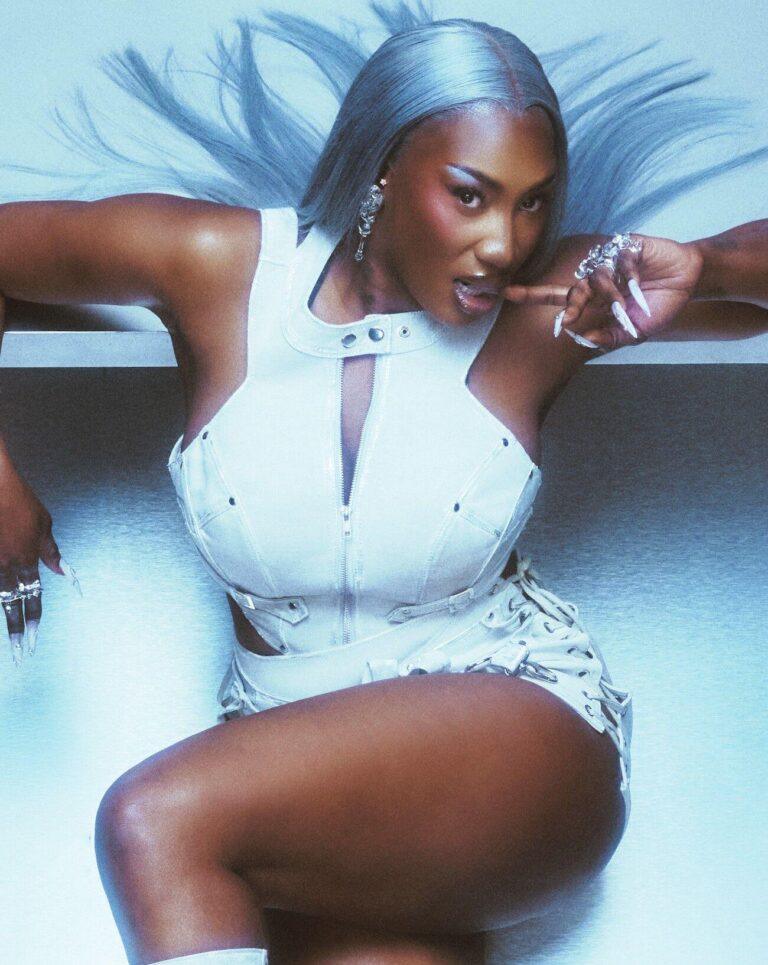
On the cover of Destinée, you appear with gray-blue hair in a futuristic setting. What was the mood board you created for this shoot?
I would say it’s an introspective aesthetic. We visually represented the fact that I can be honest and that I feel a little bit unique.
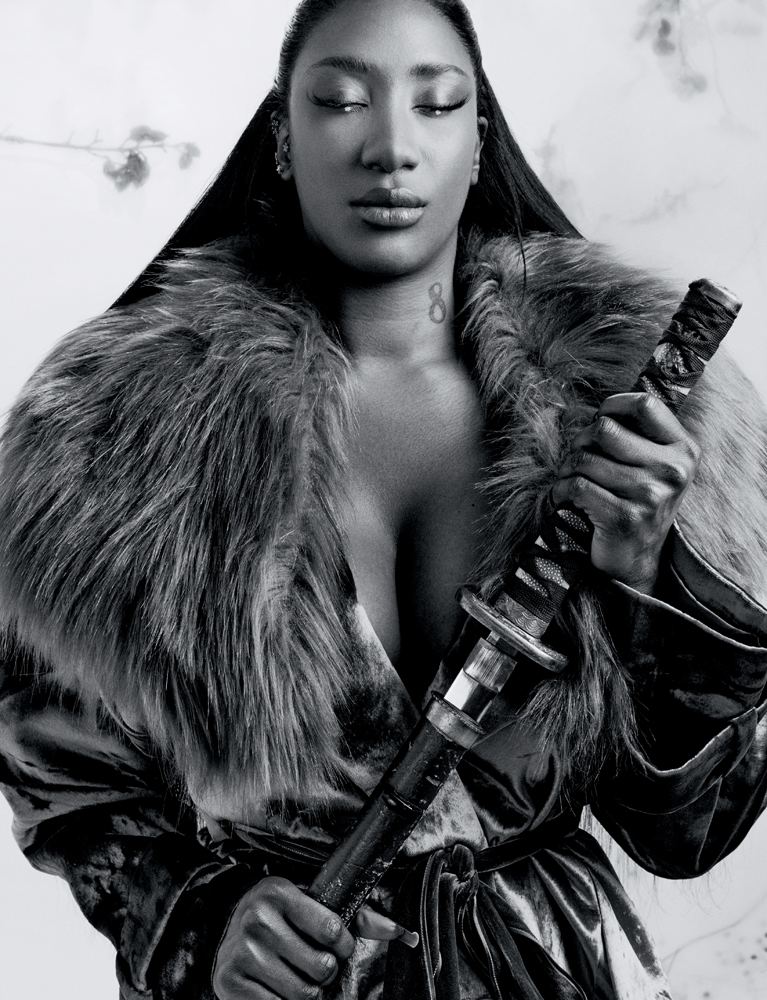
“I have no problem exposing the moments when I am most vulnerable.” — Aya Nakamura
On this album, as in your other productions, there are many love songs. In your opinion, do the most beautiful songs always speak of this feeling?
Love is a universal theme. It’s a feeling capable of connecting all human beings. For these songs, I drew inspiration from experiences that have happened to other women, but most of the time, I draw from my own life.
In songs like Anesthesia or Blues, you address the topic of mental health. You talk about “numbed feelings,” “traumatized moments,” and “pain” that is still “raw.” Is it important for you to show your vulnerability as a superstar?
I think the higher you climb as an artist, the more distance it creates between you and others, so, from my perspective, showing my vulnerability is a step that brings me closer to my audience. It’s very important to me. There’s more to life than just the “strong, smiling woman.” There aren’t only happy moments in life. I have no problem exposing the times when I’m most vulnerable. I think it’s normal. For me, as an artist, it’s fundamental.
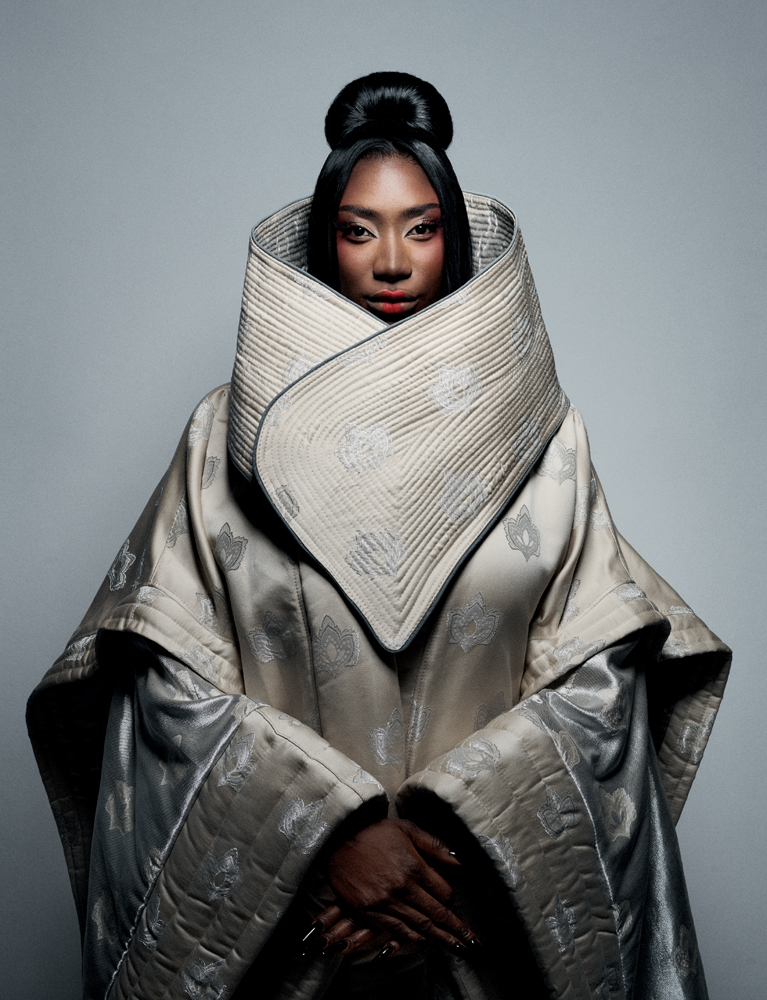
“We need to allow ourselves moments of rest.” — Aya Nakamura
Given your current level of fame, and the pressure and expectations that come with it, how do you take care of your mental health?
I believe it’s essential to step back, to learn to observe yourself, to truly know yourself, and to be aware that you need to give yourself time to rest. It’s also important to surround yourself with a good team, to have a support network that can assess your strengths and weaknesses, and is attentive to your needs.
In your song Summum, you say the line “at the peak of my femininity.” For you, is it essential to write songs that empower women when they listen to them?
Yes, that’s what I try to do, but first and foremost, I talk about what I feel. [Laughs.] I infuse my songs with everything I have inside me, and that’s perhaps what the audience then feels, quite simply. And above all, I’m a woman. Today, I feel like I’m at the peak of my femininity. I don’t know if it requires sacrifices, but what I’m sure of is that there are certain parts of society where you can’t be 100% yourself.
“I infuse my songs with everything I have inside me, and perhaps that’s what the audience then feels.” — Aya Nakamura
In the song Dis-moi, you sing, “I don’t hold my tongue.” It seems like you don’t lie in your lyrics, just like in real life. Has that ever backfired on you?
“A little, it’s true. Being honest as a woman, and honesty in general, isn’t always accepted; it doesn’t have its place in society every day. No matter where you are or who you are, not every truth is worth telling. So, yes, my outspokenness may have hurt me at times, but I also think that in the long run, it’s been beneficial.”
In the music video for your single Désarmer, you’re the only woman, surrounded by men fighting for you. This is a departure from the rap and R&B videos of the 2000s, where it was usually a male singer surrounded by young women…
I think attitudes have changed. We’re much more uninhibited, on all levels. There’s still some reserve about certain things, but people are less afraid to say what they feel, what they think. I think this is a direct result of social media.
“My outspokenness may have hurt me at times, but in the long run, it has served me well.” — Aya Nakamura
On Destinée, as on your previous albums, we discover many inventive expressions. How do they come about?
I think they stem from my surroundings, from the mix, the blending of the environments where I grew up. It’s a mix that influences me naturally, without me even realizing it.
You come from a family of griots, and your mother was a storyteller and singer. In your opinion, does that explain your gift for storytelling?
It’s partly thanks to her that I’m where I am today. So, yes, absolutely.
You’re independent, and you’ve launched your own label, Nakamura Industrie. How has that changed things for you artistically speaking?
Not much, except that I see the bills! [Laughs.] But it hasn’t changed the way I worked before. It’s always been the same. And I work with pretty much the same people. There hasn’t been a major evolution. Anyway, for the last seven or eight years, I haven’t had a manager (at 20, when she was expecting her daughter Aïcha, her first managers asked her to choose between her music career and starting a family, editor’s note).
It’s quite rare in the music industry not to have a manager. Is it sometimes scary to take responsibility for all your choices?
It’s a decision I made from the beginning, so it’s fine. It’s a big responsibility, but it’s natural.
“Three concerts at the Stade de France… Honestly, I’m proud.” — Aya Nakamura
You’ve already signed the French rapper RnBoi to your label, and you supported him on stage in October at the Centre Pompidou, at the festival organized by the label Because Music. This role of mentor seems important to you…
As an artist myself, I know what it’s like to start out. I’ve had mentors too. And I think it’s cool to have a producer who’s interested in what you’re doing, without being too intrusive. We had a great time together on stage at Beaubourg. He’s starting his career, so if I can support him from time to time, I do. I discovered him a few years ago during a DVM Show [a French rap freestyle show broadcast on Twitch] and I was instantly hooked. Then we decided to embark on this adventure together. I’d like to sign other artists, but it takes time. We’ll see, because we have to commit to it.
You’re going to give three concerts at the Stade de France in May 2026. Quite an achievement…
It’s a big step. It’s huge. Honestly, I’m proud. And so happy to see my fans. I’m preparing myself physically, but I don’t see what more I could do.
A few years ago, you preferred to play at the Accor Arena because you were worried about the sound quality in a stadium…
I’ve changed my mind! [Laughs.]
“Just a few years ago, I never would have imagined playing the Stade de France.” — Aya Nakamura
Is it because you saw Beyoncé live at the Stade de France this year?
Wait, you’re kidding, but it made a difference! I saw Beyoncé, and that reassured me, since we’re from the same label. But above all, the demand was there for those dates. Just a few years ago, I confess I never would have imagined playing at the Stade de France. But while there’s life, there’s hope! I believe anything is possible when you think positively.
You’re talking about Beyoncé, an artist who has greatly influenced you. Do you have any icons? If so, have you met them?
Of course, I have icons! Beyoncé, Lauryn Hill, and I also really like Erykah Badu. They are the first three women who inspired me. I’ve already met Beyoncé and Erykah Badu, but not Lauryn Hill. Two out of three, then.
For the cover of this issue, you chose to pose in a kimono. Why?
It’s simply a nod to the Japanese character from the series Heroes, from whom I get my pseudonym.
You have two little girls. What values do you try to pass on to them?
Self-acceptance, the difference between right and wrong, but above all, having fun and being yourself. That’s the most important thing.
“I am a Black artist and there are places in France where some people have never seen Black women.” — Aya Nakamura
Do they understand that their mother is a music star?
Yes, of course, they perfectly understand, especially when they see me go to shows. Sometimes they’re even there during the filming of my music videos or during my photo shoots. They’re starting to get used to it. I think they might not realize it, though, in terms of “superstar” or “fame.” But they know my work.
What helps you stay grounded?
I would say my children and those around me.
You delivered an unforgettable performance at the opening ceremony of the Paris Olympics, accompanied by your dancers and the Republican Guard. Was there a before and after that show?
No, not really. The performance certainly made a big impact. But personally, I didn’t feel the difference.
Following this performance, we heard many shocking racist comments. And you took a short break after that…
I haven’t been receiving racist criticism since the Olympics. There was some before and after. It wasn’t something new for me. I’m a Black artist, and there are some places in France where some people have never seen Black women. So, it can be surprising, let’s say.
“‘Haughty,’ no, but ‘a woman who knows what she wants,’ yes.” — Aya Nakamura
You’re seen as a powerful, independent, and free woman… Are there any misconceptions circulating about you?
People fantasize, of course, sometimes, but I don’t think the public is mistaken, because I have different facets… However, it all depends on which aspect we’re talking about. “Haughty,” no, but “a woman who knows what she wants,” yes.
You’ve collaborated with Balenciaga and you attend many fashion shows… What’s your relationship with fashion?
I always like to stand out, to be well-dressed. But I don’t do anything more than anyone else. I’d say my style is avant-garde and at the same time very chill. I don’t necessarily have specific eras, looks that change depending on my albums and life stages. It’s mostly in the States that artists think like that. I’ve always had fun with colors and styles, without necessarily having a specific album in mind.
Recently, you had your wax figure unveiled at the Musée Grévin, you attended the Met Gala, and you’re a global ambassador for Lancôme…
Yes, I admit, it’s a kind of consecration. I’m proud to be a global ambassador for Lancôme today. And I was so happy to be at the Musée Grévin for the unveiling of the wax figure, surrounded by my family who were there for me, with my loved ones and friends. It’s quite something. It’s the culmination of ten years of work. As for the invitation to the Met Gala, it was a very impressive moment, especially because of the number of stars who were there.
“My biggest dream? The Super Bowl with Beyoncé.” — Aya Nakamura
What are you most proud of so far?
Believing in myself, moving forward, and the team I have. The best advice I could give a young artist today would be to let go and trust themselves.
What is your biggest dream?
I’ve always had dreams, but my ultimate dream would perhaps be to sing at the Super Bowl. And who knows? With Beyoncé and Lauryn Hill, that would be pretty amazing…
One last word?
See you at the Stade de France!
Destinée (2025) by Aya Nakamura is available now. The star will be performing at the Stade de France in Saint-Denis on May 29th, 30th, and 31st, 2026.
Hair: Raphie Bantsimba. Makeup: Carina Chatel and Lili Choi at Calliste Agency. Nails: Sherley Delannay. Set design: Coline Robert. Photography assistants: Margaux Jouanneau and Loup Catusse. Production assistants: Barnabé White, Ching En Kao, and Éléonore Pons. Retouching: Marco Giani. Production: Iconoclast Image.