18
18


Questioning prejudices and stereotypes: Alice Diop’s ongoing fight
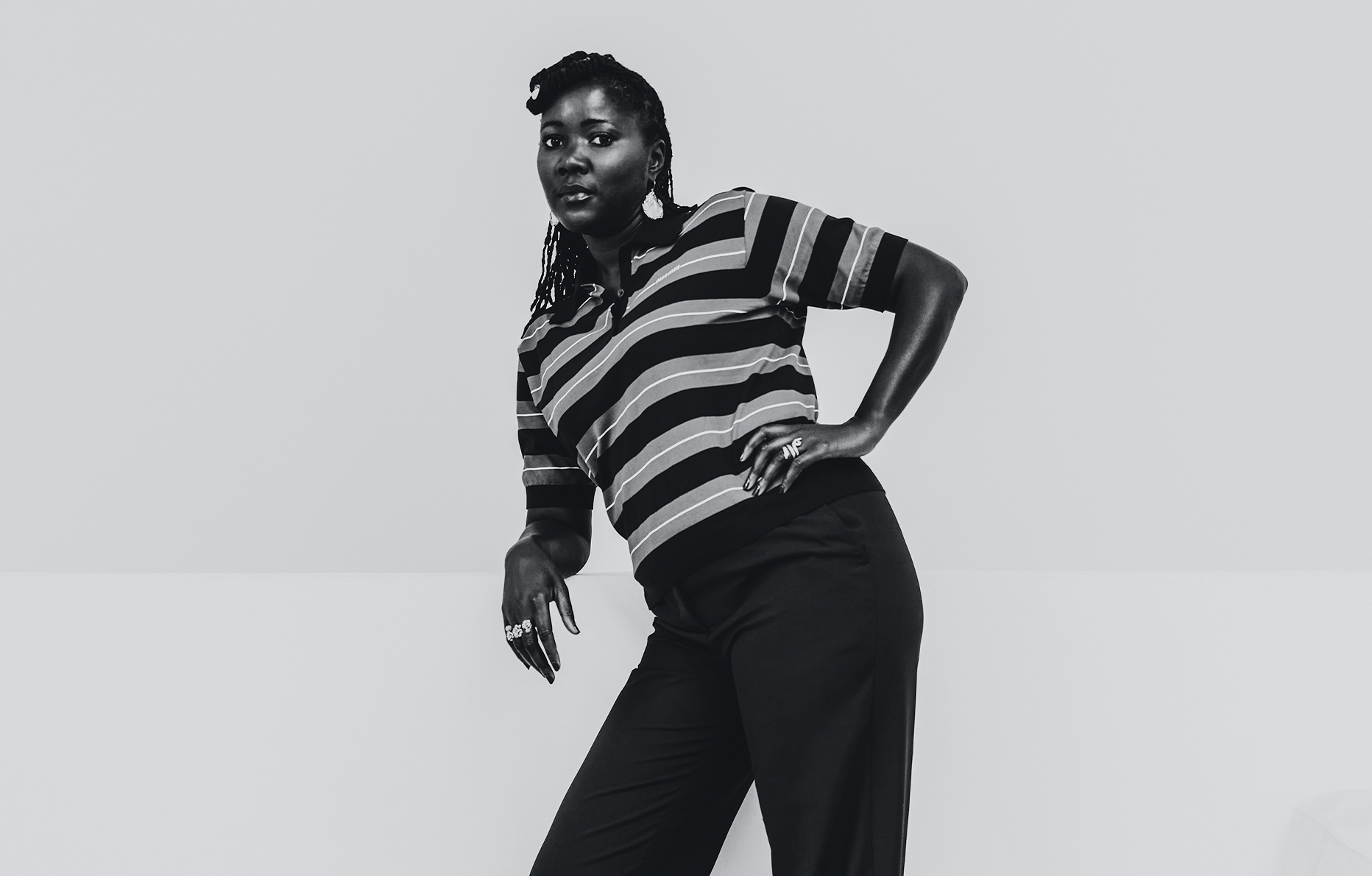
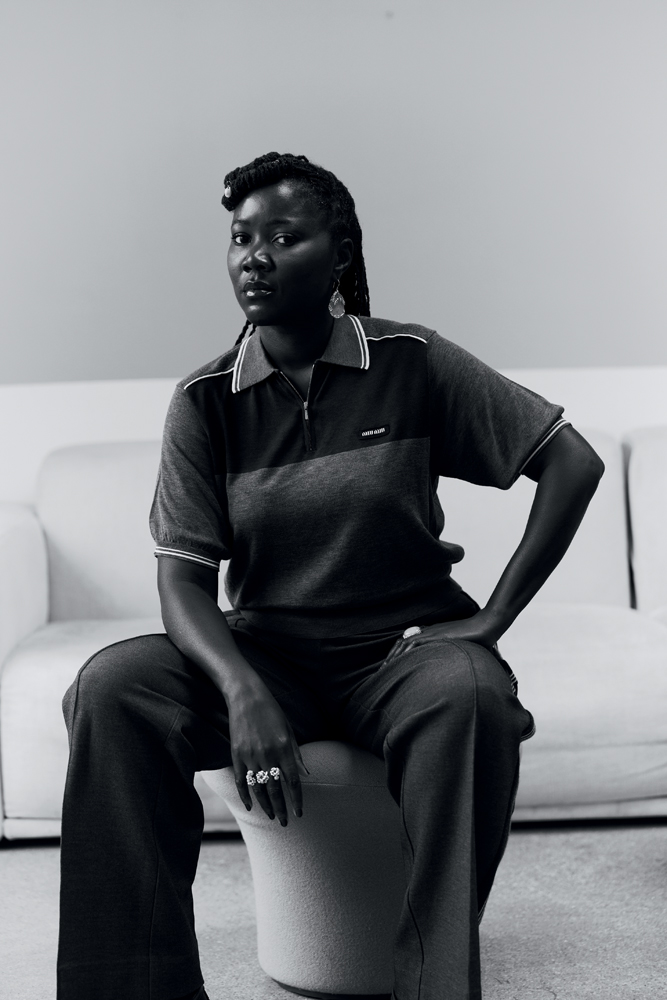
A double prize winner at the 2022 Venice Film Festival, Saint Omer, her first major fiction movie, brought this seasoned documentary director international recognition and new audiences. Continuing to question prejudice and clichés, the brilliant Franco-Senegalese filmmaker is back this year with Fragments for Venus, a short-film adaptation of a poetry collection by the African-American author Robin Coste Lewis, which also inspired a performance at Paris’s Festival d’automne from November 19th to 30th, 2025.
Interview by Delphine Roche,
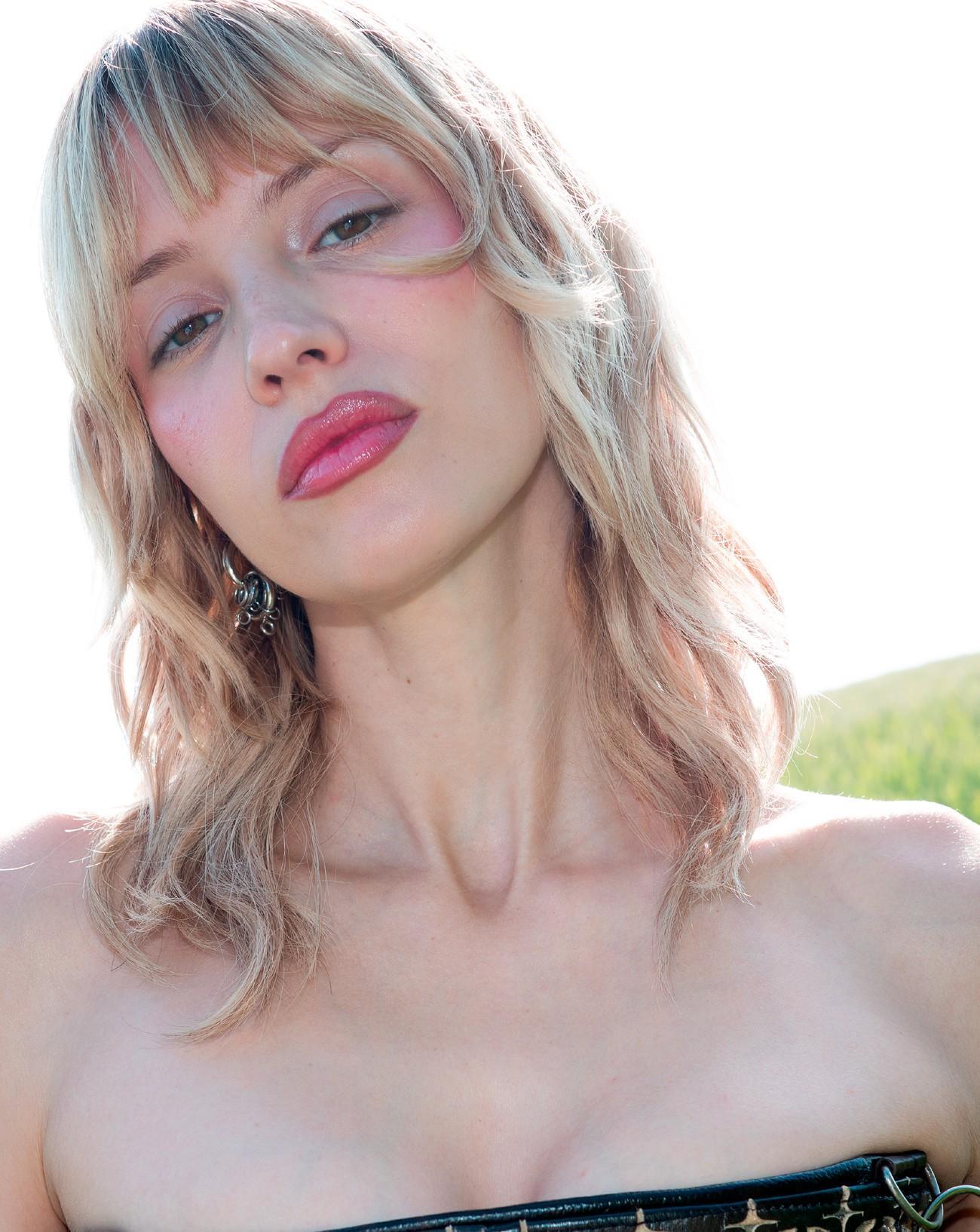
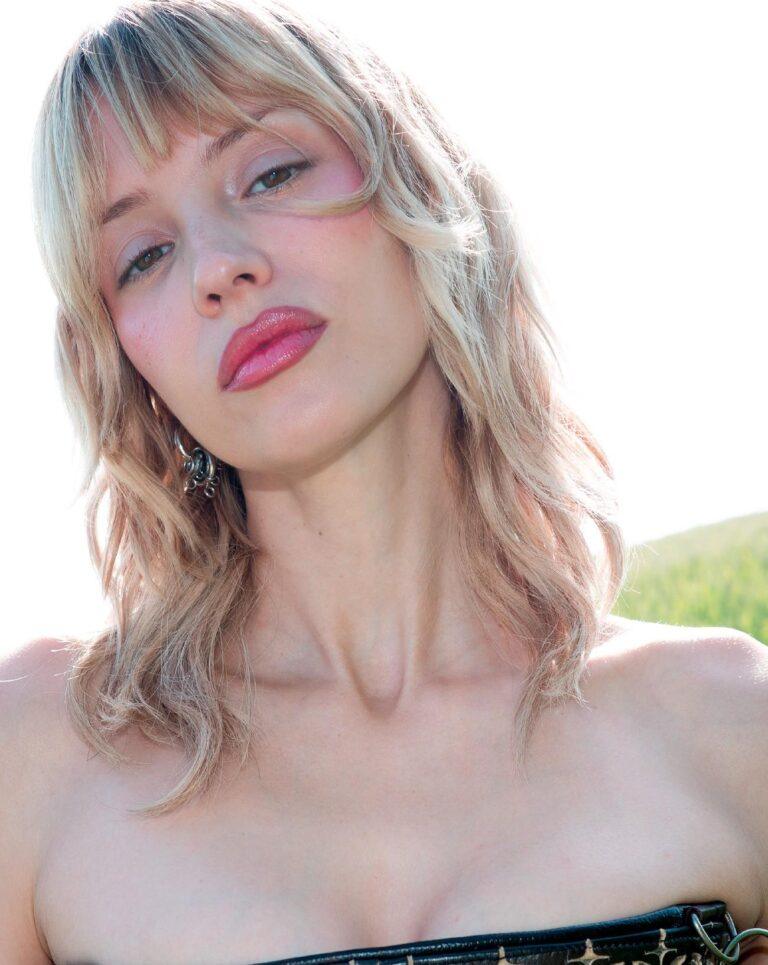
photos by Goldie Williams Vericain .
Alice Diop’s breakthrough with the film Saint Omer in 2022
It took the arrival of Saint Omer, her first fictional feature film, for the world to at last understand how much Alice Diop’s viewpoint is not only unique but crucial for our times. In 2022, when it won two prizes at the Venice Film Festival, this harrowing movie, inspired by the trial of Fabienne Kabou, a Franco-Senegalese mother accused of infanticide, opened a wider audience’s eyes to Diop’s very particular way of weighing words and the unsaid so as to point up the silences of history.
Cowritten by the author Marie Ndiaye and by Amrita David, Alice Diop’s film editor, Saint Omer favours long fixed shots composed like paintings. Those unfamiliar with the filmmaker’s rich documentary back catalogue suddenly discovered her stylistic approach, at once quiet and implacable, which makes the most of the fecund interstices between what is said and what isn’t, between images and words.
A calm, ruthless writing style
It can be seen at work in all her films, such as Vers la tendresse, which explored how four men from a French housing estate view women, and Les Sénégalaises et la Sénégauloise, in which Alice Diop, who grew up in France, filmed the women in her family who stayed in Dakar.
This year she’s taking part in Miu Miu Women’s Tales, a programme launched in 2011 that celebrates female filmmakers by offering them carte blanche to make a short movie. When shown at the 2025 Venice Film Festival, Diop’s Fragments for Venus deeply moved the audience. In this freeform cinematographic essay, inspired by Robin Coste Lewis’s poem Voyage of the Sable Venus, Diop went well beyond a simple response to a short-movie commission, using the format both to synthesize and push further the questions raised by her work as a filmmaker. Interview.
Interview with film director Alice Diop
Numéro: How did you get involved with Miu Miu Women’s Tales?
Alice Diop: Verde Visconti [cofounder, alongside Miuccia Prada, of the Miu Miu Women’s Tales Committee, ed.] asked me to take part three years ago. I was very touched, because this collection of films brings together directors who inspire me, among them Lucrecia Martel, Agnès Varda, and Alice Rohrwacher. Each of them managed to find her own language within the limits of the exercise. So I felt very honoured to be invited, but had never worked to commission because, to make a film, I need to feel that there’s an imperious necessity to do so, be it a short or a feature film, a fictional story or a documentary – I make no difference between the formats.
At the beginning, I wasn’t feeling that need, but during a residency in the US I discovered African-American authors who hadn’t yet been translated into French, in particular a collection of poems by Robin Coste Lewis, Voyage of the Sable Venus. For me, it was a total detonation, a revelation with respect to all the questions that have been nagging me as a filmmaker and as a woman, articulated with a poetic and political power I had never encountered until now. I was so struck by this text that I’ve been working on it for the past two years, including readings at the Festival d’automne, and in November I’m going to push that further with a performance. When Verde Visconti got back in touch last year, while I was living in the US and teaching at Harvard, I started thinking about how to adapt the collection’s title poem into stage form, and that’s when I saw the need to do it as a film.
An essential residence in the United States
I was so struck by this text that I’ve been working on it for the past two years, including readings at the Festival d’automne, and in November I’m going to push that further with a performance. When Verde Visconti got back in touch last year, while I was living in the US and teaching at Harvard, I started thinking about how to adapt the collection’s title poem into stage form, and that’s when I saw the need to do it as a film.
A performance and a short film inspired by the poem Voyage of the Sable Venus
The poem Voyage of the Sable Venus lists artworks that feature one or more Black women. With no commentary, it highlights all the racist violence present in the Western gaze.
This poem was the result of a long research project during which Lewis compiled all the titles and descriptions of artworks that mention the presence of a Black woman, from antiquity to today. Out of that was born this experimental, epic form that reveals the unconscious basis on which the entire fabrication of the Western gaze is built: the effacement, the fetishization, or the objectivization of the Black body. For me, it was a revelation that really made me think about how my own gaze had been constructed up till that point.
Fragments for Venus is an essay that attempts to articulate, through cinema, this searing revelation, one that in reality is so obvious, but which I hadn’t grasped till then. What’s more, I shot it last year just as Trump’s new presidency began in the US, a real political tragedy. The fact of working on these ideas at precisely that moment was both a refuge and a form of resistance – I was reassured to know that there were still spaces where these questions could be addressed.
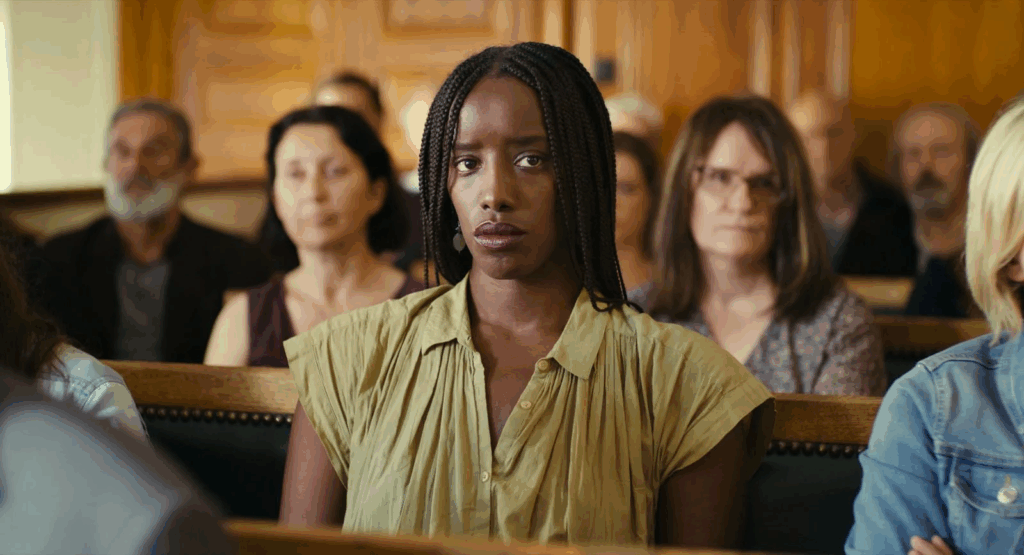
“My film, Fragments for Venus, reveals the unconscious basis on which the entire fabrication of the Western gaze is built: the effacement, the fetishization, or the objectivization of the Black body.” – Alice Diop.
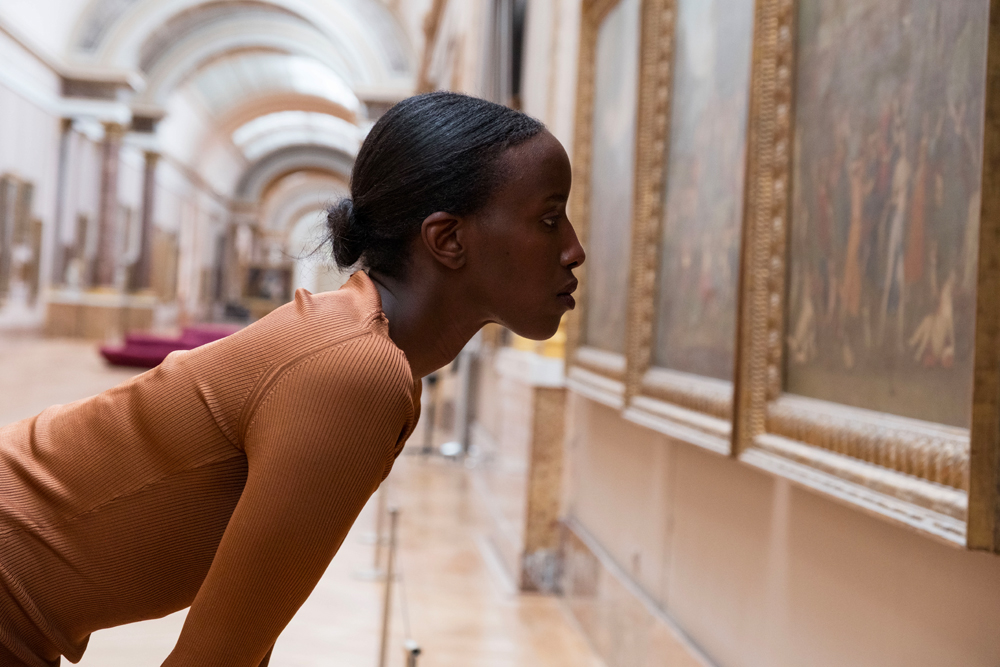
Fragments for Venus features two actors. We first see Kayije Kagame, who played the main character in Saint Omer, looking at pictures in the Louvre, while your voiceover recites the titles of works listed in Lewis’s poem. Then, we see Séphora Pondi of the Comédie-Française in the busy streets of Bedford-Stuyvesant, in Brooklyn. What made you choose these two women?
The casting for this film absolutely had to include both of them. Their presence is almost a political declaration. These two women, these two bodies, these two sensibilities, these two presences question the norm of how we’ve been taught to look at a woman as beautiful and desirable.
The streets of Bed-Stuy in New York, a fertile ground for inspiration
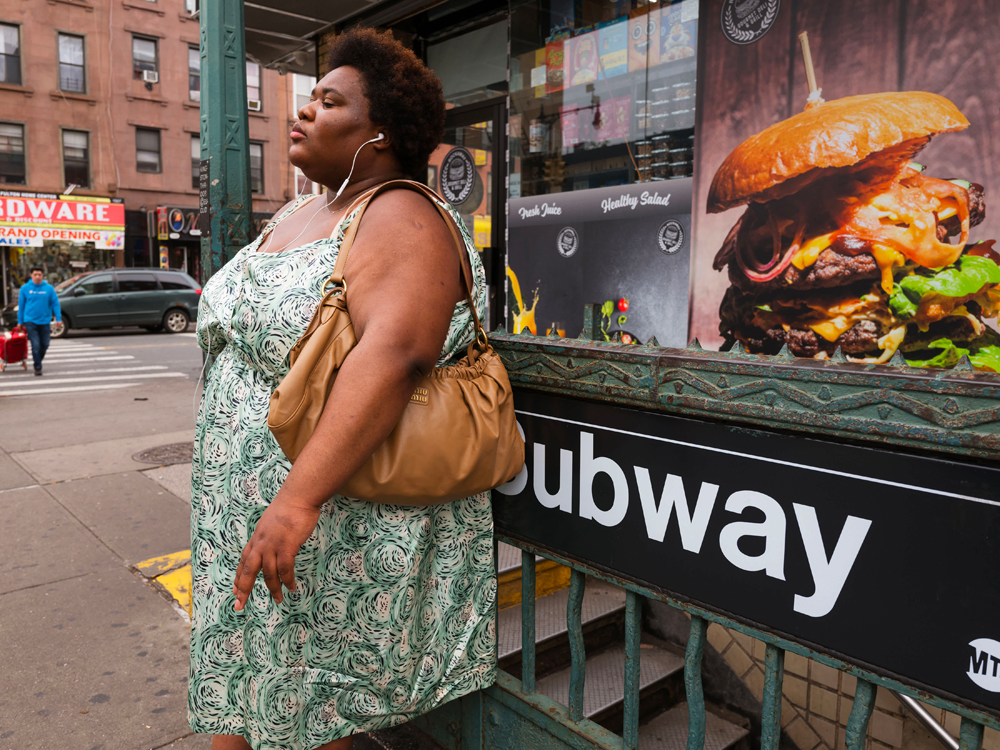
Replying to your gaze as a filmmaker, when looking at these two women and at others in the streets of New York, are their gazes toward the viewer, but also Pondi’s gaze when looking at other Black women in Brooklyn. Is the circulation of the gaze between all these protagonists also a political issue?
Totally. The film was also born from what I’ve experienced going to the US over the past ten years to promote my work. Walking in the streets of Bed-Stuy, I feel I’m not the same woman as when I go out in Paris. I have the impression that my relationship to my body, to space, to others, and to myself is completely modified. There’s something very specific about Black America, and particularly Bed-Stuy.
Transforming an objectifying Western gaze
What do you feel in these New York streets?
It’s the feeling of being validated, recognized, looked at, and revealed in the gaze of other women who attest that you exist. They look at me as much as I look at them. There’s something very political in this way of looking at women who are looked at by other Black women, and to think that they won’t disappear from the record because they’ll be transformed into a sculpture by Simone Leigh, a photo by Zanele Muholi, or a painting by Jennifer Packer – Black women artists who I celebrate in a sort of mood board at the end of the film.
Fragments for Venus opens with the objectifying, predatory Western gaze, and finishes with these women seen in the street, who could acquire a form of immortality by being celebrated in art by other Black women. For me, it’s a form of consolation, of healing, and one of the greatest promises for the future.
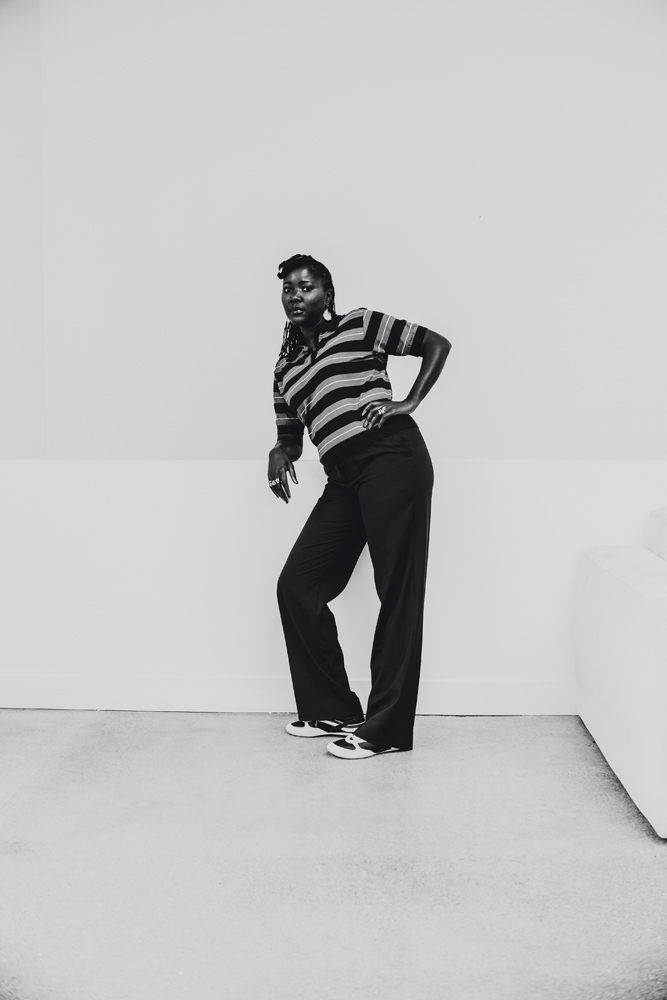
Transcending resentment
As a filmmaker, did you try to construct a healing gaze within the visual tradition forged by the Western gaze?
I think that’s precisely why I became a filmmaker, even if it took time for me to understand that and to theorize it. Right from the start, I wanted to show a representation of working-class and immigrant neighbourhoods that was different to what we’re used to seeing. I wanted to offer the centre to these Black women who are only looked at on the margins. That’s why this film, for me, condenses and synthesizes all the questions that have been troubling me ever since the moment when the imperious need to invent new images came upon me.
It’s a very gentle, serene film, which was a joy to shoot, and which also records the state I’m currently in thanks to meeting these other women. It’s about going beyond resentment and anger, all that poison born from the violence of history, in order simply to declare our presence. It’s just about affirming it, without needing to demand anything, or to shout and scream. We have to recognize that that violence could come back to bite us, and that there’s a way of avoiding it by affirming very simply, very calmly, very serenely, that we’re here.
Alice Diop’s first production at the Festival d’automne
What form will your performance take at the Festival d’automne?
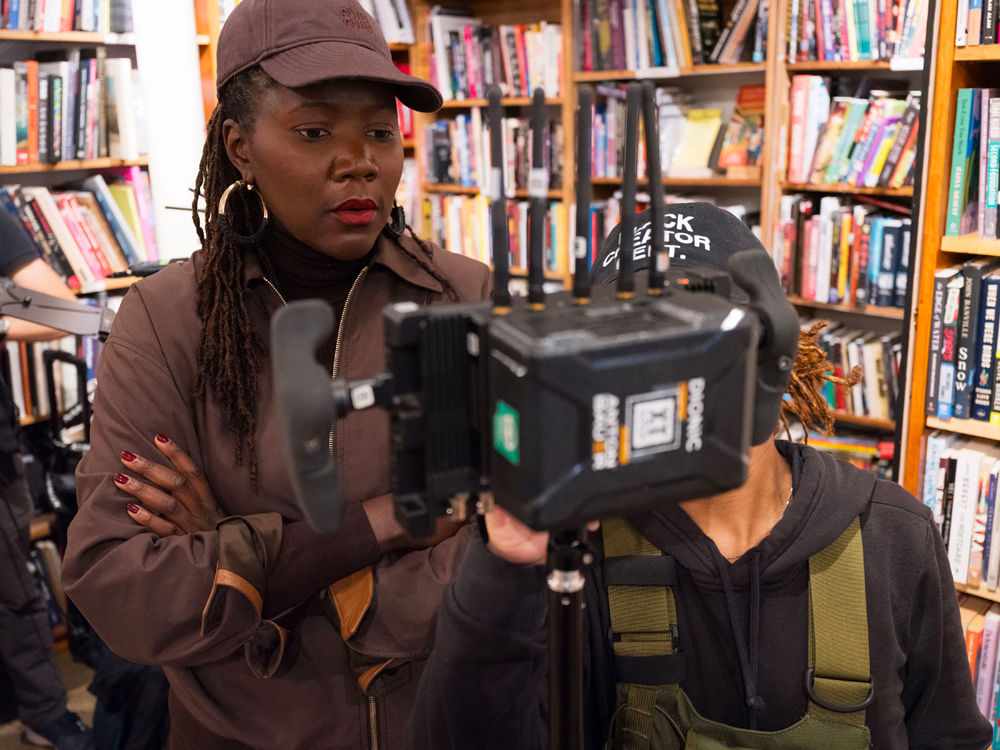
Nicholas Elliott, who introduced me to Robin’s text, will direct the piece with me. We’re going to construct a performance around the epilogue in her collection of poems, in which she recounts the very intellectual and theoretic research she undertook in museums in order to construct a metaphoric poetic epic. She imagines herself at the prow of a boat, steered by a Black Venus, that travels through time in order to gather together, like a sort of Noah’s Ark, all the dismembered bodies of Black women to be found in museums around the world. For the performance, I’m going to find myself for the first and probably last time centre stage in the theatre.
“I wanted to offer the centre to these Black women, who are only looked at on the margins.” – Alice Diop.
I need to recite this text and to address it to others, because it is like a form of healing. For me, something physical happens each time I read or hear it – I feel pain and anguish being cleaned and expunged, which is the opposite of a theoretical approach, of a discourse. There’s something, in the present moment, that’s healed. It’s wonderful that a text can do that. Indeed the initial reactions of Black women who saw Fragments for Venus were deeply moving for me. I hope that all those who see the film will also feel this healing effect.
Fragments for Venus can be seen on Miu Miu Women’s Tales.
Le voyage de la Vénus noire by Alice Diop will be staged for the Festival d’automne from November 19th to 30th, 2025, at MC93 – Maison de la culture de Seine-Saint-Denis.
Styling: Azza Yousif. Hair and makeup: Namani. Assistant photographer: Jeremy Cardoso.