21
21


Exhibited and empowered bodies at the Bourse de Commerce
Inaugurated in March, the major exhibition at Paris’s Bourse de Commerce takes as its title “Corps et âmes” – Bodies and Souls. Exploring the human figure in contemporary art through works in the Pinault Collection, the vast corpus of pieces selected, which include names such as Georg Baselitz, Miriam Cahn, and Kerry James Marshall, shows how a theme as old as the history of art has been reinterpreted in the light of issues that are as current as they are universal.
By Matthieu Jacquet.
Published on 21 May 2025. Updated on 1 April 2026.
“Corps et âmes”: a major season at the Bourse de Commerce
A young woman lies naked and motionless on the damp soil. Suddenly, her body disappears, leaving an imprint in the mud, which then fills with a scarlet liquid. We’re watching one of the famous Siluetas by Ana Mendieta (1948–85), a series of outdoor performances the American-Cuban artist staged in the 1970s that show her body becoming one with the earth. On display since early March on the ground floor of Paris’s Bourse de Commerce, this short, poetic video greets visitors to the museum’s new hang, and serves to introduce its theme, bodies and souls (“Corps et âmes“).
These two words are set in the plural, since the hundreds of bodies on show recount how, since the mid 20th century, artists have “redrawn” the corporeal human experience in the light of contemporary issues, as well as of the emergence of new forms of spirituality.
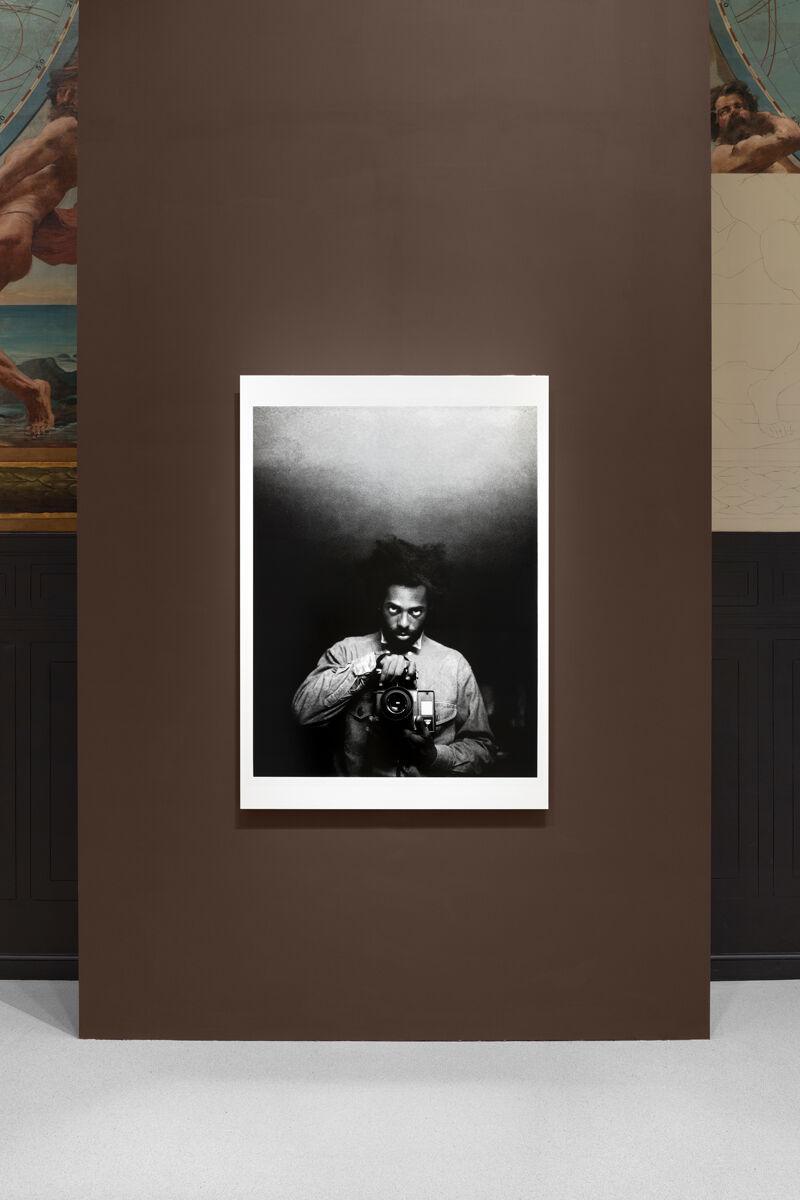
Key artists from the Pinault Collection, from Duane Hanson to Arthur Jafa
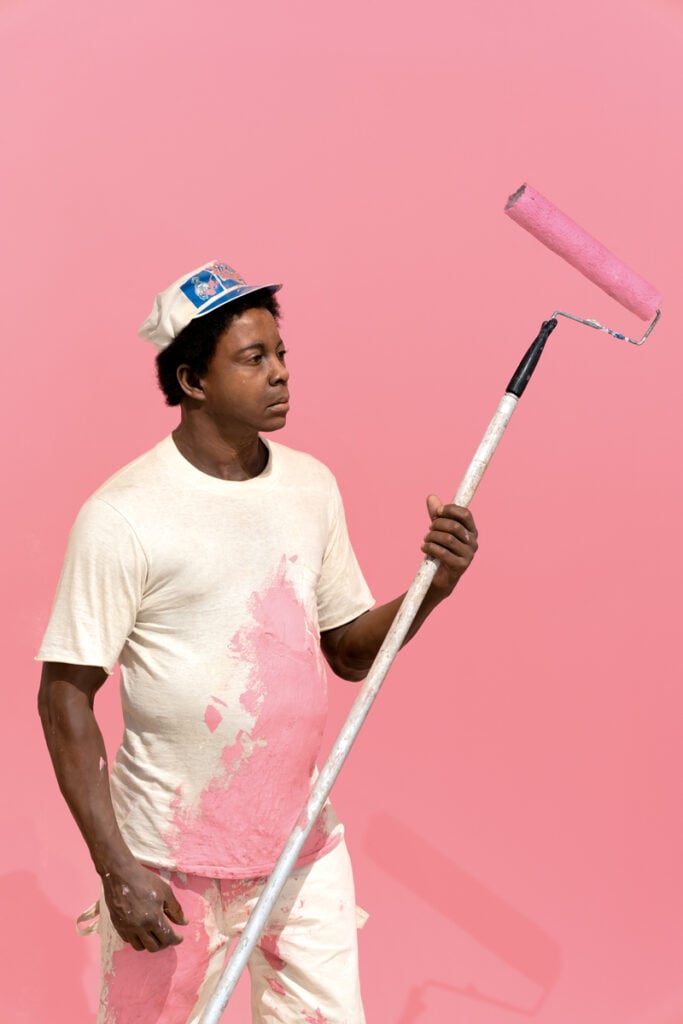
François Pinault and his team couldn’t help but notice that around half of the works in his huge collection relate to the body. Two years after Avant l’orage, a major show focusing on contemporary representations of landscape that highlighted both its beauty and its disturbing transformations, it seemed only natural that this other age-old artistic theme should take center stage at the Bourse de Commerce.
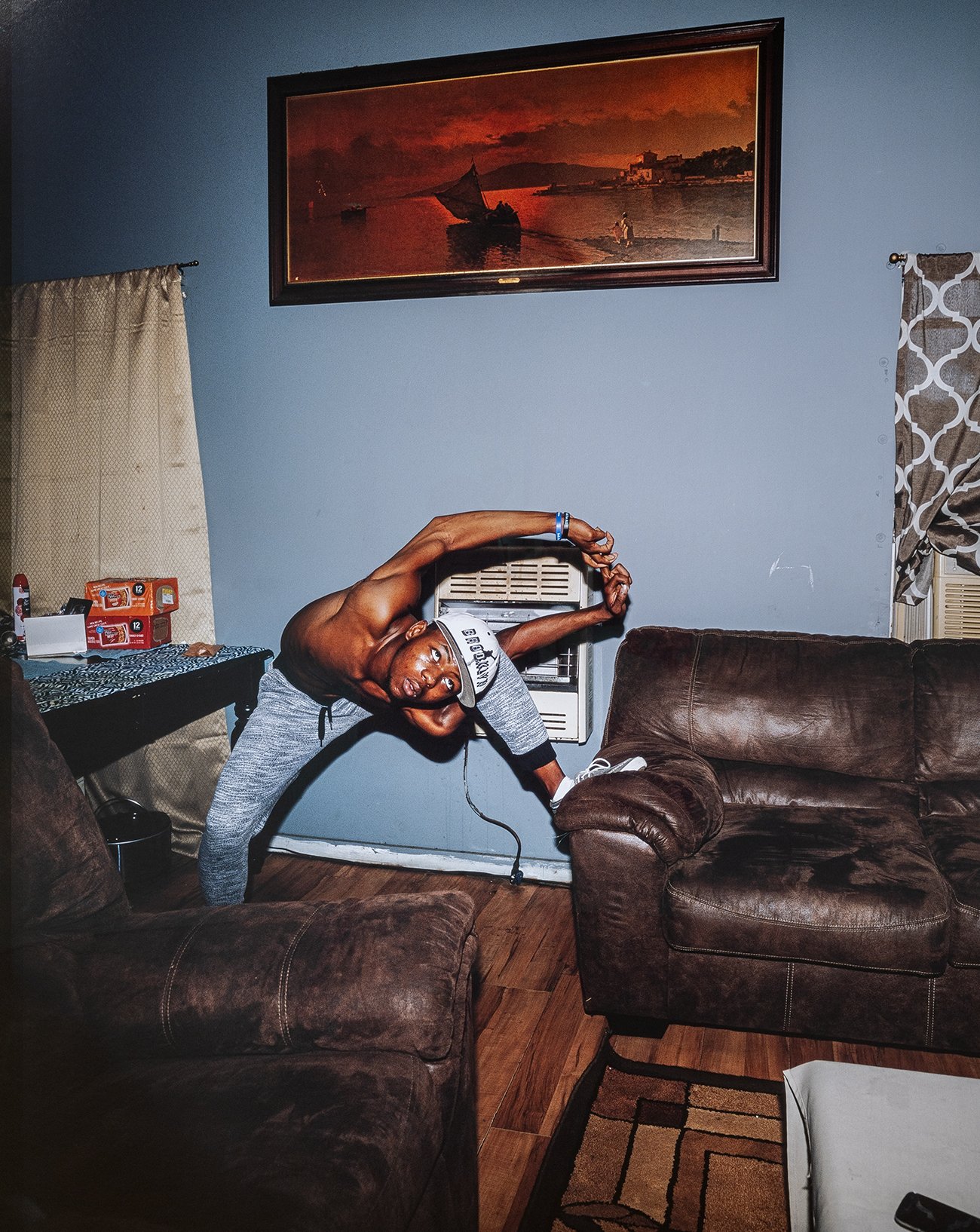
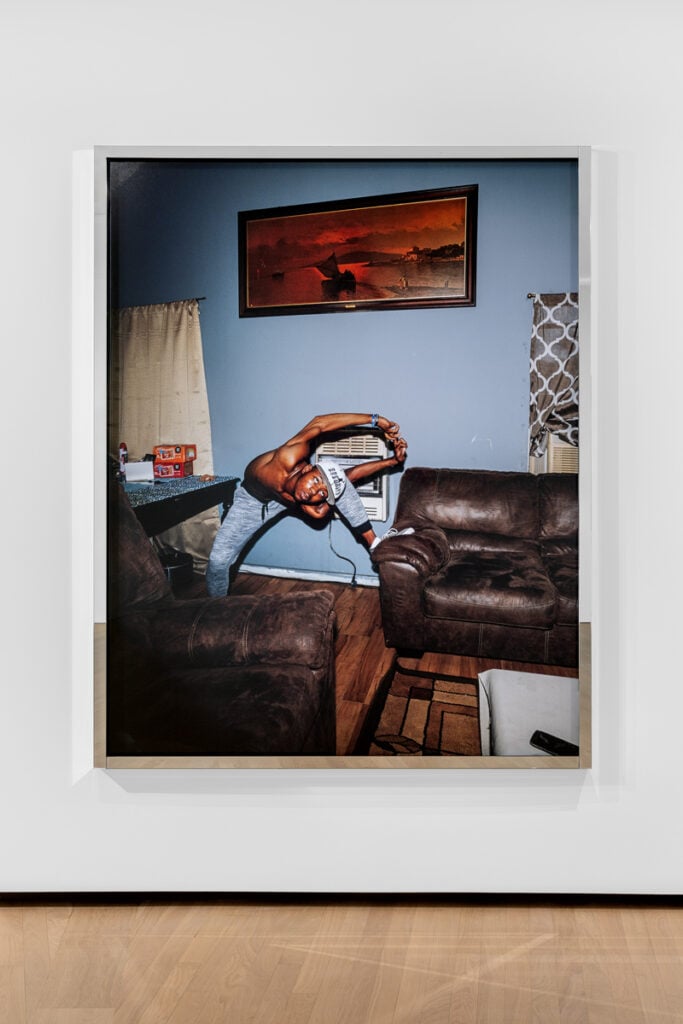
So much so that the institution is devoting the entirety of this season’s hang to it, with a group exhibition featuring some 30 artists – from Man Ray and Auguste Rodin to Duane Hanson and Senga Nengudi – and three solo presentations: Arthur Jafa, who is showing three films in the rotunda and basement; Ali Cherri, who is exhibiting a series of sculptures in the rotunda’s historic display cases; and Deana Lawson, who is exhibiting a dozen or so photographs on level two.
Kerry James Marshall: a reimagined Olympia
A number of key figures define the parameters of the hang, which was curated by Emma Lavigne, the Pinault Collection’s General Director. On level three we find the American painter Kerry James Marshall, whose work Pinault has been collecting for years. His 1993 canvas One Cannot be but Moved by Beauty Examined will leave no one indifferent: depicting a naked Black woman lying on an autopsy table, her left arm completely flayed, it was inspired by the Hottentot Venus, as she was known, a Khoekhoe woman who was exhibited in Britain and France in the early 19th century. With its violence and bluntness, the work questions the semantic ambiguity between the “exhibition” and “exposition” of the body.
On the adjacent walls we find two other, more sensual Marshall portraits of Black women, for which he appropriated another historic motif, the odalisque, whose subjects were predominantly white. Nodding to Édouard Manet’s celebrated Olympia, they open the first section of a hang that seeks to celebrate bodies that were long absent from artistic representation.
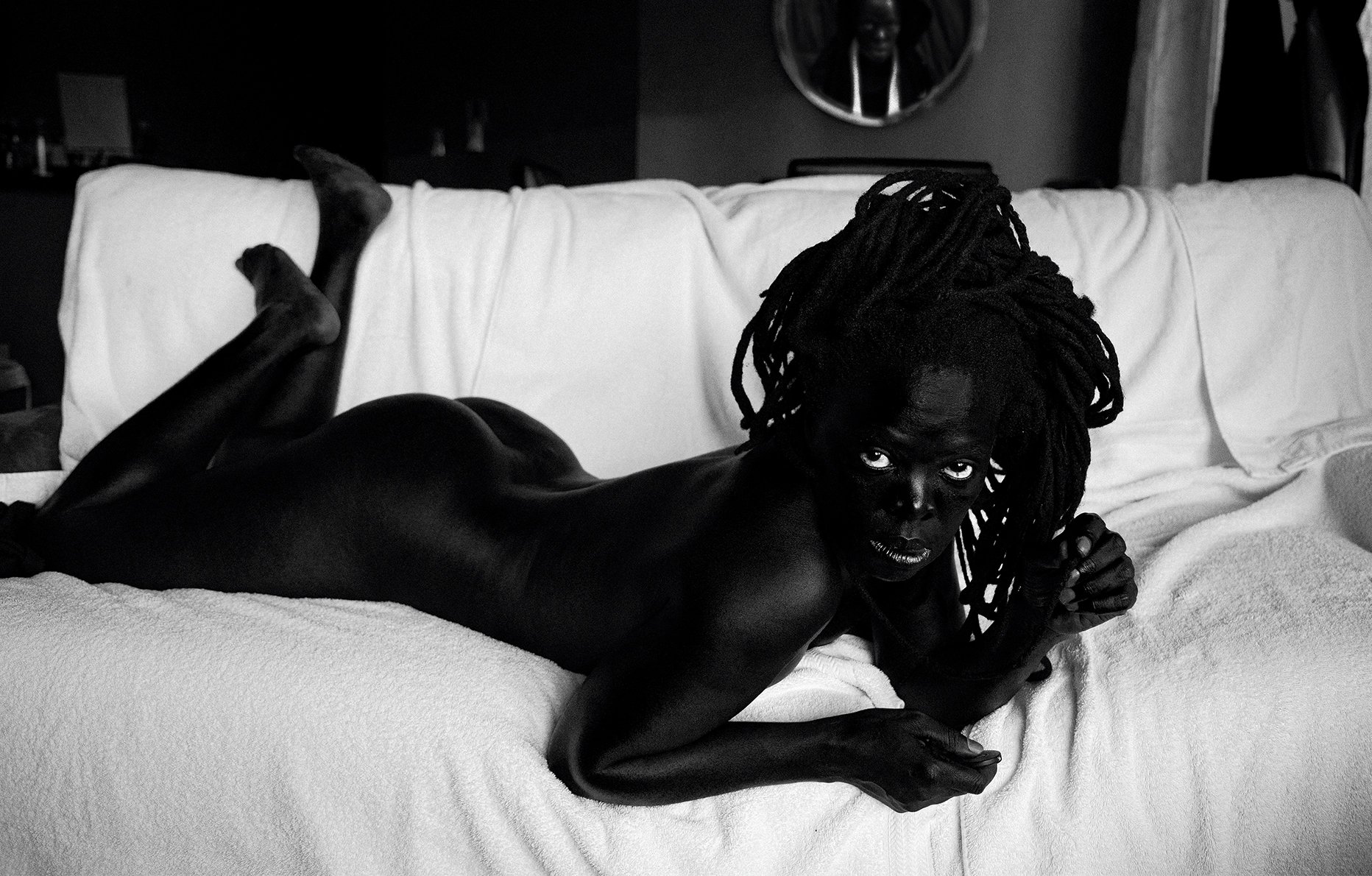
© Zanele Muholi.
Staging the body to reclaim one’s place in history
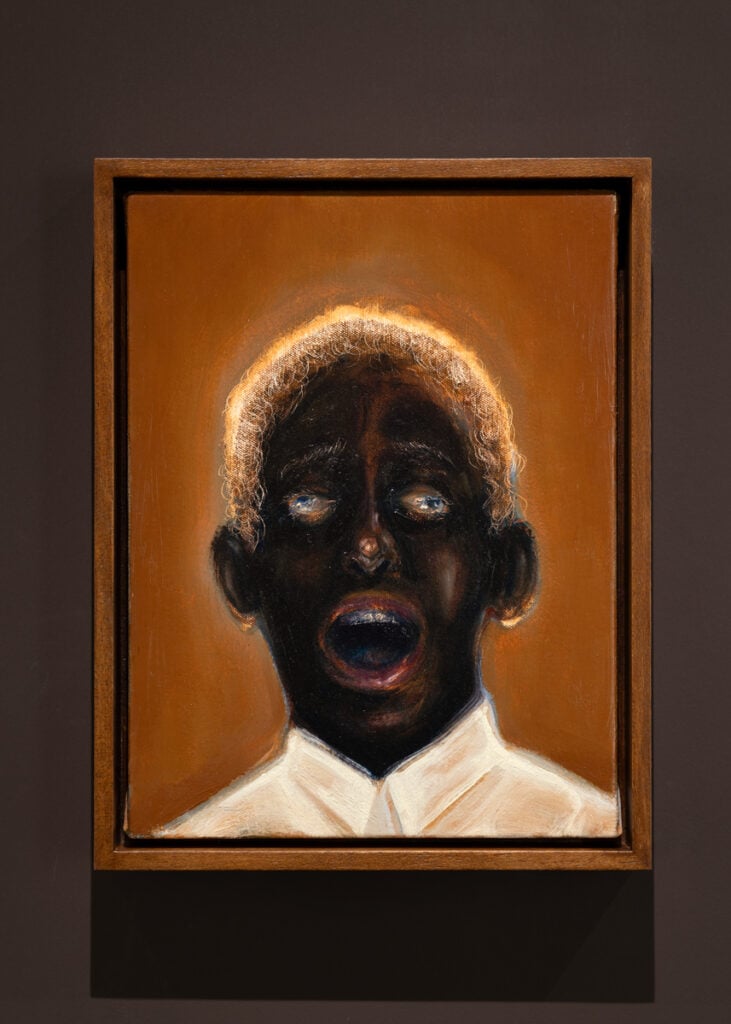
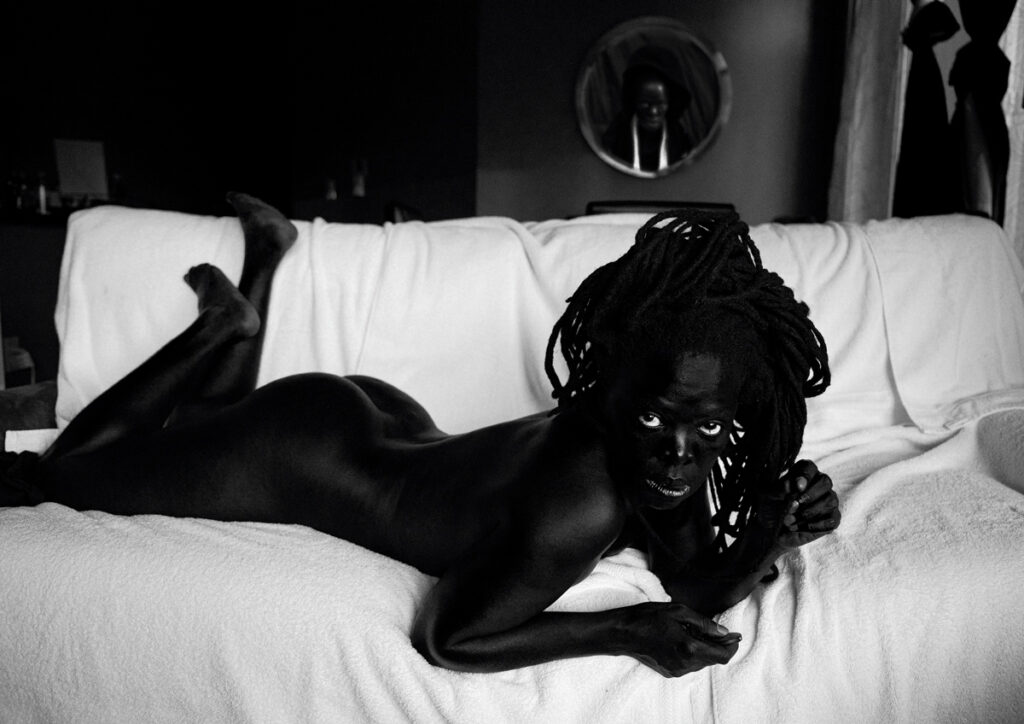
In this respect, Black bodies play a major role, from the self-portraits by the South African photographer Zanele Muholi to the intimate studies painted by the British artist Lynette Yiadom Boakye, not to mention the figures portrayed by the young Brazilian painter Antonio Obá. By including such works, “Corps et âmes” underlines the importance of diversifying the narratives – and bodies – shown in places of power so as to root them in history.
While several pieces date from the 1960s, a time of feminist and civil rights struggles in the West, others were made in the wake of George Floyd’s death in 2020, which sparked a revival of the Black Lives Matter movement in the US and led to structural reconsiderations in the art world about the place of racialized people, both as represented in collections and as employed in museums and galleries.
From Michael Armitage to Ana Mendieta, where body meets landscape
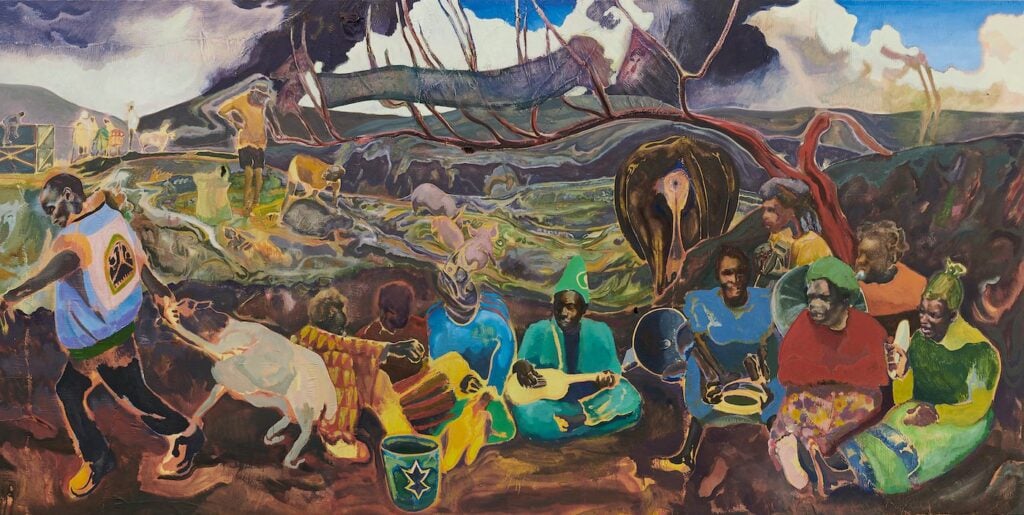
Michael Armitage is another key artist in the hang, with two arresting masterpieces. One of them, Dandora (Xala, Musicians) (2022), an imposing canvas reminiscent of history paintings, depicts Kenyans sitting in a huge rubbish dump in Nairobi (the artist’s home town), chatting and playing music. Through the handling of color and his liquescent forms, the painter transforms this desolate prospect into a dreamlike scene.
“These bodies seem consumed by a landscape that absorbs and dehumanizes them,” Lavigne comments. “Yet there is music. The quest for beauty, emotion, and group engagement galvanizes them.” Although the work warns of the real threat of this open-air dump to the health of its residents, we perceive above all the harmony of the bodies within nature, which can also be seen a few steps away in Ana Mendieta’s films and in a splendid landscape painting by Peter Doig, one of Pinault’s favorite artists.
Artworks tinged with tragic current events
“Several of these works take on a more serious meaning in the light of current events,” observes Guillaume Cerutti, the recently appointed president of the Pinault Collection. Created for the most part between the 1960s and the 2010s, the works do indeed seem to resonate differently in the wake of recent tragedies that have profoundly altered our relationship with the body and its representation, from the COVID pandemic to armed conflicts and their media coverage. Through her powerful portrait of a blindfolded man, the South African painter Marlene Dumas could just as easily be evoking the situation of prisoners of war as human beings who no longer wish to watch the violence of the world.
Begun in 2002, her Blindfolded Men series was inspired by the image of a Palestinian held in a refugee camp by the Israeli army. The ghost of the Middle East crisis is very much present here, as it is in Mira Schor’s poignant canvas, painted last year in the wake of the October 7 terrorist attacks. At the center of the image, a woman’s lacerated body is split in two, evoking both the open-heart surgery undergone by the American artist and her suffering in the face of the conflict, torn as she is between two seemingly irreconcilable populations.
Miriam Cahn: exposed and direct bodies
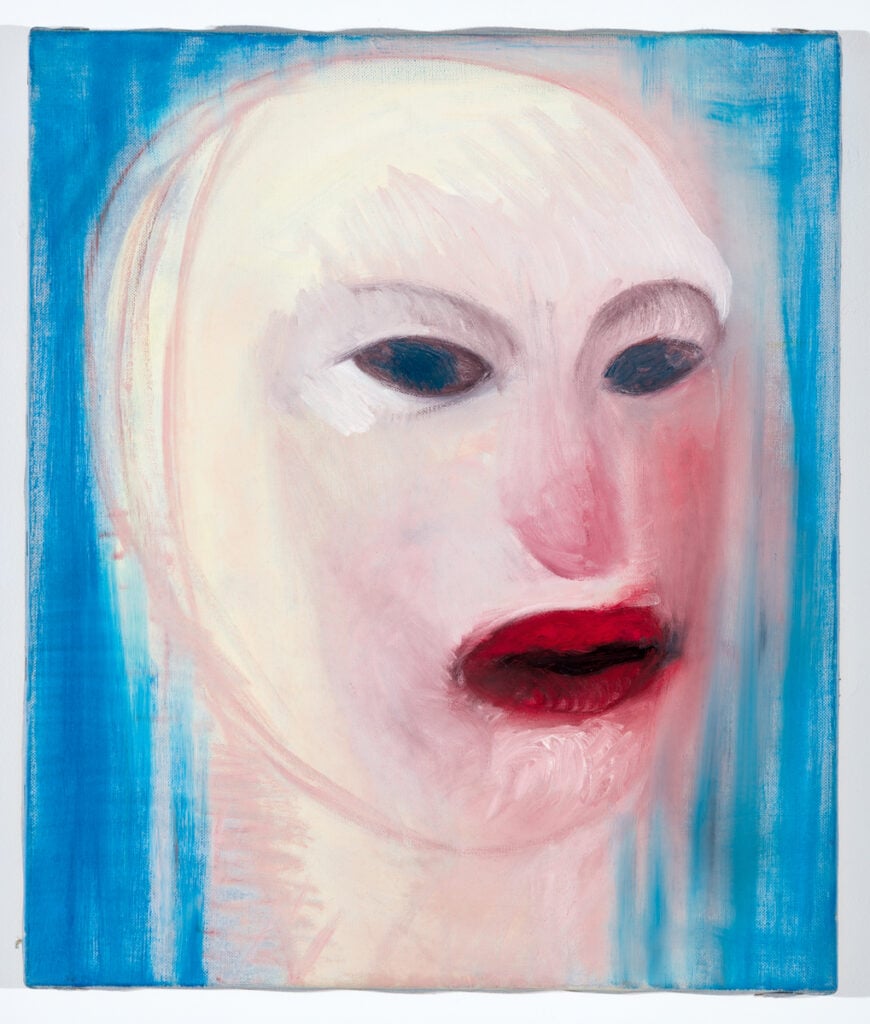
Other bodies whose flesh is marked by trauma can be found in a room entirely devoted to the Swiss artist Miriam Cahn. In a series of paintings of different formats, she pays tribute to her recently departed father by presenting vulnerable, naked, reddish bodies that evoke “the different emotions she experienced during the last days of his life: joy, sadness, amazement, doubt,” as Lavigne explains. “From this, she has created a small theater of the intimate, an ensemble of bodies designed to make us aware of their finiteness.”
Two years after her solo show at the Palais de Tokyo, which was also curated by Lavigne, Cahn’s presence at the Bourse de Commerce carries a taste of revenge. At the time, one of her paintings was defaced by a far-right former elected official, outraged by its raw depiction of wartime rape. This attempt at censorship reminds us that explicit representations of the body, violence, and sexuality still have the power to disturb and shock, making their presence in museums all the more important at a time of increased threats to freedom of expression.
Georg Baselitz’s installation: an ode to the aging body
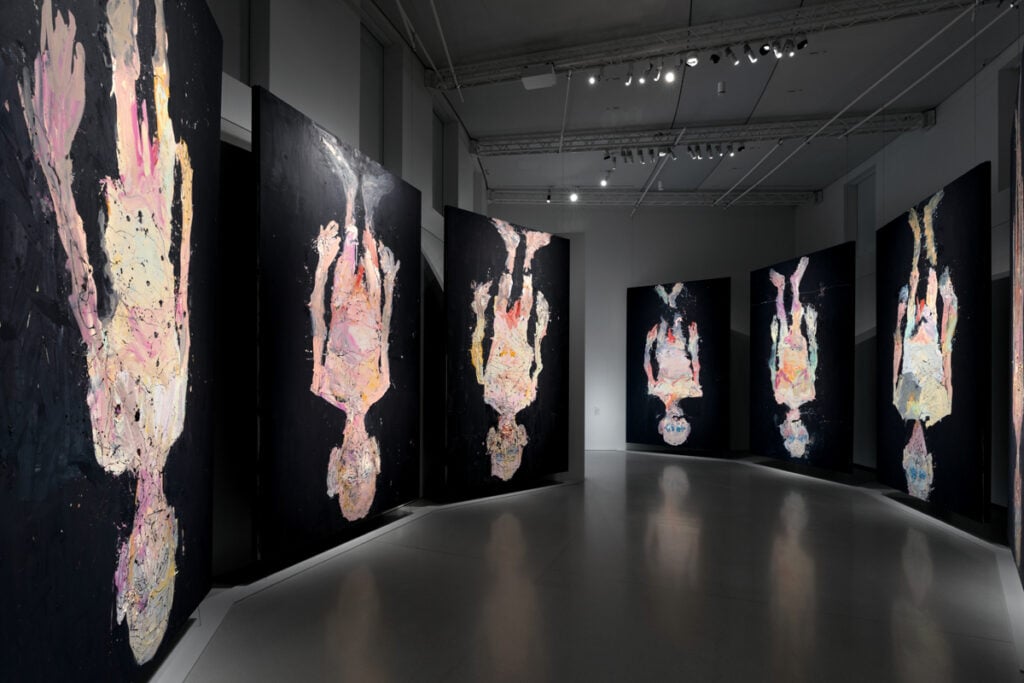
One of the tours de force of the “Corps et âmes” hang is the exceptional presence of Georg Baselitz’s Avignon series, unveiled at the Venice Biennale in 2015 and never shown since. Eight self-portraits that are almost 4 m high depict the ageing, upside-down body of the great German painter against a black background. Suspended from the ceiling, they transform one of the galleries at the Bourse de Commerce into a chapel-like space, complete with a soundtrack by the composer György Ligeti (1923–2006).
“With this series, Baselitz wanted to bring the visitor’s body into an enclosed space so as to intensify emotion,” Lavigne explains. While the flaccid silhouettes in these monumental canvases evoke old age and bodily decay, the frenetic brushstrokes, warm, vivid colours, and bursts of paint tell a rather different story, one of irrepressible, impulsive, youthful energy.
Fragile, but very much alive bodies
And it is with precisely this dichotomy that the Bourse de Commerce hang plays: the body is exposed in its flawed and fragile state, which in turn only serves to underline its vitality, a reading that is reinforced by the display choices. “I designed this exhibition as a dance,” Lavigne underlines, “with a succession of bodies sometimes still and at others in motion.” One example of this is Ali Cherri’s “family of broken bodies,” which is shown in the 24 historic display cases that run around the rotunda’s perimeter.
Hybrid and fragmentary sculptures made from artifacts salvaged in auctions, or characters modeled in terracotta, these motionless figures seem to come alive as you view them, since they are set in dialogue with Arthur Jafa’s powerful films – shown in France for the first time – and Deana Lawson’s vivid photographs of African-American communities and cultures. Downstairs, in the auditorium, the visit ends with a captivating film by Cecilia Bengolea showing young Jamaicans frenetically dancing in the torrential rain and lightning of a violent storm. Subjected to these extreme conditions, the body is revealed in its most sublime but also its most human form.
“Corps et âmes”, open until August 25th, 2025 at the Bourse de commerce – Pinault Collection, Paris 1st.
From May 22nd to 25th, 2025, the Bourse de Commerce presents “Arthur Jafa : Remixed Party”, a series of event revolving around three cartes blanches by artists from the contemporary art scene: Crystallmess, Arthur Jafa et Pol Taburet.