
30
30


When art takes the catwalk: Louis Vuitton and Daniel Buren
Since the beginnings of haute couture, fashion and art have been closely intertwined. One can think of Elsa Schiaparelli’s collaboration with Salvador Dalí or Yves Saint Laurent’s dresses paying tribute to Piet Mondrian. Over the past decade, the relationship between these two fields has grown even stronger. Fashion shows have become a new arena for their intersection. Within these ephemeral spaces where new collections are unveiled, contemporary artists and designers have joined forces to create striking, unforgettable installations. Today, let’s revisit the Louis Vuitton Spring/Summer 2013 show by Marc Jacobs, featuring a spectacular set design by Daniel Buren.
By Léa Zetlaoui.
Louis Vuitton brings art into fashion
Long before auctioning off his remarkable art collection in 2019, Marc Jacobs had already demonstrated his deep passion for contemporary art. This keen interest went far beyond that of a mere collector. It was the driving force behind his bold, interdisciplinary creative approach from the very beginning.
Marc Jacobs and the stars of contemporary art
As the creative director of Louis Vuitton for sixteen years, Marc Jacobs is widely known as a trailblazer in forging collaborations between the worlds of art and luxury fashion. When he introduced ready-to-wear for the French trunk-maker in 1997, he started operating a major transformation in the image of the house. Especially regarding new and daring experiments and placing artistic innovation at the core of the creative process.
Firm in his belief that fashion could serve as a playground for the collective imagination, he invited celebrated artists to reinterpret the iconic Speedy bag season after season. While these collaborations undoubtedly had commercial aims, they also expressed a genuine desire to spark a dialogue between craftsmanship and art. Takashi Murakami, Richard Prince, Yayoi Kusama, and Stephen Sprouse are among the illustrious names he brought on board. Marc Jacobs set the bar exceptionally high, when aligning himself with such major figures in contemporary art.
A new era is opening
Far more than mere marketing stunts, these collaborations actually marked a turning point in fashion history. First, they helped redefine the boundaries between art and brand strategy. Then, they paved the way for a new generation of fashion designers with a taste for interdisciplinary practices.
Through them, Marc Jacobs established himself as one of the most influential designers of his generation. The first one to root his work in a broader reflection on fashion as a cultural vector. Even today, his approach continues to shape the creative strategies of the luxury industry.
A Louis Vuitton show with Daniel Buren
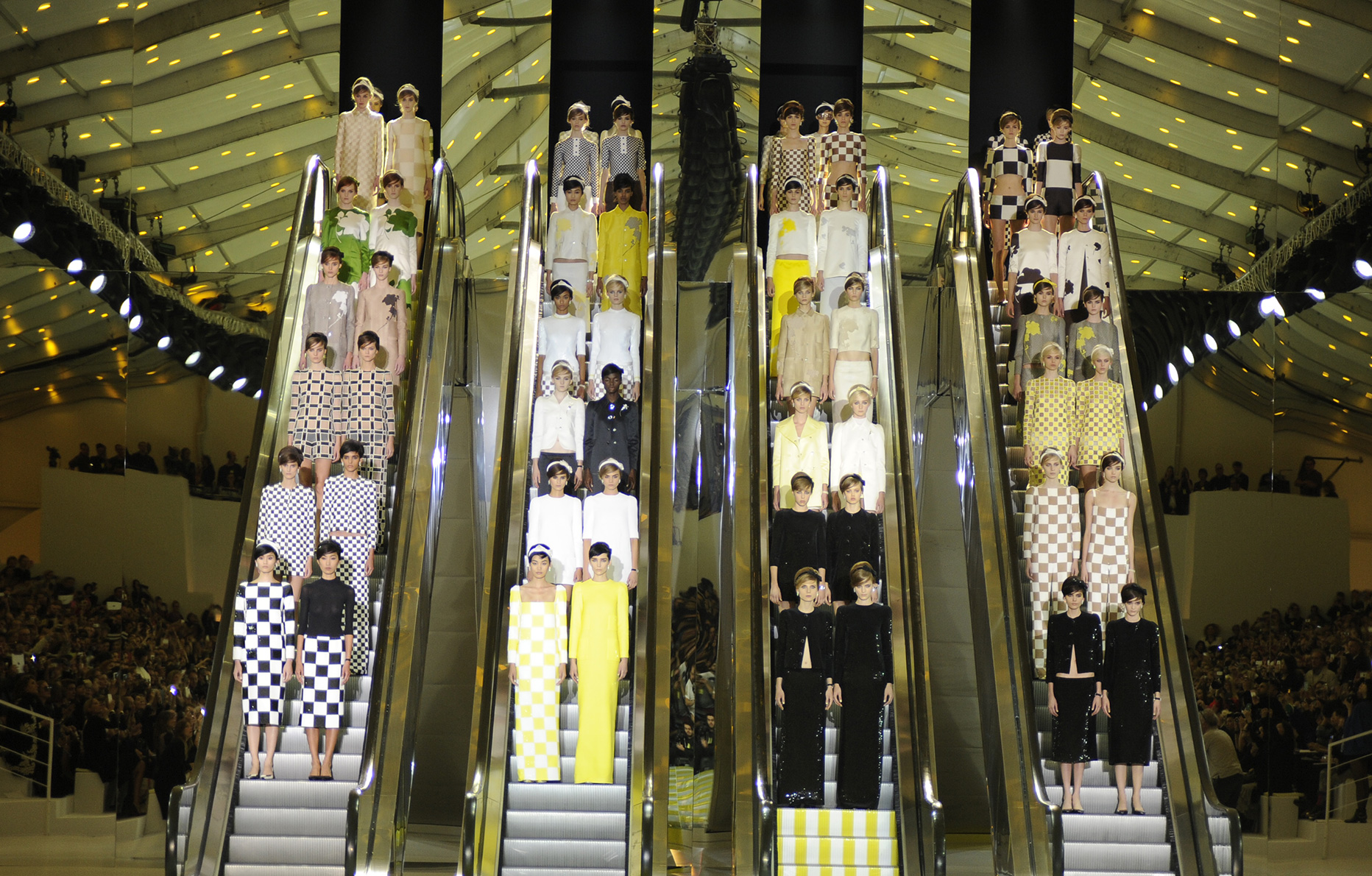
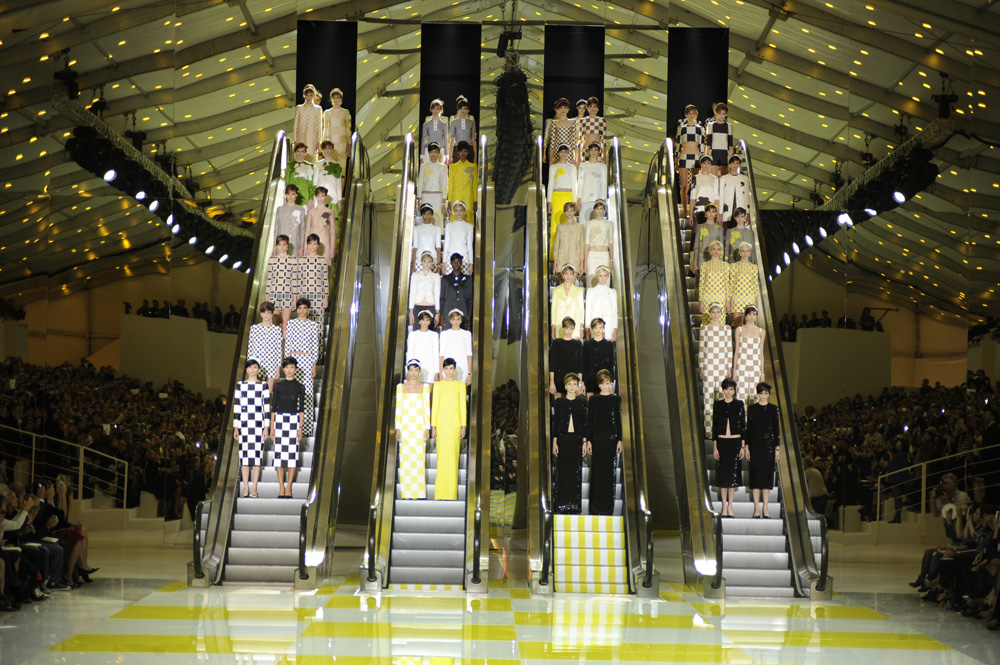
On October 2nd, 2012, a year before his departure, Marc Jacobs expanded the dialogue between fashion and art even further. For the Louis Vuitton Spring/Summer 2013 show, he invited artist Daniel Buren to create the show’s set.
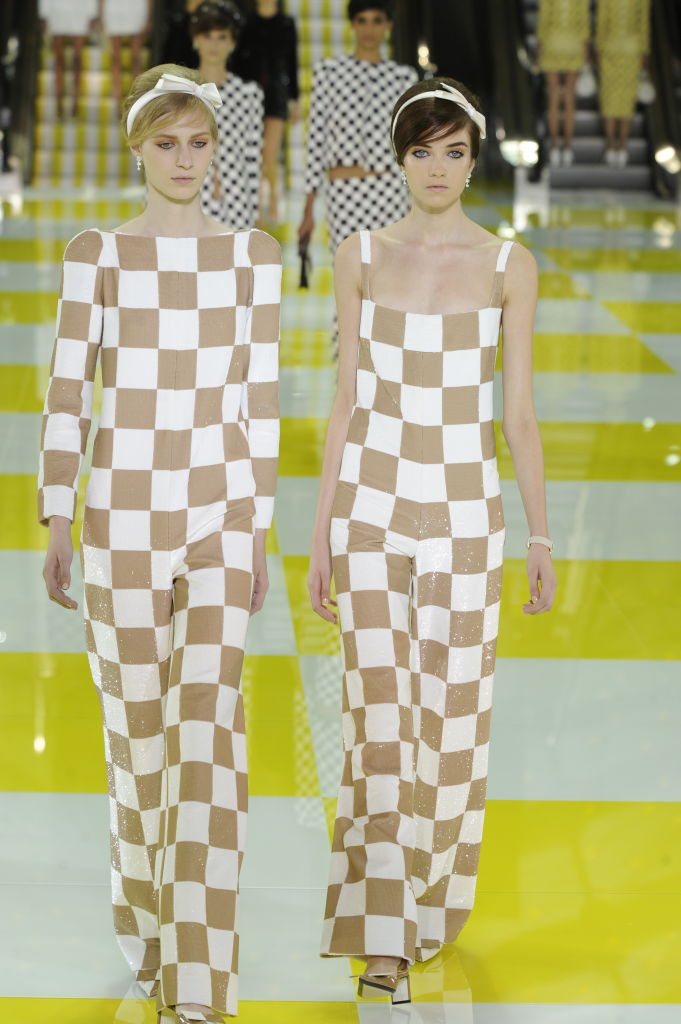
Widely known for Les Deux Plateaux – his iconic black and white striped columns installed in the courtyard of the Palais-Royal in Paris – the French contemporary artist envisioned a monumental installation for the event in the Cour Carrée of the Louvre. Remaining true to his rigorously formal art vocabulary, he reinterpreted the iconic checkerboard pattern in yellow and white.
A mutual source of inspiration
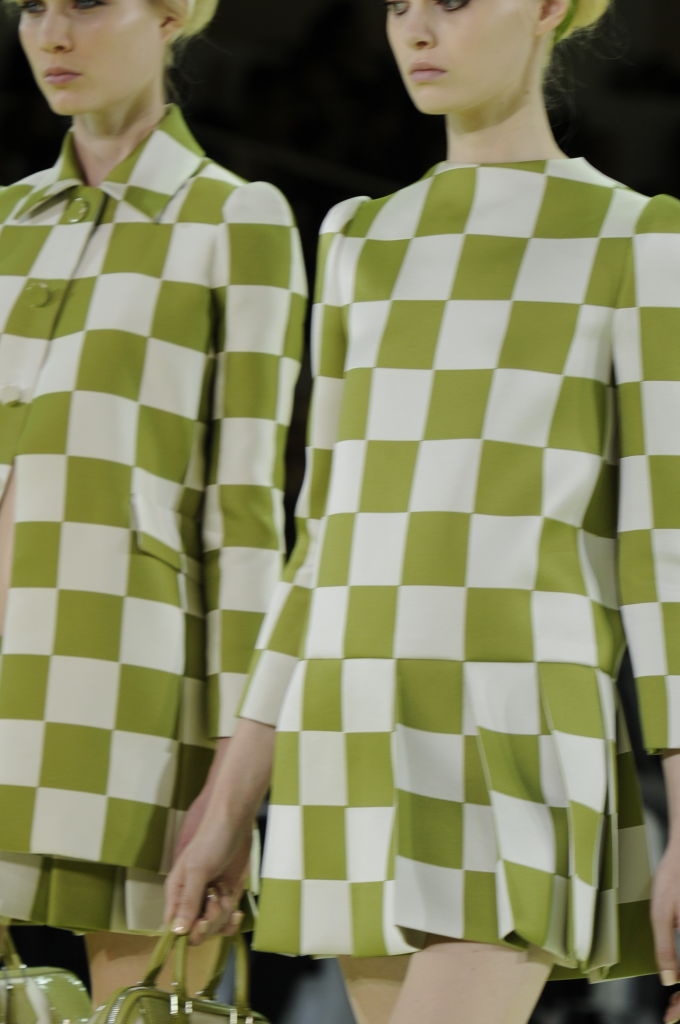
In response to this immersive scenography, Marc Jacobs designed a collection inspired by the 1960s. A-line dresses, straight cuts, and low-heeled shoes made up a wardrobe that was both graphic and structured. The designer’s creative gesture lay in his clear appropriation of Daniel Buren’s checkerboard motif and application it to his garments and accessories.
The result was a total visual concept, where the set and the collection became one, merging the languages of fashion show and art installation. A moment that felt like the climax of the Marc Jacobs era at Louis Vuitton.
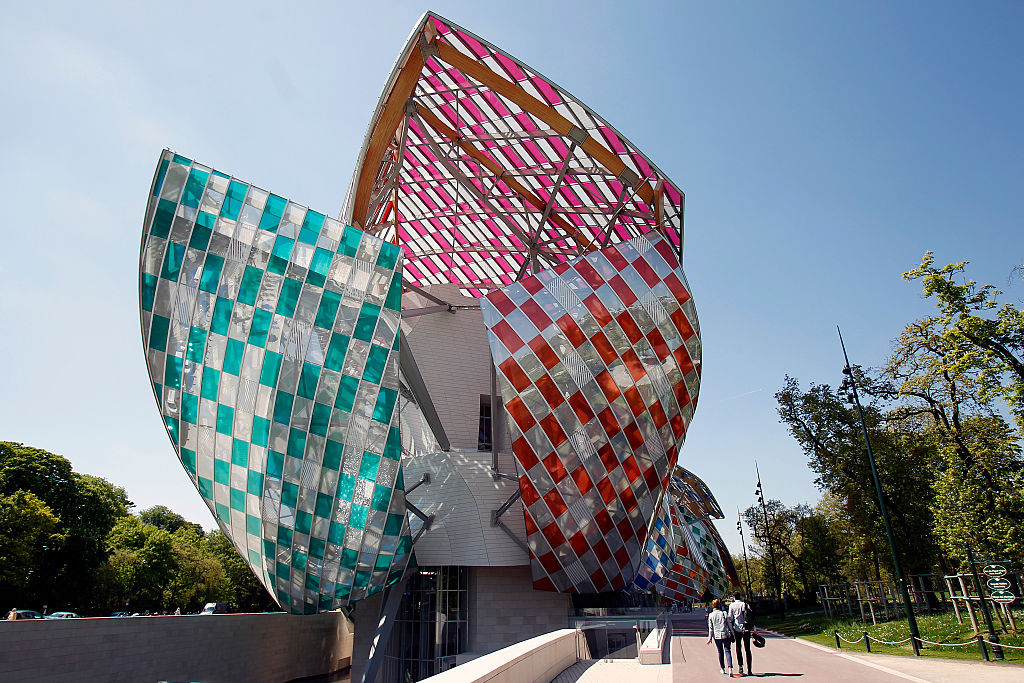
Daniel Buren would later continue his collaboration with the French house. First by designing the house’s store windows, and then at the Fondation Louis Vuitton in 2016. His work L’Observatoire de la lumière made a spectacular impression on the architecture of Frank Gehry’s building. He applied coloured filters to its twelve glass sails, thus transforming the structure into a moving, luminous artwork in dialogue with the landscape of the Bois de Boulogne nearby.