24
24


Why do many actresses turn to film direction?
Zoë Kravitz, Scarlett Johansson, Kristen Stewart, Noémie Merlant, Céline Sallette, Laetitia Dosch, and Judith Godrèche… In 2025, actresses are stepping behind the camera to create films free from the male gaze. Far from being anecdotal, these cinematic ventures mark a significant shift.
By Violaine Schütz,
and Jordan Bako,
translation by Emma Naroumbo Armaing .
Published on 6 August 2025. Updated on 24 April 2026.
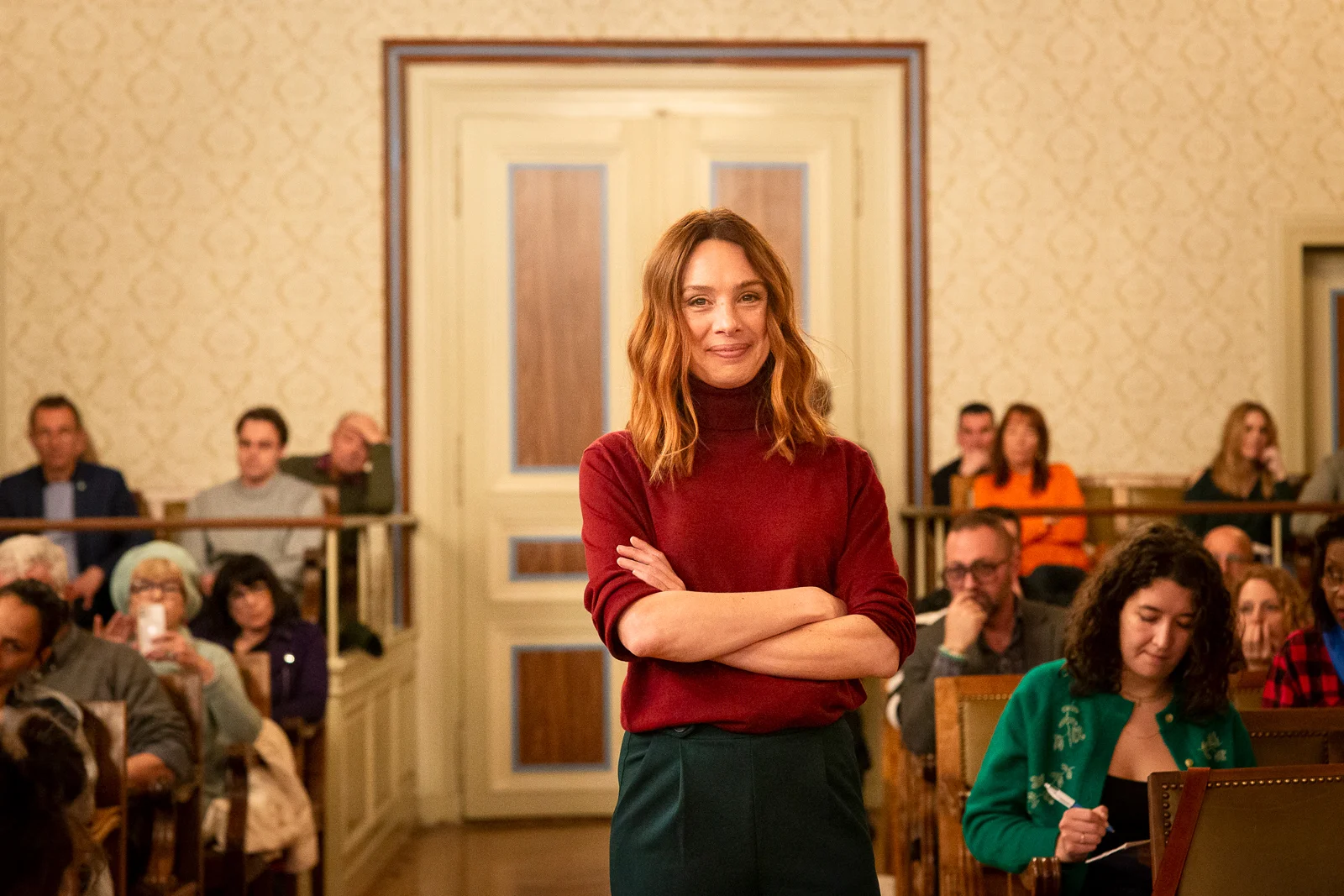
Laetitia Dosch in Le procès du chien (2024) © Bande à Part Productions.
It was one of the key trends in recent years—and at the last Cannes Film Festival. And it’s likely to shape the next one, too. In 2024, many actresses debuted films as directors. Céline Sallette appeared on the Croisette with Niki, a biopic about artist Niki de Saint Phalle; Noémie Merlant unveiled Les Femmes au balcon (set in a heatwave-stricken Marseille); Laetitia Dosch presented Le Procès du chien; and Ariane Labed introduced September Says. Judith Godrèche premiered Moi aussi, a short film addressing sexual violence. Even the festival’s jury president, Greta Gerwig, is an actress-turned-director.
An increasing number of actresses go behind the camera
The growing number of women stepping behind the camera to express their own vision—beyond the male gaze—is no coincidence. This trend aligns closely with the momentum of the #MeToo movement. Women no longer want to be objects of male desire or perspective—they’re creating their own stories, populated with heroines often far more nuanced than those imagined by male directors.
As filmmaker Anissa Bonnefont recently put it: “There have been—and still are—men who tell women’s stories beautifully. But today, more and more female directors are beginning to make space for a different representation of women in cinema. It’s reassuring to witness this, even though we’re still very far from gender equality in our industry. Now we’re seeing films made by women where female characters are portrayed in all their complexity and strength—and that needs to stop being frightening.”
The end of the actress as an object obeying an all-powerful director?
The emergence of the actresse-turned-director signals the closing of an era — the actress as an object, a mere instrument wielded by a figure of authority. As Juliette Binoche once said in Libération about her early career: “When a young actress, mutable and hesitant, gives herself through a role, she turns to her director for approval. She is wholly his, hers, the world’s. Doesn’t that yearning from the young actress give the director the illusion that everything belongs to him? Has he not sensed that this extreme longing hides another, not necessarily carnal, but invisible, unreachable—a yearning for the absolute that transcends them both?”
A movement spreading across the Atlantic
That shift is not entirely new. Asia Argento, Valeria Bruni-Tedeschi, Nicole Garcia, Hafsia Herzi, Monia Chokri, Mélanie Laurent, Emmanuelle Bercot, Zabou Breitman, Sophie Marceau, Agnès Jaoui, Julie Delpy, Valérie Donzelli, Sandrine Kiberlain, Valérie Lemercier, and Maïwenn have all leaped from acting to directing.
And the movement has long since taken root in the U.S. Angelina Jolie made her directorial debut as early as 2007 with the documentary A Place in Time. Last September, the Girl, Interrupted star showcased Without Blood, a drama she wrote and directed, starring Salma Hayek, at the Toronto International Film Festival.
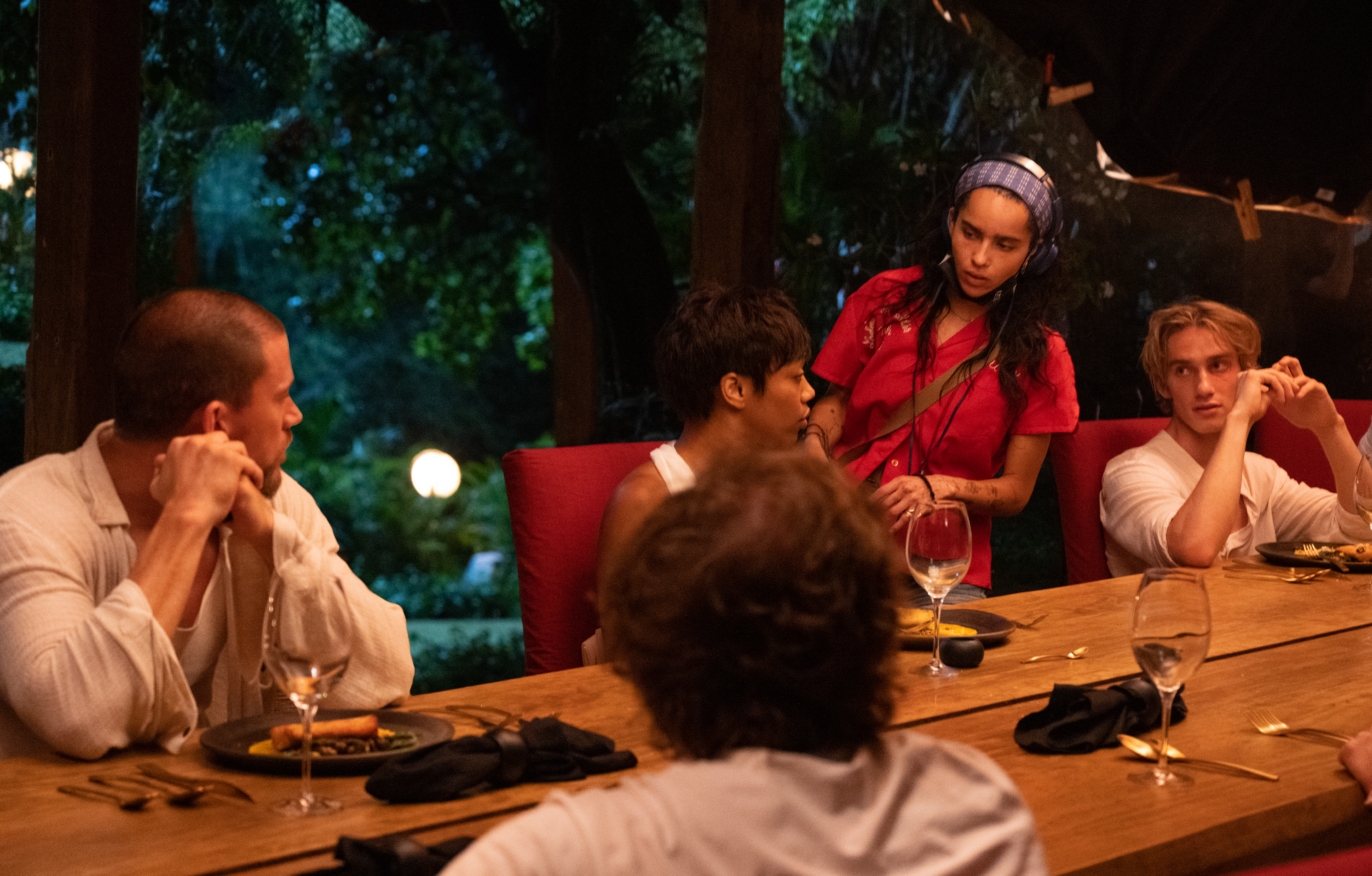
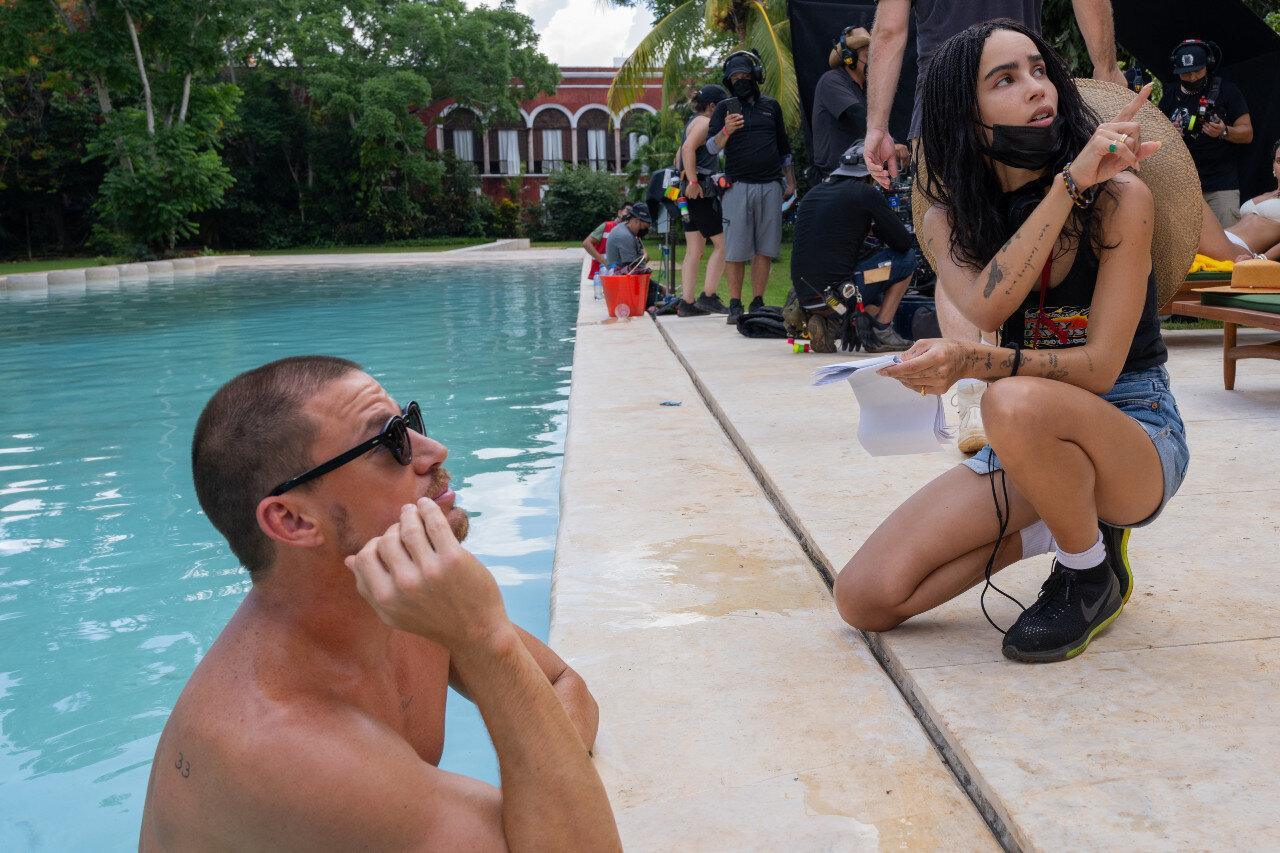
After two years of keeping a low profile in the media, Zoë Kravitz is back in the spotlight, this time behind the camera. Blink Twice marks her directorial debut. The project stars Channing Tatum and Naomi Ackie, and has been in the works since 2017.
Scarlett Johansson and Kristen Stewart as directors in Cannes
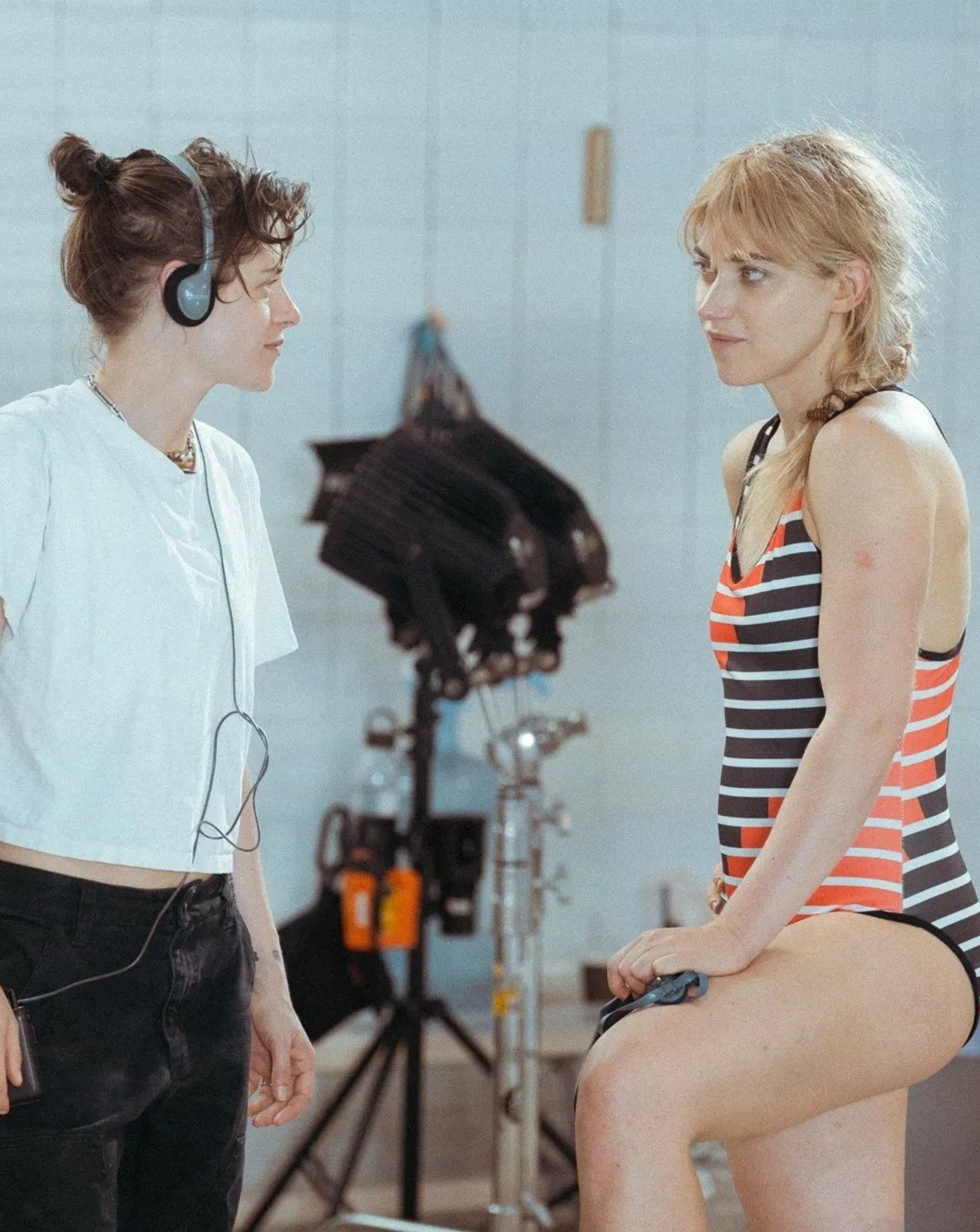
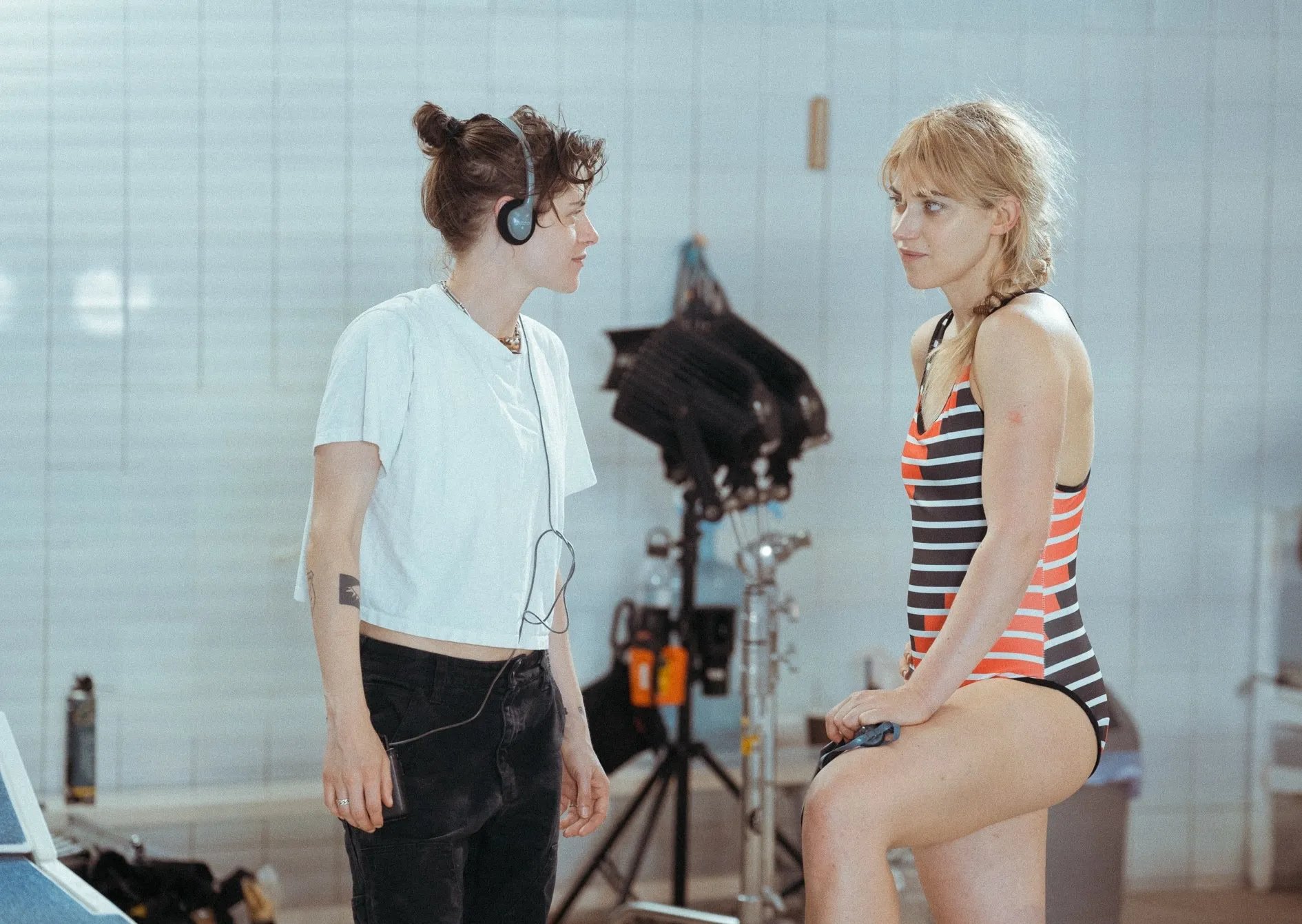
At the 2025 Cannes Film Festival this year, both Scarlett Johansson and Kristen Stewart competed with films they directed. The Twilight star cast actress Imogen Poots in her directorial debut, The Chronology of Water, coming out in theaters in December. As for the newly crowned most bankable American actress at the world’s box office, she directed a film titled Eleanor the Great, starring June Squibb in the lead role.
Dakota Johnson and Greta Lee behind the camera
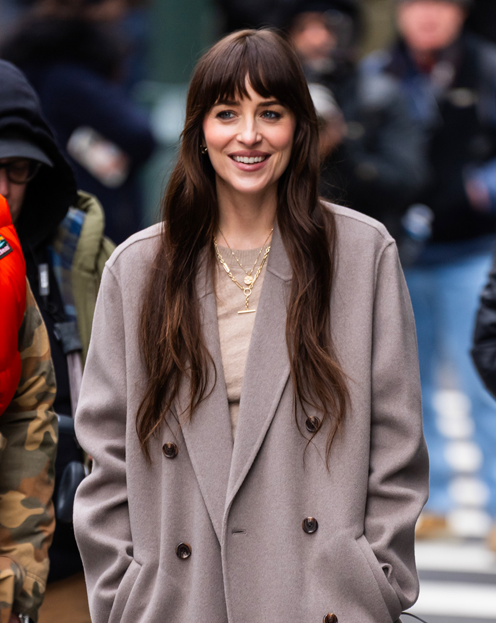
Dakota Johnson, Greta Lee, and Alison Brie are all preparing to hold the camera. The first one spoke about it at the Karlovy Vary Film Festival in the Czech Republic. She revealed that she was “working on the final details” of a feature film starring young actress Vanessa Burghardt. The latter had previously appeared alongside Dakota Johnson in the 2022 comedy Cha Cha Real Smooth. “I think I’m going to direct a film soon, a small one. It is very close to my heart,” the Materialists star shared.
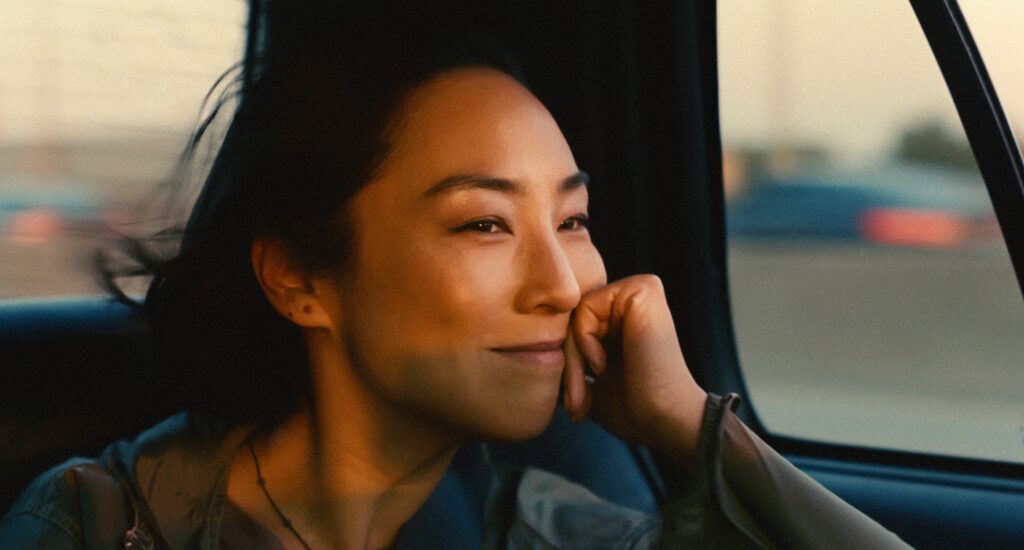
As for Greta Lee, she is reportedly set to direct an adaptation of the horror novel The Eyes Are the Best Part. With that project, the Past Lives (2023) actress makes a sharp shift in genre. She will be rewriting the story of a Korean-American student who develops a taste for cannibalism, especially for human eyes…
Alison Brie is also about to direct her first feature film with horror elements. In an interview with Marie Claire US, the Community and GLOW actress revealed that she is co-writing the project with screenwriter Alice Stanley Jr. Already behind the camera for an episode of GLOW, she describes the upcoming film as a fun, female-driven story. “While we were writing it, I felt like I was writing it to direct it. I could see every shot in my head,” she told the magazine.
Producing attracts more and more actresses
From comedy to horror, drama and romance, films directed by actresses clearly have a bright future ahead. Just like those produced by women. In an interview with Numéro, Saoirse Ronan told us about The Outrun: “I wanted to be more creatively involved and bring my own perspective to a project centered on me. After producing this film, I believe more actresses should step into action.”
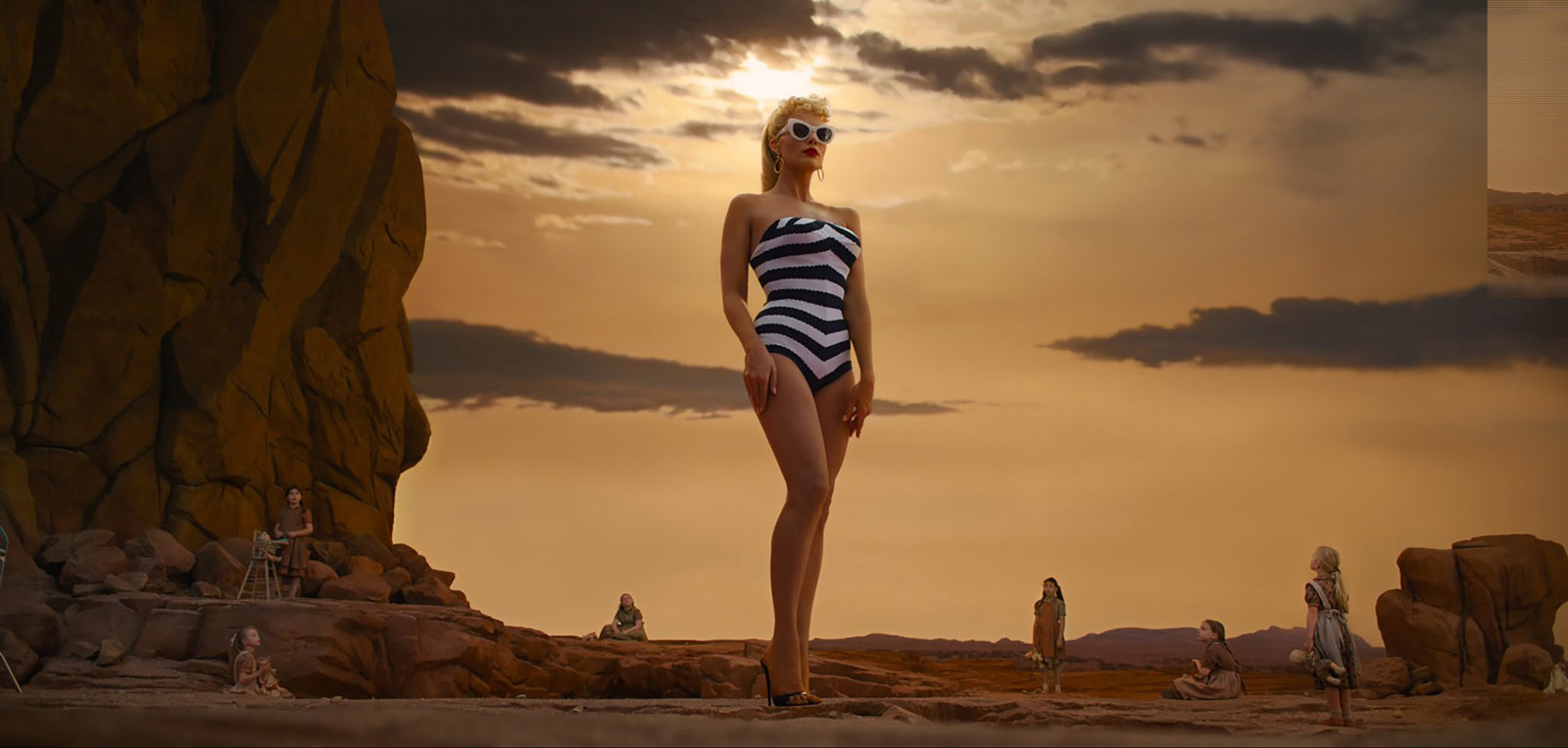
Actresses have increasingly made their mark as producers in Hollywood—think Reese Witherspoon or Viola Davis. In 2024, by taking up the camera and embracing production roles, actresses are clearly reclaiming power. Just as Margot Robbie declared in the metaphysical final scene of Barbie (2023): “I don’t want to be an idea anymore.”
The Chronology of Water (2025) by Kristen Stewart.