
31
31


9 revolutionary horror films to (re)watch for Halloween
Psycho, The Blair Witch Project, The Shining… Some horror films have reshaped the history of cinema by redefining the visual and narrative codes. From psychological terror to visceral horror and sensory nightmare, here are 9 seminal works that continue to have an influence on contemporary cinema to (re)watch for Halloween.
Carrie, a horror masterpiece about female teenage rage
Nothing is more terrifying than the fury of a humiliated teenage girl… In Carrie (1976), American director Brian De Palma adapts Stephen King‘s cult novel with surgical precision. A bloody Greek tragedy showing that horror stems not so much from monsters, but from social cruelty.
The film is remembered for its direction, alternating between virtuosic framing and hallucinatory slow motion. As well as for its iconic epilogue, a harbinger of modern horror cinema – personal trauma becomes the trigger for the supernatural. Carrie paved the way for an entire lineage of films exploring the terror of the margins and the explosion of normality.
Carrie (1976) by Brian De Palma, available in VOD.
Suspiria, or horror as a chromatic ballet
With Suspiria (1977), Italian director Dario Argento — father of actress Asia Argento — turns horror cinema into a baroque opera. Saturated colours, deafening music by Italian prog rock band Goblin, macabre choreography… Everything works to create a sensory universe.
This cinematic nightmare conveys the idea that horror is not just about fear, but can also be an aesthetic experience. Here, each murder is designed as a fully visual and sonic sequence. Suspiria left a lasting mark on contemporary cinema, and later inspired music videos and art-house productions.
Suspiria (1977) by Dario Argento, available on MUBI.
The Texas Chainsaw Massacre, one of the cult classics in horror cinema
From the moment it premiered, The Texas Chainsaw Massacre (1974) by Tobe Hooper shocked audiences with its radicalness. No supernatural monsters, just a portrait of America, consumed by its own urges and lingering trauma of the Vietnam War. The fear is realistic, raw, almost documentary.
Shot on a shoestring budget, Tobe Hooper’s feature establishes a gritty, jittery style that would later become the blueprint of any slasher. As for the character of Leatherface, a grotesque blend of absurdity and monstrosity, he embodies the unease of a society where savagery lurks at the margins. The film remains a cornerstone of American independent cinema.
The Texas Chainsaw Massacre (1974) by Tobe Hooper, available on Canal+.
The Shining, or horror designed as mental architecture
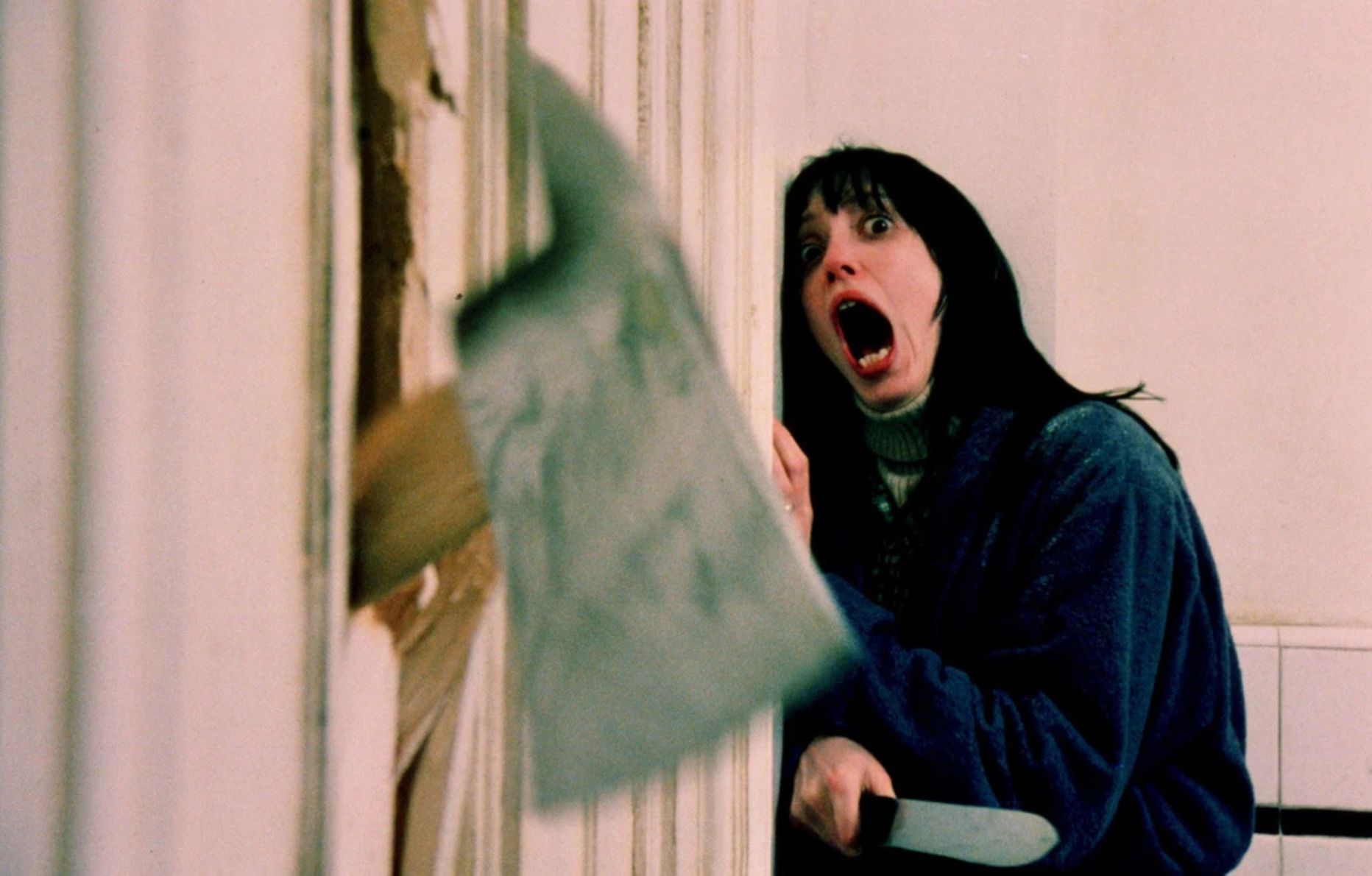
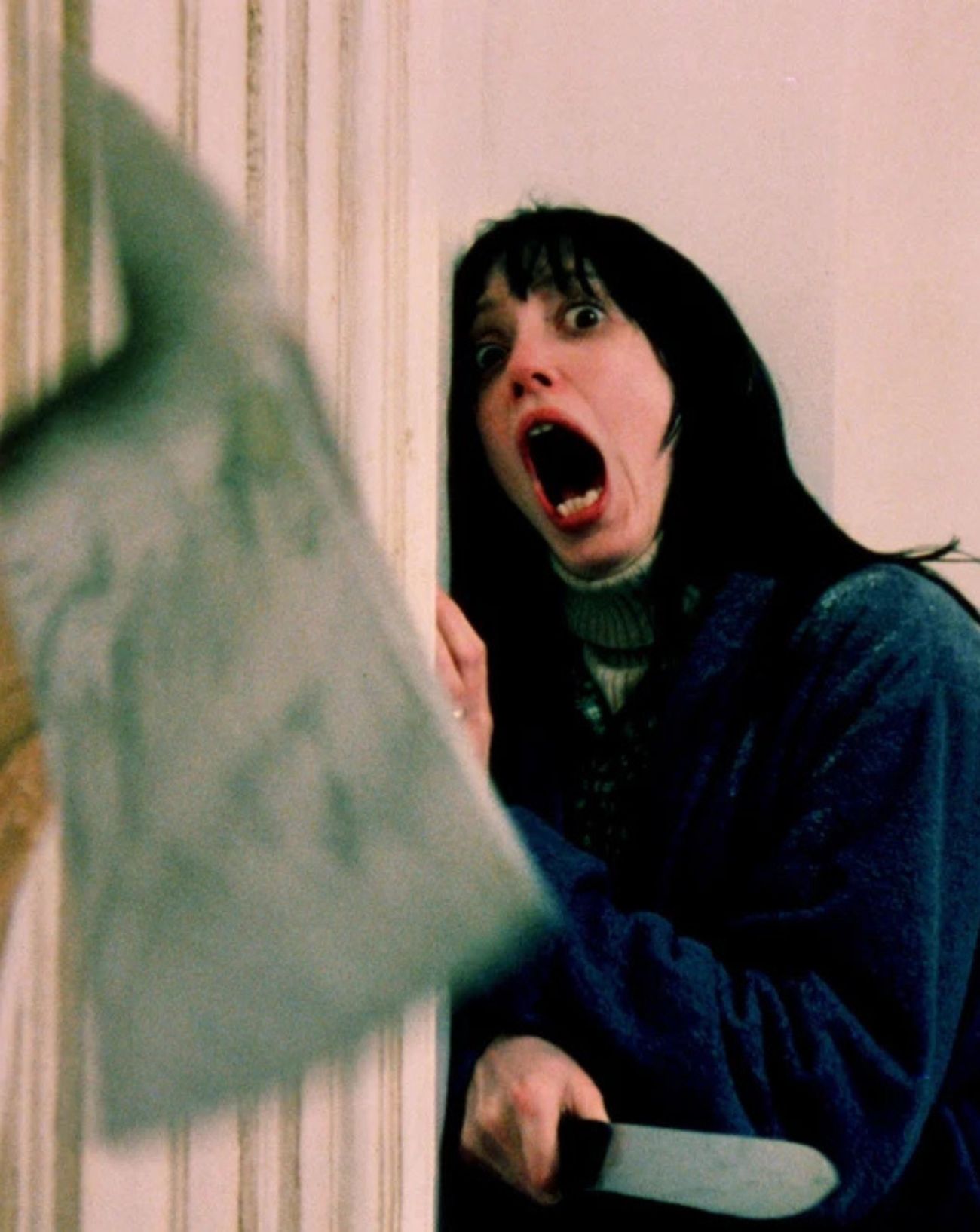
With The Shining (1980), Stanley Kubrick adapts another one of Stephen King‘s novels and builds a psychological labyrinth. While many viewers still prefer the book, what stands out here is the personnification of the Overlook Hotel, which becomes a character in its own right. iIts endless corridors trap Jack Nicholson until he becomes mad. The Washington Post described the film as “a chilling exploration of the human psyche.”
Here, terror emerges primarily from the setting and repetitions. The fluid tracking shots, nightmarish visions, and the electronic score by American composer Wendy Carlos create a hallucinatory atmosphere. The Shining cemented the idea that horror can be entirely atmospheric and psychological, without forgetting the viscerally powerful imagery.
The Shining (1980) by Stanley Kubrick, available on HBO Max.
The Blair Witch Project: The origin of modern found footage
In 1999, three students lost in a forest were enough to redefine horror. The Blair Witch Project (1999), directed by Daniel Myrick and Eduardo Sánchez, brought the found footage technique into the mainstream. The entire film unfolds as a supposedly authentic video recording shot by the protagonists in the story.
Suggesting it was based on real events, the film’s viral marketing campaign introduced a new way of spreading fear. Its grammar – shaky camera, nerve-wracking off-screens – continues to influence an entire generation of filmmakers and franchises, like Paranormal Activity. It is the art of concealment used to scare.
The Blair Witch Project (1999) by Daniel Myrick and Eduardo Sánchez, available on Filmo.
Psycho, a key thriller directed by Alfred Hitchcock
With Psycho (1960), Alfred Hitchcock broke all the rules. Killing off the heroine forty minutes into the film shook the audience’s expectations. The iconic shower scene remains a foundational moment of cinematic fright, and has been analysed by generations of critics. A shock that forever changed the grammar of suspense on screen.
In a mundane motel, an apparently harmless man, Norman Bates (played by Anthony Perkins), becomes one of the most iconic modern monsters of the horror genre. Psycho didn’t just terrify generations of watchers, it redefined what audiences come to expect from a horror story.
Psycho (1960) by Alfred Hitchcock, available on Canal+ and La Cinetek.
Night of the Living Dead, or the horror as a political manifesto
With Night of the Living Dead (1968), George A. Romero crafted the modern zombie and anchored horror in current political events. At the time, The Times underlined that “the film evokes racial tensions as much as the Vietnam War.”
Casting a Black actor, Duane Jones, in the lead role gave the story an unprecedented dimension. And its brutal ending, mirroring the violence of the era, marked a turning point… Horror then became a social criticism. The film paved the way for decades of political cinema disguised as genre film.
The political weight of the film crystallises in its ending. The Black hero and the sole survivor, Ben, is coldly shot by a white militia mistaking him for a zombie. The image directly echoes the racial violence and lynchings happening at the time, definitively embedding horror into the American social context.
Night of the Living Dead (1968) by George A. Romero, available on Amazon Prime Video.
Alien, or when science fiction turns into visceral horror
With Alien (1979), Ridley Scott fused science fiction and pure horror. The spaceship becomes a suffocating, enclosed space where the unknown emerges from the depths. The xenomorph, created by H.R. Giger, embodie both sexual and biological anxieties. Even before the film became a serious project — and one of the greatest horror films in history — screenwriter Dan O’Bannon was already dreaming about the Chestburster scene. A monster whose terrifying modus operandi would leave a lasting mark on cinema history.
Together with Swiss artist Hans Ruedi Giger, he imagined a dark, majestic, and overwhelming futuristic world. Their inspirations were manifold. Including the writings of Lovecraft, Francis Bacon’s 1944 triptych Three Studies for Figures at the Base of a Crucifixion, and Greek mythology, particularly the Erinyes (or Furies) – infernal deities who pursued wrongdoers, sometimes on behalf of Hades.
The project was never marketed as a space odyssey, but rather as a horror movie. The poster tagline said it all: “In space, no one can hear you scream.”
Alien (1979) by Ridley Scott, available on Disney+.
The Exorcist, when horror targets the sacred
With The Exorcist (1973), William Friedkin confronted audiences with the unthinkable… The demonic possession of a child. This time, horror became metaphysical. The violence of the imagery, including convulsions, blasphemy, a body in torment, remains shocking to this day. Yet, the pith of the feature lies in its clinical direction. Its realism only heightens the terror. The Exorcist turned cinema into a spiritual battleground, asking the ultimate question – what lies beyond reason?
The Exorcist is also one of the most controversial films in cinema history. Upon its release, audiences fainted in theatres, shocked by its graphic imagery. The confrontation between science and faith, staged with a documentary-like austerity, redefined the limits of what horror could show. Fifty years later, the film’s legacy remains untouched. Every story of possession still owes its visual and sonic language to The Exorcist.
The Exorcist (1973) by William Friedkin, available in VOD.