
15
15


Who is Wei Libo, the young artist reviving ancient craftsmanship?
Always on the lookout for newness from the flourishing French art scene, Numéro art shines a light on the work of emerging visual artist Wei Libo. From marquetry to ceramics, the Chinese-born artist draws on ancestral craft techniques to explore, through sculptural works brimming with poetry, the memories and spirits that have haunted him since childhood.
By Matthieu Jacquet.
Wei Libo, an artist who embraces craft with poetry
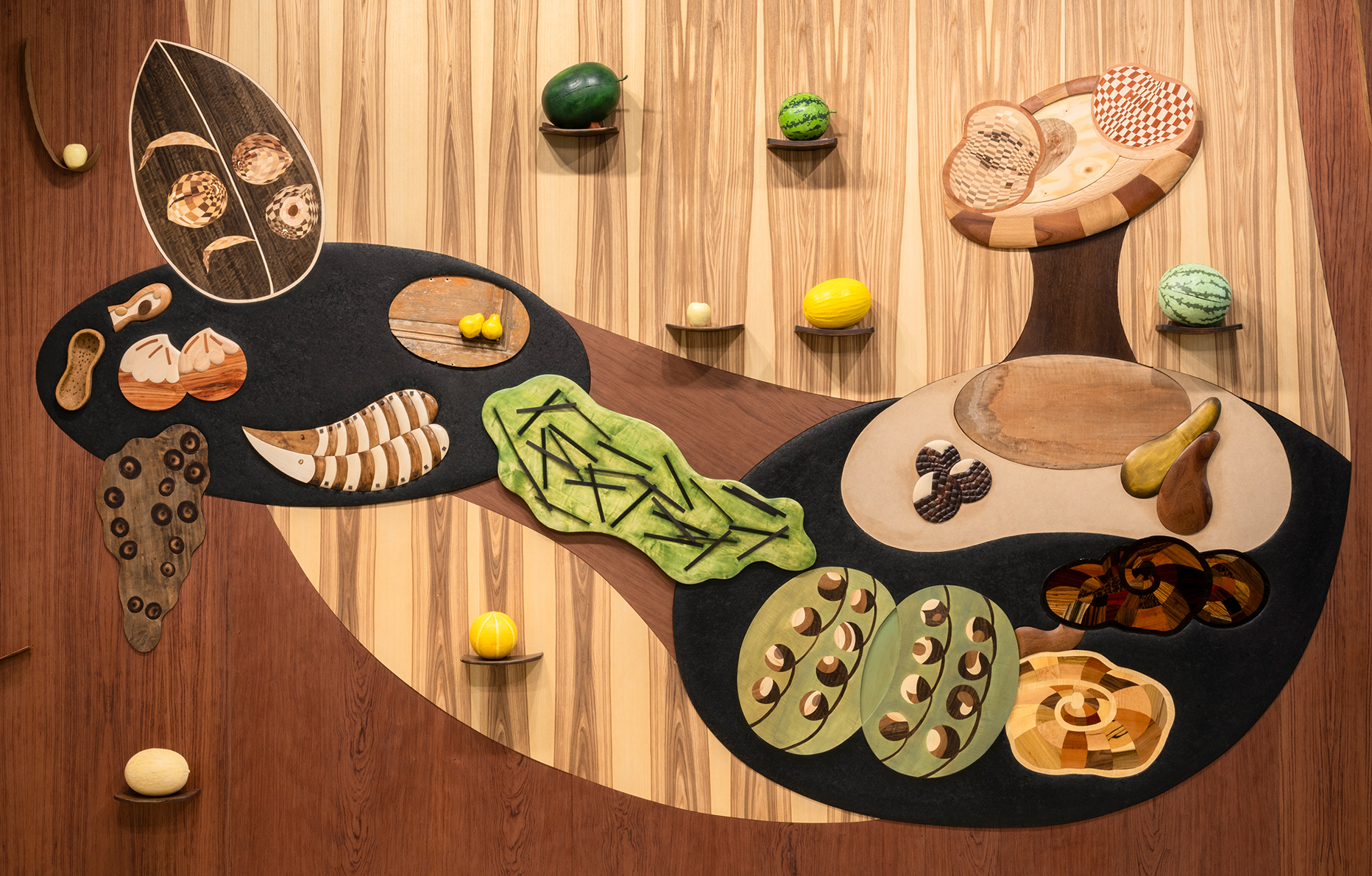
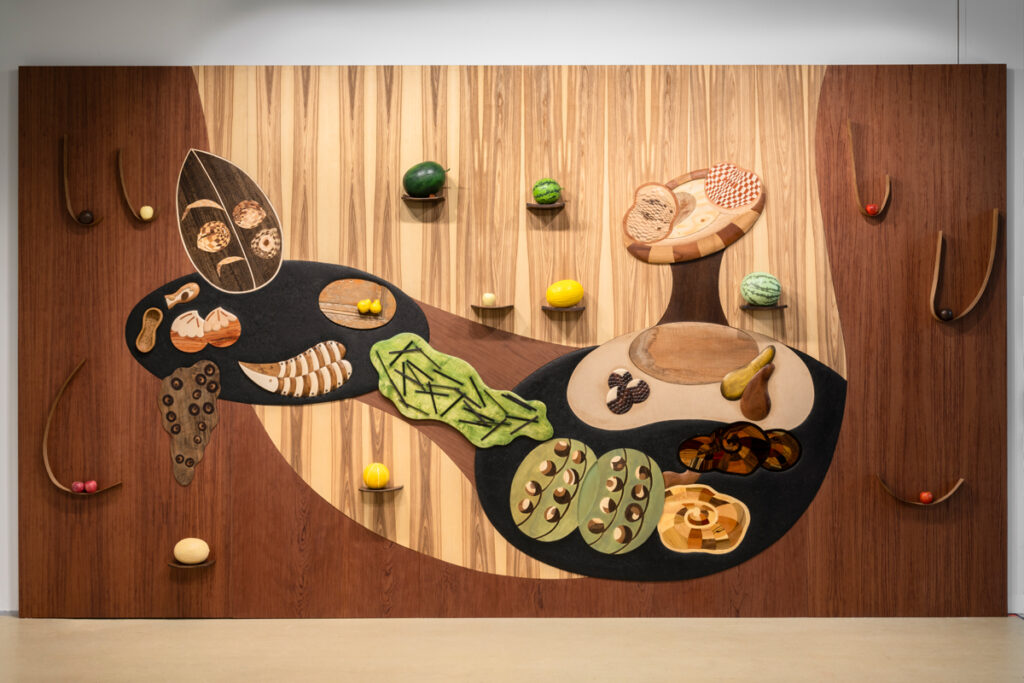
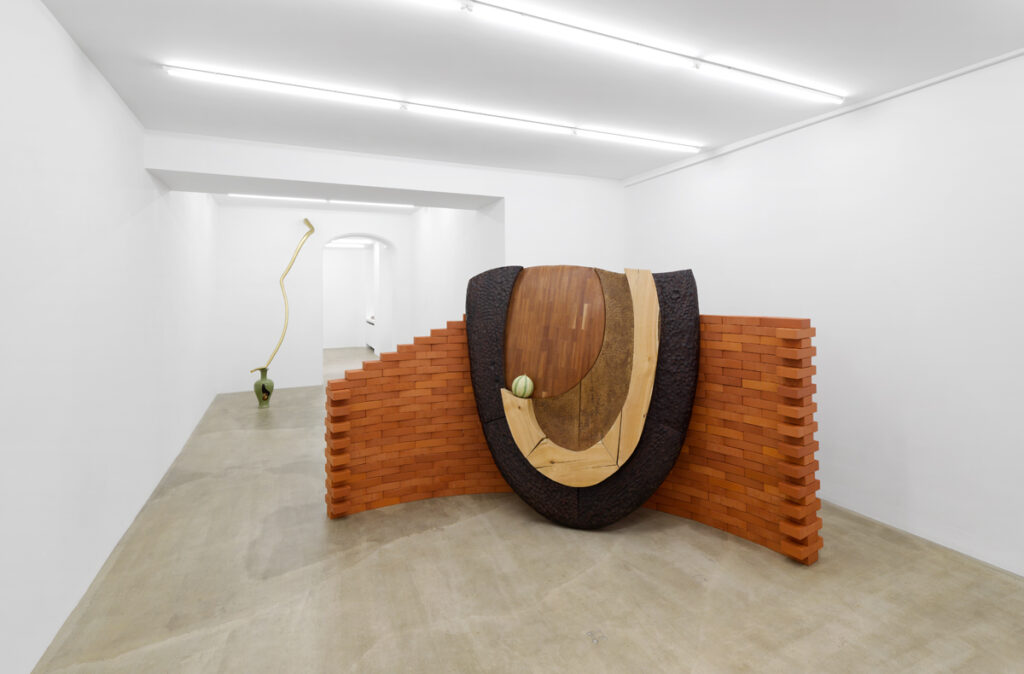
Last June, the thousands of visitors at the Art Basel Fair were met with an impressive installation on their route. At the stand of the Parisian gallery Sans titre, a wall entirely covered in a large wooden panel unveiled a still life in shallow relief, made of curved lines and ovoid shapes. One could distinguish hazelnuts, peanuts, pears and plates, while the realism of the mangoes, watermelons and apples on curved shelves was striking.
A growing visibility, from the Paris Beaux-Arts to Art Basel
Primarily sculptural, Wei Libo’s practice stems from a need to reclaim his family history. Born in the 1990s in north-west China, the artist witnessed the large-scale urbanisation of his country, which led to the destruction of his family home. Leaving that house, and the many objects it contained, has been haunting him since his arrival in France for his studies.
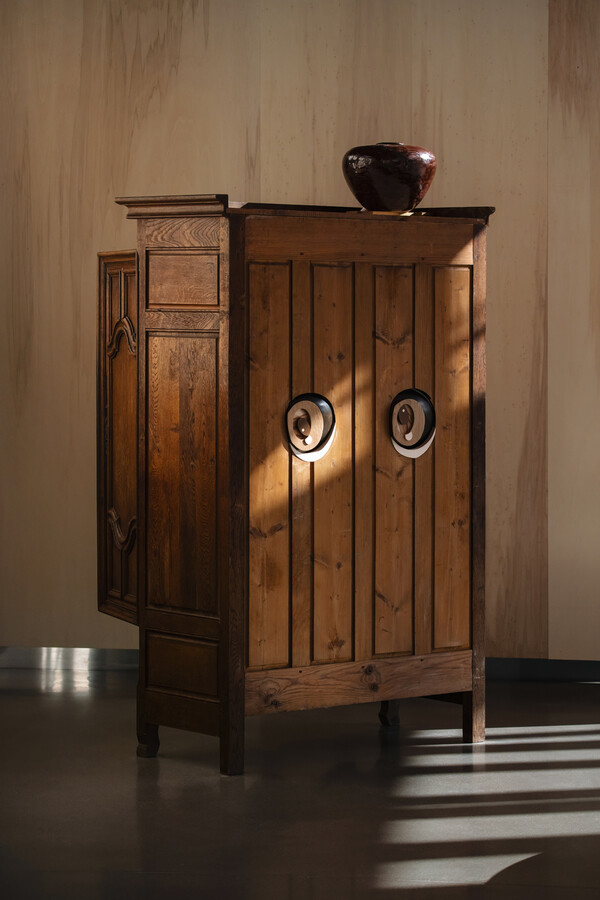
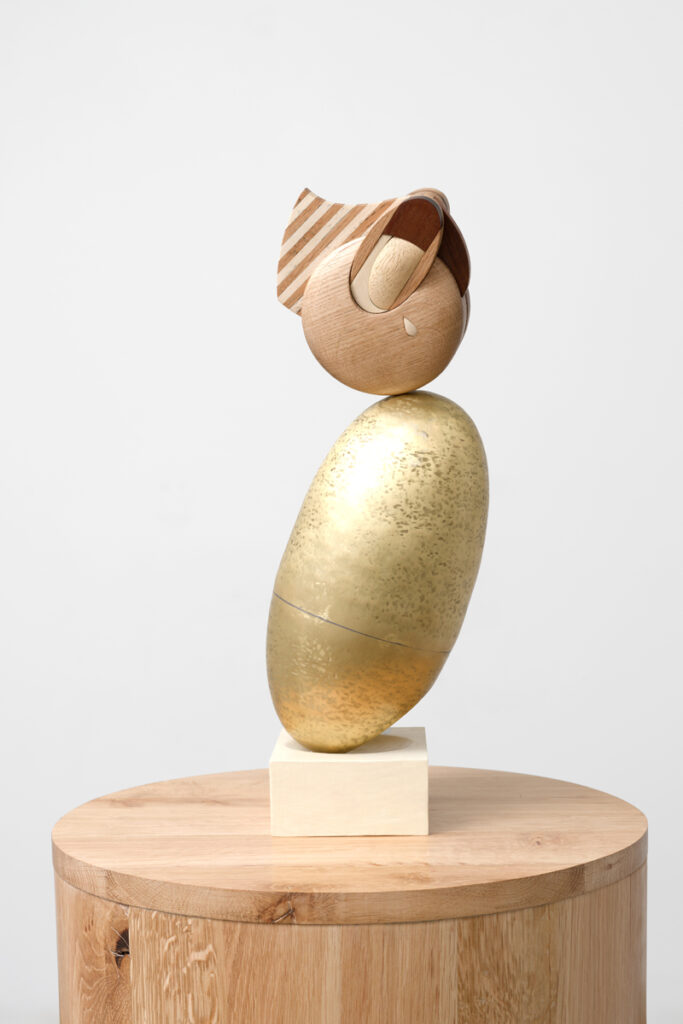
It was at the Beaux-Arts de Paris that he decided to recreate, in its entirety, a chest of drawers once crafted by his grandfather. To do so, he trained in marquetry for six months, determined to craft a faithful replica of the piece that has lived on in his memory for years. In early 2025, the results of his hard work were unveiled at the Frac Île-de-France. Several intricate details, such as pepper-shaped handles or a tiger whose silhouette emerged on the flat surface through the meticulous inlay of different pale woods, were on display.
A passion for handwork
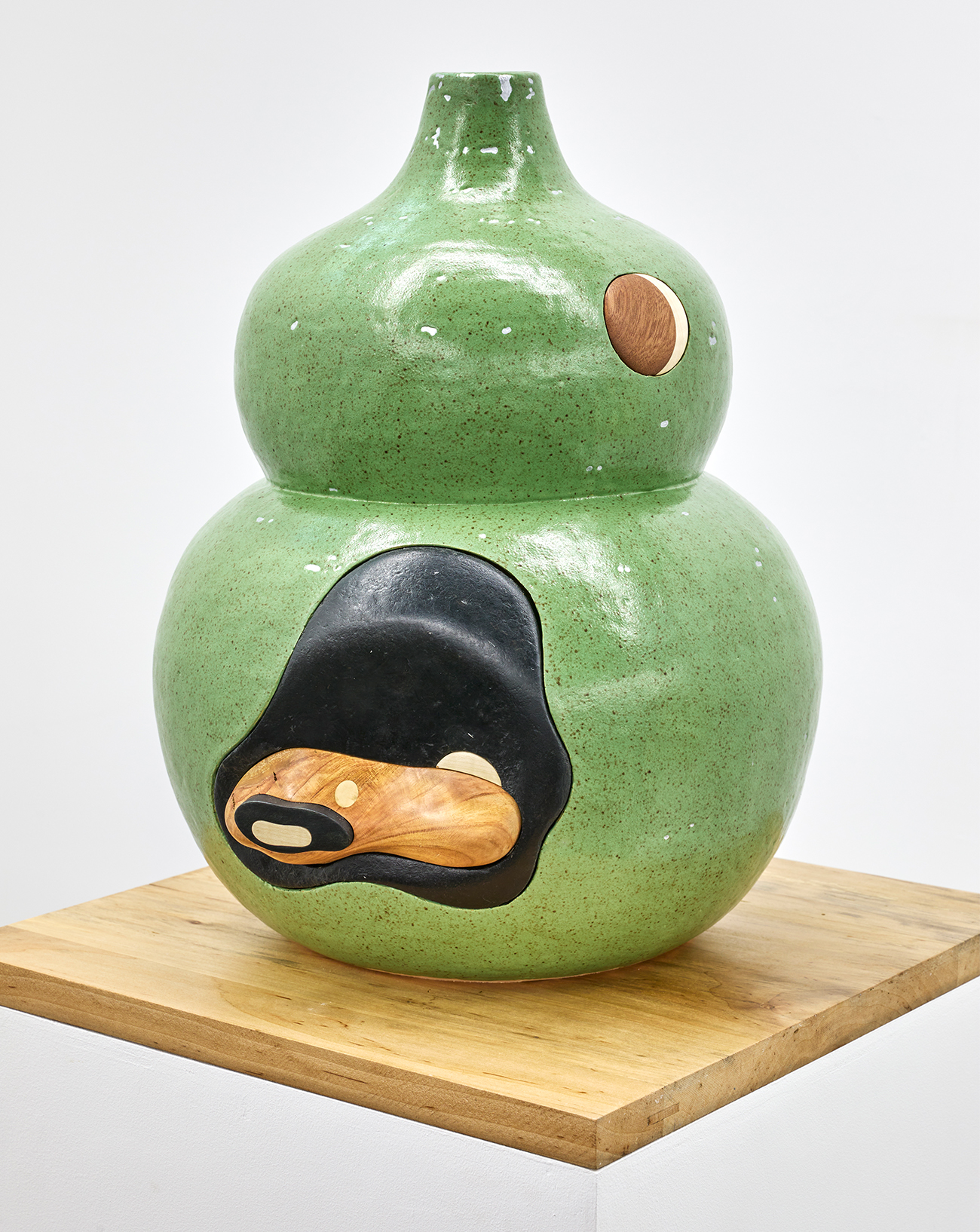
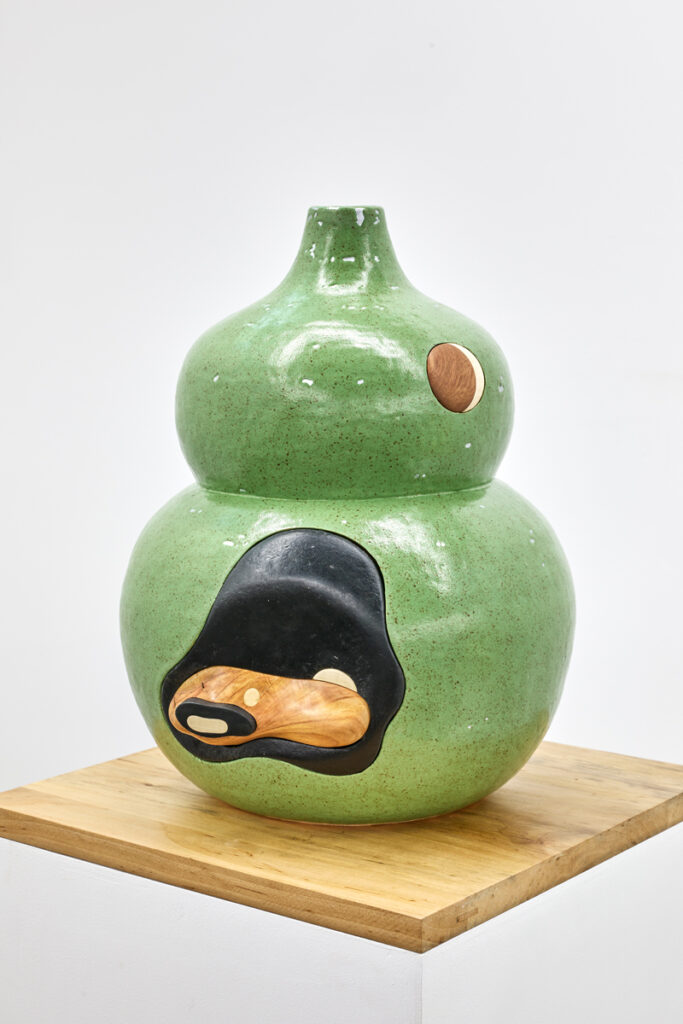
Fascinated by “the relationship between humans and earth,” Wei Libo is part of a new generation of artists reclaiming traditional craftsmanship, long dismissed by the contemporary art world. In addition to wood, the young artist has learned to master ceramics. He creates vases whose forms echo those of the Song dynasty with remarkable precision.