9
9


Takeaways from Antonin Tron’s debut Balmain show
On March 4th, 2026, Antonin Tron unveiled his first runway show for Balmain. Appointed last November, the designer reworked the codes of the house in his Fall/Winter 2026-2027 collection.
By Léa Zetlaoui.
In recent months, Fashion Weeks have been marked by the arrival of new creative directors at the helm of major fashion houses. Following their first collections, two trends have emerged: either breaking away from or continuing the work of their predecessor. On March 4th, 2026, Antonin Tron opted for a third alternative to present his debut Balmain show… The designer went back to the fundamentals.
Pierre Balmain, a discreet couturier
Pierre Balmain founded his fashion house in 1945. A few months before Christian Dior revolutionised the female silhouette with the New Look (1947), Balmain helped redefine post-war fashion. In their own ways, both designers initiated a return to luxury and elegance after years of deprivation.
Trained as an architect, Balmain developed a style that was both sober and subtle, naturally appealing to a high-society clientele — queens, princesses, aristocrats and intellectuals — attached to a form of elegance that was discreet rather than eccentric.
As mentioned in the book Le Musée de la mode, Vogue magazine once wrote that he created “robes de circonstance” — literally “event dresses.” Fully aware of his place, he humbly acknowledged how he differed from some of his contemporaries. “If I am not like Schiaparelli, Courrèges or Dior — those who revolutionised fashion — I will remain the one who has the courage to refuse,” he declared.
Renaissance and revolution in a Parisian house
Like Balenciaga, Schiaparelli or Courrèges, the house gradually lost its prominence without ever disappearing after the death of its founder in 1982. It was not until 2006 and the arrival of Christophe Decarnin that it finally regained its full panache. While translating and reworking Pierre Balmain’s heritage to adapt it to contemporary fashion, he also shaped a new type of luxury. One that was bold, sexy, and above all, very expensive.
Five years later, when Olivier Rousteing — previously director of the design studio — was appointed creative director, Balmain reached unprecedented levels of popularity. The frenzy sparked by his collaboration with H&M in 2015 is a case in point. Only 25 at the time, the first Black designer to lead a major fashion house crafted baroque and opulent collections. His clothes captivated the biggest stars across the world, from Beyoncé to Kanye West and Kim Kardashian. Close to the celebrities he dressed, he also became part of the very exclusive club of the most-followed personalities on Instagram, amassing more than 9.7 million followers. However, nothing is immutable. And Olivier Rousteing’s departure — unexpected yet foreseeable — above all illustrates the difficulties an industry faces in remaining relevant.
A new era begins with Antonin Tron
Calling difficult the challenge that Antonin Tron now faces at Balmain would be an understatement. As a graduate of the Royal Academy of Fine Arts in Antwerp, his résumé includes prestigious houses such as Louis Vuitton, Givenchy, Balenciaga and Saint Laurent. With his label Atlein, launched in 2016, he received the ANDAM award in both 2017 and 2018. Far from being an outsider, the 42-year-old French designer nevertheless remains discreet. A personality trait that he shares with the house’s founder.
But this is not the only thing they have in common. As the show notes explain, Antonin Tron “identifies with a house that, according to him, has since its beginnings exalted an architectural and sublime vision of the female body, reflecting a new world for women, centred on dynamism, sensuality and an opulence that is resolutely modern in its minimalism.” One can note that this Fall/Winter 2026–2027 collection, created in less than six months, represents more of a preface than a true statement of intent.
Reworking the house’s codes
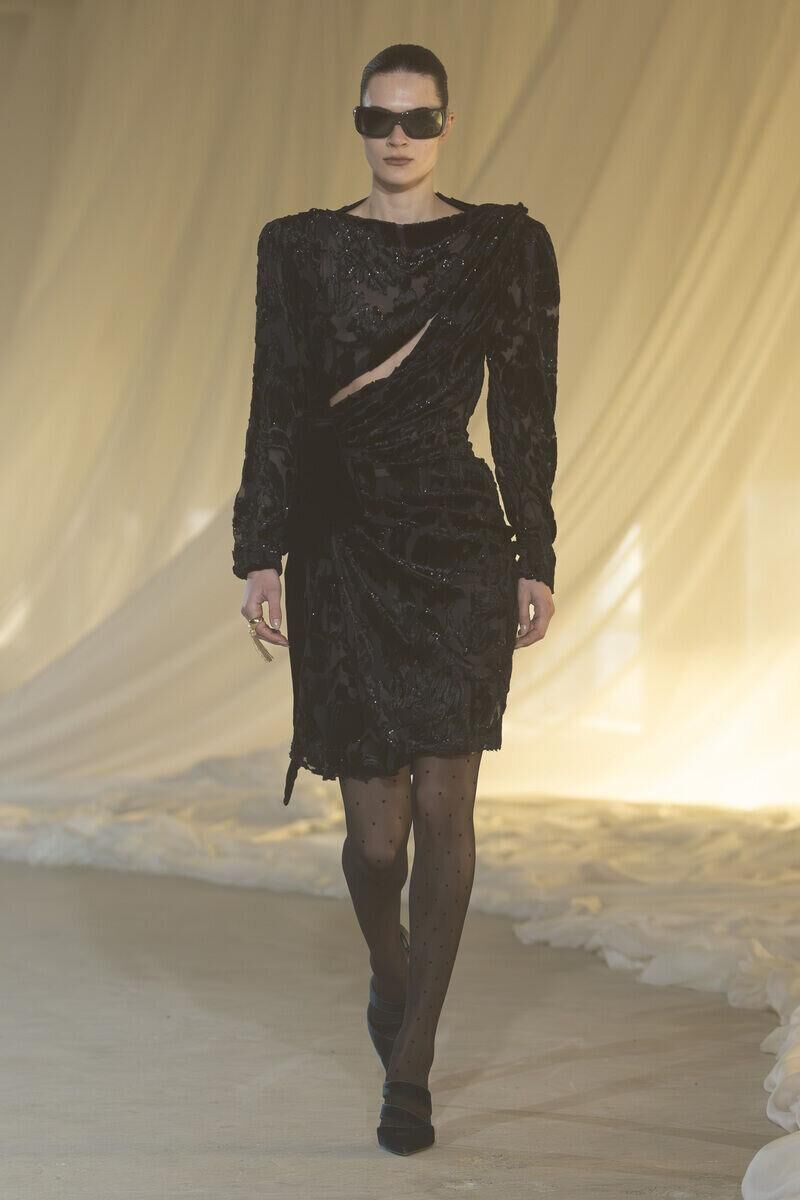
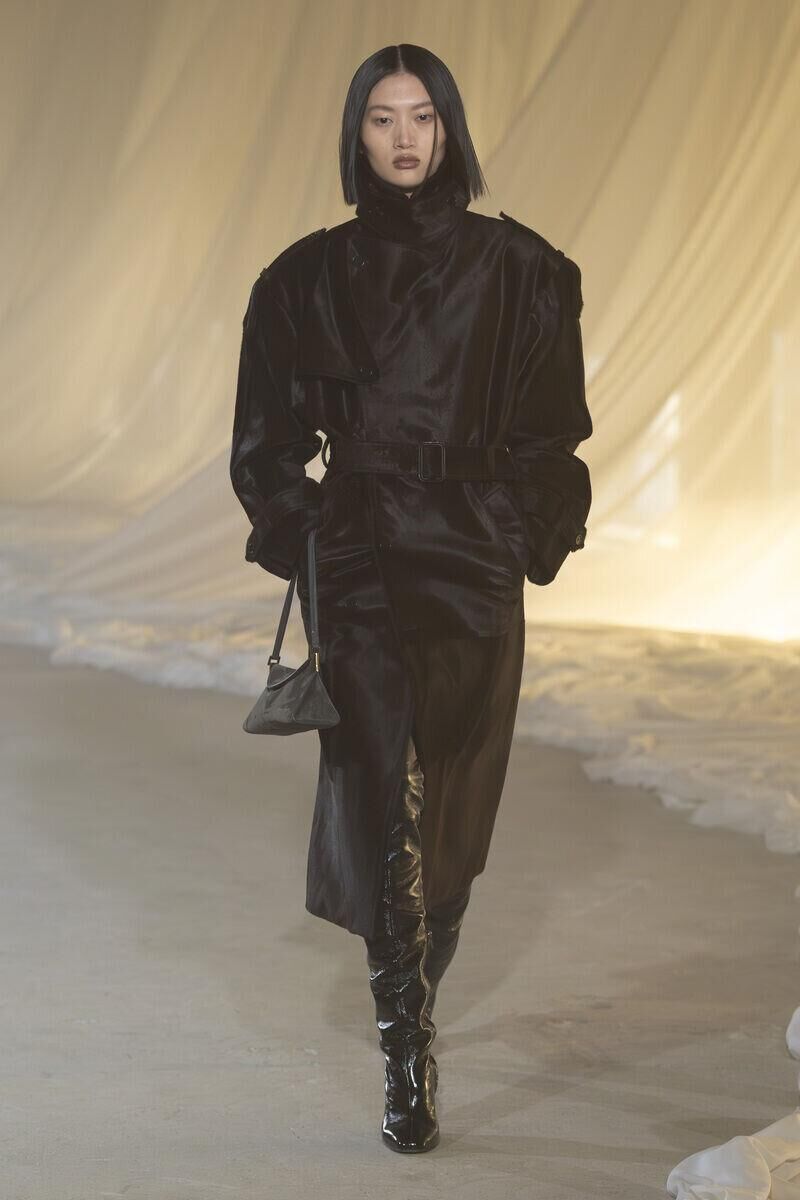
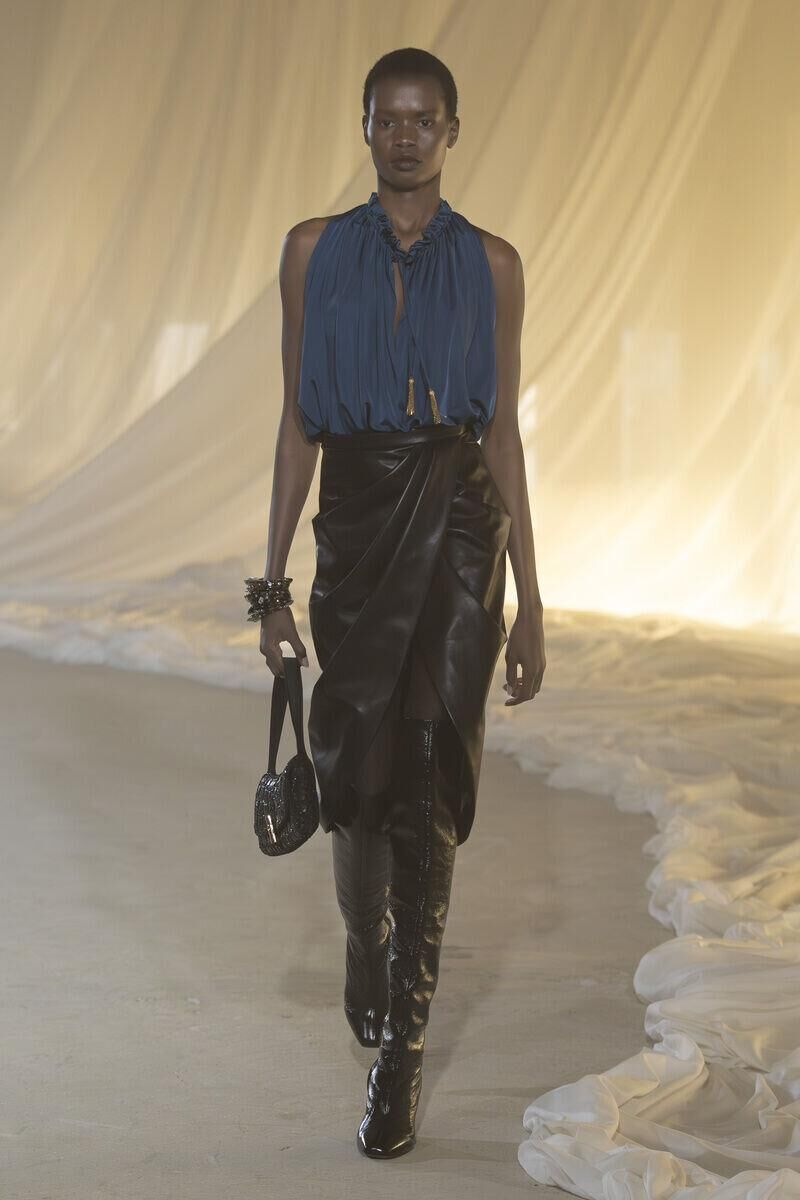
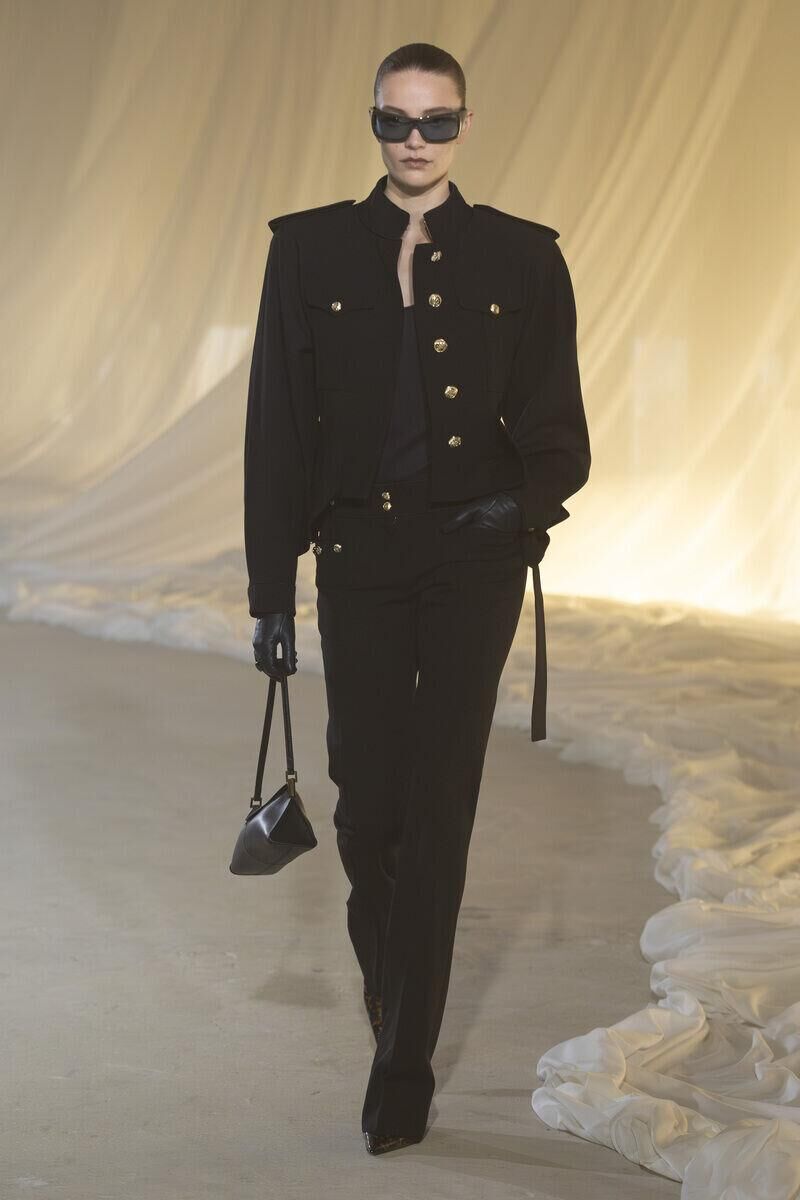
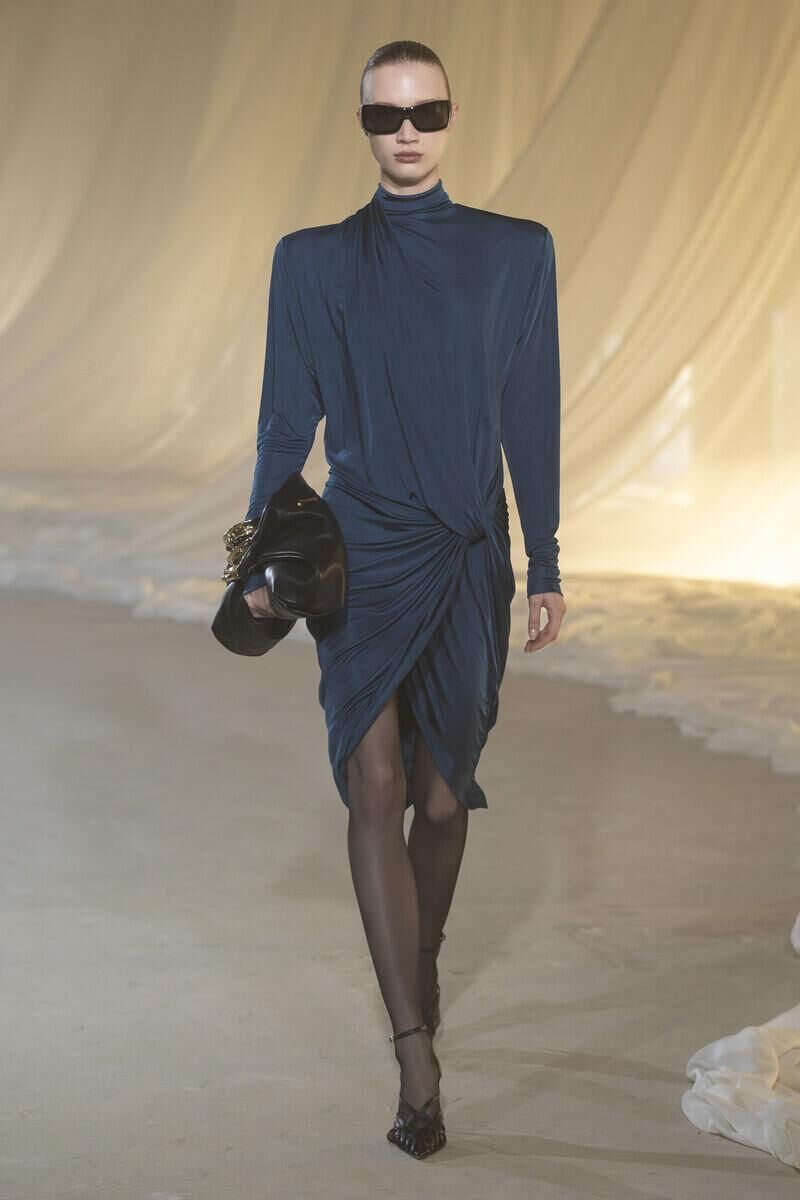
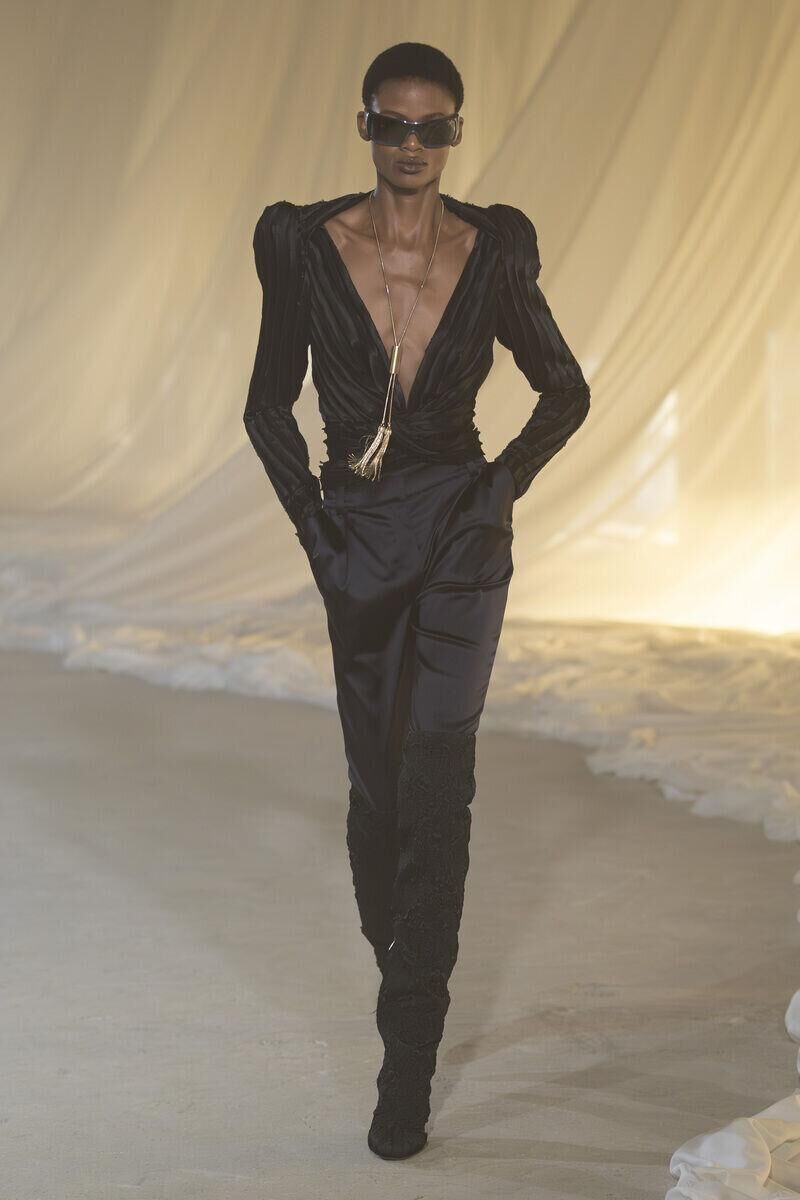
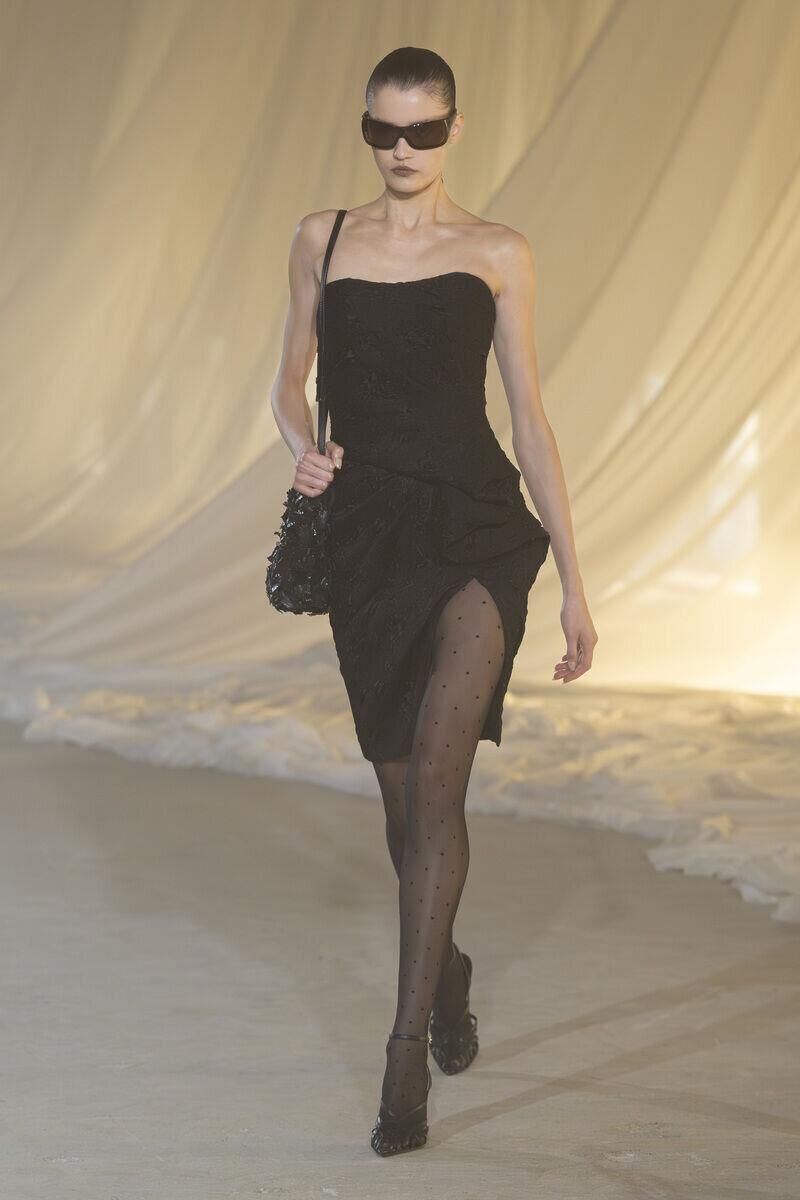
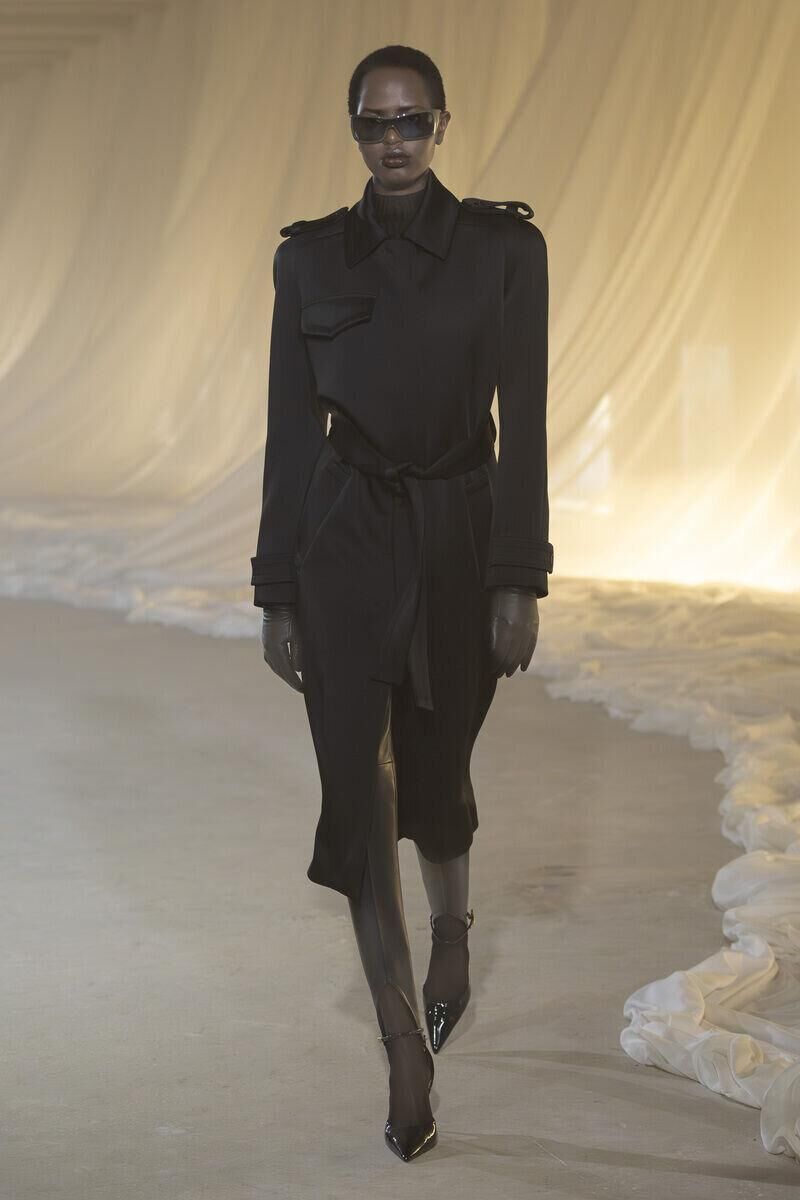
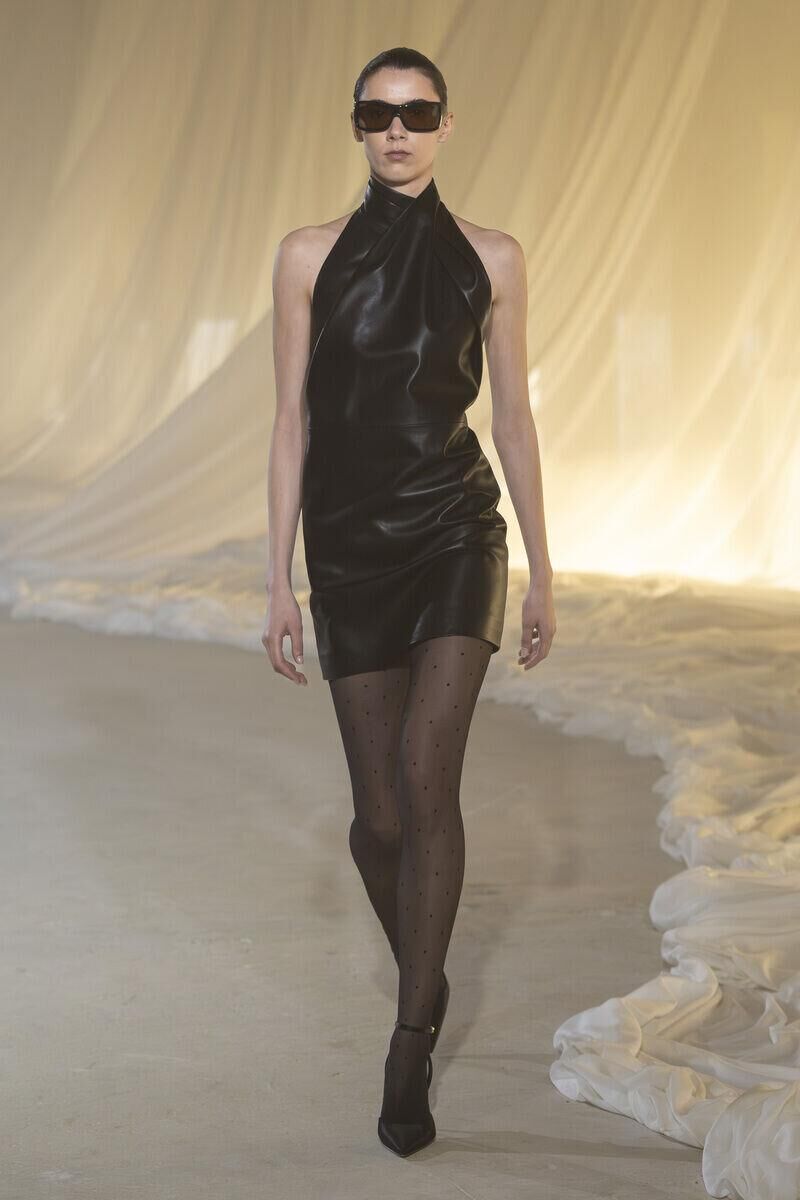
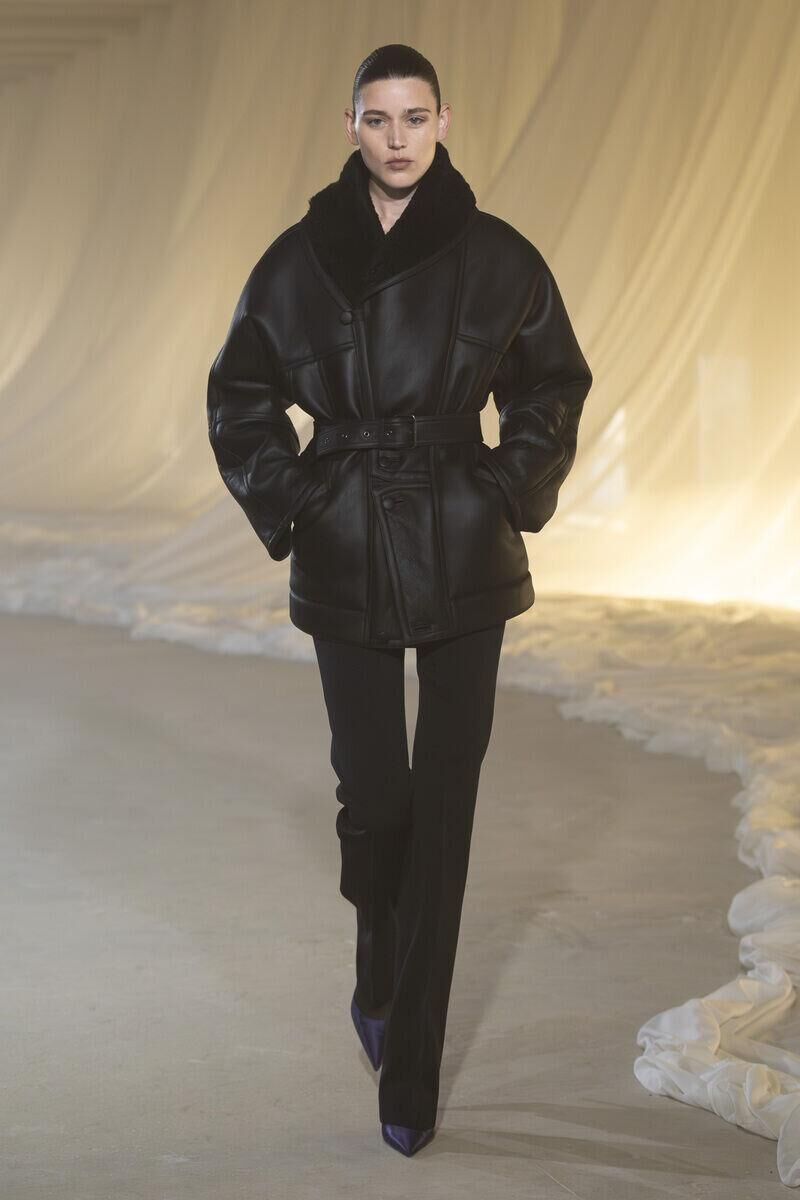
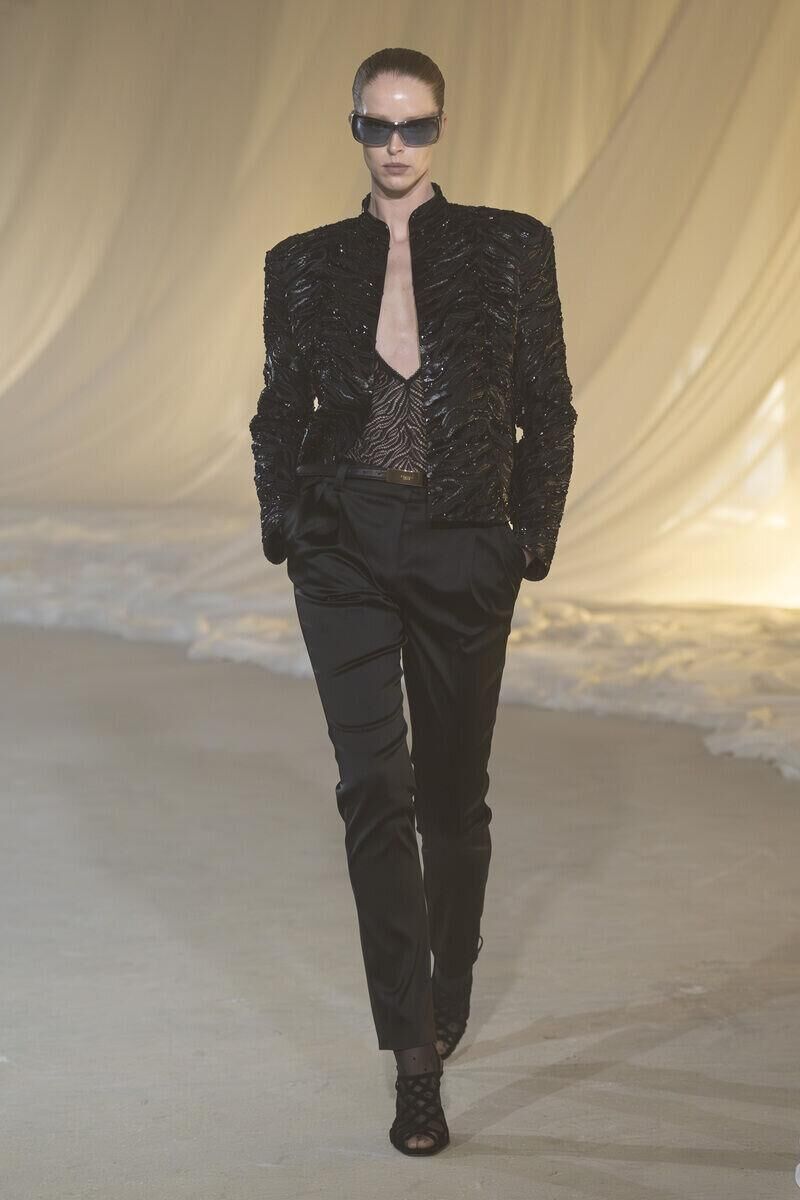
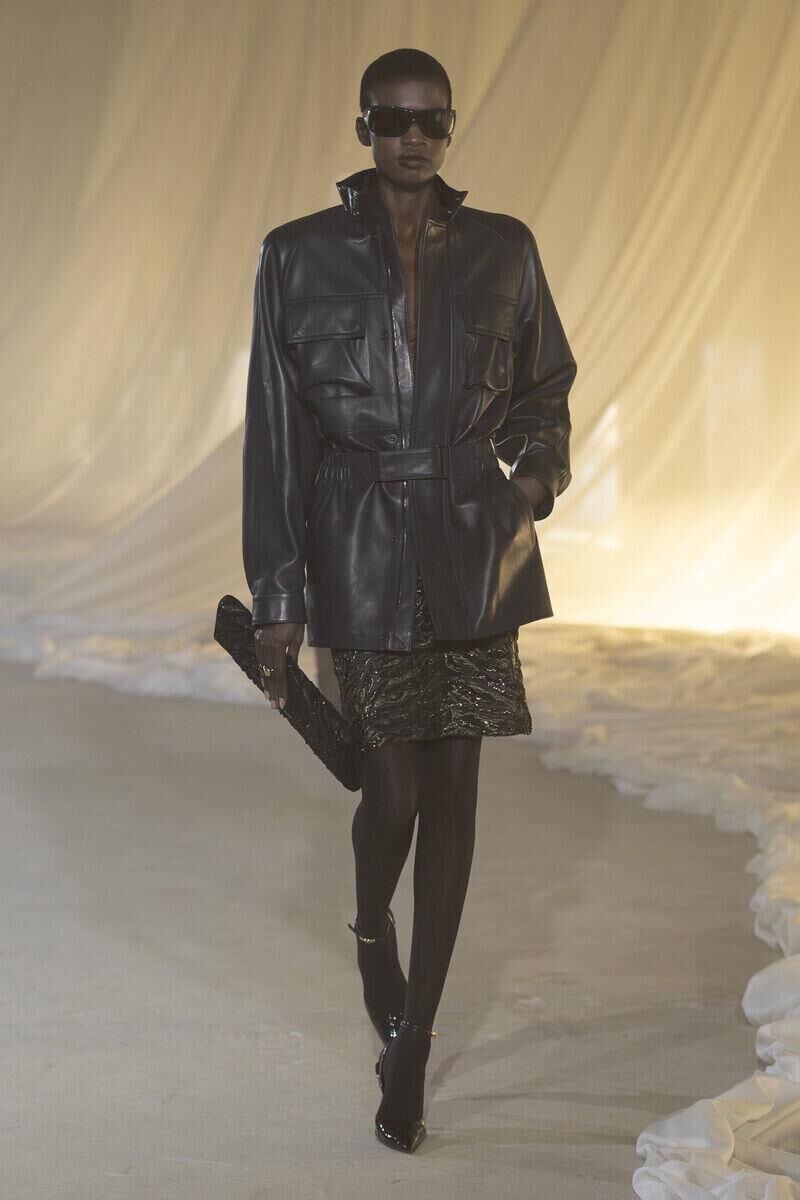
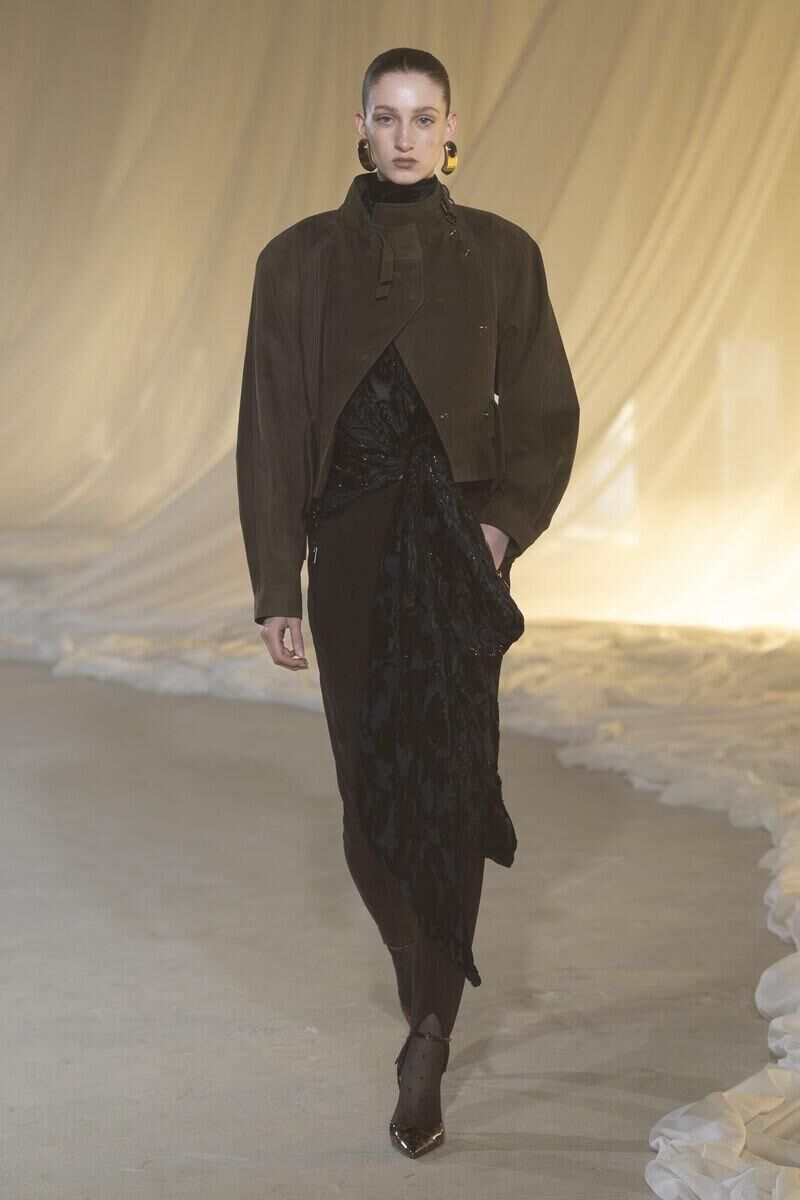
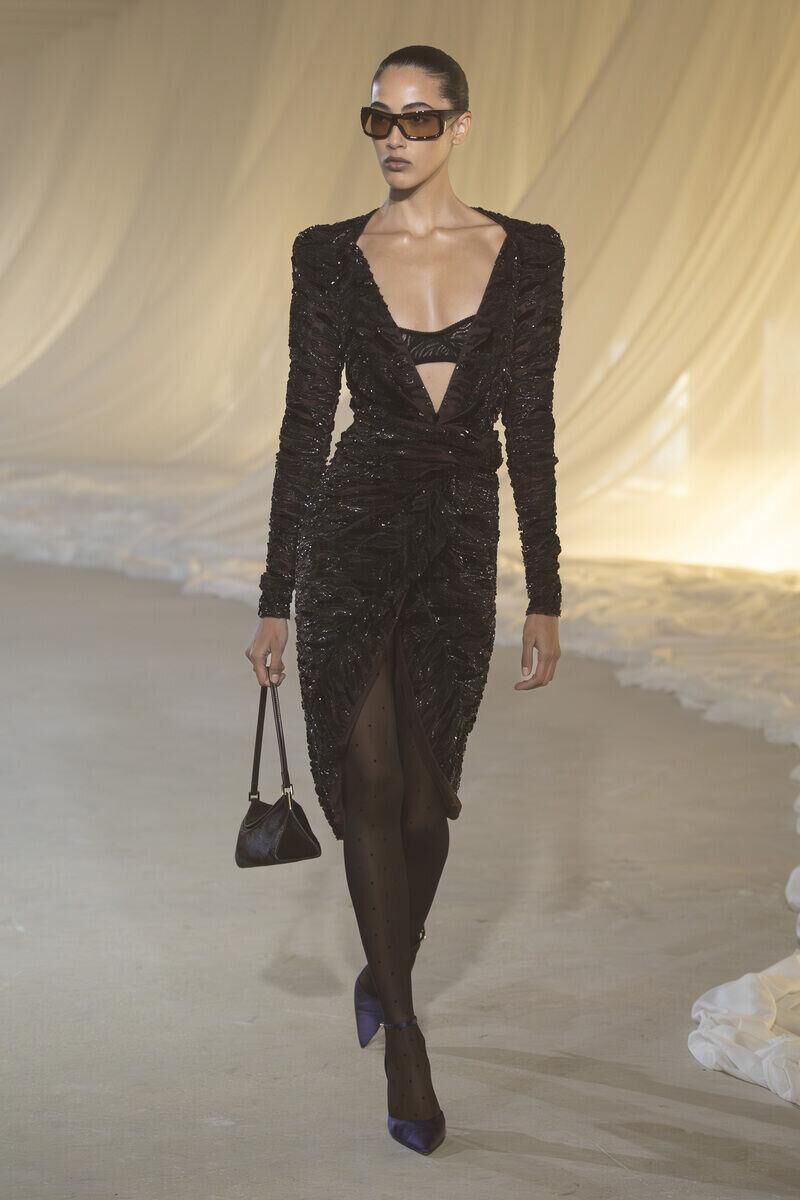
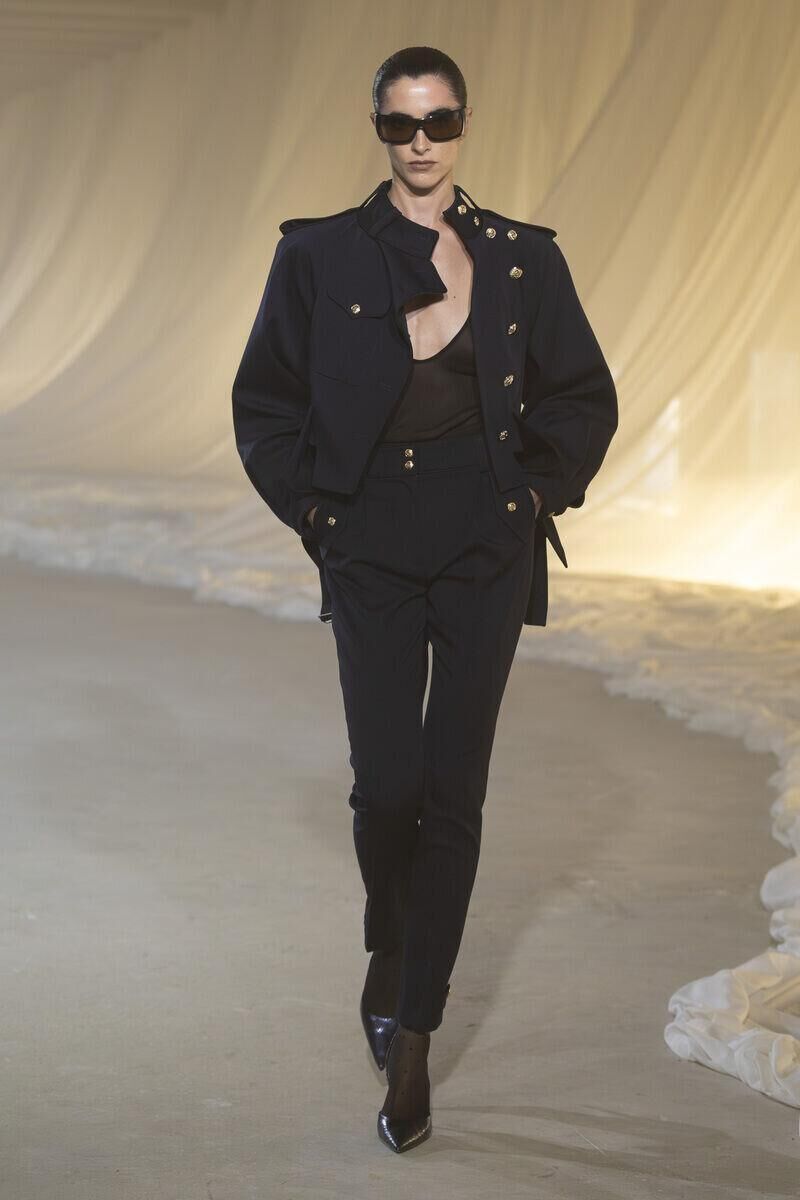
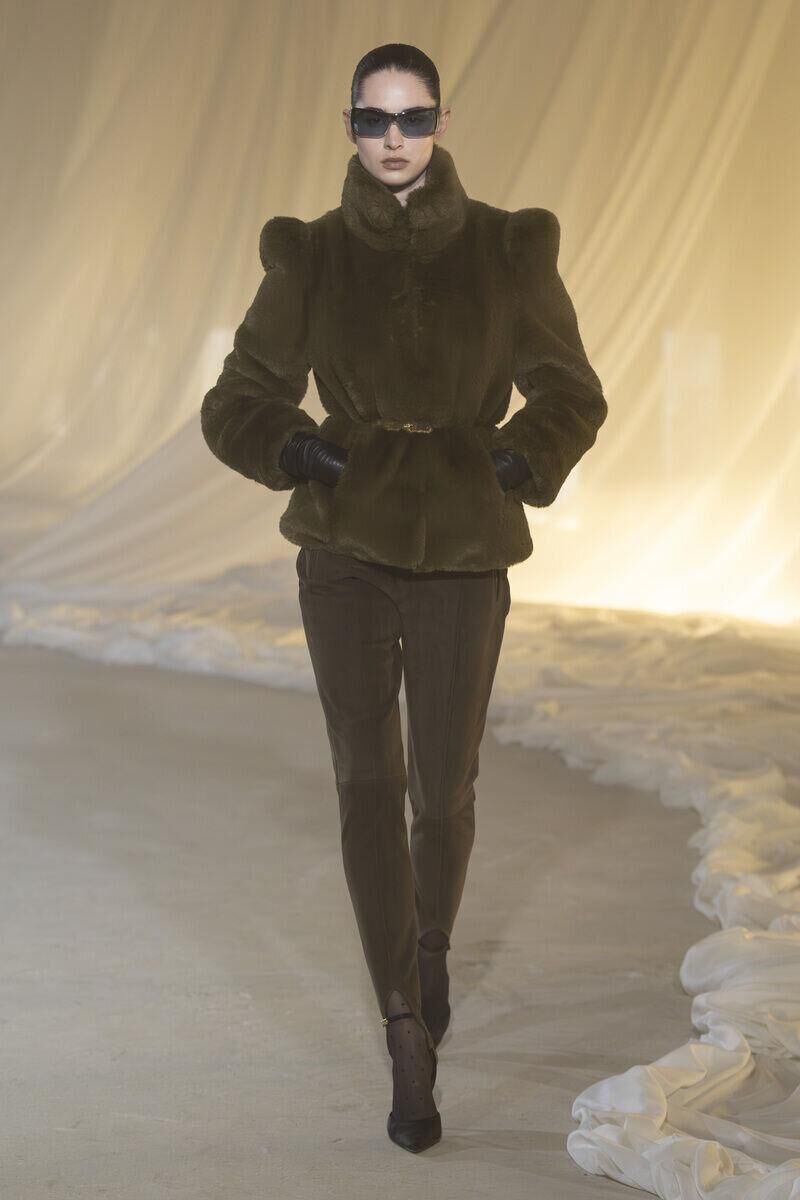
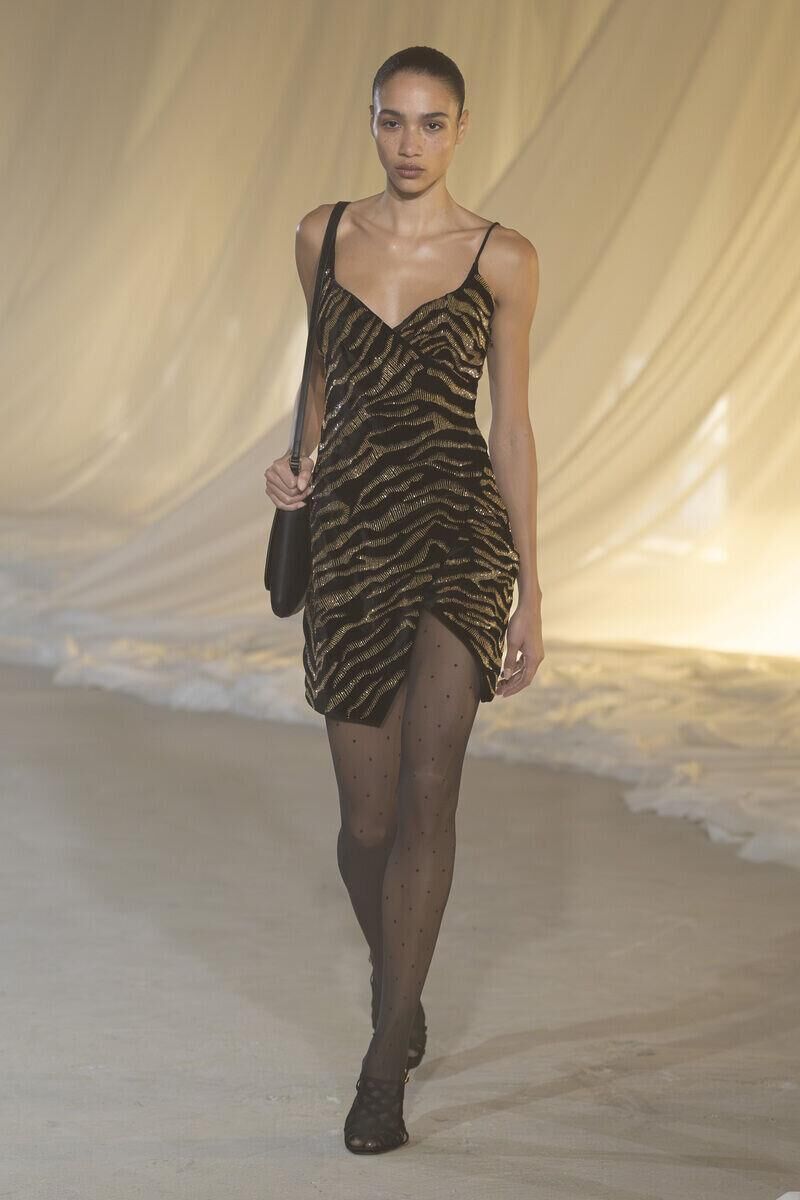
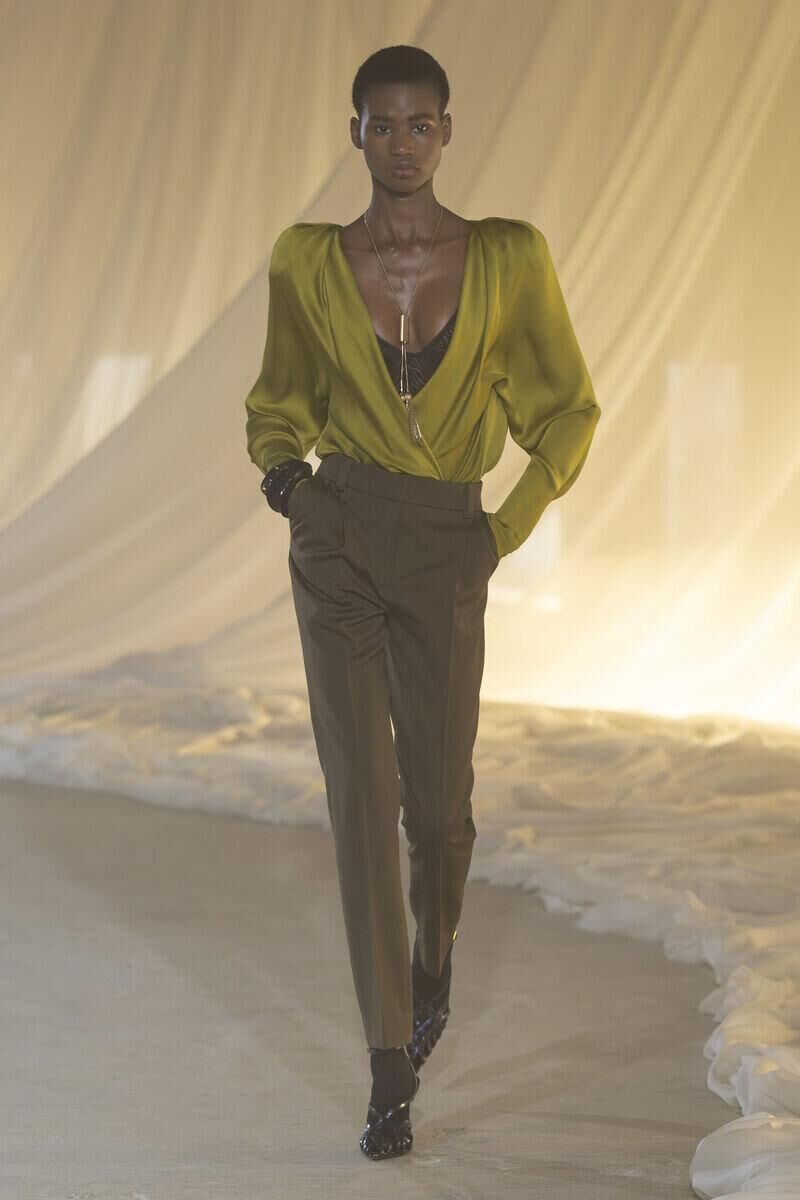
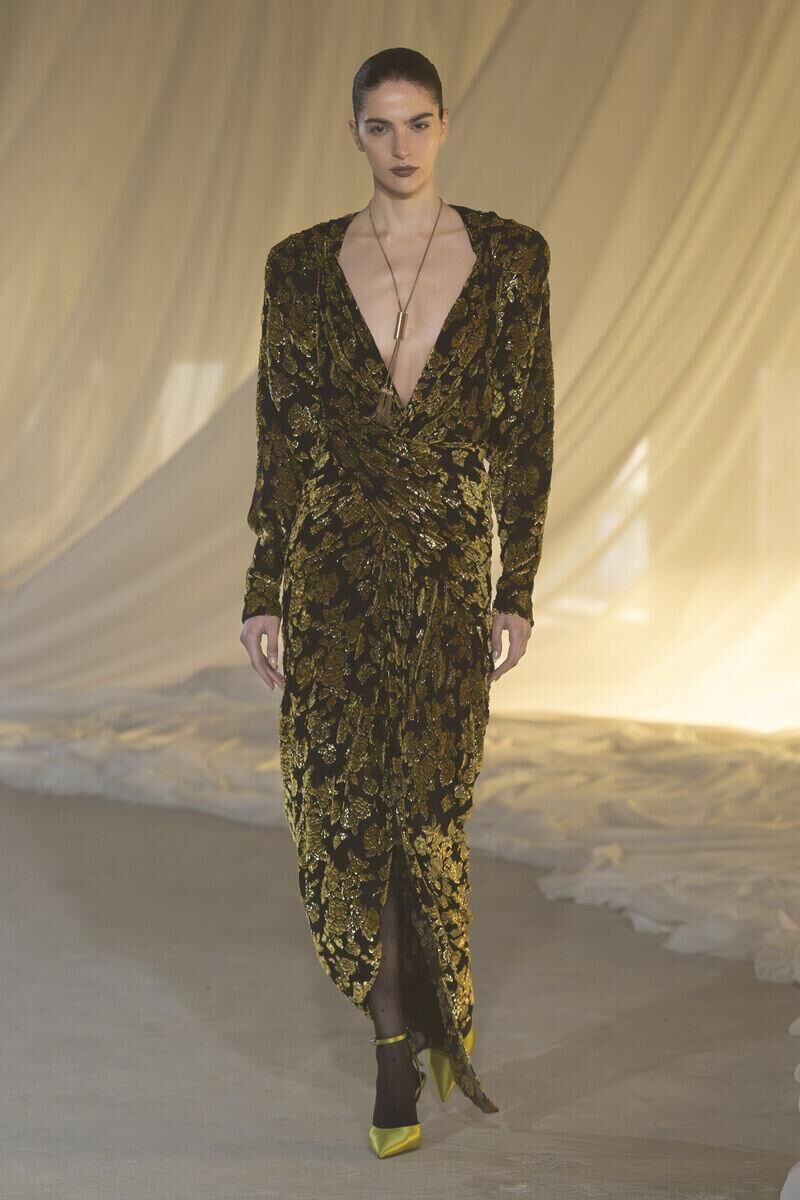
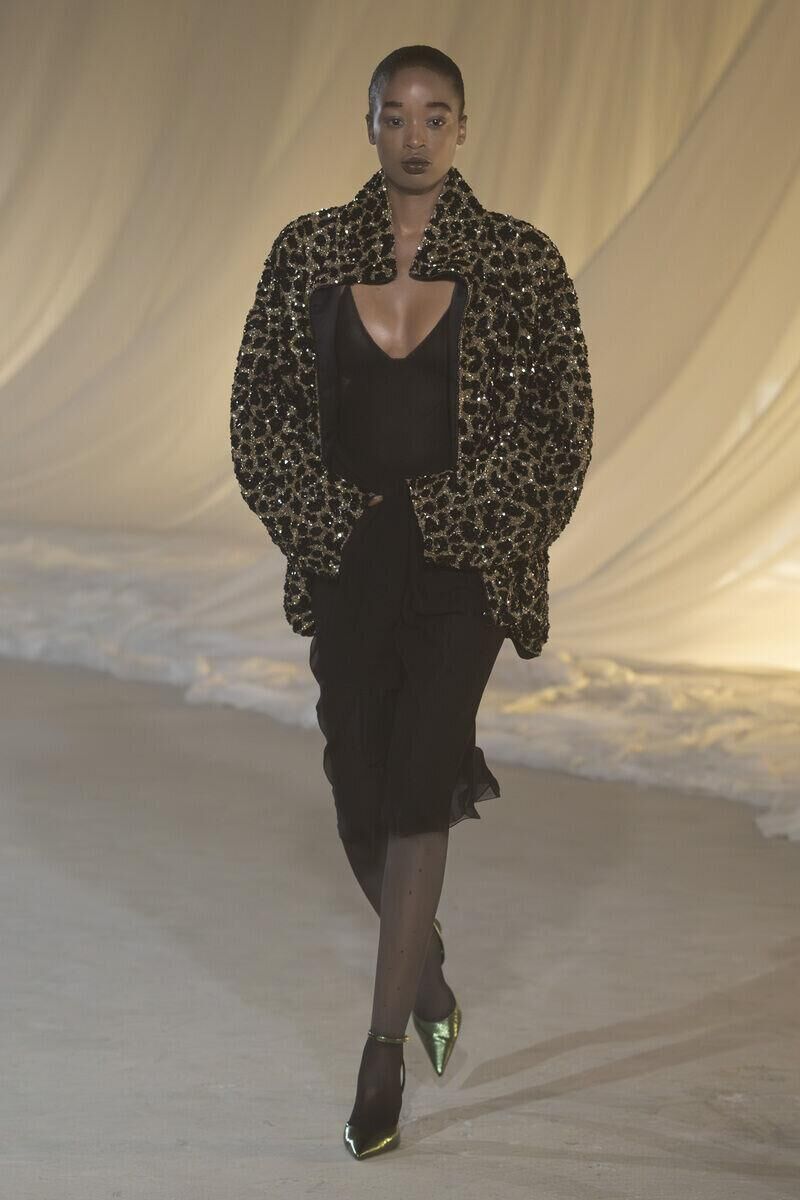
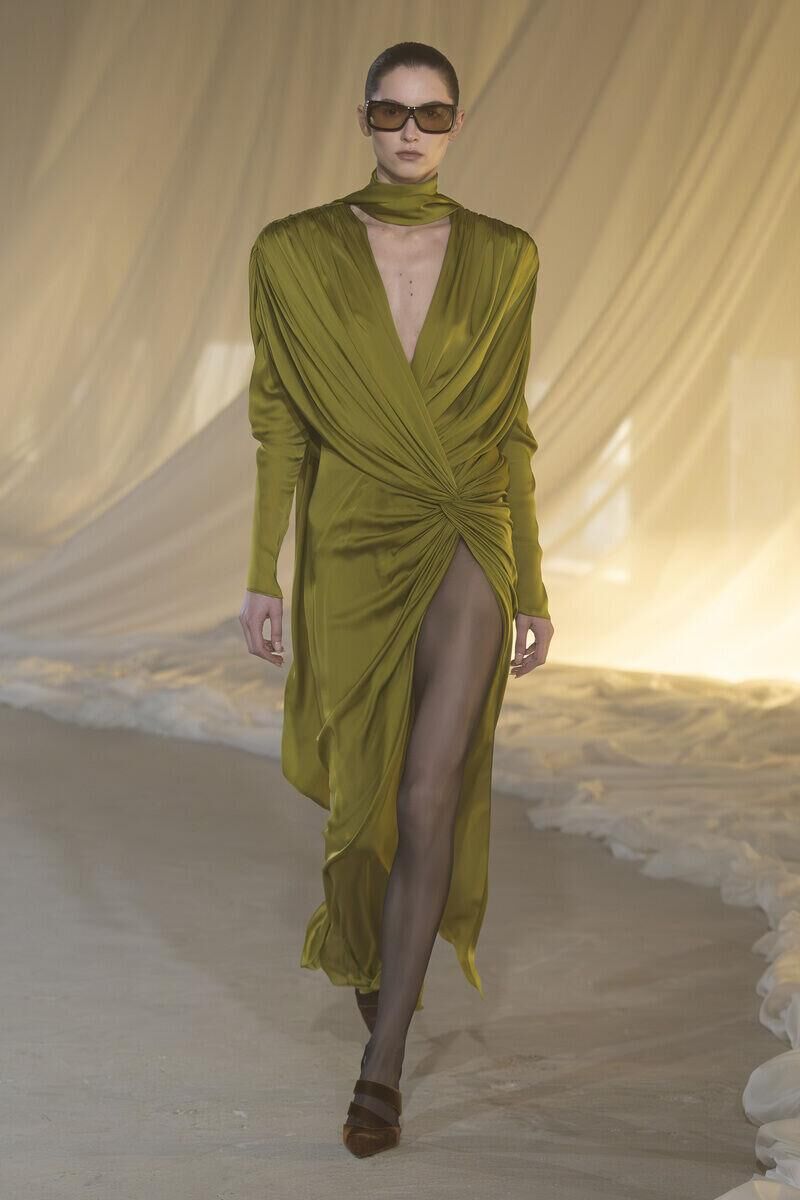
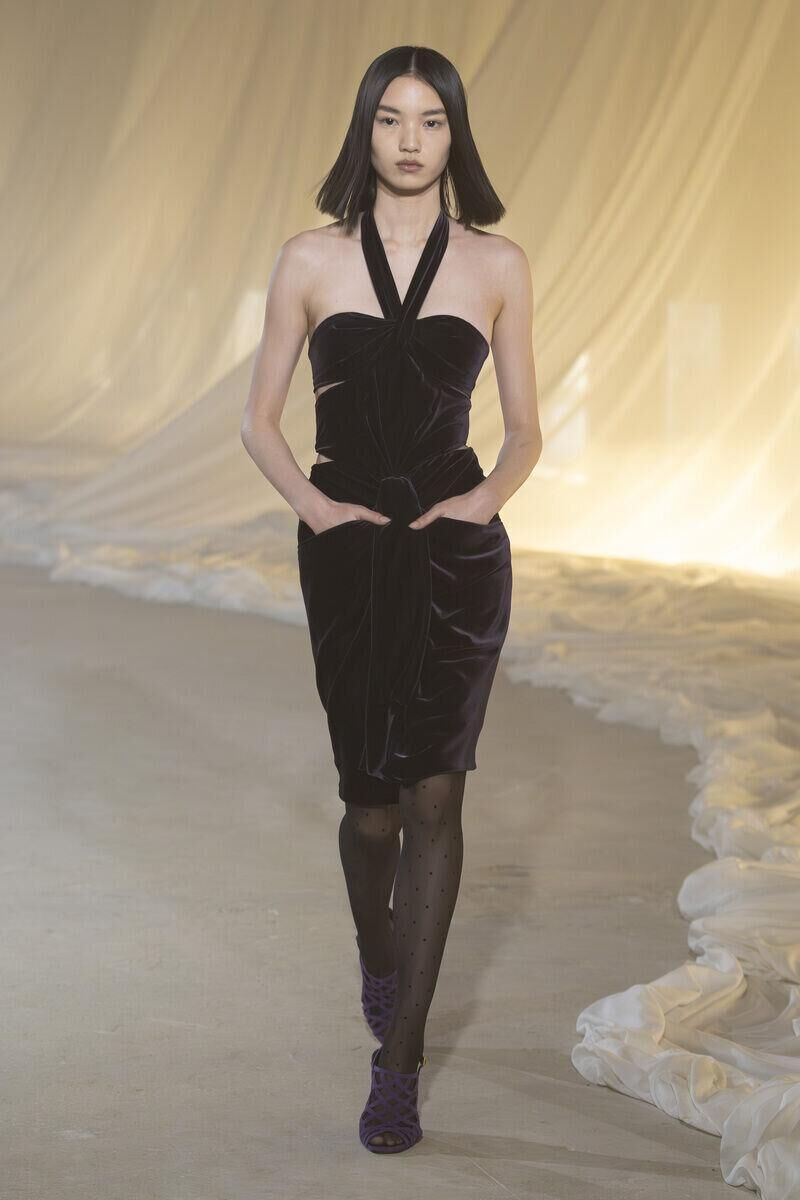
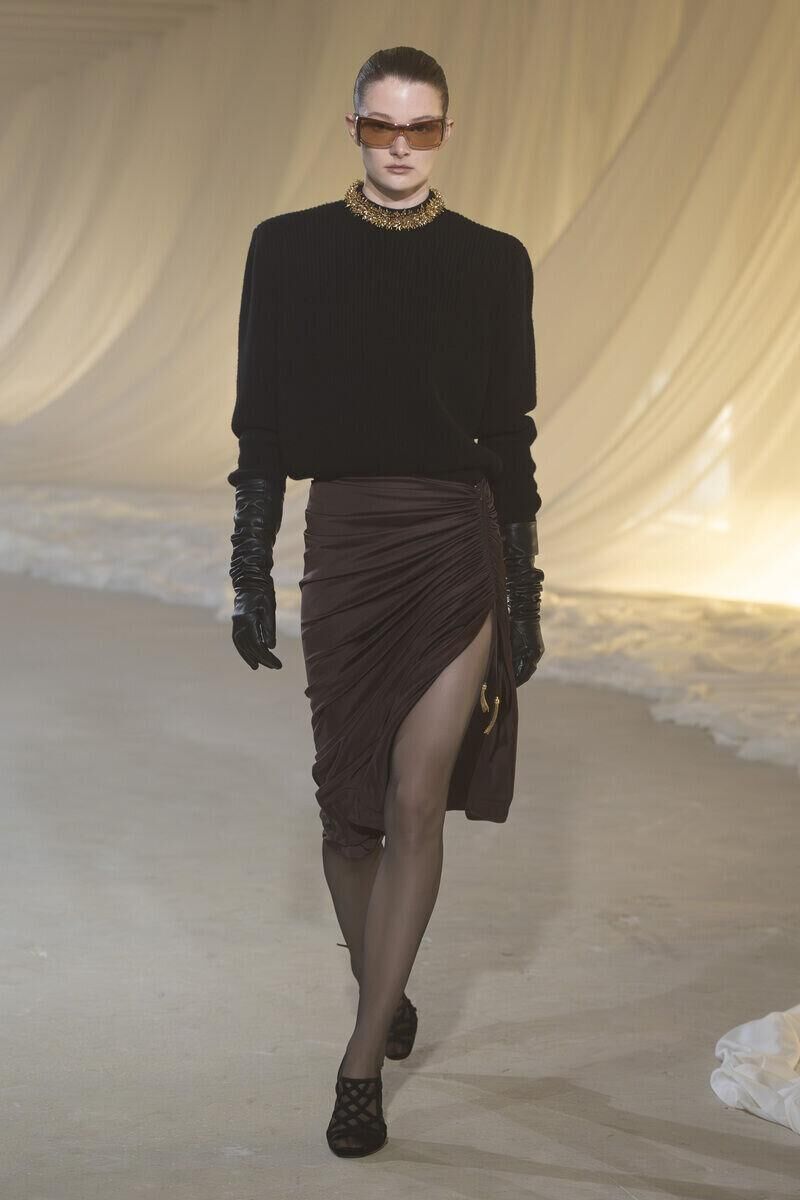
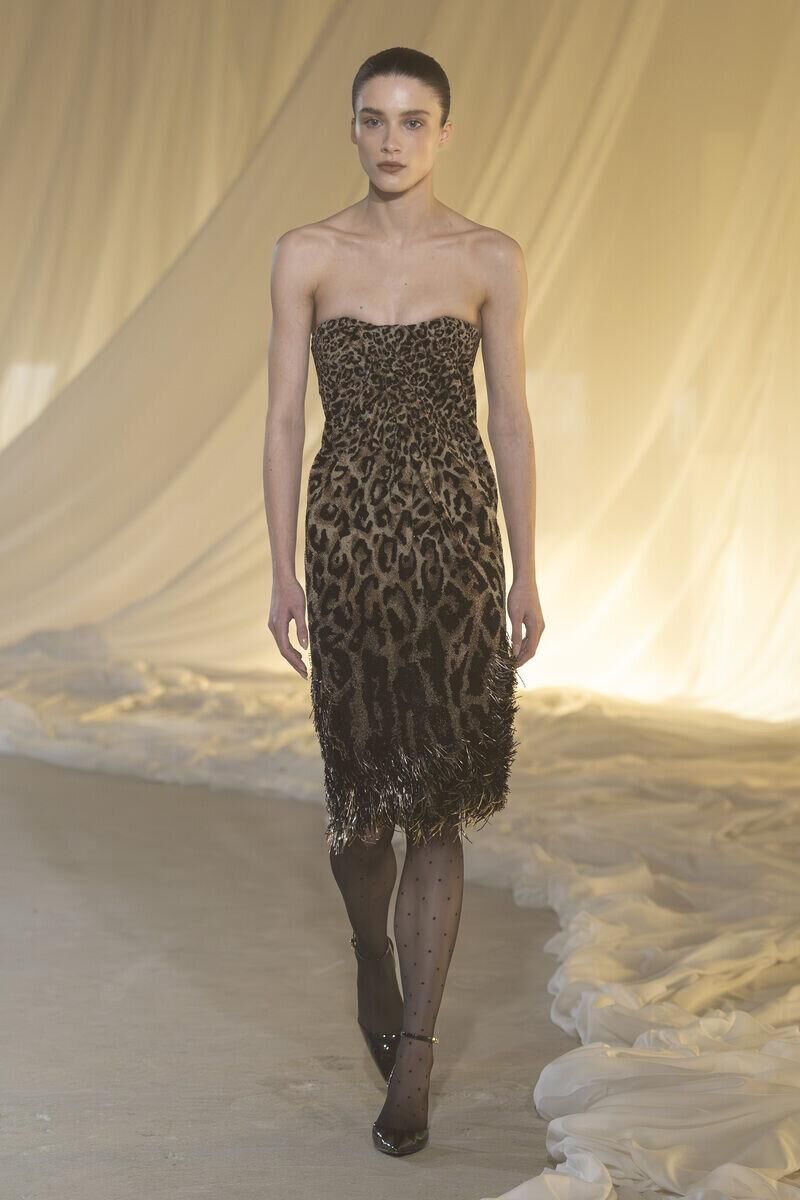
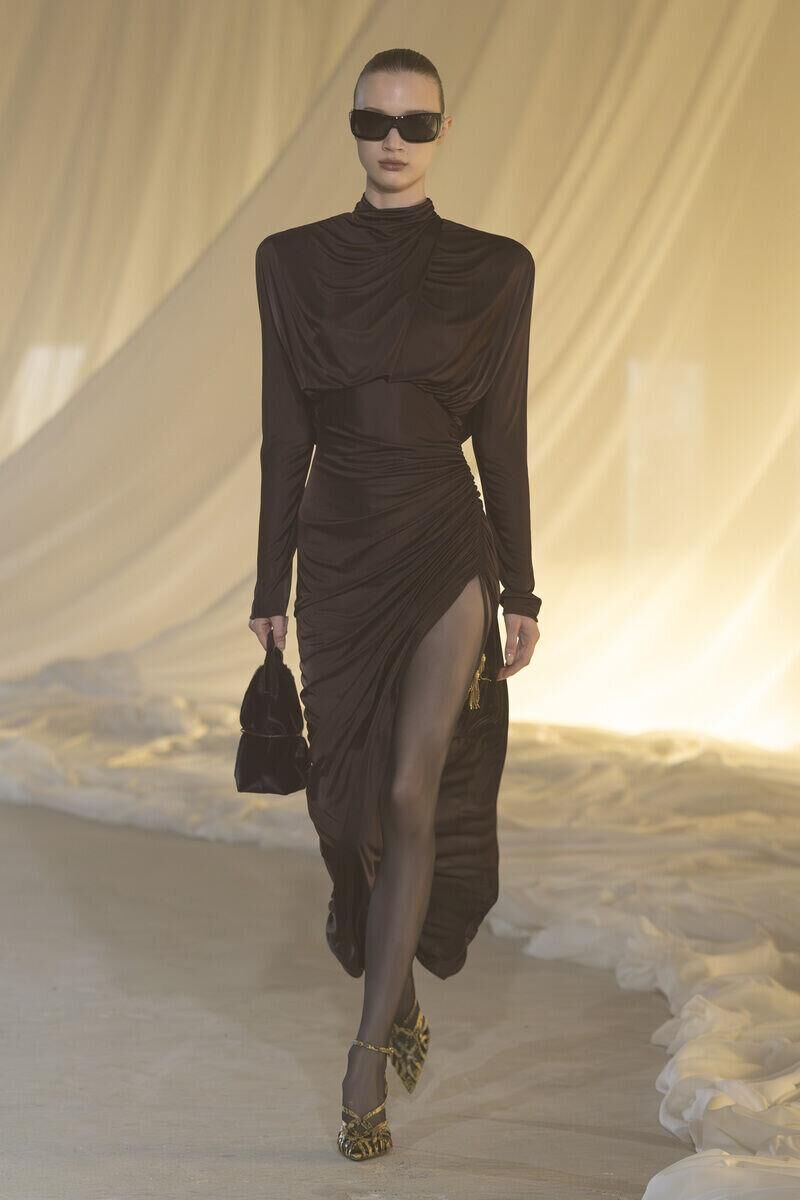
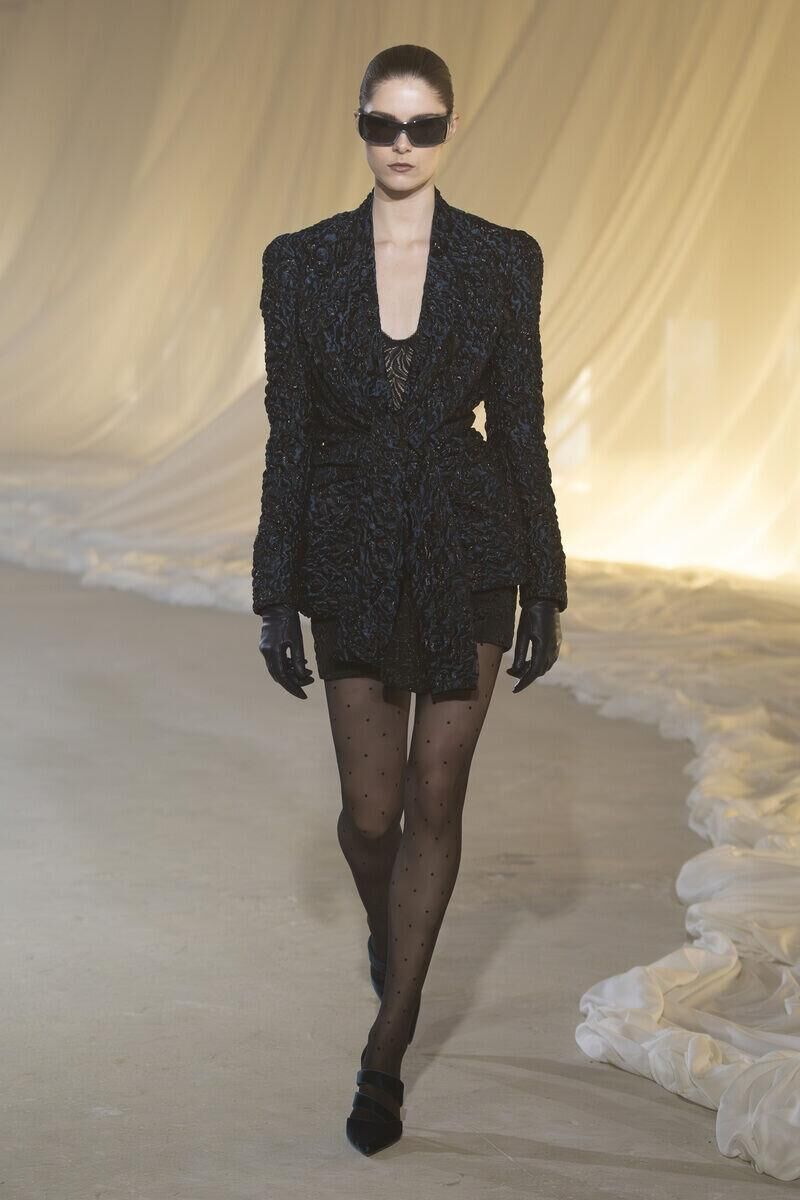
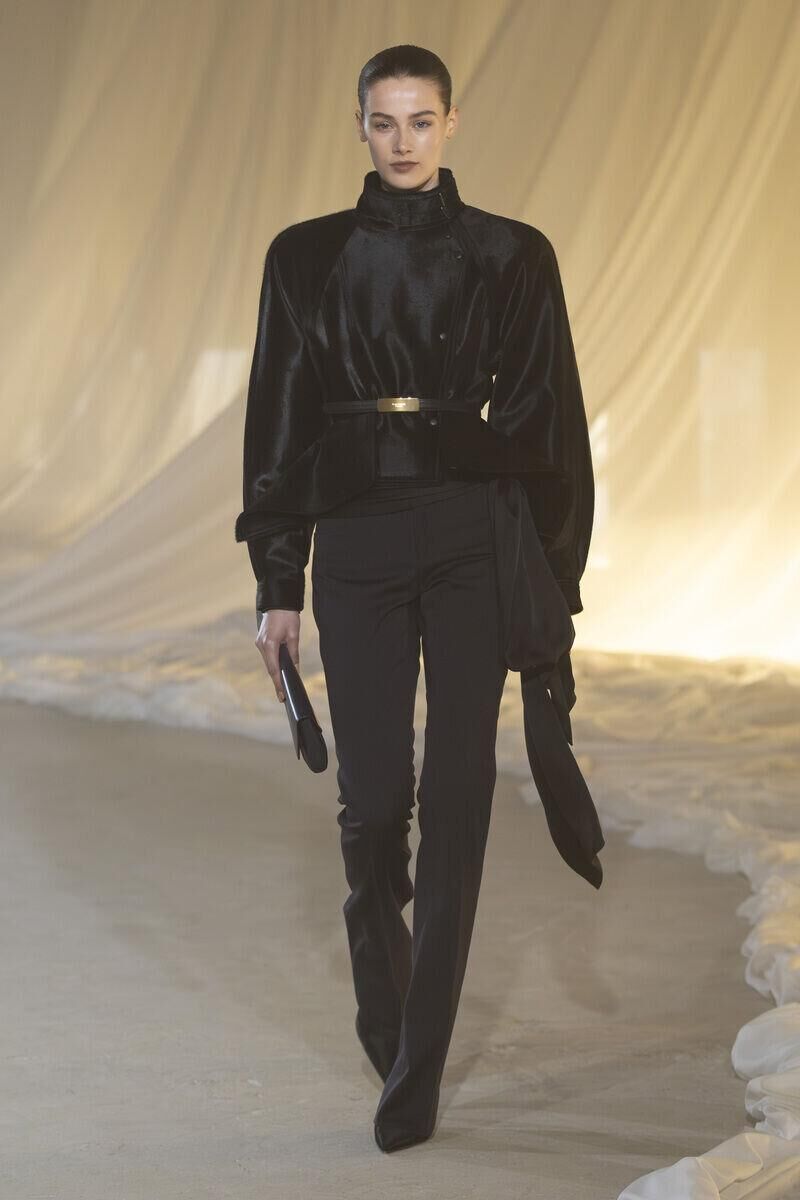
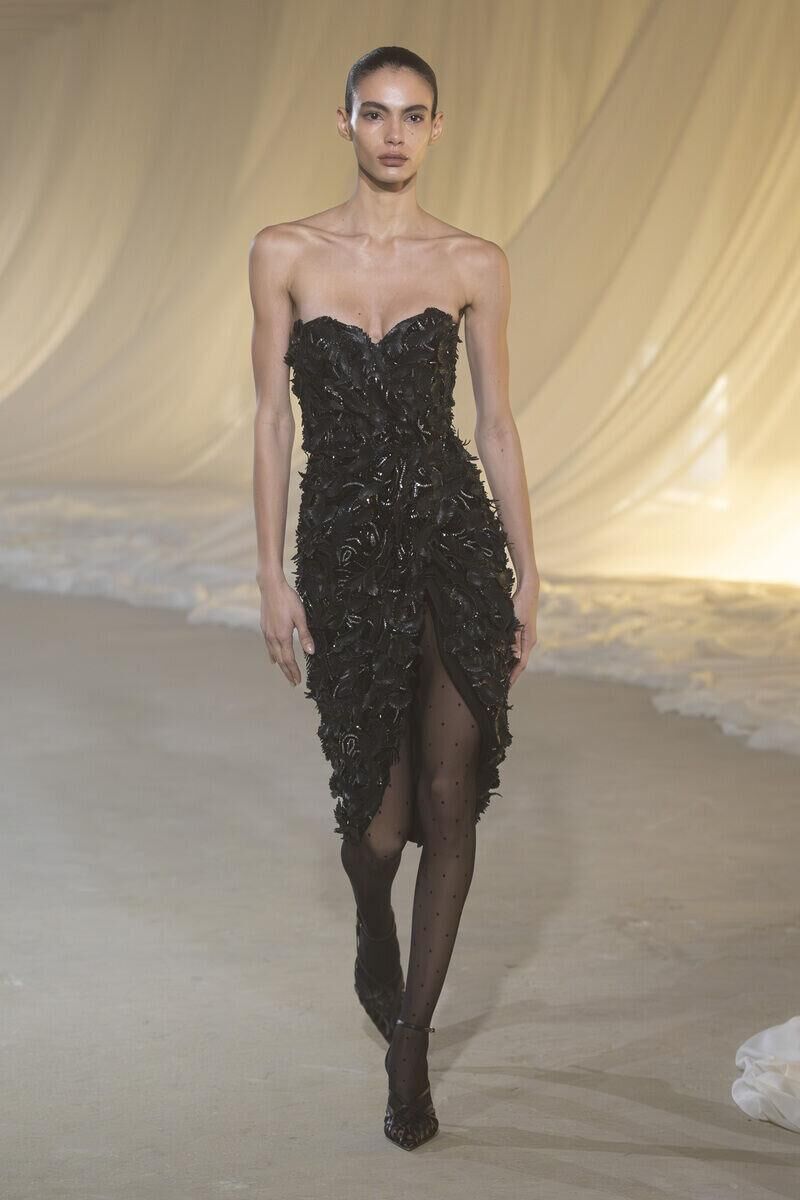
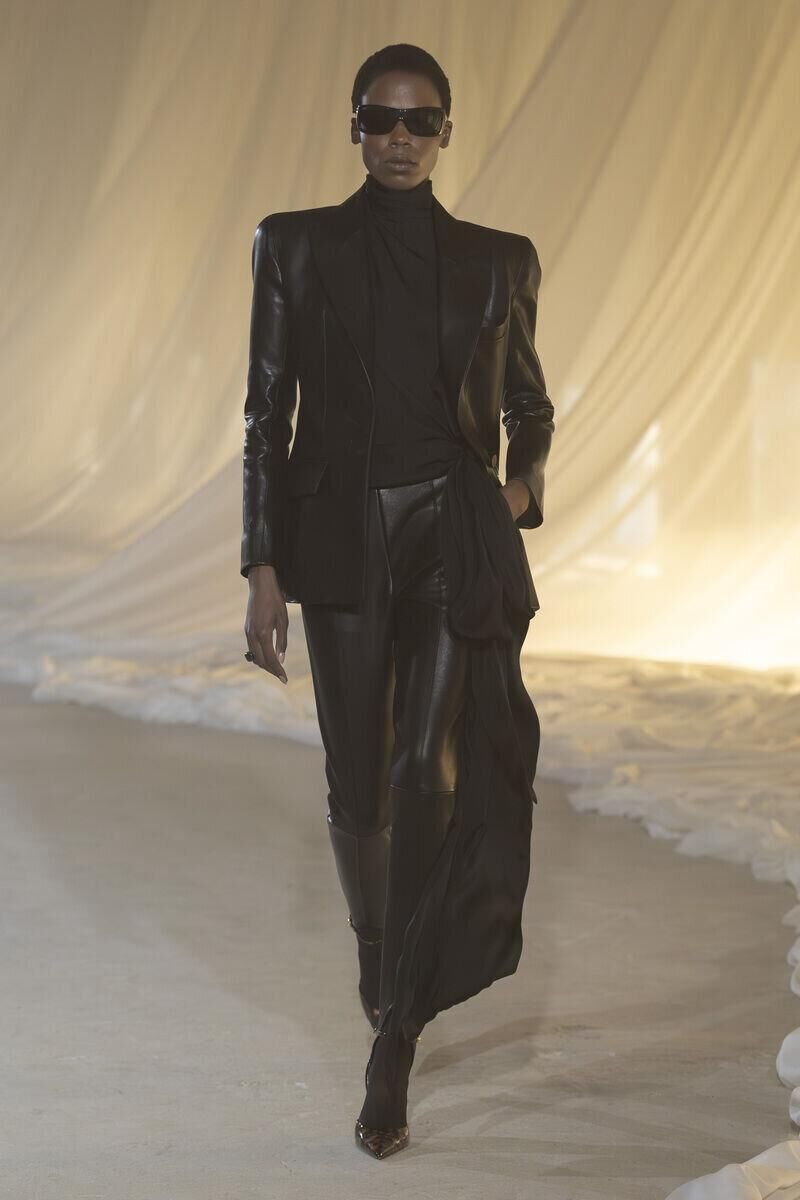
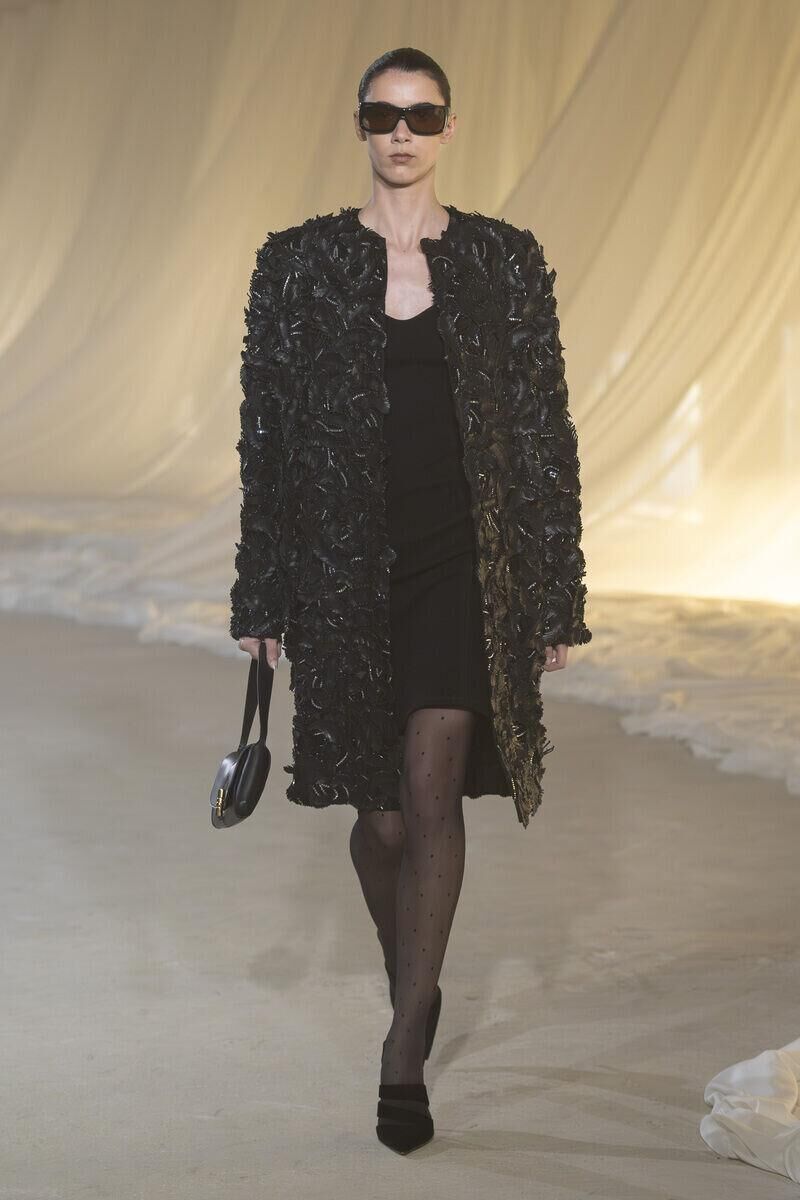
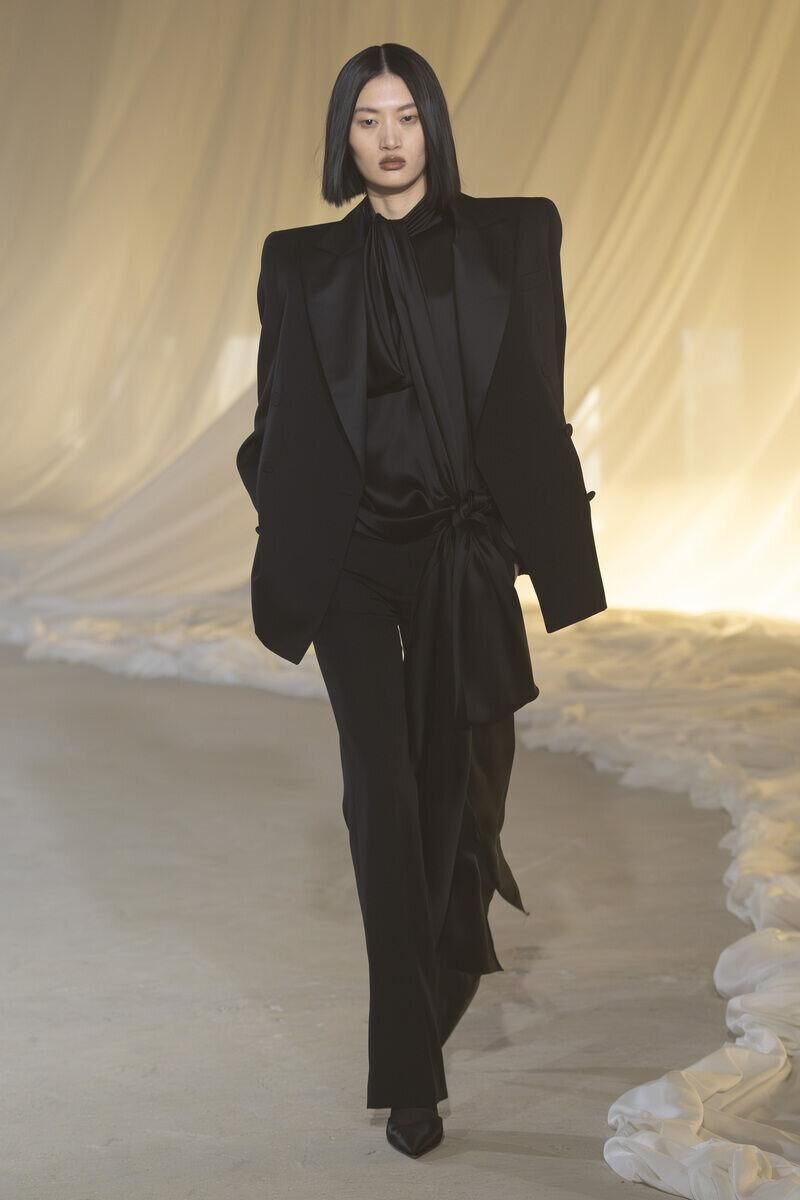
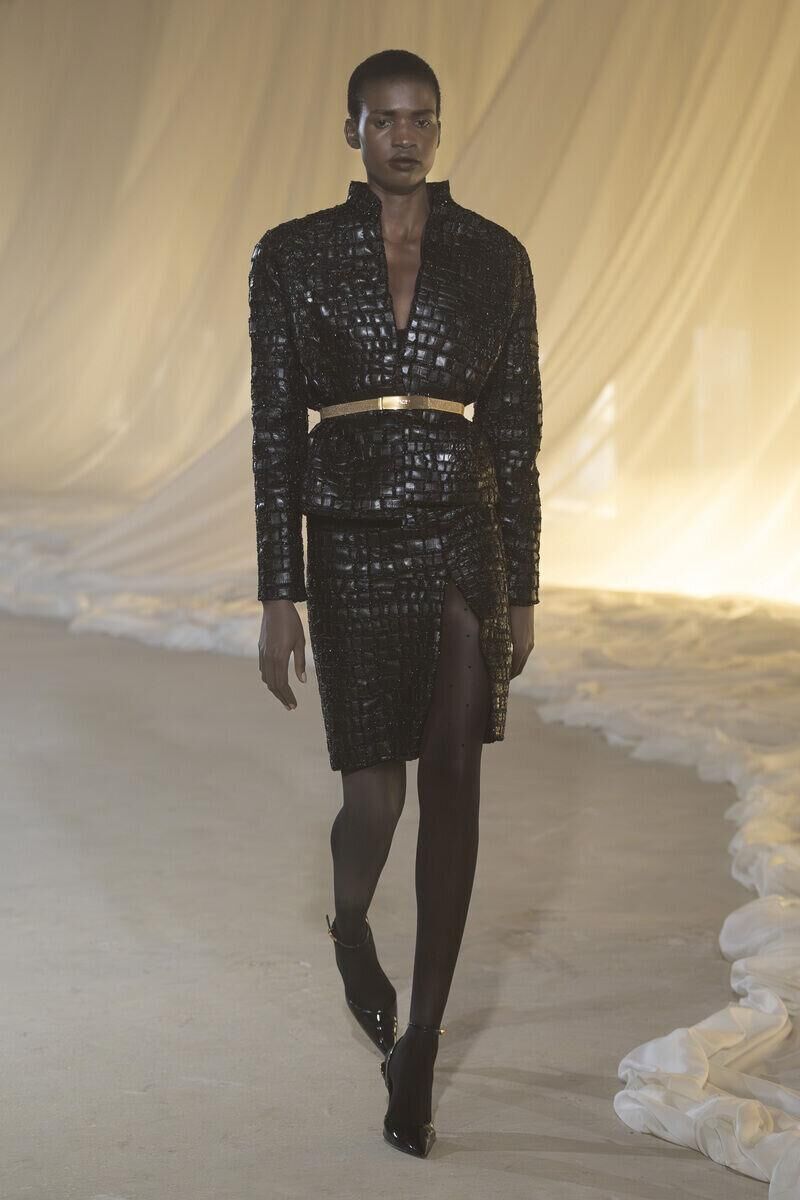
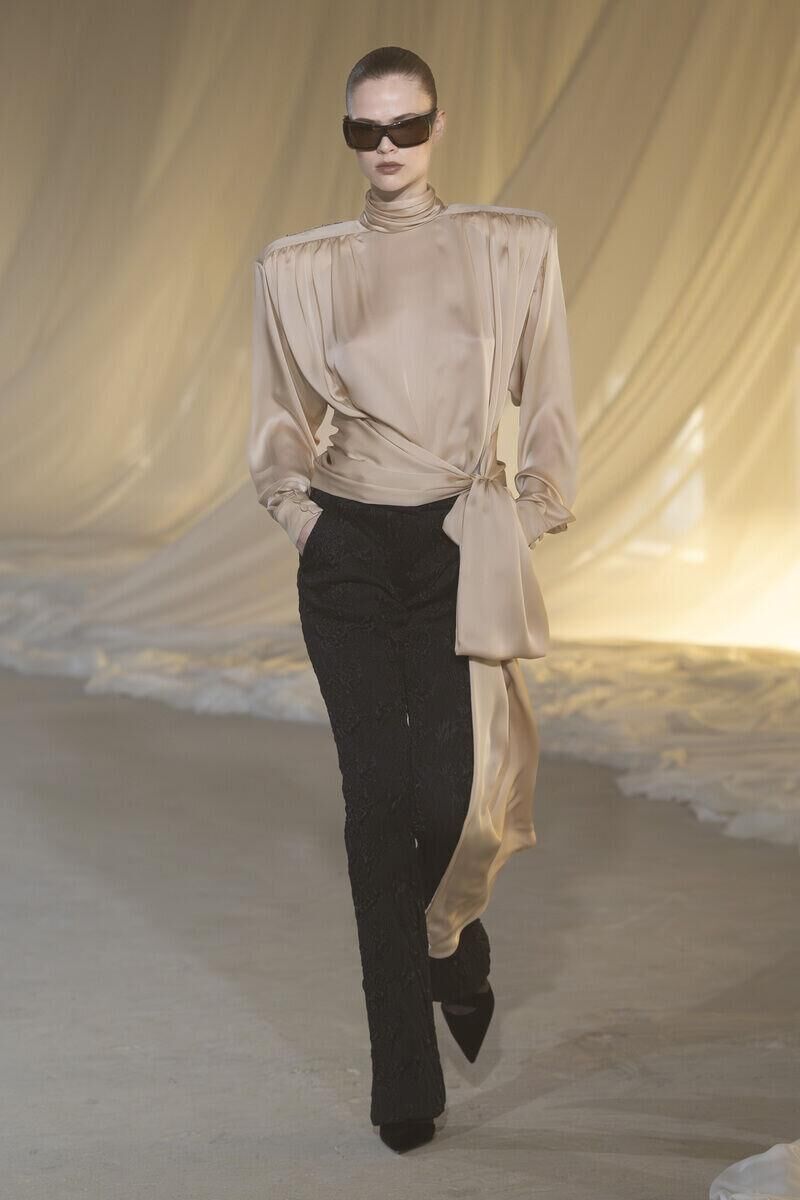
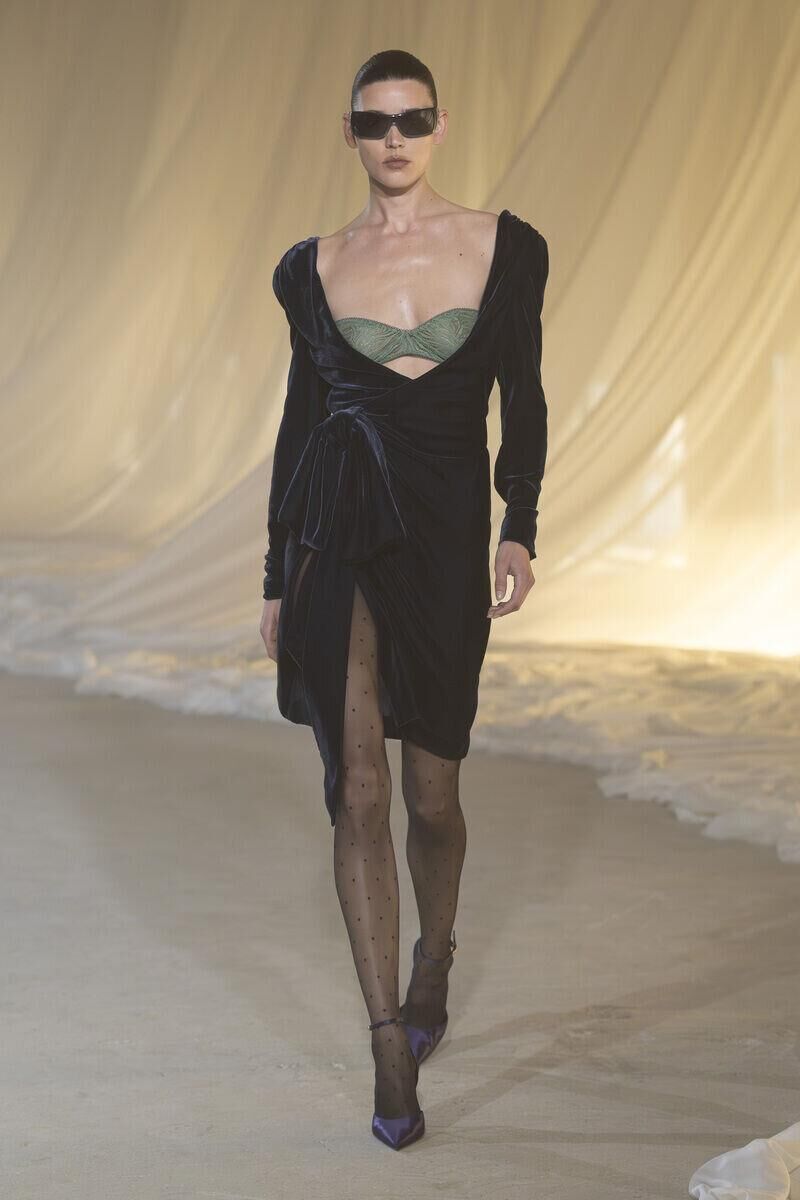
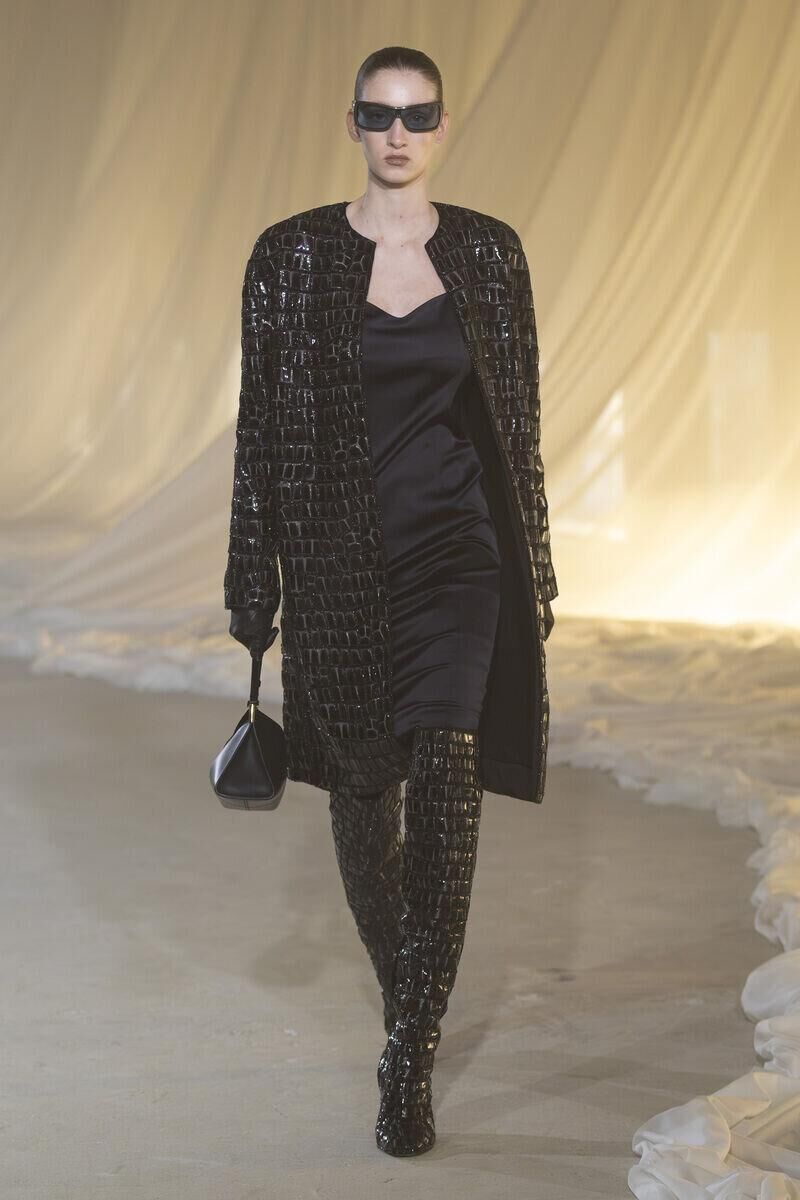
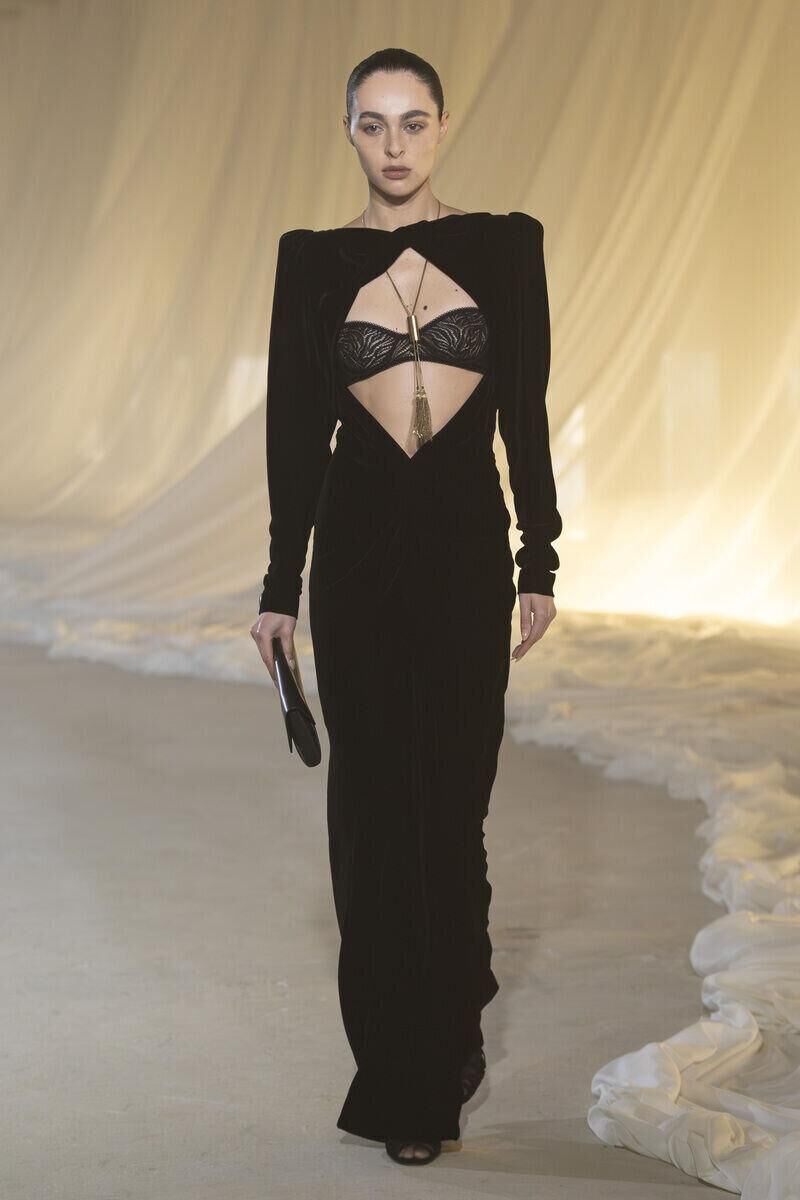
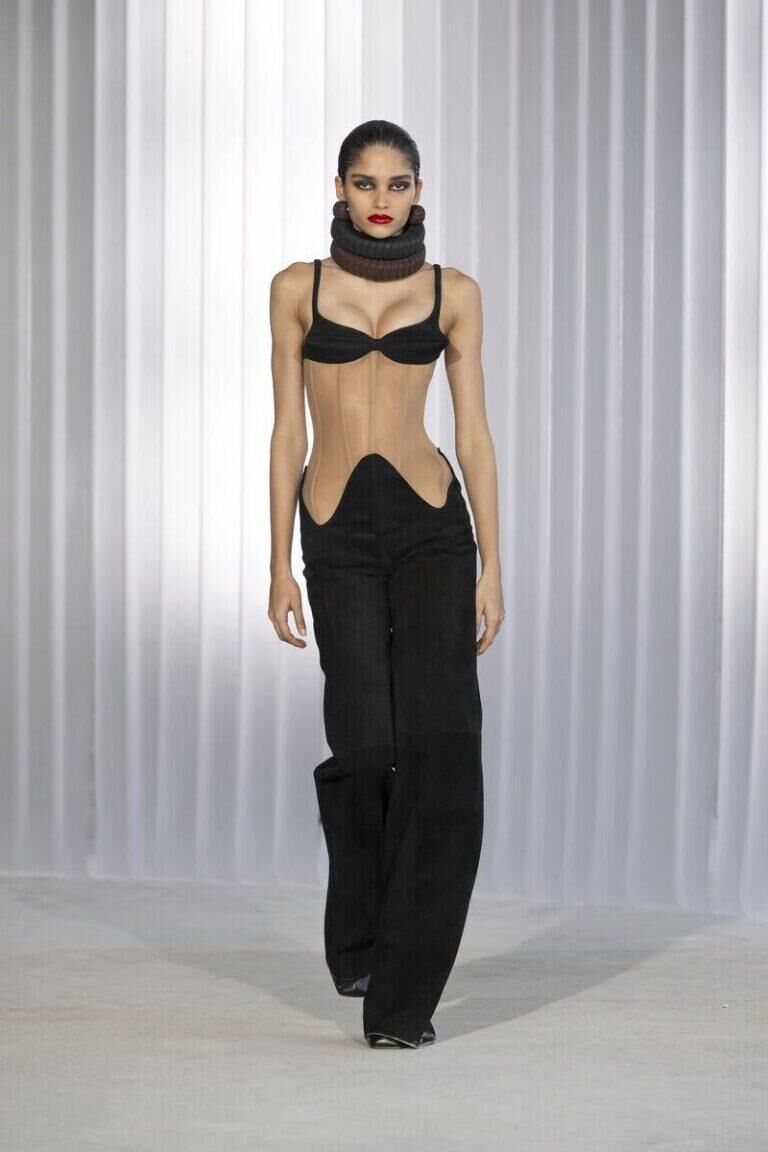
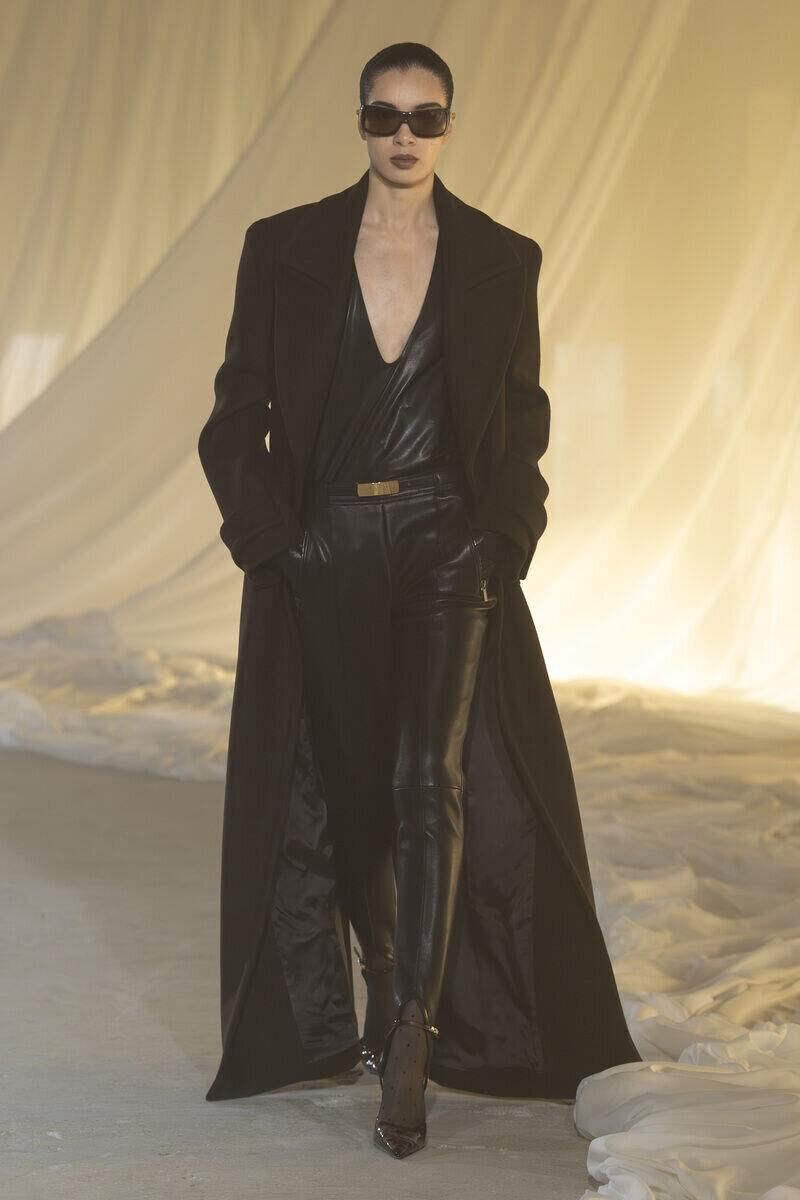
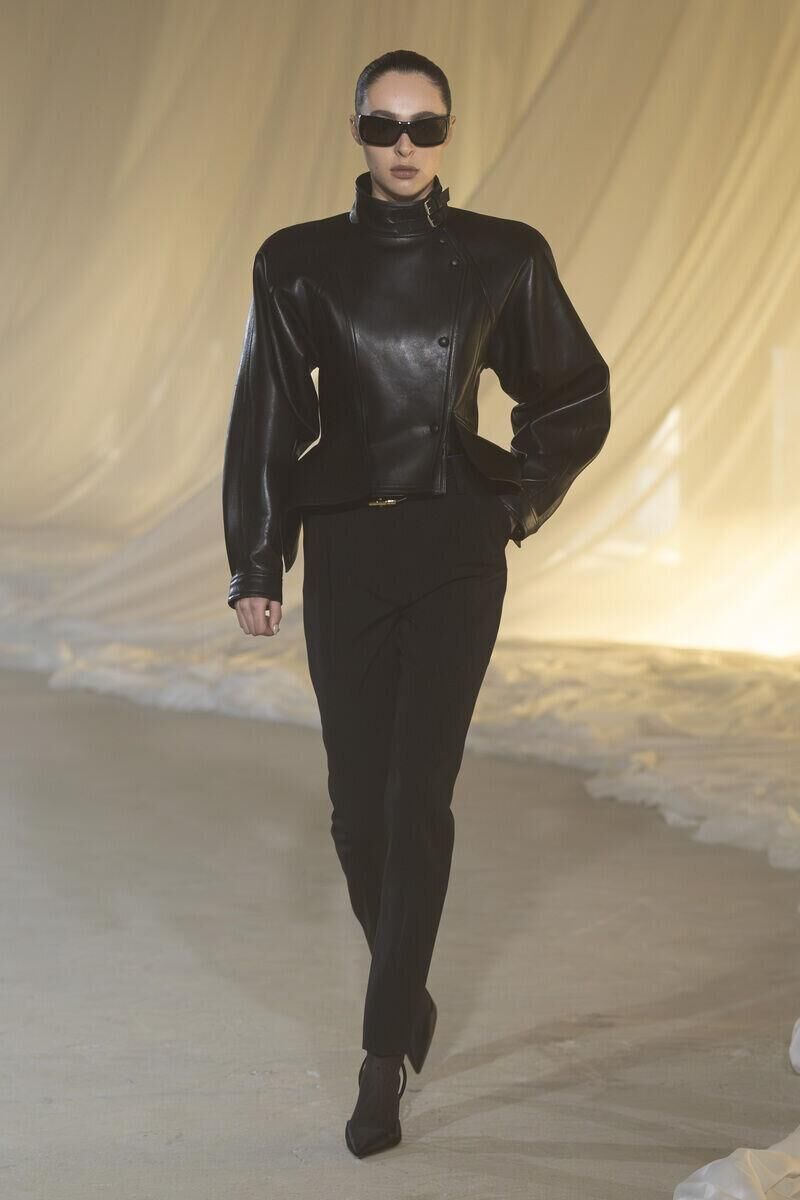
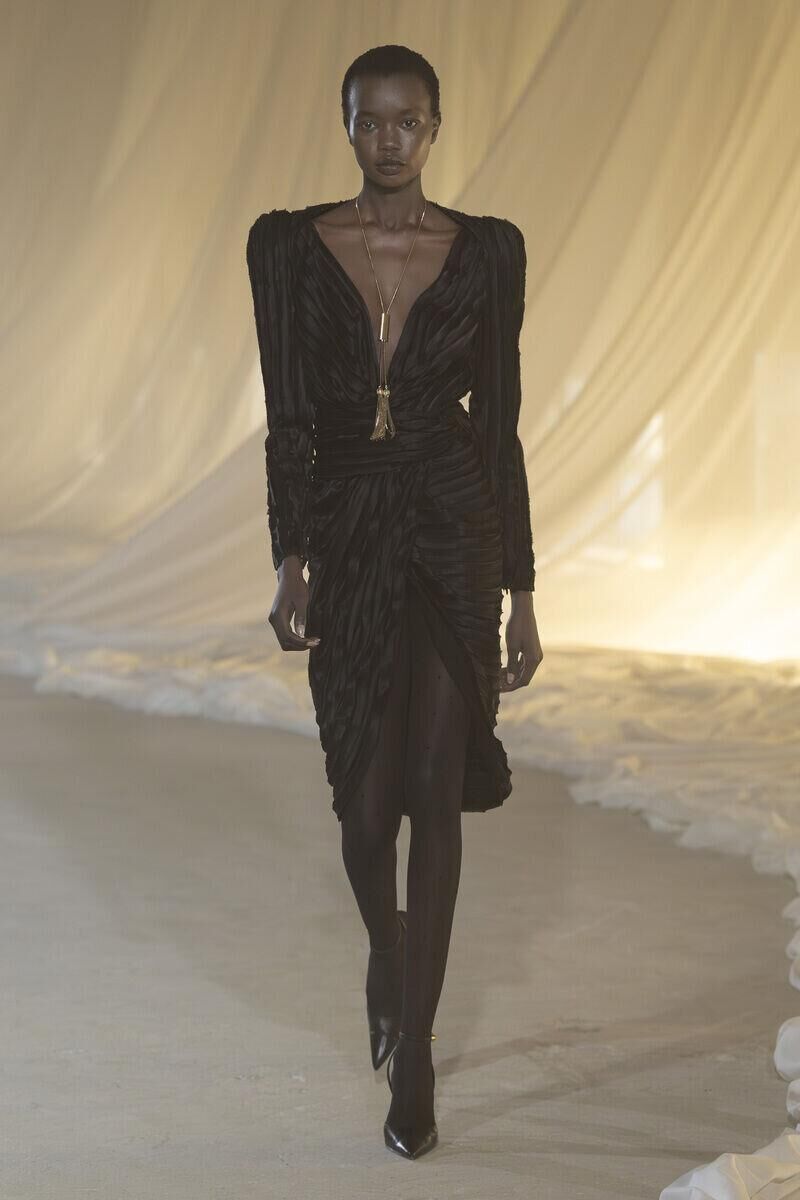
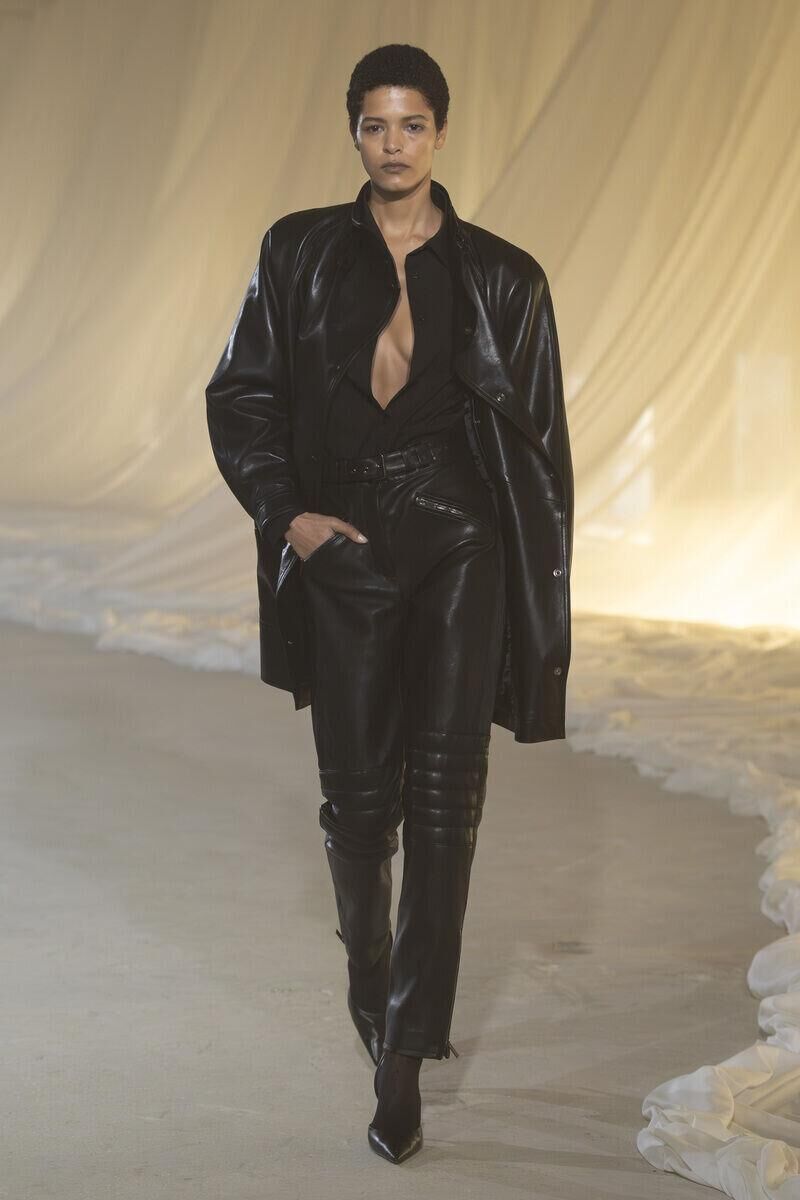
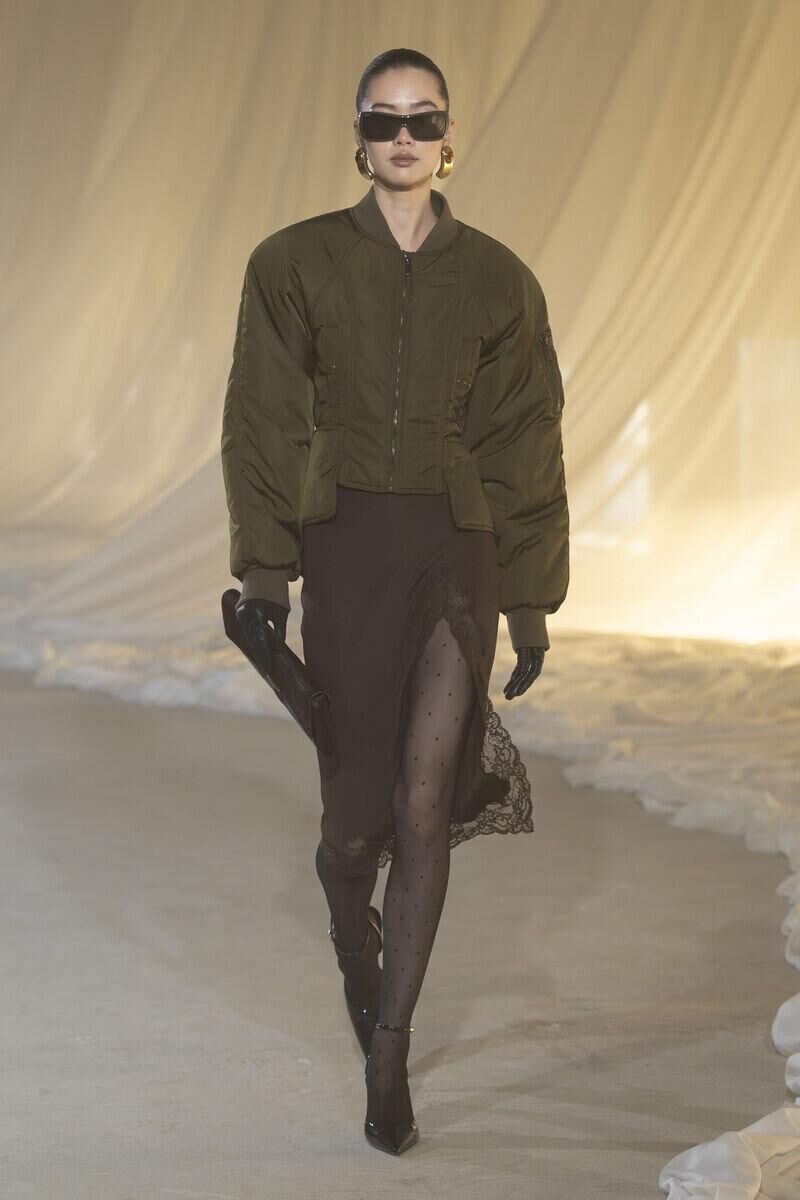
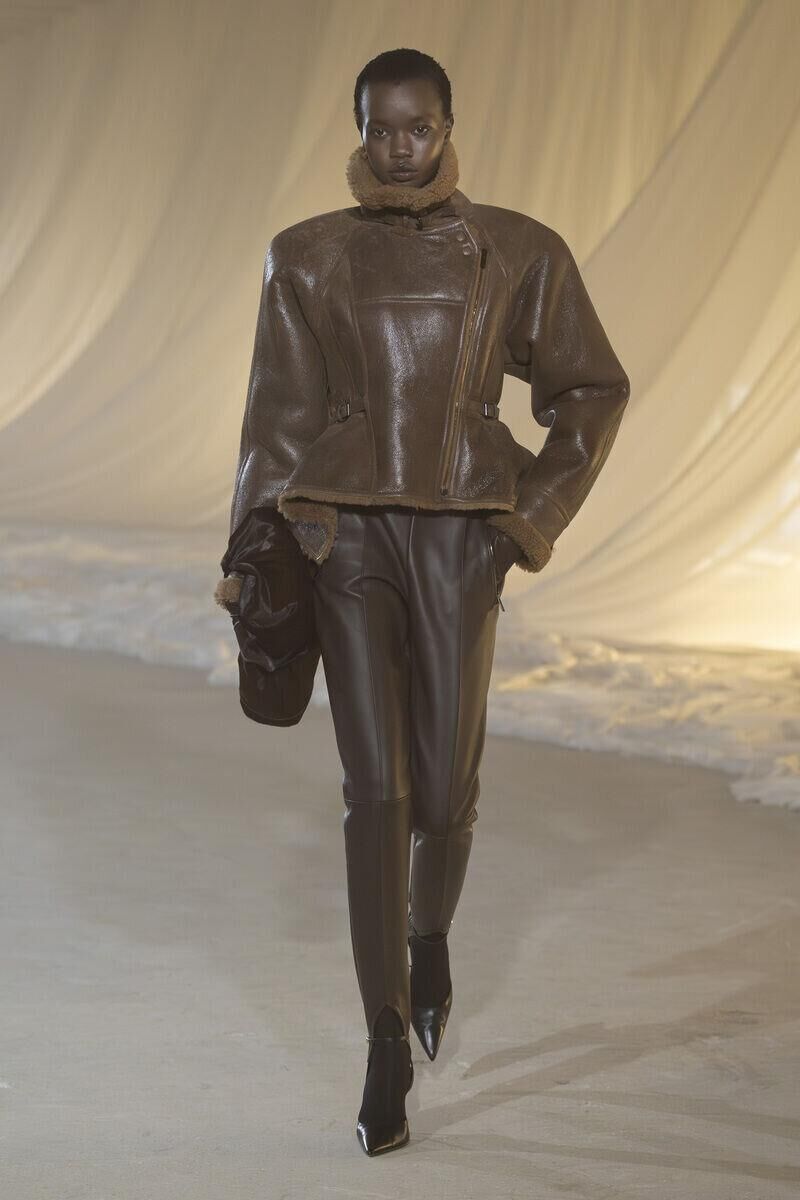
Revamping Balmain’s emblematic codes, this Fall/Winter 2026–2027 collection draws its sensuality from the Spring 1946 collection and its drapery from the 1953 collection. The bomber jacket, a symbol of freedom and emancipation, becomes a leitmotif.
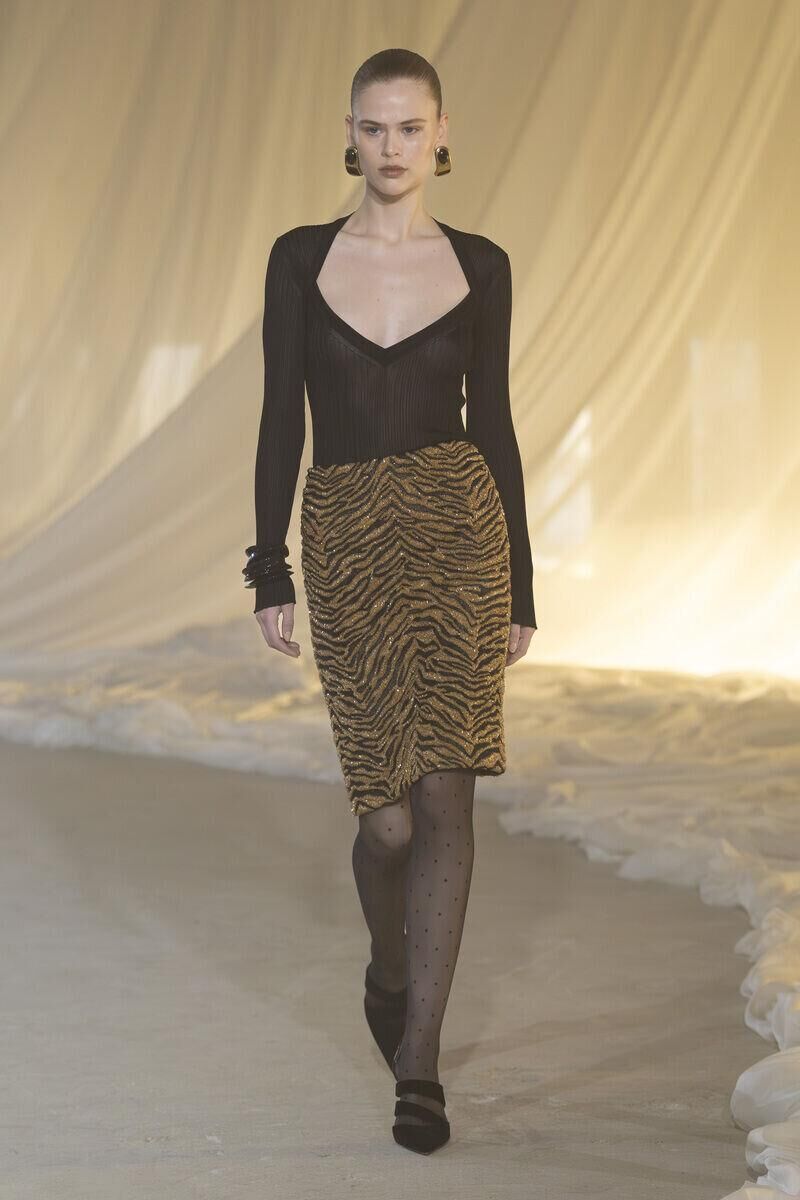
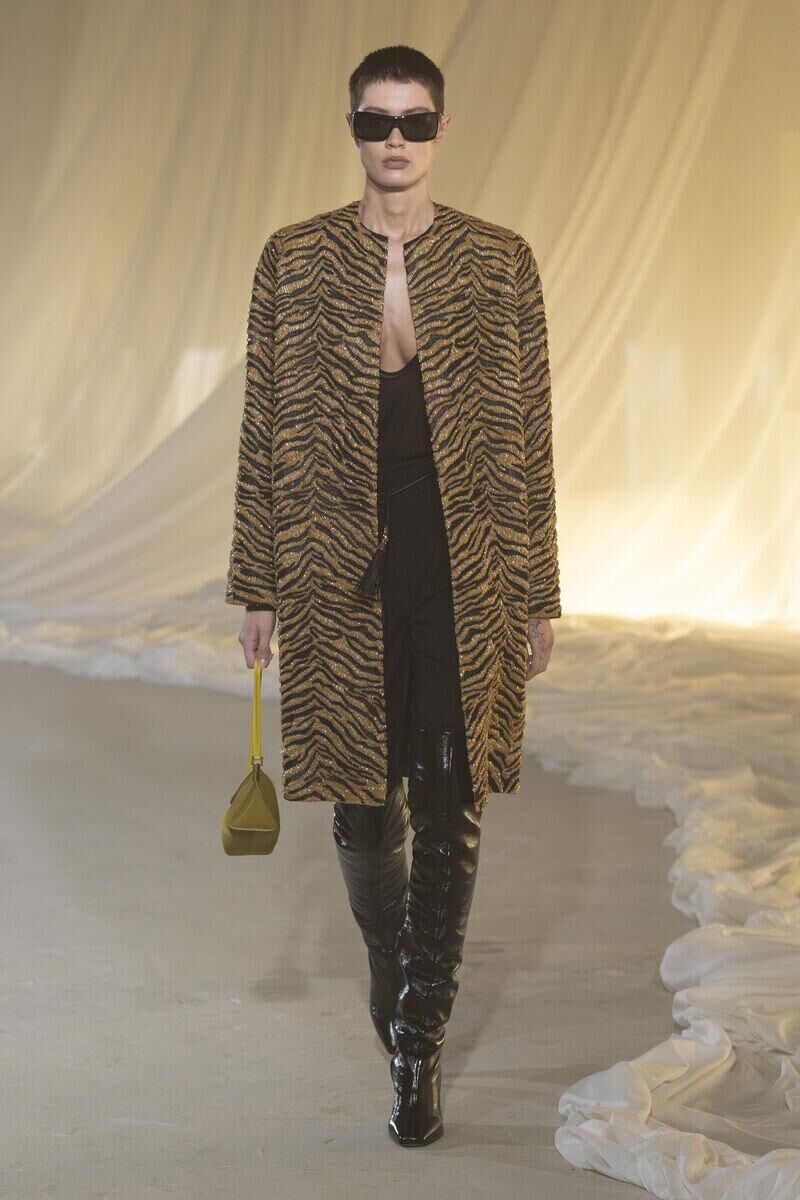
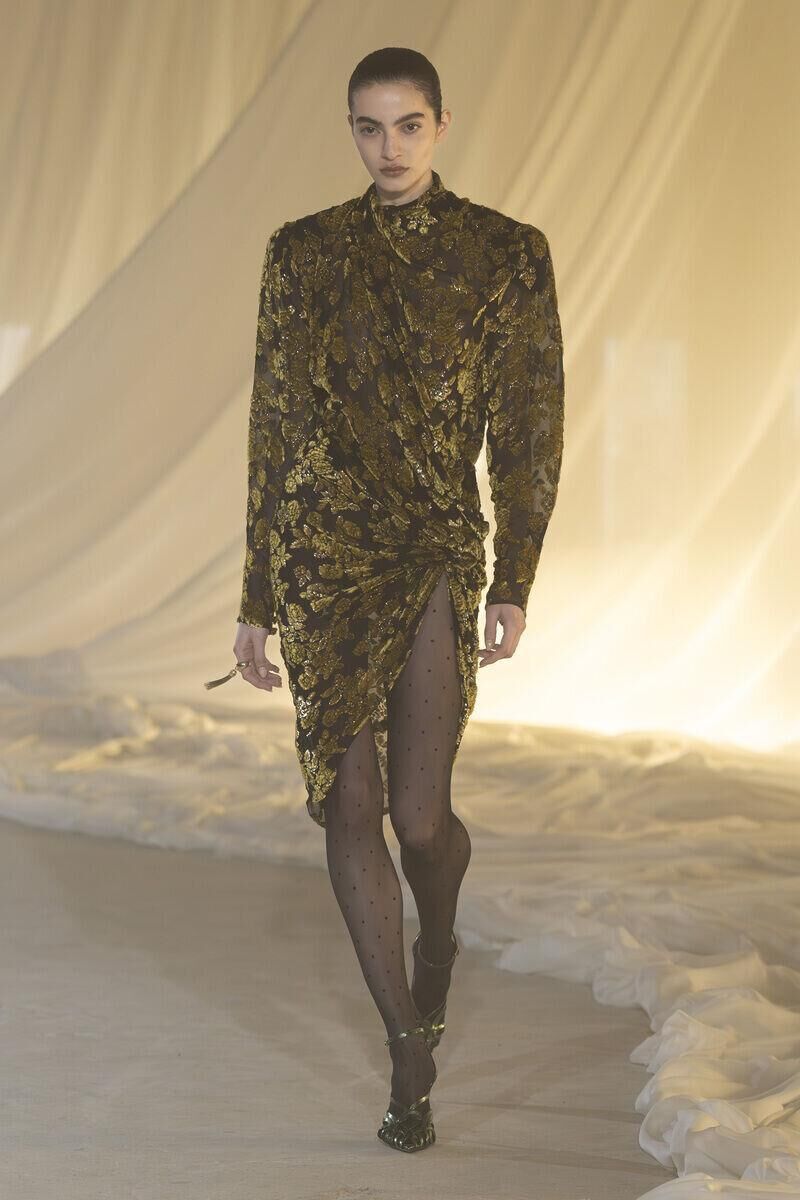
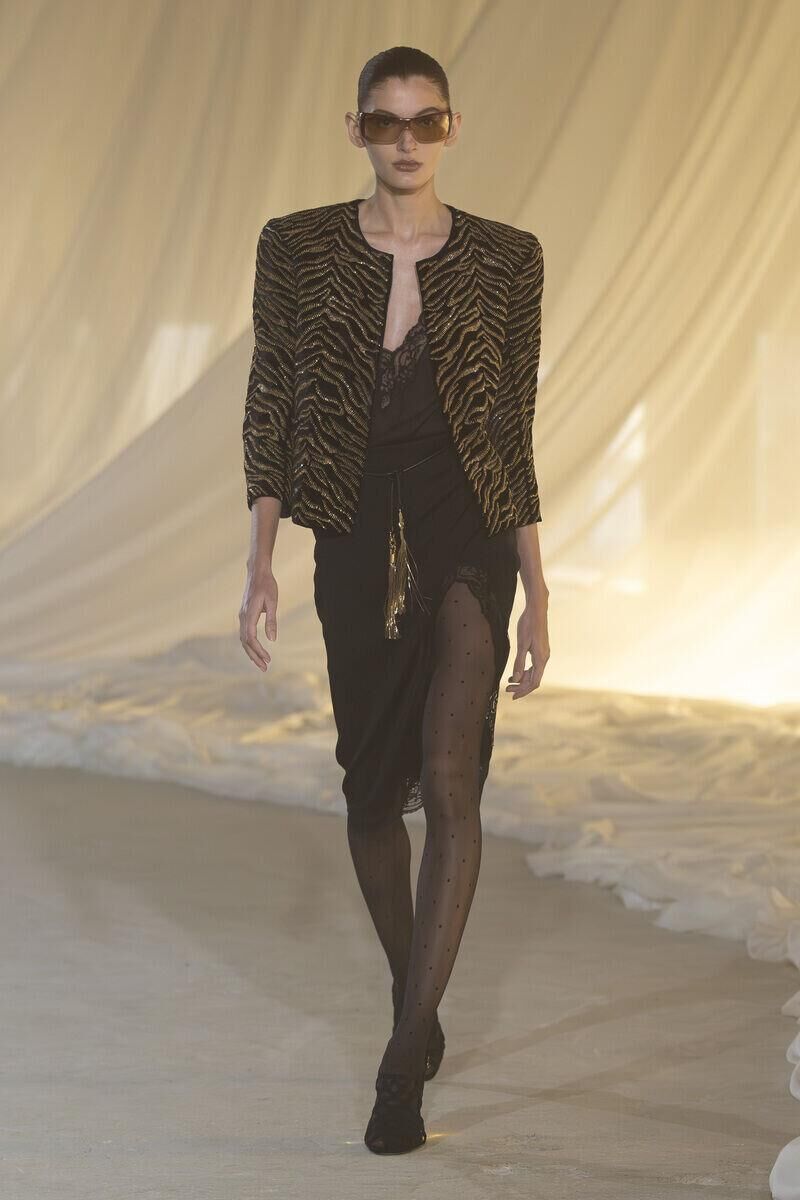
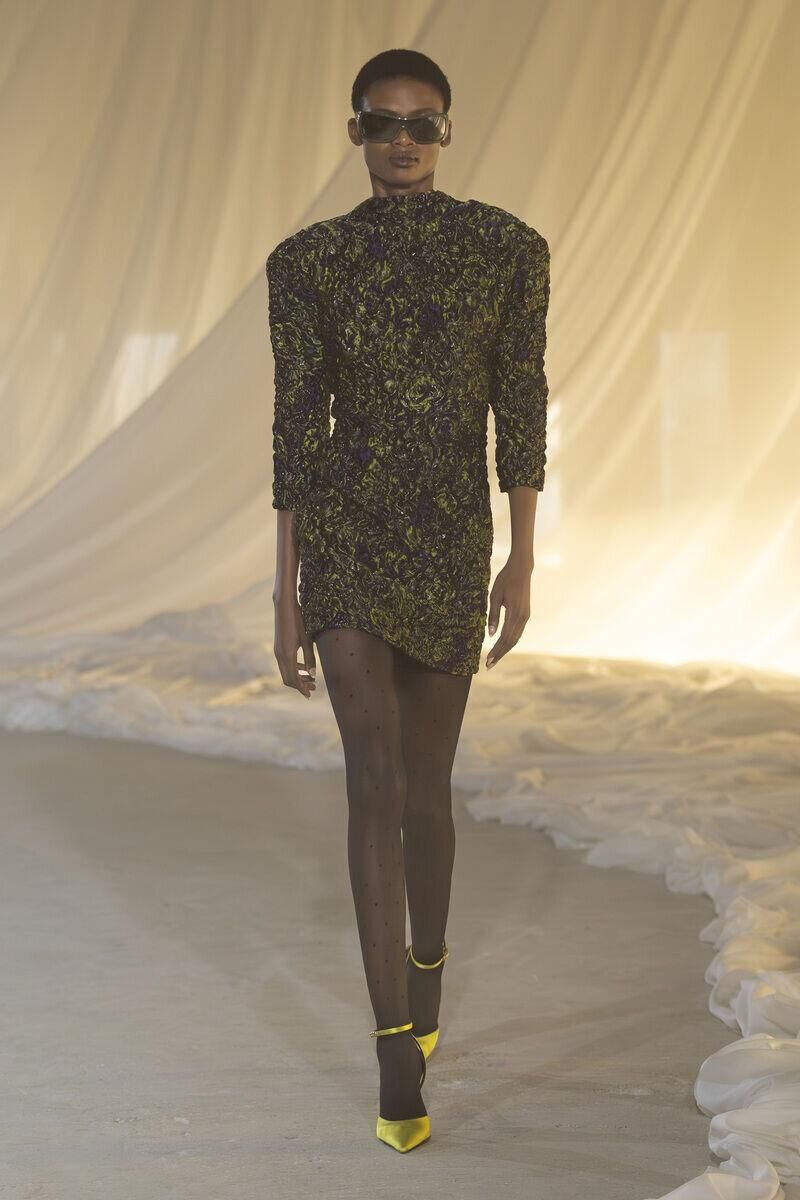
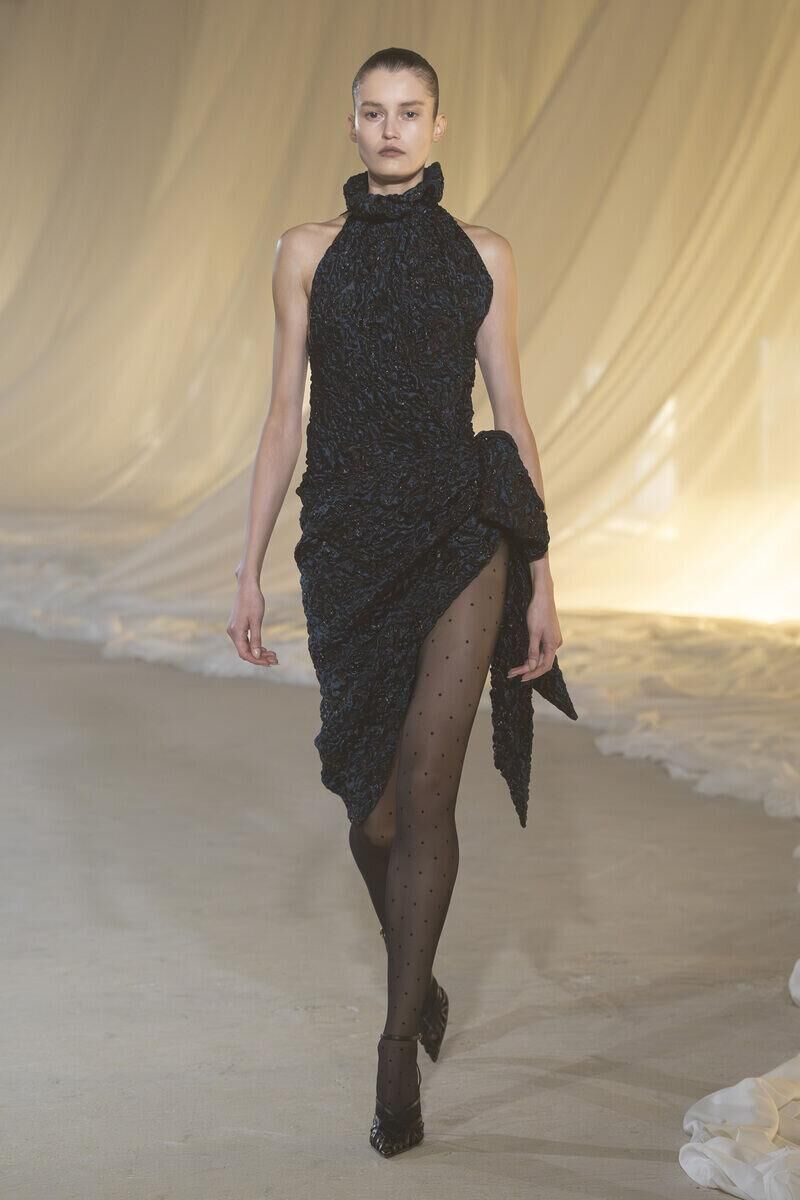
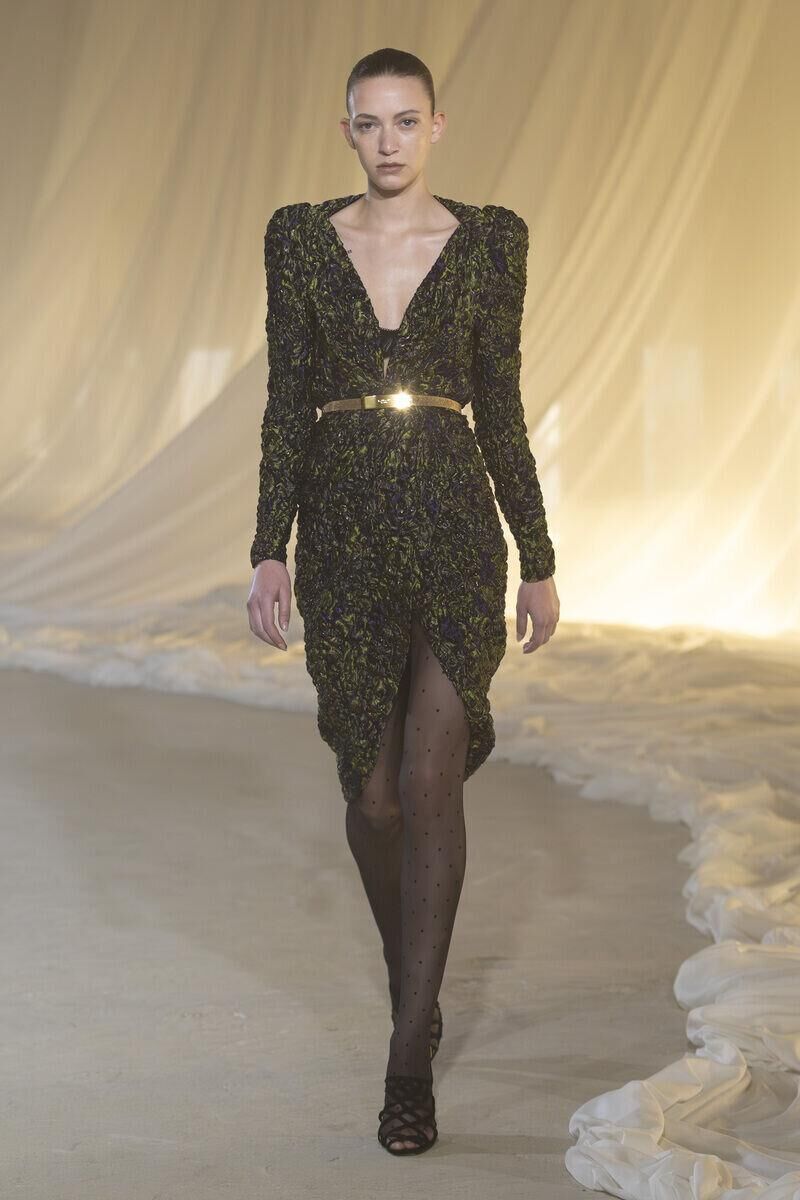
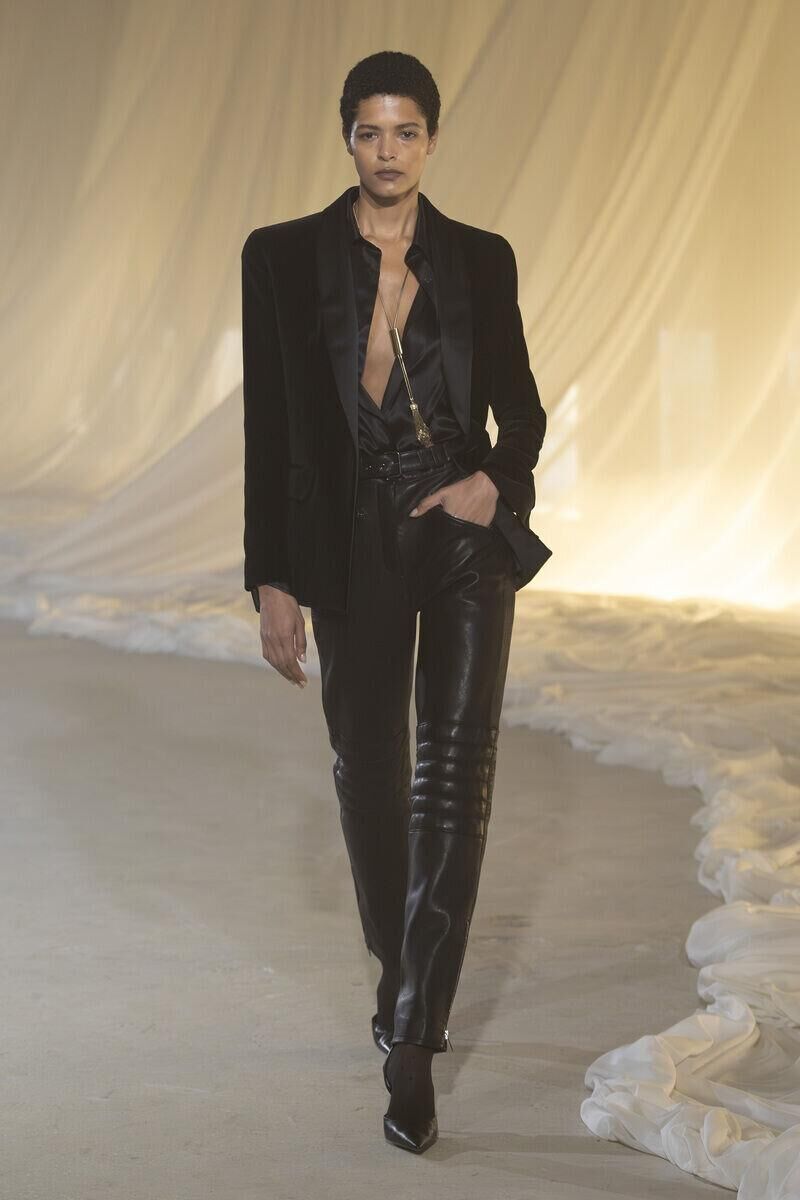
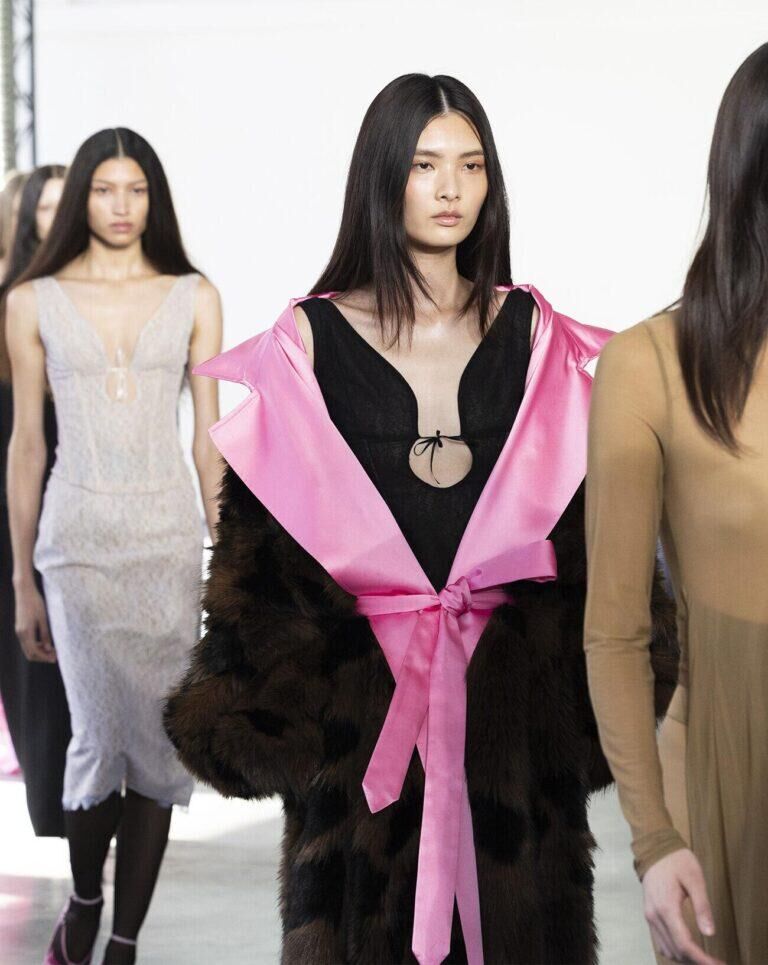
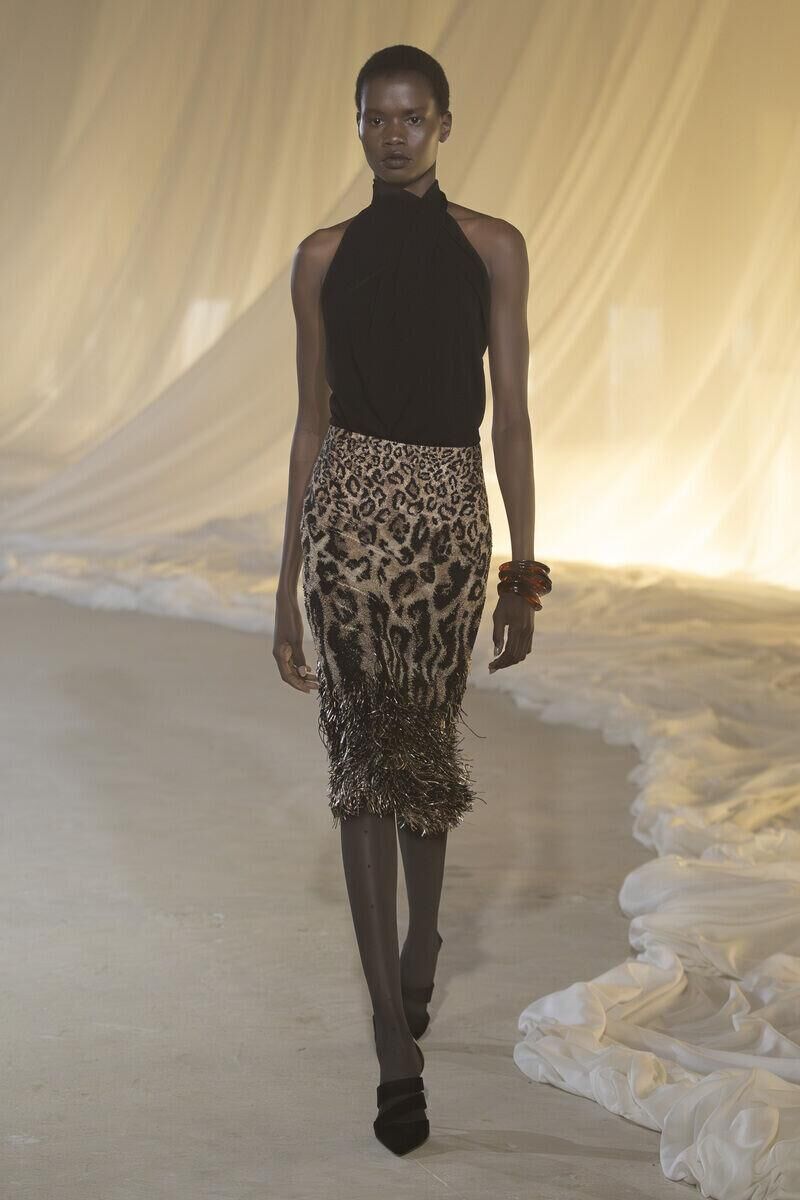
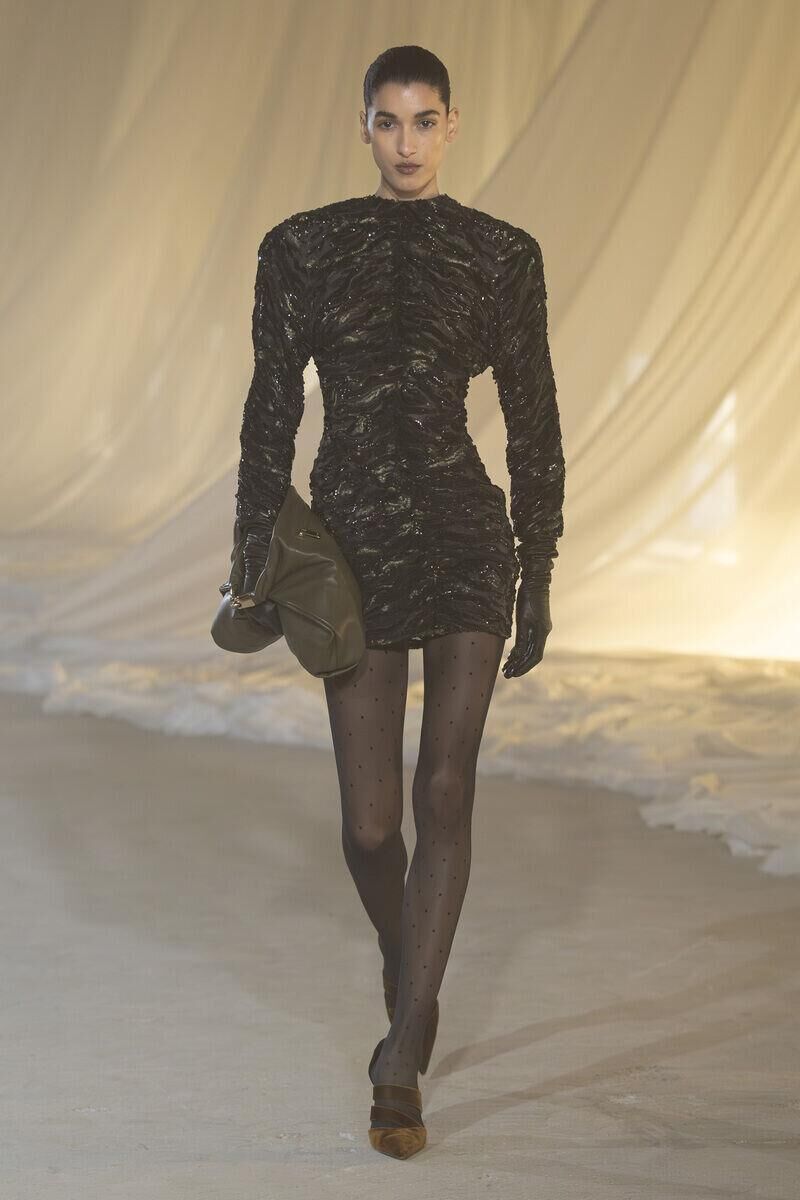
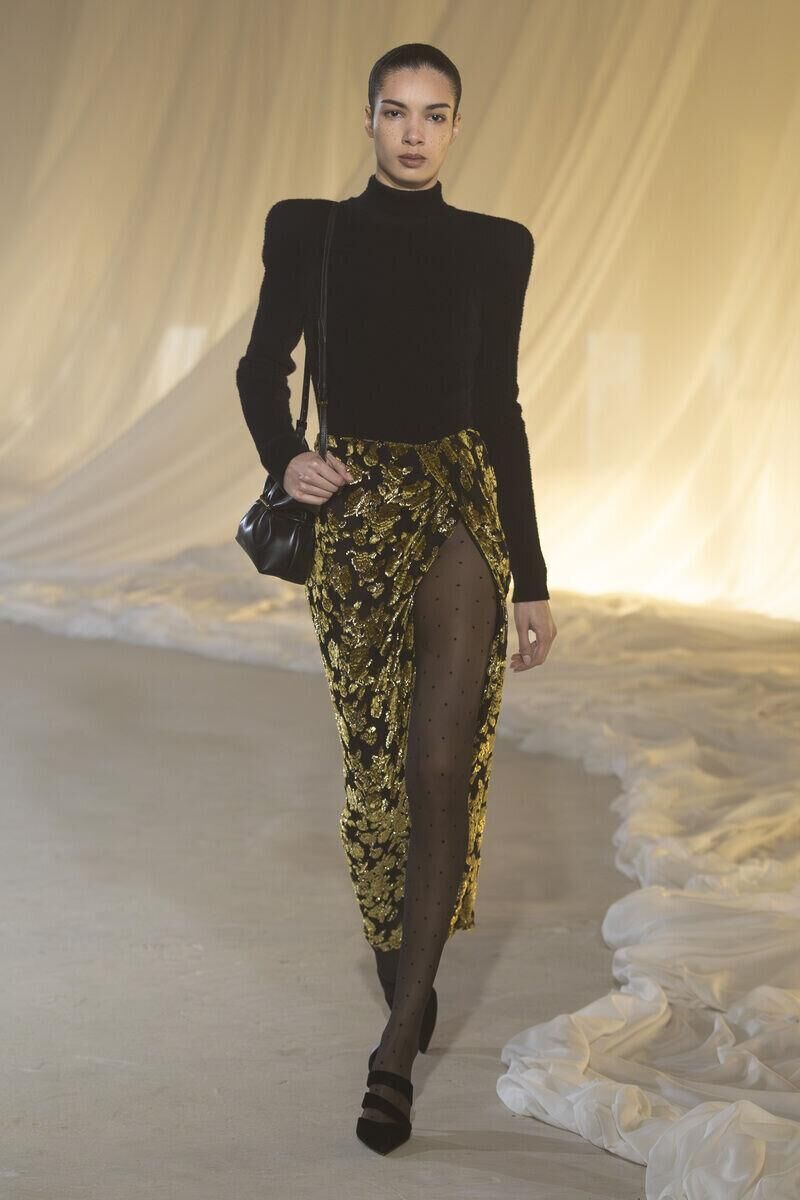
Dear to Pierre Balmain, animal prints — tiger, leopard and crocodile — are reinterpreted with subtlety. They are hand-embroidered on transparent organza or supple leather, and paired with light feathers, exalting the house’s historic craftsmanship. In line with Decarnin and Rousteing, Antonin Tron also works with precious materials, yet with greater restraint. Satin, velvet and jacquard appear in nocturnal palettes punctuated with deep purples and greens.
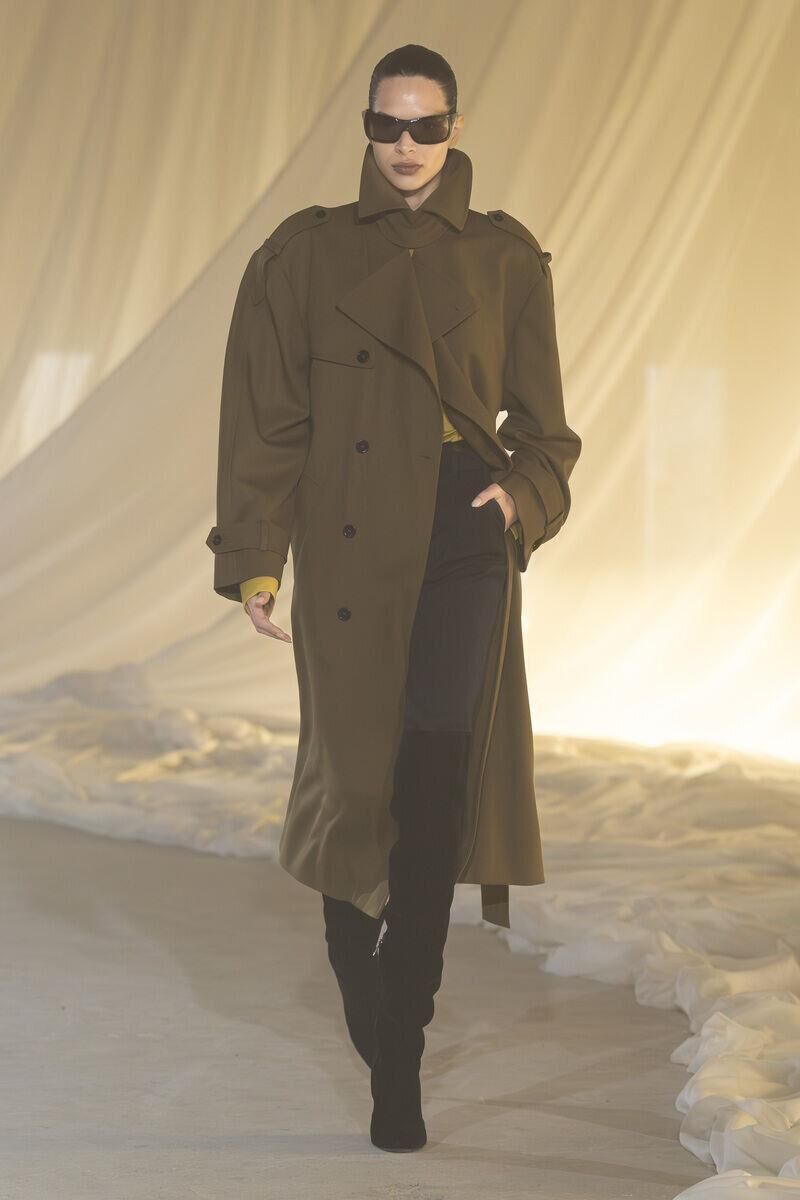
Balancing fluidity and structure, strength and delicacy, Antonin Tron‘s first Balmain show succeeds in breathing new life into the house’s archives. In an approach he describes as “minimal opulence” in an interview with Vogue, the designer reworks the house’s archives for a woman who is at once elegant, free and modern.
All the looks from the Balmain Fall/Winter 2026-2027 show