8
8


Obongjayar, the captivating Nigerian singer acclaimed by Little Simz
Inspired by Fela Kuti’s afrobeat movement, Obongjayar draws on a wide range of influences in his spiritually-infused music. Born in Nigeria, the London-based artist is unclassifiable. He continues to unveil new facets of his work on his latest album, Paradise Now, out now in a deluxe edition.
By Alexis Thibault.
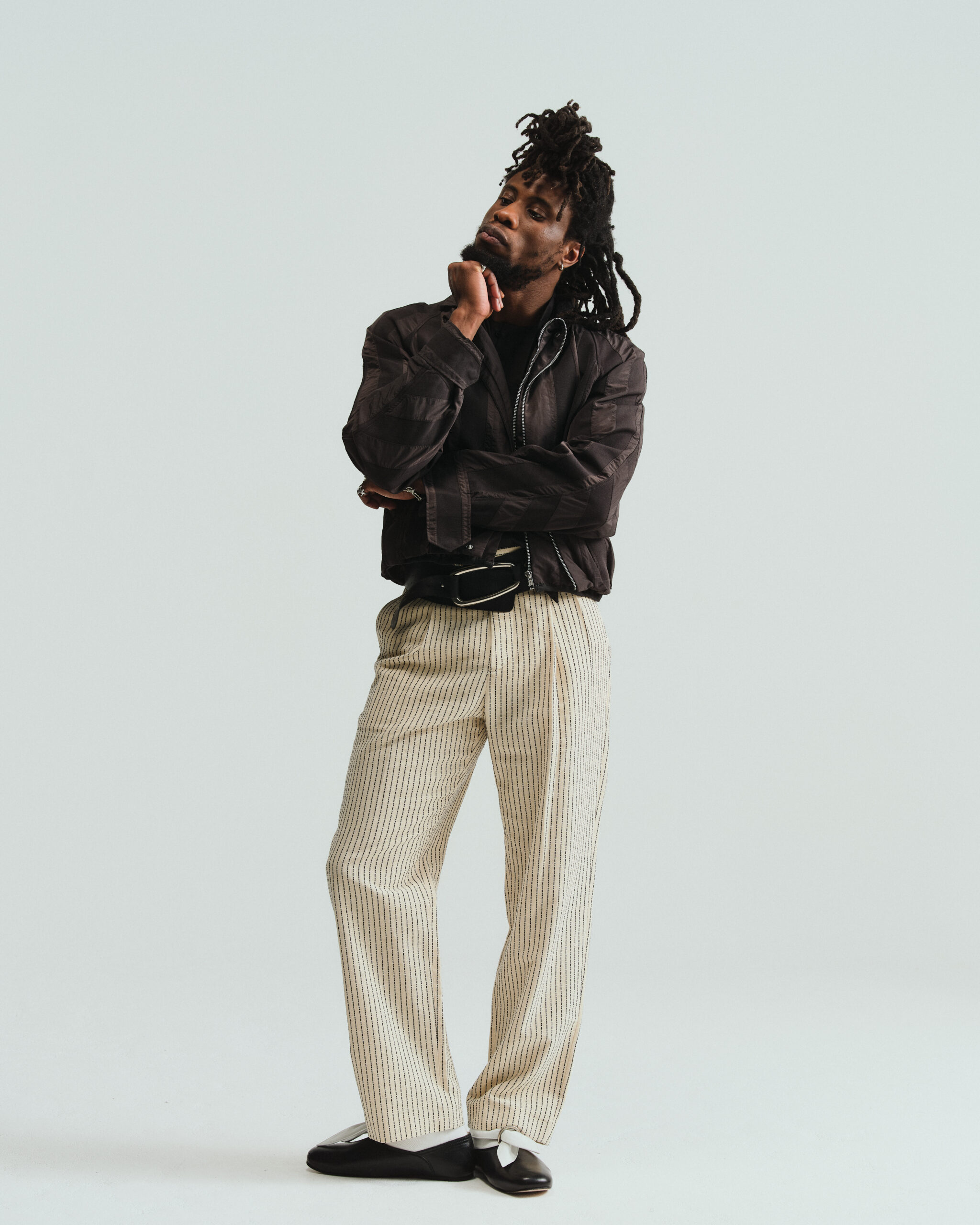
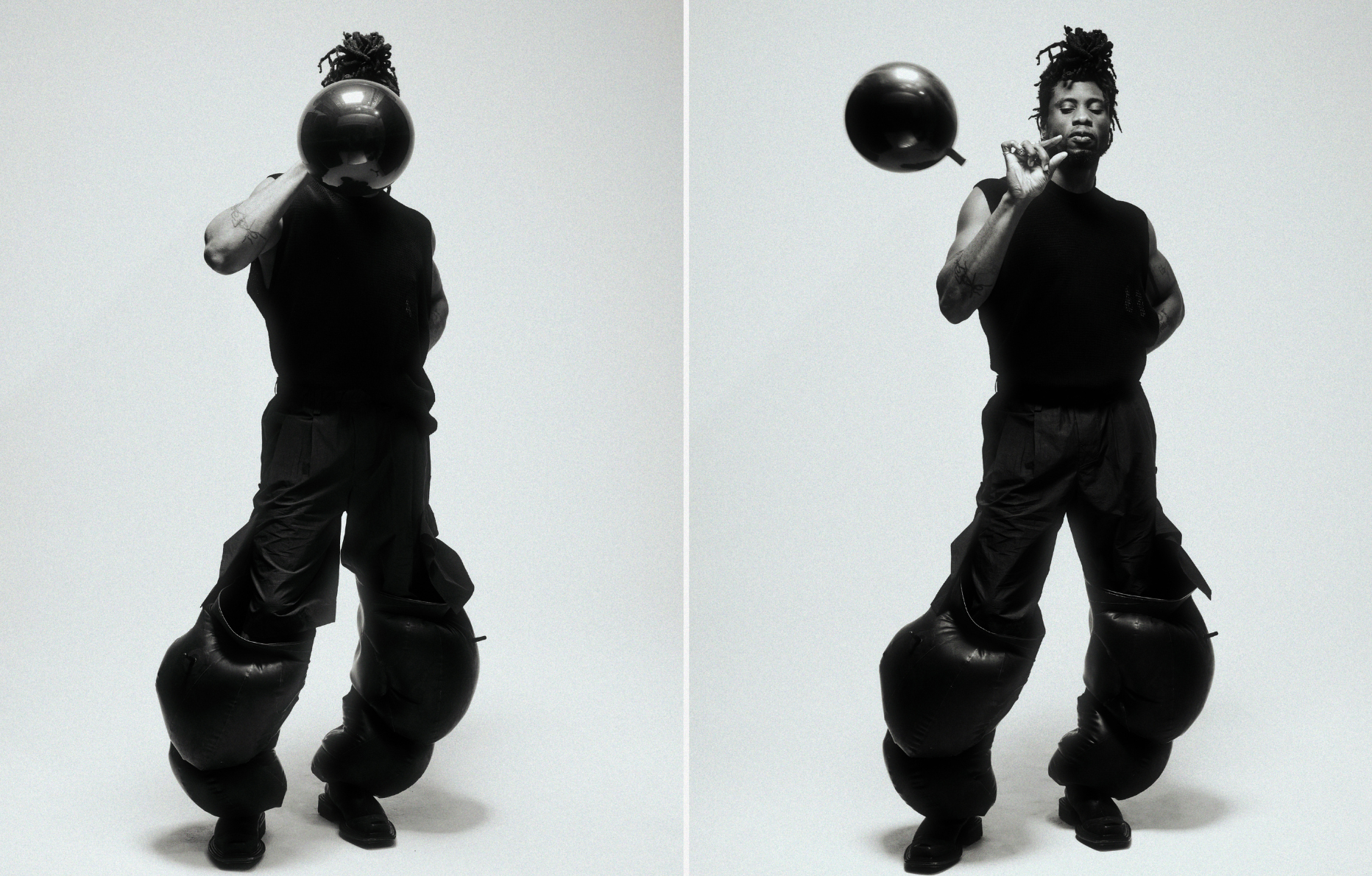
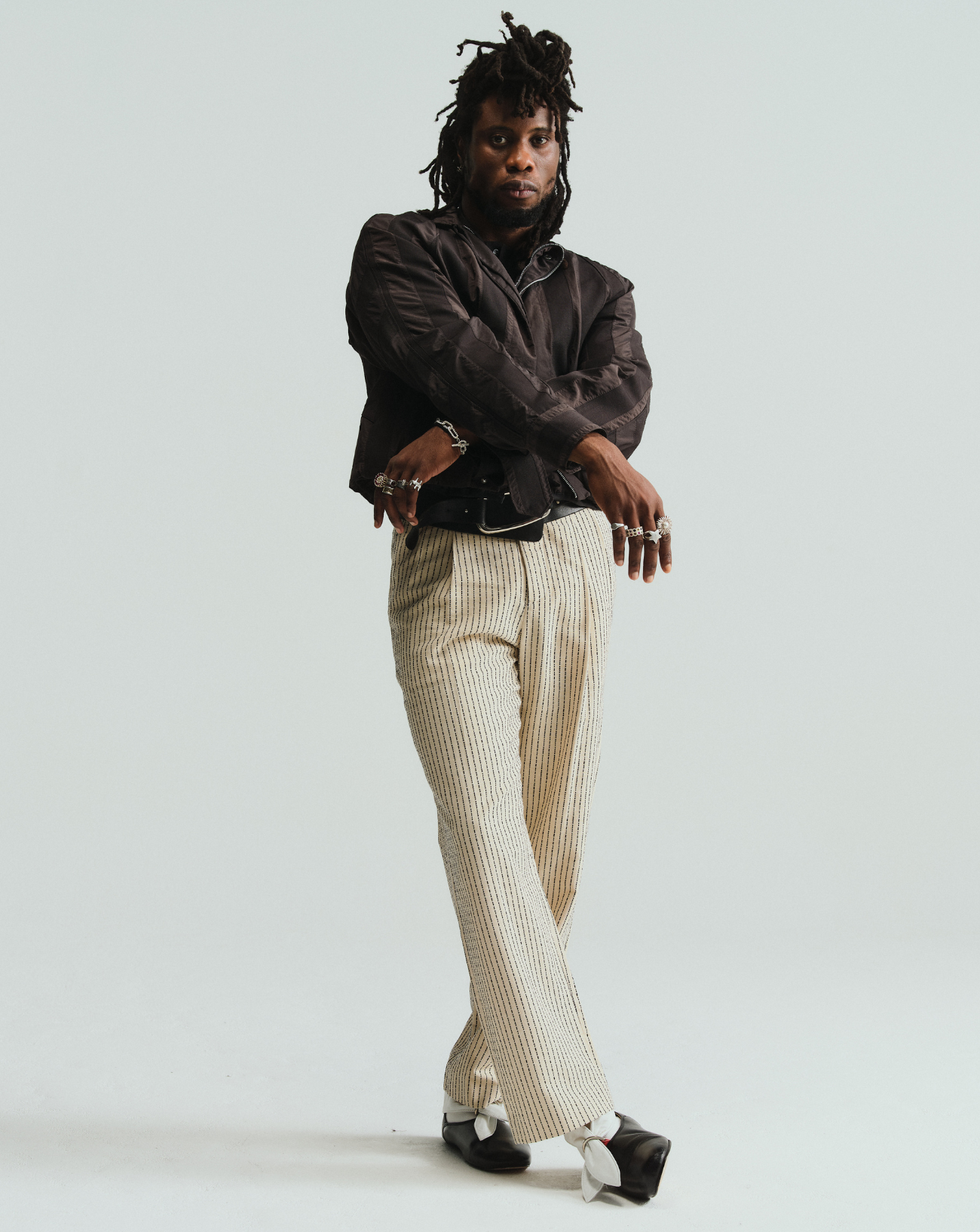
Obongjayar, a singer at the crossroads of original afrobeat and electronic music
Nigerian singer Steven Umoh recalls potholed roads, bumpy rides, and moss-covered fences behind which endless football matches unfolded. That was Calabar, a city in southeastern Nigeria, where brick houses flaunt multicolored roofs. Back then, he hadn’t yet picked his stage name, Obongjayar.
Based in London for the past fifteen years, the 32-year-old musician is an avid fan of singer Asa and Nigerian rap. He crafts deep, spiritual music, blending spoken word, original afrobeat, and electronic sounds. In his love songs, he reveals his light falsetto, as if speaking to a child.
Conversely, when tenderness gives way to uproar, his voice gets deeper, earthier, almost abrasive. It responds and adapts to his music, which Obongjayar describes as “the breeze that hits you when you step outside your house.”
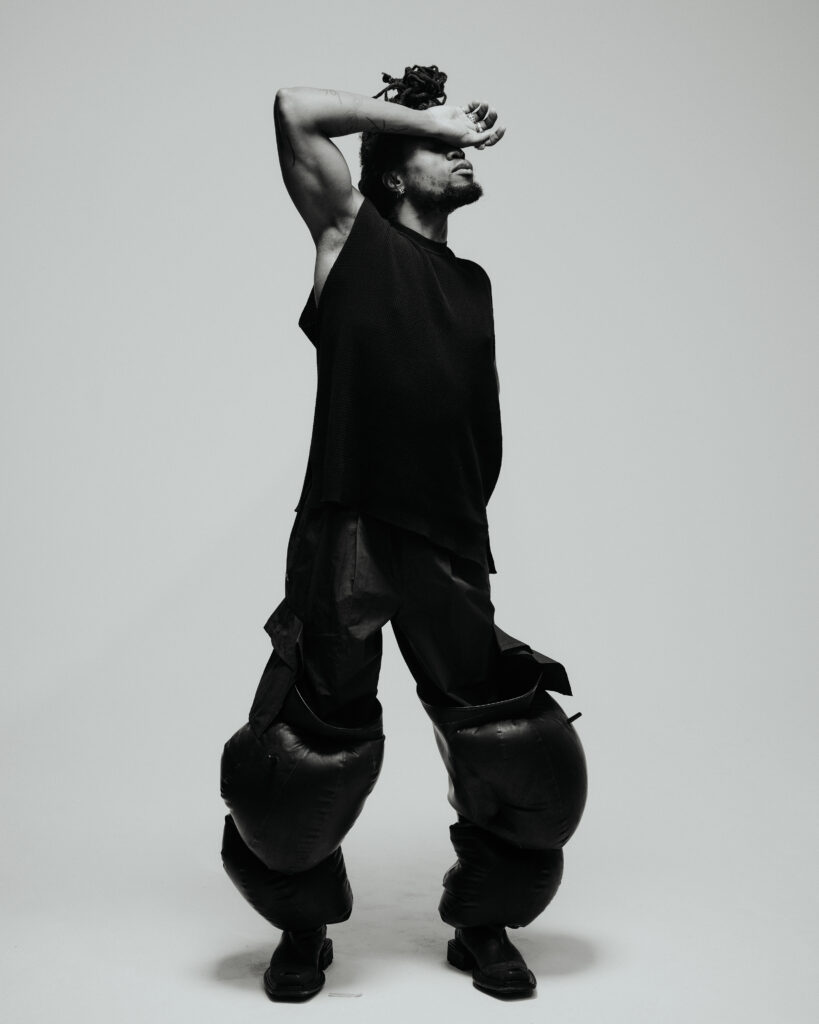
Collaborations with Little Simz and Fred Again
He first broke through with Frens (2019), featured on the original soundtrack of the video game FIFA 20, and has since carved out a singular path. A blend of poetic intensity and visceral commitment. In 2021, he released the track Point and Kill with his friend Little Simz. The music video is a tribute to neo-noir African cinema and draws its inspiration from Touki Bouki (1973), Djibril Diop Mambéty’s radical road movie.
Later, his collaboration with British producer Fred Again on Adore U (2023) – now a platinum record – sealed his transformation into an alchemist of British groove and melancholy. Released at the end of May, his second album, Paradise Now (2025), stands as both a manifesto of freedom and a rejection of labels. An incandescent record that seeks neither to please nor to comfort, but which strikes a chord, right where it still burns, thanks to its fractured bursts and moments of grace.
Paradise Now, an album about heartbreak and joy
Driven by already iconic singles, including the hedonistic Not in Surrender (2025), the venomous pop of Just My Luck (2025) and the feverish Sweet Danger (2025), this record is now available in a deluxe edition. With Paradise Now & Forever (2025), Obongjayar expands his universe by adding five new tracks, including the single Lipdance, composed as a euphoric breather.
But beneath the shiny surface lies a Trojan horse… Tales of acceptance, solitude, sorrow, late-night escapes, and stubborn procrastination.
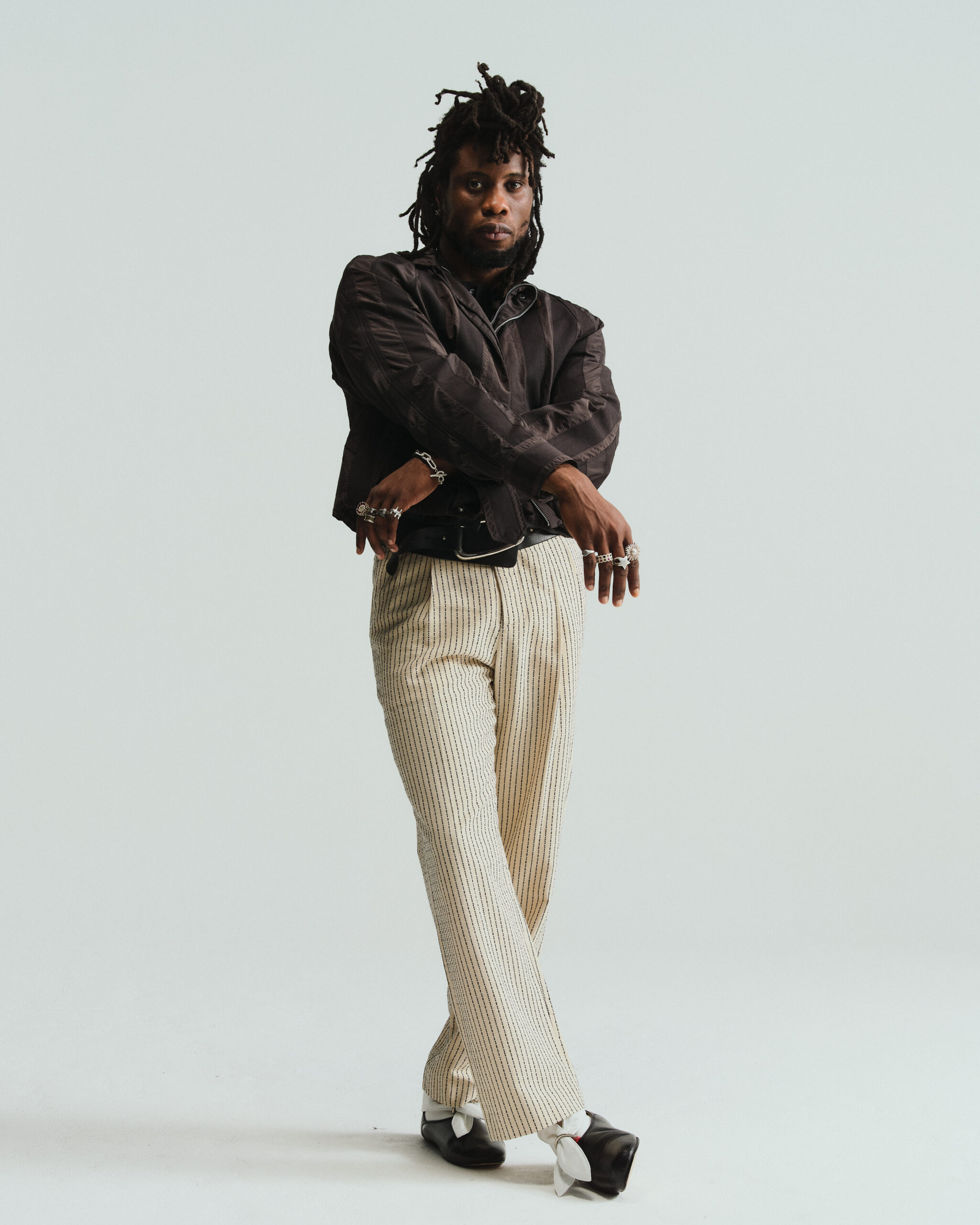
Interview with singer Obongjayar
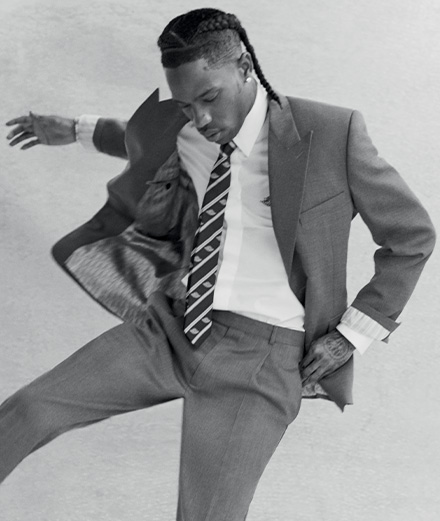
Numéro: The dramatic cover of your new album, Paradise Now, shows you frozen in an expressive motion, as if crashing into a pane of glass at full speed. How does it represent this new record?
Obongjayar: I associate utopia with a destination. We’re constantly searching for a better “elsewhere”, because our current situation never seems good enough. But the ugliness we project onto our environment is just a mental construct, as if we had created the very obstacles we wish to overcome. On that cover, I’m trying to break through a glass ceiling – the one I created myself.
The press struggles to categorize your music, even though you clearly root it in the original afrobeat genre, far from its mainstream version. How do you explain that?
In my music, the influence of afrobeat is undeniable. In 2020, my track Carry Come, Carry Go was heavily inspired by Lady (1972) by Fela Kuti. Later, Tinko Tinko (2022) leaned more towards Never Far Away (2005) by Nigerian musician Lagbaja. The emotion I was expressing there was closer to Marvin Gaye’s Ain’t No Mountain High Enough (1967). This year, my song Sweet Danger brings together the worlds of Femi Kuti [Fela Kuti’s son] and James Bond…
“Even those closest to us project that image onto us. The image of a successful, accomplished artist, who no longer has any problem.” – Obongjayar
Did that track allow you to play a character?
I embody a somewhat sultry, confident, almost toxic man. Don’t expect me to fit into a mold. I’m a tornado. I cannot be caged. I recently listened to Bonnie and Clyde (1968) by Serge Gainsbourg, and I noticed similarities in the flow of the track and the use of background samples. It’s fascinating! That energy seeped into how Sweet Danger was composed.
If you could create a new, completely unprecedented ministry, what would it be?
A ministry whose sole mission would be to sabotage everything… before destroying itself. It would dismantle all institutions – governmental, religious, educational, economic – that have caused us so much harm. It would tear down these oppressive systems, then self-destruct.
“Feeling empty is already feeling something.” – Obongjayar
Afrofuturism is a cultural, artistic and political movement born in the 1960s and defined in 1993 by cultural critic Mark Dery. It combines science fiction, African history and speculative imagination to revalue Black identities. Your work is often associated with this movement. What do you think about that?
Lately, the term has been distorted, stripped of its real meaning. It’s being used indiscriminately by people who don’t truly understand it to describe anything that seems “different”. And if it’s just being used to qualify something as “futuristic,” then I find it almost insulting. Why can the things we’re doing exist here and now? Why must our work always be relegated to some distant future, to something alien or incomprehensible?
According to rapper Little Simz, people tend to assume that artists are always fulfilled because of their success. Are you full of doubt?
Even those closest to us project that image onto us. An image of a successful, accomplished artist, who no longer has any problem. As if we were living on a plane above ordinary people. People picture us constantly creating, meditating on our ideas. That’s not real. That being said, it’s necessary to feel grief and loneliness. To go through these states and truly experience them. Feeling empty is already feeling something. Acknowledging absence is already a form of awareness. And that’s often what we, as artists, try to explore through our music – this ability to debunk, understand and offer a new perspective on pain or emptiness.
Paradise Now & Forever (2025) by Obongjayar, available now.